Artwork
Bohèmes
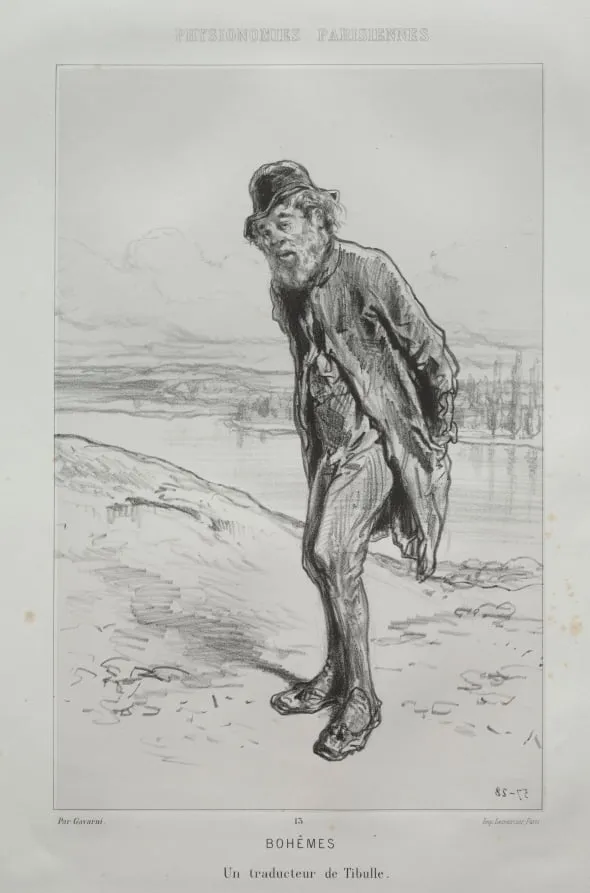
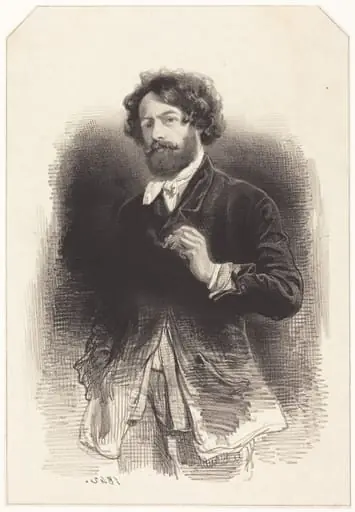
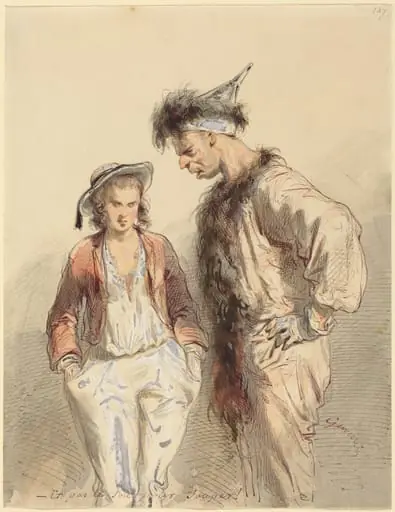
Bohèmes is a print by the Romanticist artist Paul Gavarni. It dates from 1857 and is held in the collection of the Cleveland Museum of Art.
About this work
Overview
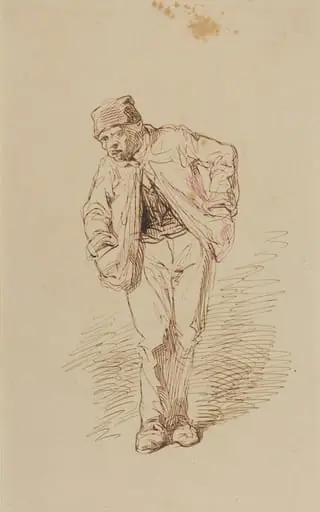
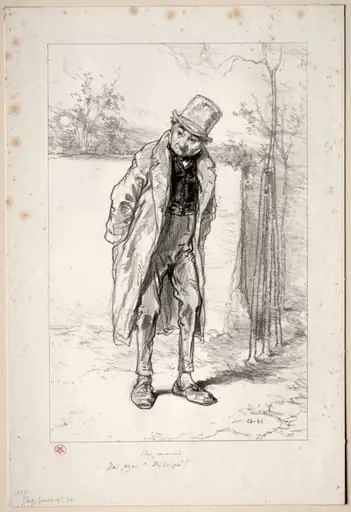
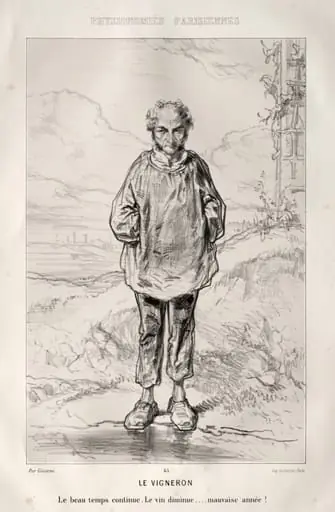
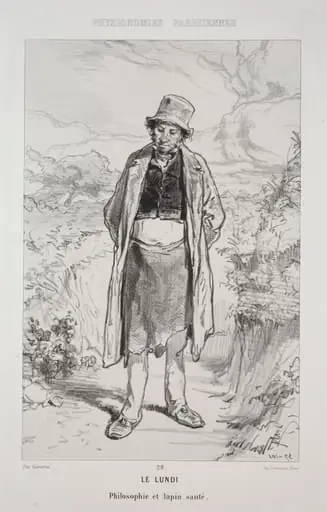
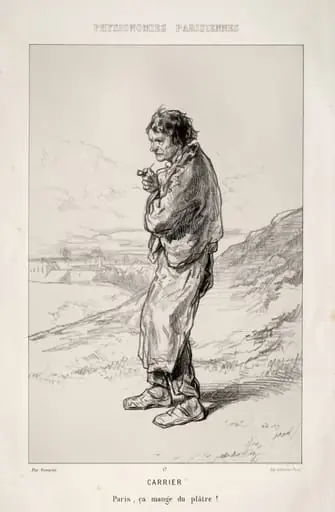
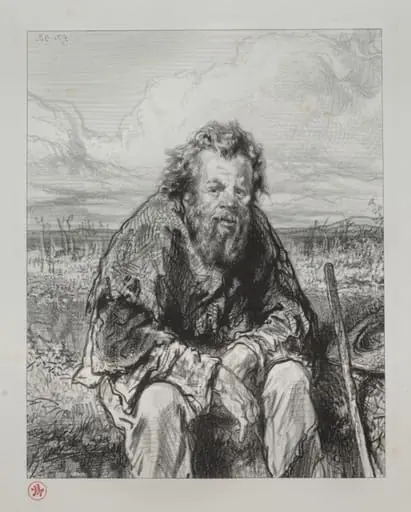
Paul Gavarni’s print Bohèmes, executed around 1857, is part of the Cleveland Museum of Art’s collection. The work presents a solitary figure, loosely rendered, moving through an indistinct landscape. The composition is compact, focusing attention on the individual’s posture and attire rather than on elaborate background details.
Subject & Meaning
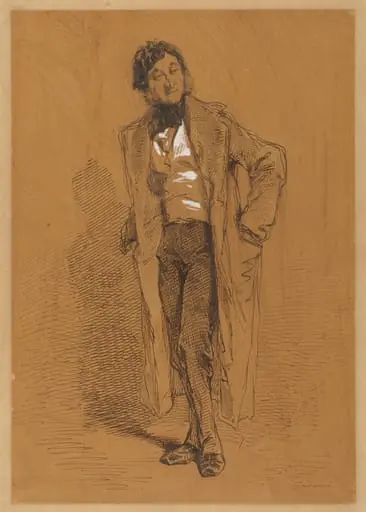
The central character is a disheveled man wearing a slouching hat and a coat, his boots caked with mud as he walks with hands tucked in his pockets. The caption describing him as a “translator of Tibullus” suggests an intellectual or literary role, contrasting his ragged appearance with a scholarly occupation.
Technique & Style
Gavarni employs a sketchy, gestural line that emphasizes the figure’s movement and personality over precise rendering. The print’s loose handling and minimal tonal shading align with mid‑nineteenth‑century approaches that favored expressive immediacy, allowing the viewer to infer texture and atmosphere rather than see them fully delineated.
History & Provenance
Created in the late 1850s, Bohèmes entered the Cleveland Museum of Art’s holdings through acquisition (specific details of purchase are not recorded in the available data). The work reflects Gavarni’s prolific output of prints that documented contemporary urban and rural scenes.
Context
The piece emerges from a period when artists increasingly turned to everyday subjects, infusing ordinary moments with emotional resonance. While not overtly Romantic, the work shares the era’s interest in portraying the lives of common people, using a modest visual language to hint at broader social narratives.
Artist & collection

Artist
Paul Gavarni was the pen name of Sulpice Guillaume Chevalier (13 January 1804 – 24 November 1866), a French illustrator, born in Paris.