Artwork
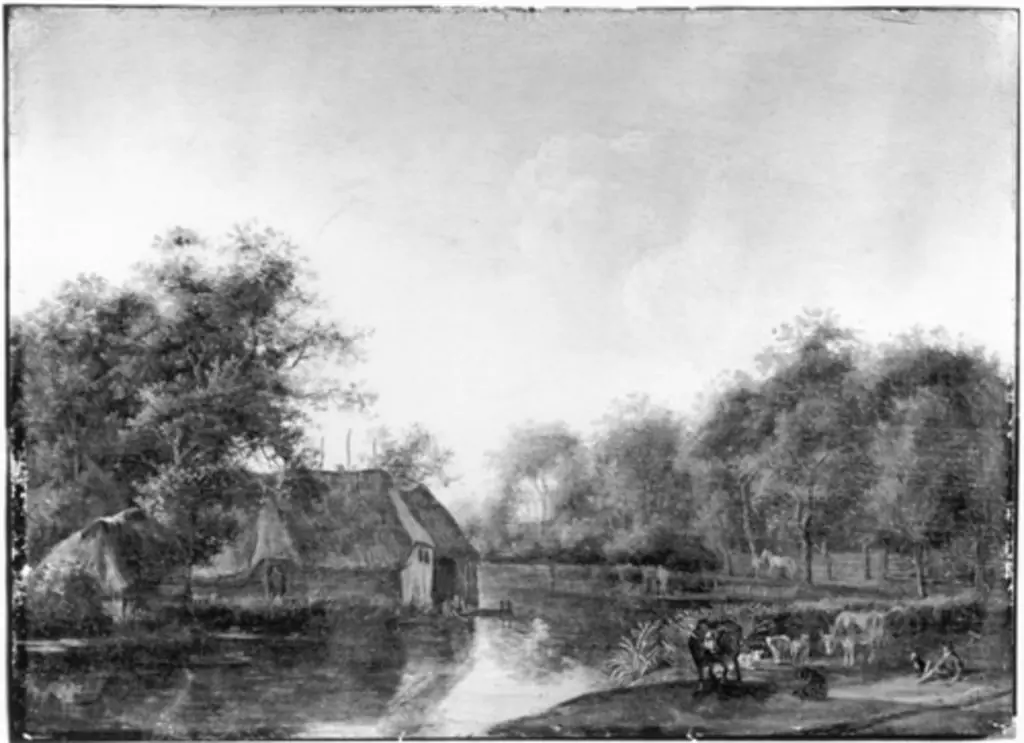
Farm near a Village
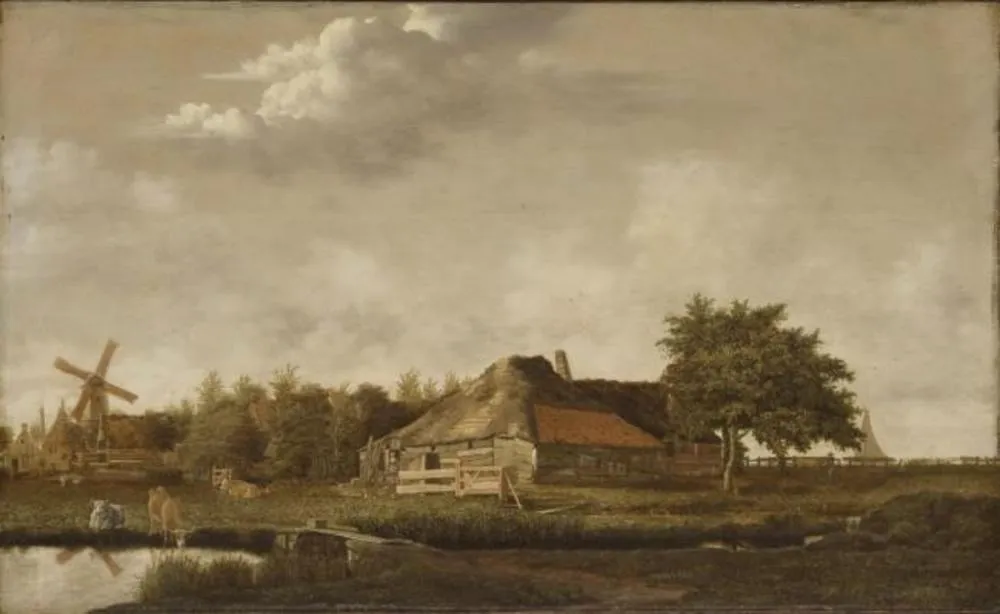
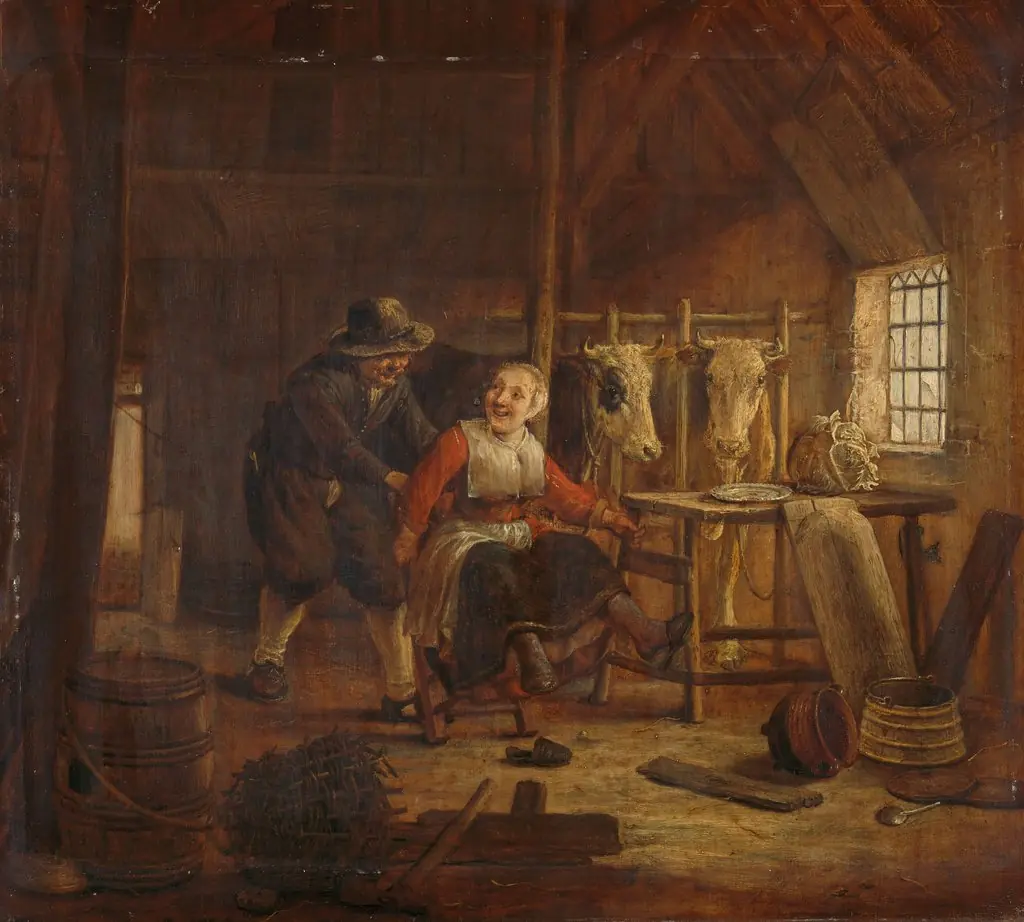
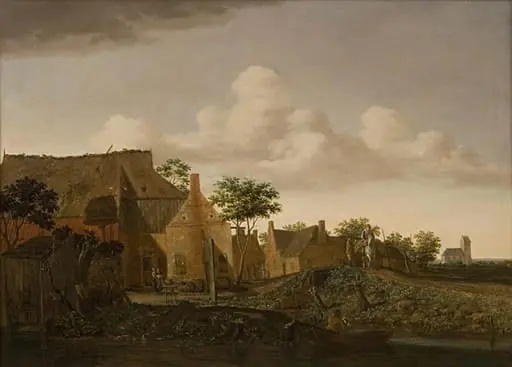
Farm near a Village is an oil painting by the Dutch Golden Age artist Govert Dircksz. Camphuysen. It dates from 1655 and is held in the collection of the Philadelphia Museum of Art.
About this work
Overview
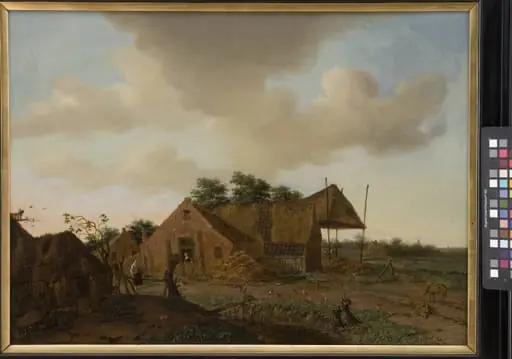
Created in 1655, *Farm near a Village* is an oil painting by Govert Dircksz. Camphuysen, a Dutch artist active during the Golden Age. The work depicts a quiet countryside scene, featuring a farmstead, a pond, grazing cattle, a solitary tree, and a distant windmill, rendered in a subdued palette of browns and greens.
Subject & Meaning
The composition presents an idealized view of rural life, emphasizing harmony between human habitation and the natural environment. Cattle peacefully feed near the water, while the farm and village recede into the background, suggesting a stable, agrarian community typical of 17th‑century Dutch countryside narratives.
Technique & Style
Camphuysen employs chiaroscuro to model forms and convey depth, allowing the foreground figures to emerge from a softly lit atmosphere. Visible brushwork adds texture to foliage and sky, while the restrained colour scheme reinforces the tranquil mood of the scene.
History & Provenance
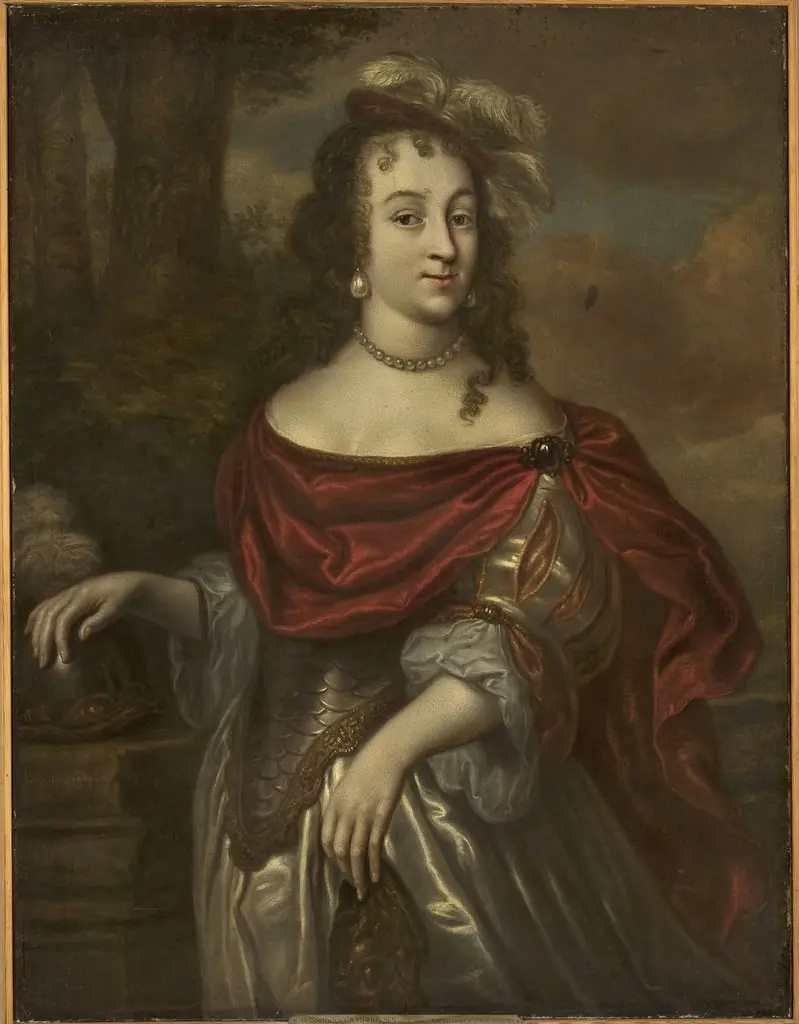
Born in Dokkum in 1624, Camphuysen moved to Amsterdam after his father’s death and later worked in Stockholm, where he painted Queen Hedvig Eleonora. Though best known for animal subjects, he produced landscapes such as this one, aligning with the Dutch Golden Age’s fascination with pastoral subjects.
Context
The painting belongs to a broader Dutch tradition that celebrated everyday rural settings, a genre popularized by artists like Paulus Potter. Camphuysen’s work reflects this trend, focusing on the quiet dignity of farm life rather than grand historical or religious themes.
Artist & collection
Artist
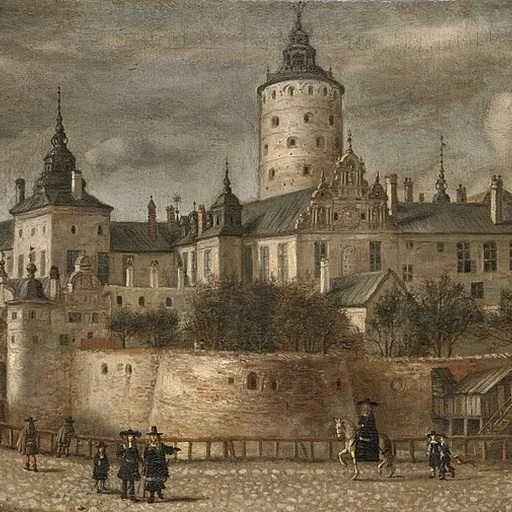
Govert Dircksz Camphuysen or also spelled Govaert Camphuijsen (born at Dokkum in 1624, and died in Amsterdam in 1672) was an animal painter, whose style was influenced by Paulus Potter.