Artwork
Mill with Bridge and Figures
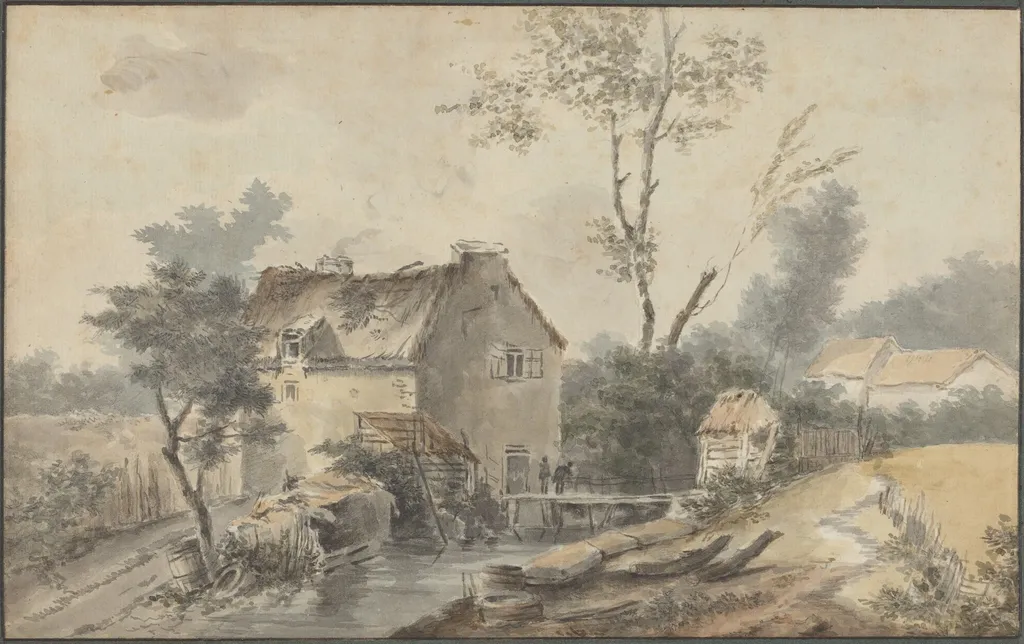
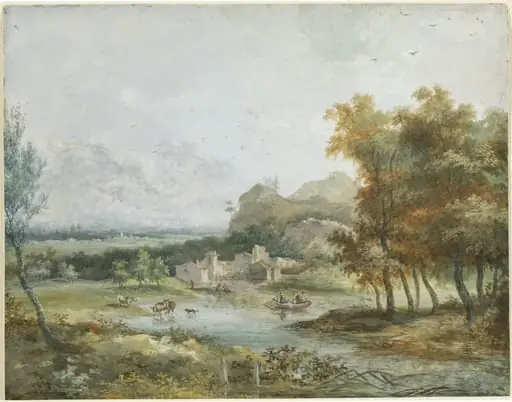
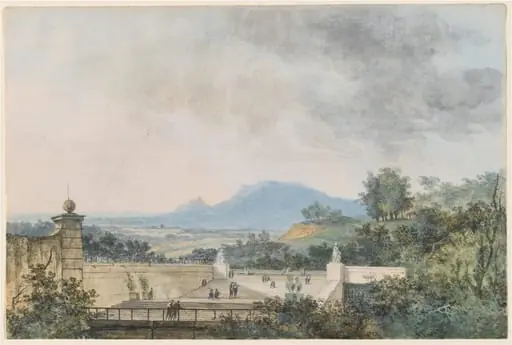
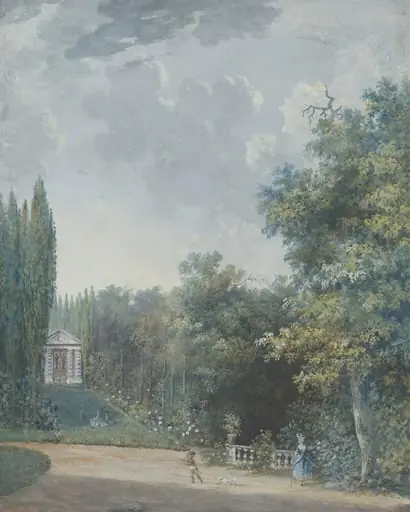
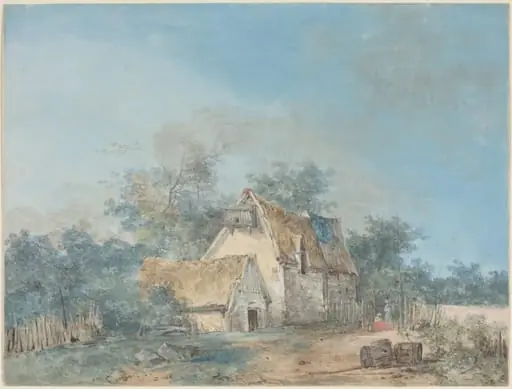
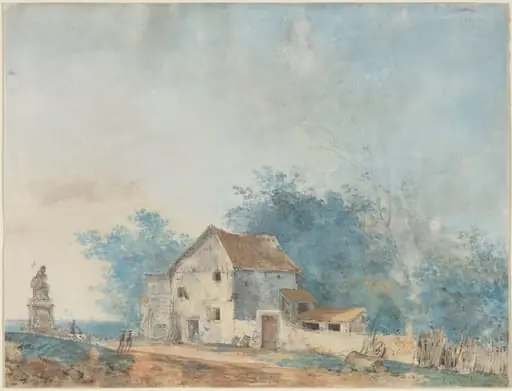
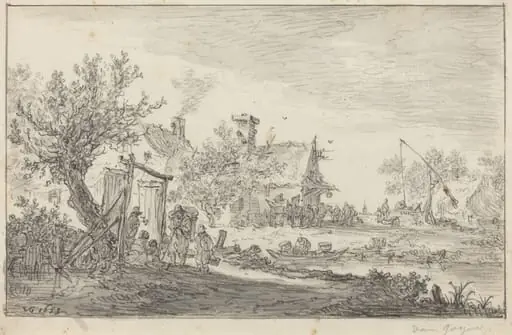
Mill with Bridge and Figures is a graphite drawing by the Baroque artist Louis Gabriel Moreau the Elder. It dates from 1773 and is held in the collection of the National Gallery of Art.
About this work
Overview
Created in 1773 by Louis Gabriel Moreau the Elder, this drawing combines watercolor and graphite on laid paper to depict a quiet rural scene. The composition centers on a wooden mill beside a stone bridge, with small figures near the water’s edge. The medium lends a restrained, atmospheric quality, emphasizing natural light and subtle tonal shifts rather than bold detail.
Subject & Meaning
The scene portrays everyday rural life in late 18th-century France, with no overt narrative or symbolism. The mill, bridge, and figures suggest functional elements of a working landscape—transport, labor, and community. The absence of dramatic action invites contemplation of quiet, habitual existence within nature.
Technique & Style
Moreau applied watercolor over a light graphite underdrawing, allowing for soft transitions and delicate layering. The laid paper’s texture enhances the tactile quality of the brushwork, while the graphite defines structural elements like the bridge and mill frame. The palette is muted, favoring earth tones and pale washes to suggest ambient light.
History & Provenance
The work is part of Moreau the Elder’s series of topographical drawings, likely made during travels in northern France. It remained in private hands until entering a public collection in the 20th century. Its survival as a preparatory or independent study reflects the growing interest in landscape as a subject beyond idealized history painting.
Context
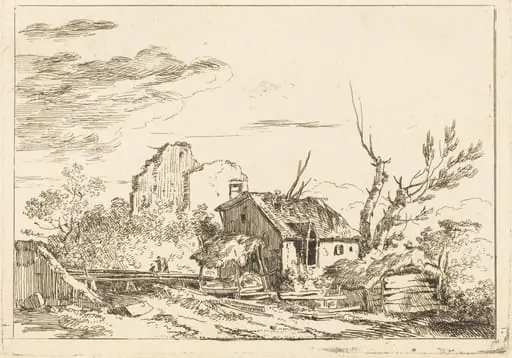
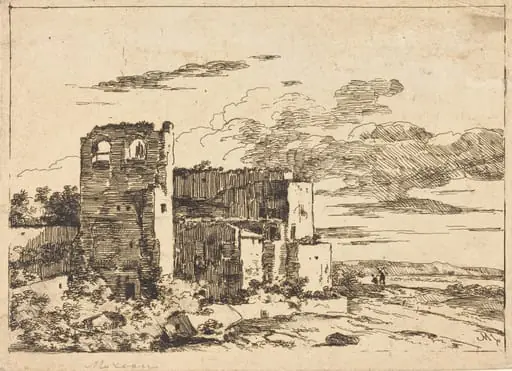
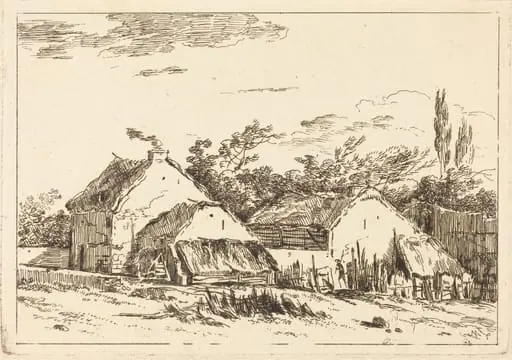
In the decades before the French Revolution, artists increasingly turned to observed nature rather than mythological or aristocratic themes. Moreau’s work aligns with this shift, capturing modest rural scenes with observational precision. His approach contrasts with the grandeur of academic Baroque traditions, favoring quiet realism instead.
Legacy
Moreau’s drawings contributed to the foundation of French topographical art, influencing later generations who documented the countryside with similar restraint. Though not widely exhibited in his lifetime, his works are now recognized for their quiet integrity and role in the evolution of landscape drawing as an independent genre.
Artist & collection