Artwork
El sueño de la razon produce monstruos (The Sleep of Reason Produces Monsters)
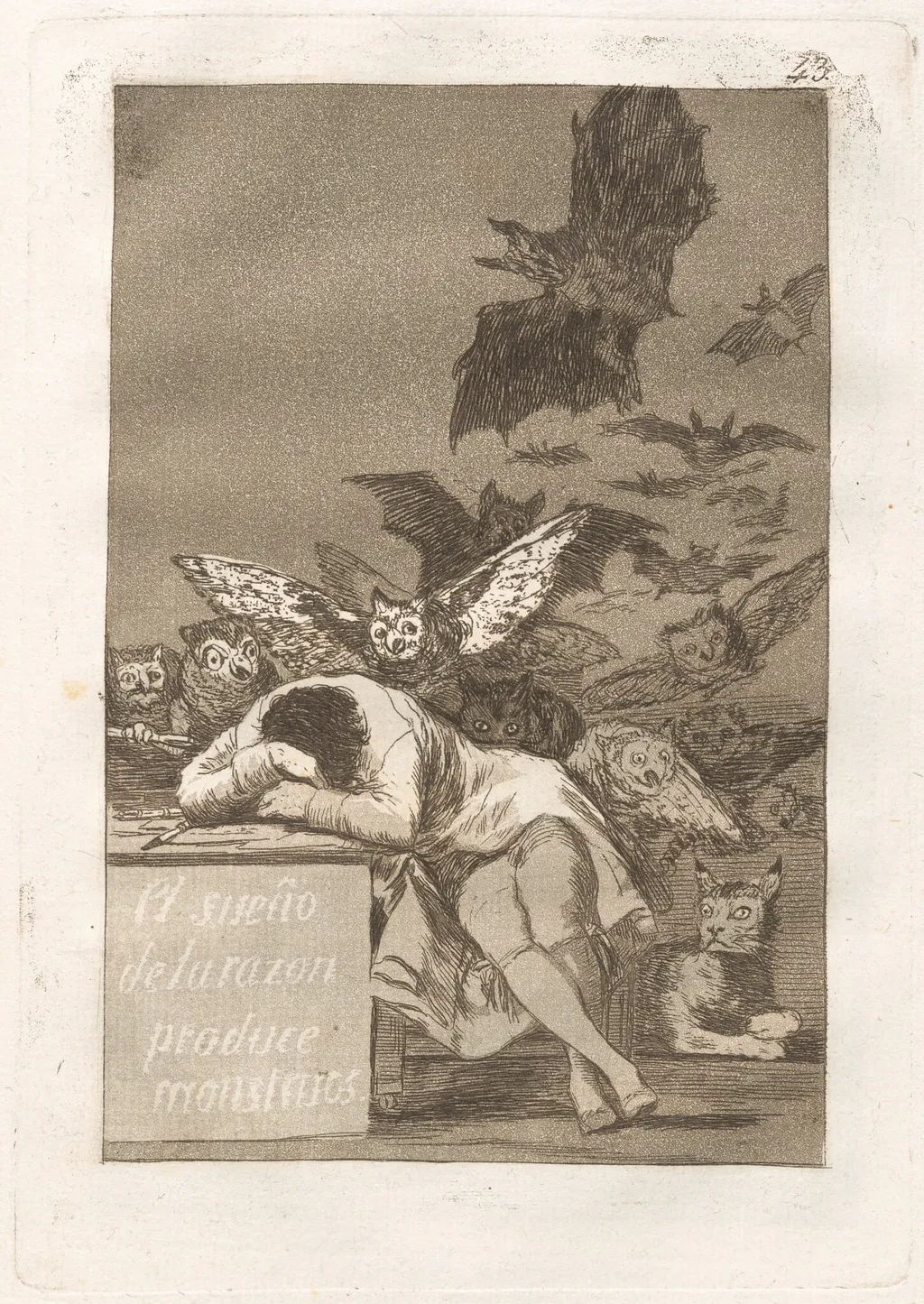
El sueño de la razon produce monstruos (The Sleep of Reason Produces Monsters) is an ink print by the Romanticist artist Francisco Goya. It dates from 1799 and is held in the collection of the National Gallery of Art.
About this work
Overview
El sueño de la razon produce monstruos (The Sleep of Reason Produces Monsters) is a 1799 etching and aquatint print by Francisco Goya. It belongs to a series examining the darker aspects of human thought, characteristic of Goya's fusion of Romanticism and social commentary.
Subject & Meaning
The print depicts a slumped figure, possibly Goya himself, asleep at a desk. Surrounding creatures—owls and bats—embody the irrational forces that emerge when reason is suspended. The scene symbolizes the consequences of unchecked rational faculties.
Technique & Style
Goya utilized etching and aquatint to achieve pronounced tonal contrasts, intensifying the image's unsettling atmosphere. The interplay of light and dark shadows heightens the sense of foreboding, while detailed rendering of the creatures adds to the overall sense of unease.
History & Provenance
Created in 1799, this work is part of Goya's oeuvre as a leading Spanish artist of his time, reflecting his penchant for exploring the human psyche through innovative printmaking techniques.
Context
This print reflects the late 18th-century intellectual climate, where the Enlightenment's emphasis on reason was being countered by growing interest in the irrational and the subconscious, themes Goya explored through his unique artistic voice.
Legacy
El sueño de la razon produce monstruos is notable for its early and influential depiction of the struggle between reason and irrationality, solidifying Goya's impact on subsequent artistic explorations of the human psyche.
Artist & collection
Artist
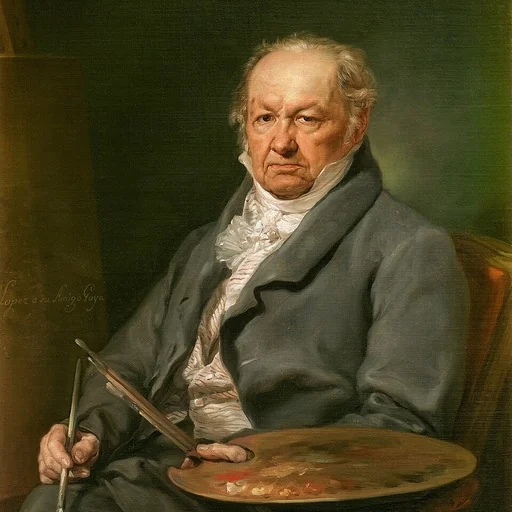
Francisco José de Goya y Lucientes (; Spanish: ; 30 March 1746 – 16 April 1828) was a Spanish romantic painter and printmaker.

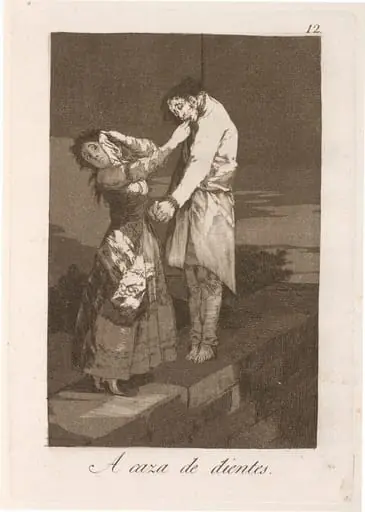 A caza de dientes (Out Hunting for Teeth)
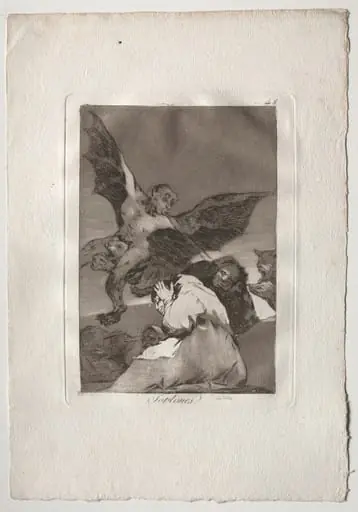 Tale-Bearers - Blasts of Wind, Plate 48
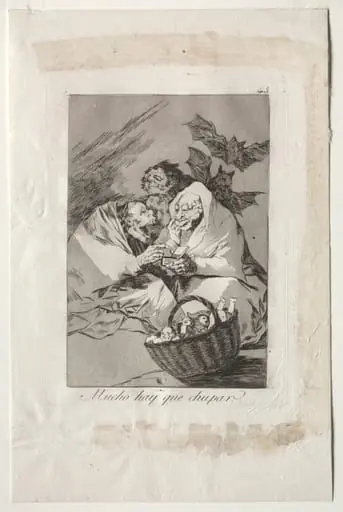 There is Plenty to Suck, Plate 45
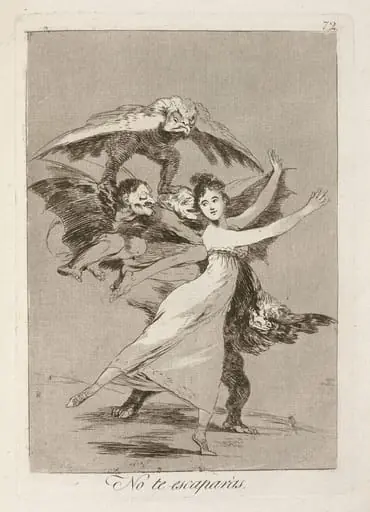 No te escaparas (You Will Not Escape)
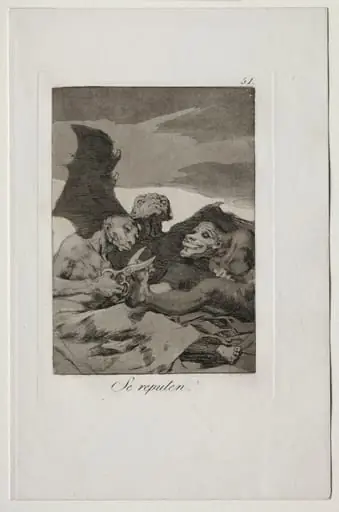 They Spruce Themselves Up, Plate 51
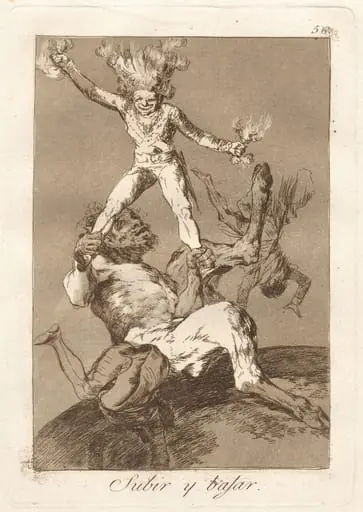 Subir y bajar (To Rise and To Fall)
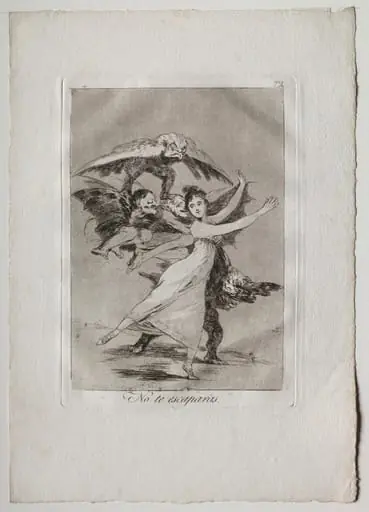 You Will Not Escape, Plate 72
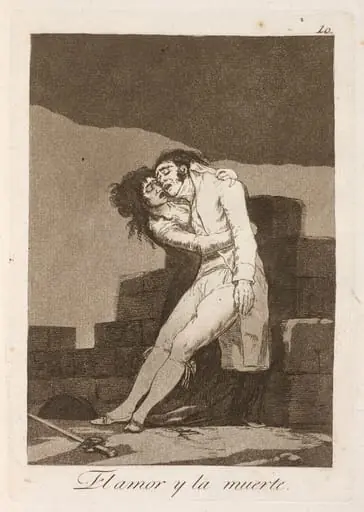 El amour y la muerte (Love and Death)
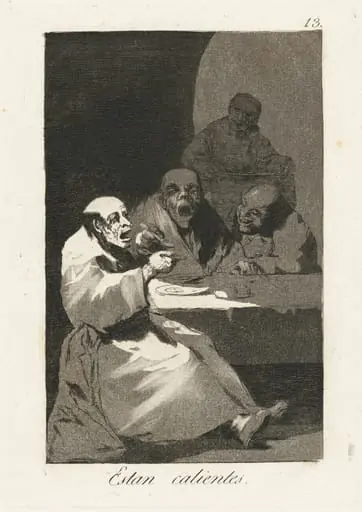 Estan Calientes (They Are Hot)
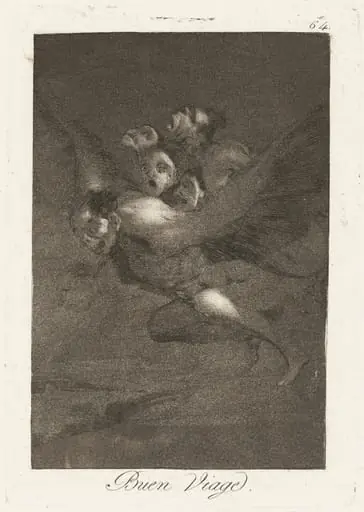 Buen Viage (Bon Voyage)
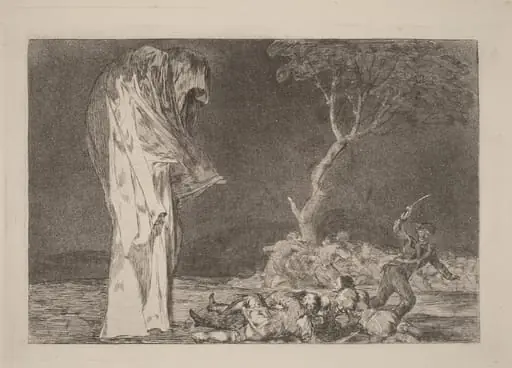 Disparate de miedo (Folly of Fear)
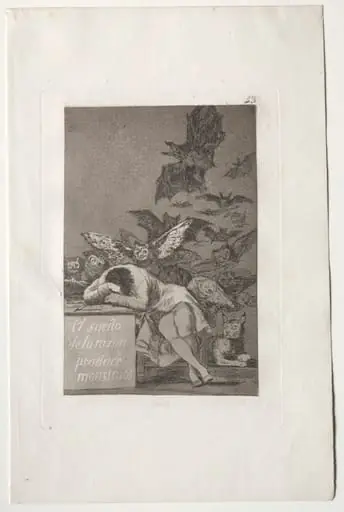 The Sleep of Reason Produces Monsters, Plate 43