Artwork
Modo de volar (A Way of Flying)
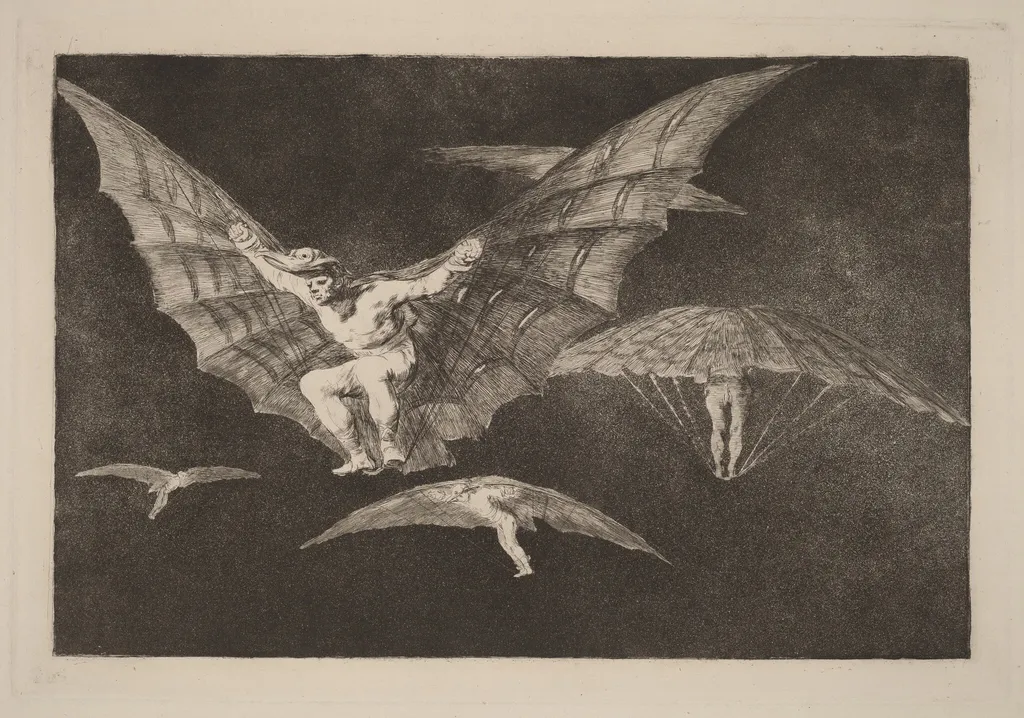
Modo de volar (A Way of Flying) is an ink print by the Romanticist artist Francisco Goya. It dates from 1816 and is held in the collection of the National Gallery of Art.
About this work
Overview
Modo de volar (A Way of Flying) is a print created by Francisco Goya in 1816, utilizing etching, aquatint, and possibly drypoint techniques. A trial proof was printed posthumously between 1854 and 1863.
Subject & Meaning
The print depicts a dark, surreal scene of winged creatures in flight, with figures awkwardly navigating these beasts. This work reflects Goya’s later thematic preoccupations with human folly and societal critique, characteristic of his response to the tumultuous era of the Peninsular War.
Technique & Style
Goya employed a combination of etching, aquatint, and possibly drypoint to achieve a range of textures and tonal nuances. The sharp, scratchy lines and frantic marks contrast with smoother areas, conveying a sense of wildness and unease.
History & Provenance
Originally created in 1816, the known trial proof of Modo de volar was printed posthumously, circa 1854-1863, following Goya’s death.
Context
This work is situated within Goya’s later period, marked by artistic innovation and engagement with the social and political upheavals of his time, including the aftermath of the Peninsular War.
Own this work as a print
Artist & collection

Artist
Francisco José de Goya y Lucientes (; Spanish: ; 30 March 1746 – 16 April 1828) was a Spanish romantic painter and printmaker.





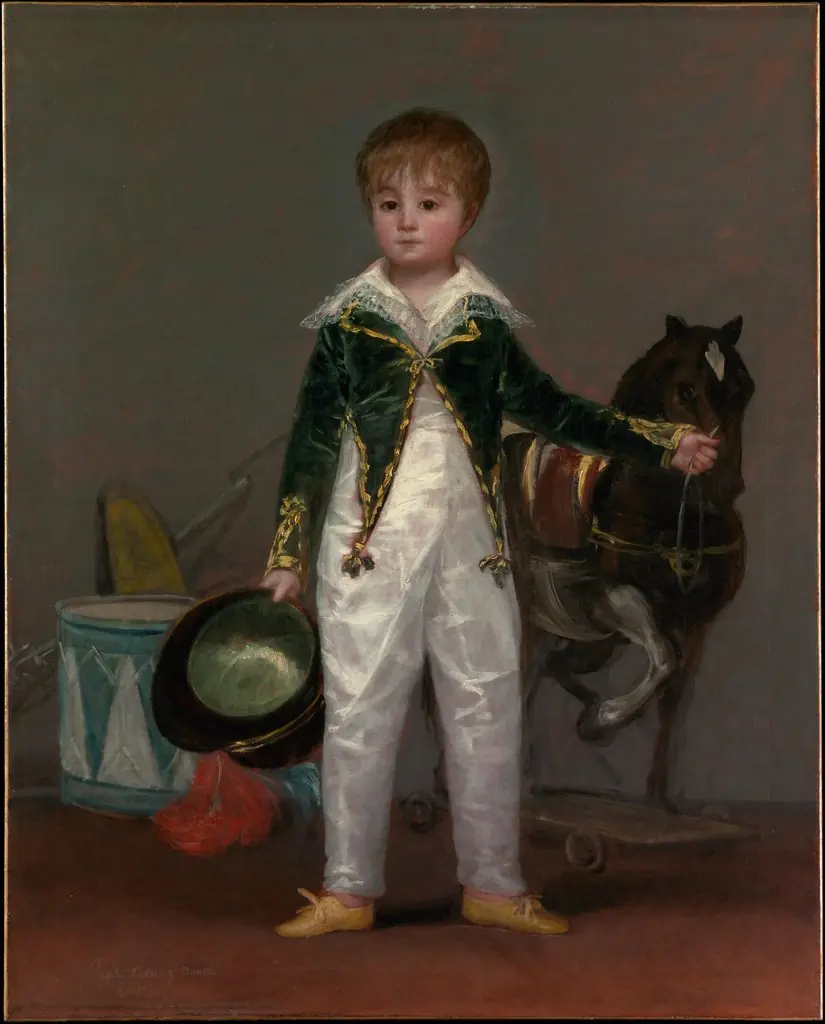
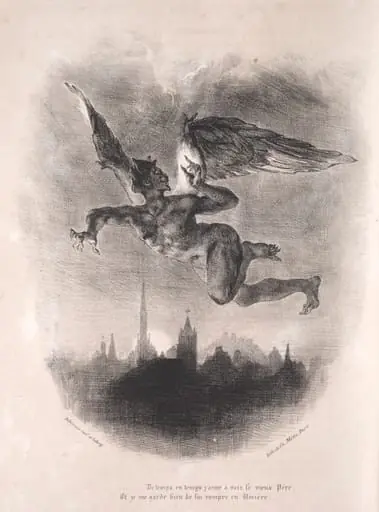 Illustrations for Faust: Méphistophélés in the air
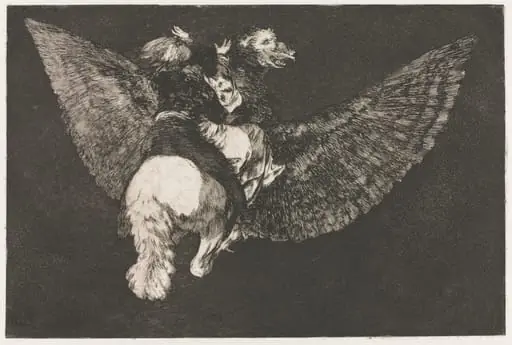 The Proverbs: Flying Folly
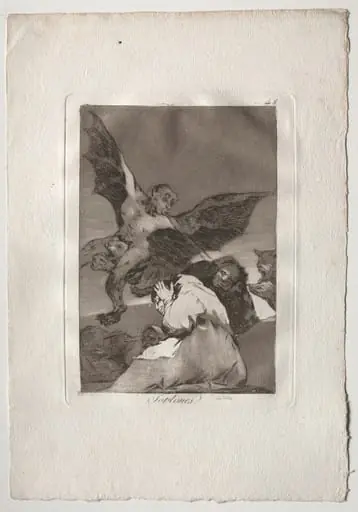 Tale-Bearers - Blasts of Wind, Plate 48
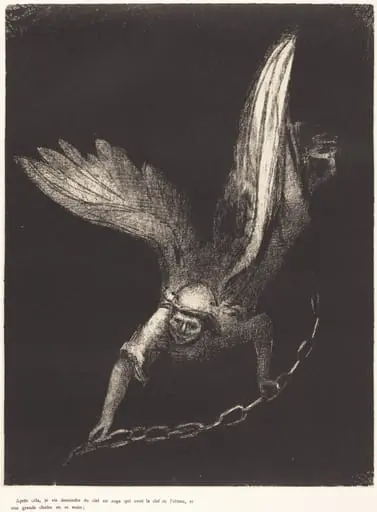 Apres cela je vis descendre du ciel un ange qui avait la clef de l'abime, et une grande chaine en sa main (And I saw an angel come down from heaven, having the key of the bottomless pit and a great chain in his hand)
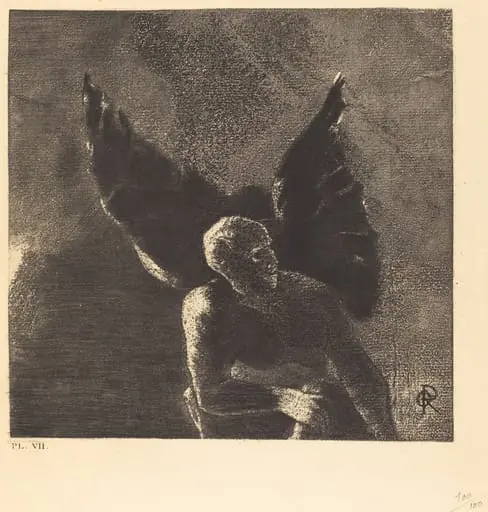 Gloire et louange a toi, satan, dans les hauteurs du ciel ou tu regnas, et dans les profondeurs de l'enfer, ou vaincu, tu reves en silence! (Glory and praise to you, Satan, in the heights of heaven, where you reigned, and in thedepths of hell, where, vanquished, you dream in s ilence!)
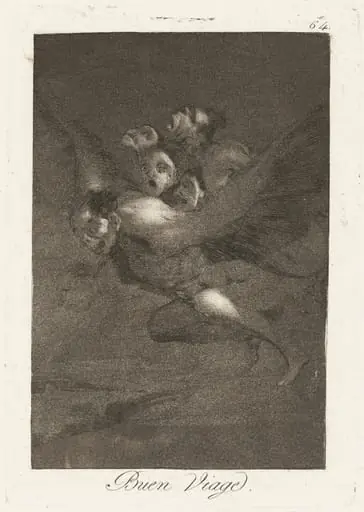 Buen Viage (Bon Voyage)
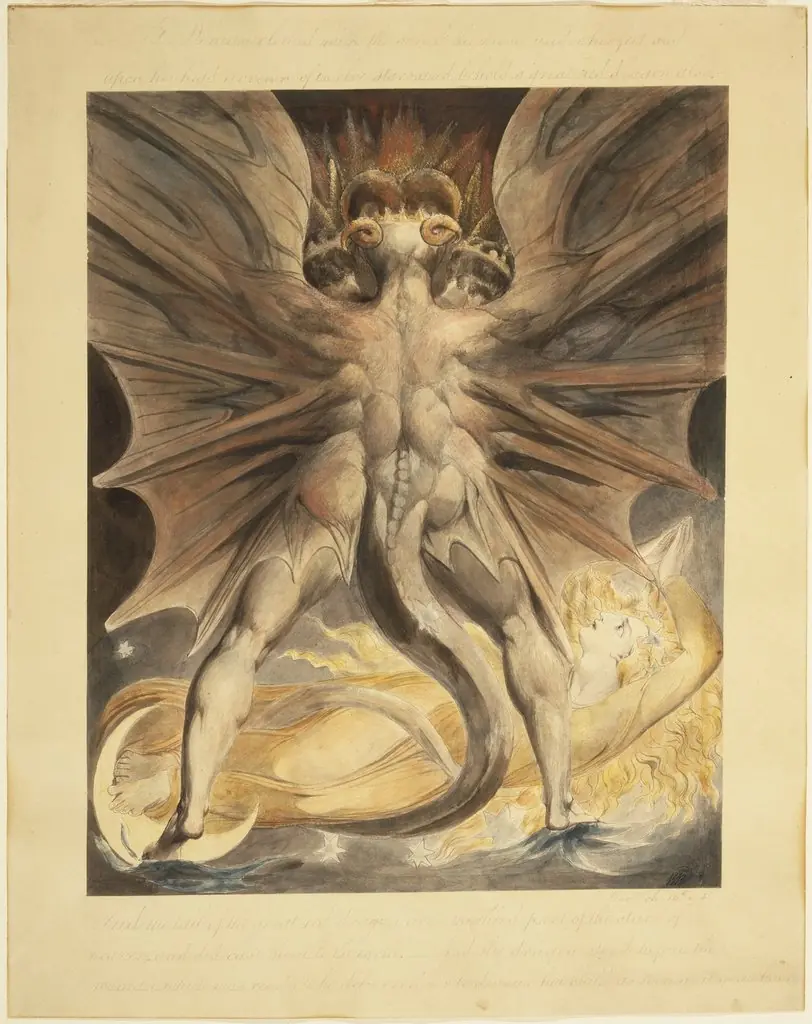 The Great Red Dragon and the Woman Clothed with the Sun (Rev. 12: 1-4)