Artwork
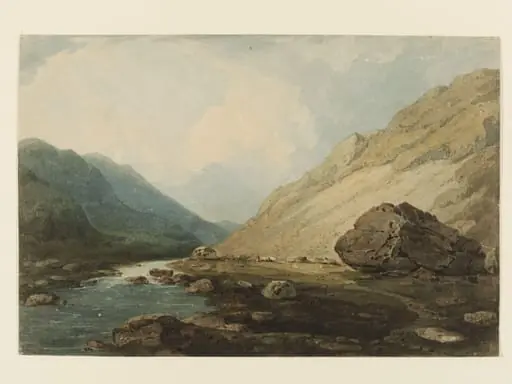
Raven Crag, Wythburn Water, Thirlmere
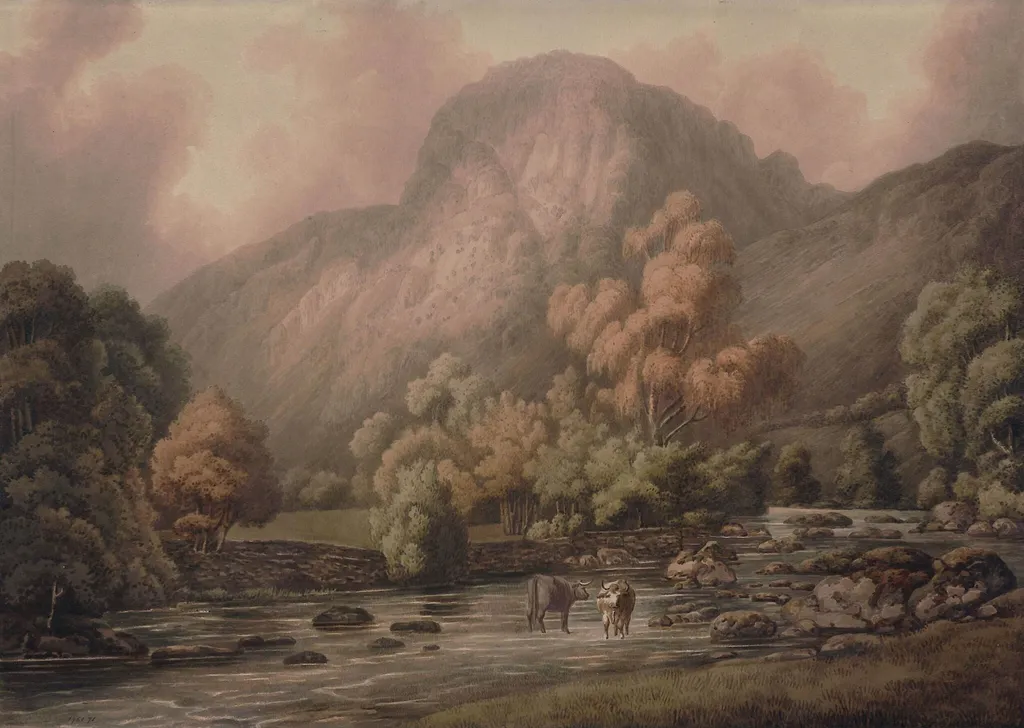
Raven Crag, Wythburn Water, Thirlmere is a watercolor work on paper by the British Romanticist artist William Green. It dates from 1808 and is held in the collection of the Victoria and Albert Museum.
About this work
Overview
Executed in delicate washes, the work bears the artist’s signature and date on the reverse, confirming its origin and timing.
William Green’s watercolour depicts a tranquil valley in the Lake District, centered on Raven Crag above Wythburn Water. The scene captures a quiet stretch of the river with two cows near its banks, framed by rolling hills and distant peaks. Executed in delicate washes, the work bears the artist’s signature and date on the reverse, confirming its origin and timing. No human figures appear, emphasizing solitude and natural stillness.
Subject & Meaning
The painting presents a pastoral landscape devoid of human activity, focusing instead on the quiet interaction between livestock and the natural environment. The cows, positioned at the water’s edge, suggest rural life without intrusion. The absence of people and the subdued tones convey a sense of calm endurance, reflecting an appreciation for the unaltered rhythms of the Lake District’s countryside.
Technique & Style
Green employed transparent watercolour washes to build subtle gradations of tone, capturing the softness of autumnal foliage and the reflective surface of the stream. Delicate brushwork defines the rocky contours of Raven Crag, while the sky and distant hills are rendered with minimal detail, enhancing depth. The palette is restrained—muted greens, browns, and greys—reinforcing the scene’s quiet, contemplative mood.
History & Provenance
The work is signed and dated by the artist on its reverse, a common practice for Green’s watercolours, which were often created as personal records or small-scale studies. Its survival suggests it was preserved within a private collection, likely by someone familiar with the Lake District’s landscape traditions. No public exhibition history is recorded, indicating it remained outside the mainstream art market of its time.
Context
Created during a period when British artists increasingly turned to regional landscapes for inspiration, this piece aligns with the tradition of topographical watercolour painting. While not part of the Romantic movement’s dramatic sublime, it shares its reverence for nature’s quiet beauty. Green’s focus on local scenery reflects a growing interest in documenting the English countryside with observational precision.
Legacy
Though not widely exhibited or reproduced, Green’s watercolour contributes to a body of work that records the Lake District’s rural character in the 19th century. Its understated composition and attention to atmospheric detail offer insight into how lesser-known artists engaged with landscape beyond the grand narratives of their contemporaries. The piece remains a quiet testament to regional observation in British watercolour.
Artist & collection
Artist
William Green painted quiet landscapes in watercolour, specializing in the English Lake District.

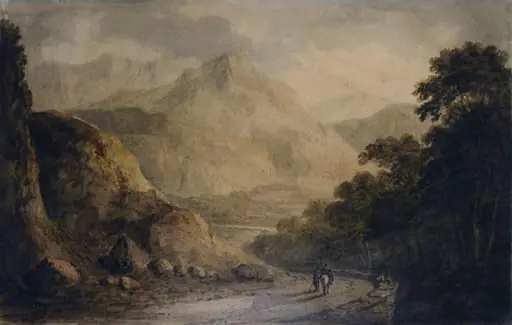 Road leading to Pont Aberglaslyn: View looking into the Vale of Festiniog, North Wales
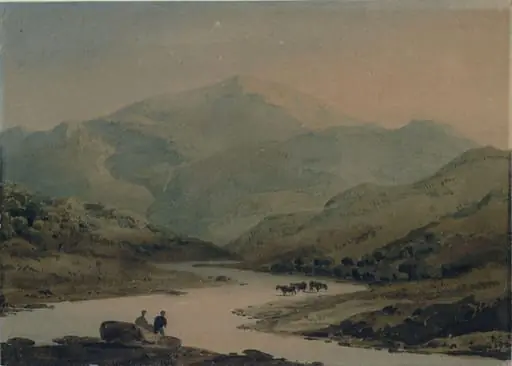 River scene: cattle in shallows
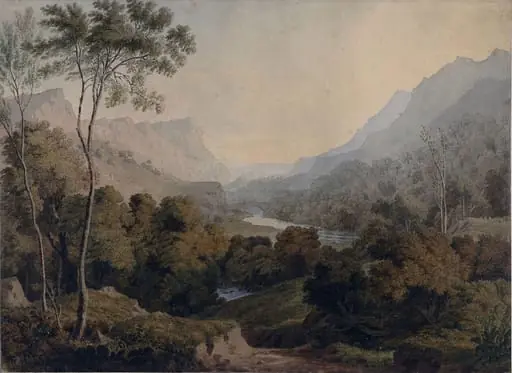 View on the Conwy, near Llanwrstm, Carnarvonshire
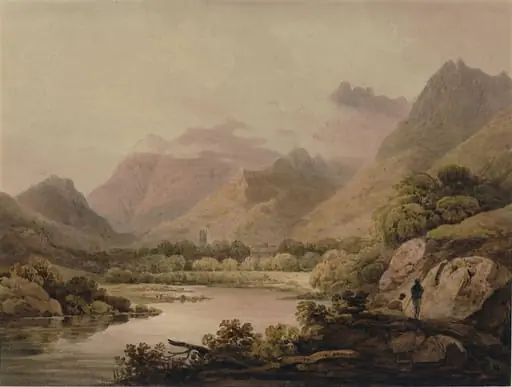 Ghirimeer on the Upper Lake of Killarney
![Landscape View [?in North Wales], by John Glover](https://artifactworldgallery.com/img/john-glover--landscape-view-in-north-wales--a6780e3d0b73ec67-w320.webp) Landscape View [?in North Wales]
Landscape View [?in North Wales]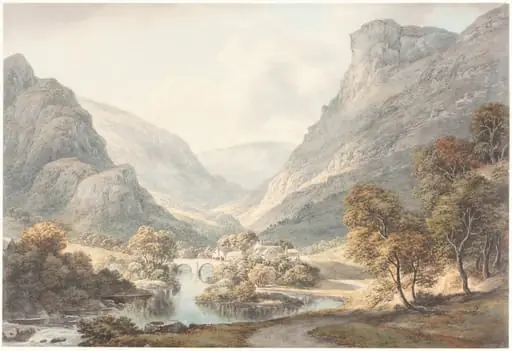 A View of Dovedale
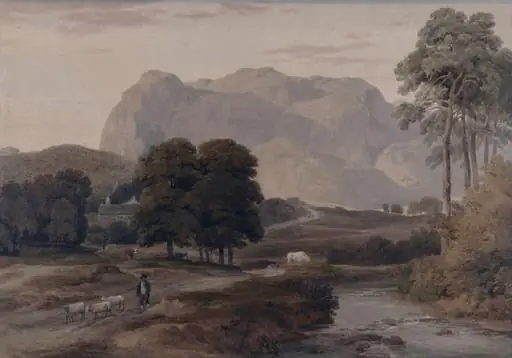 Landscape with Mountains
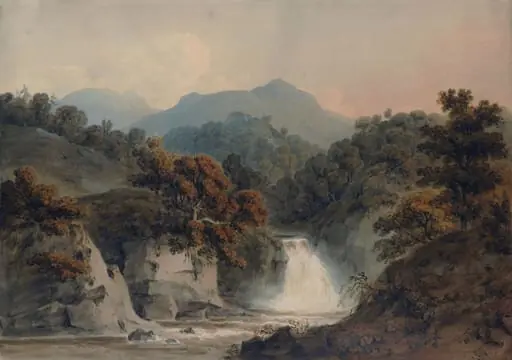 View on the Bran
 View in the Pass of Llanberis, Wales
 View of Braemar