Artwork
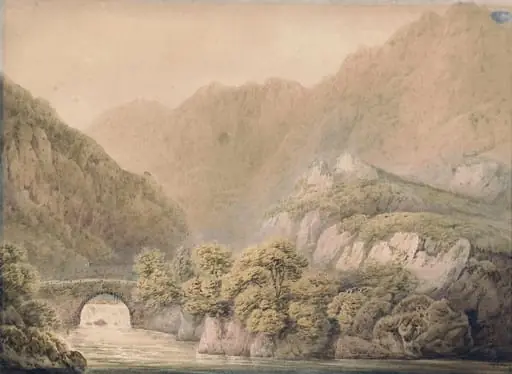
View on the Conwy, near Llanwrstm, Carnarvonshire
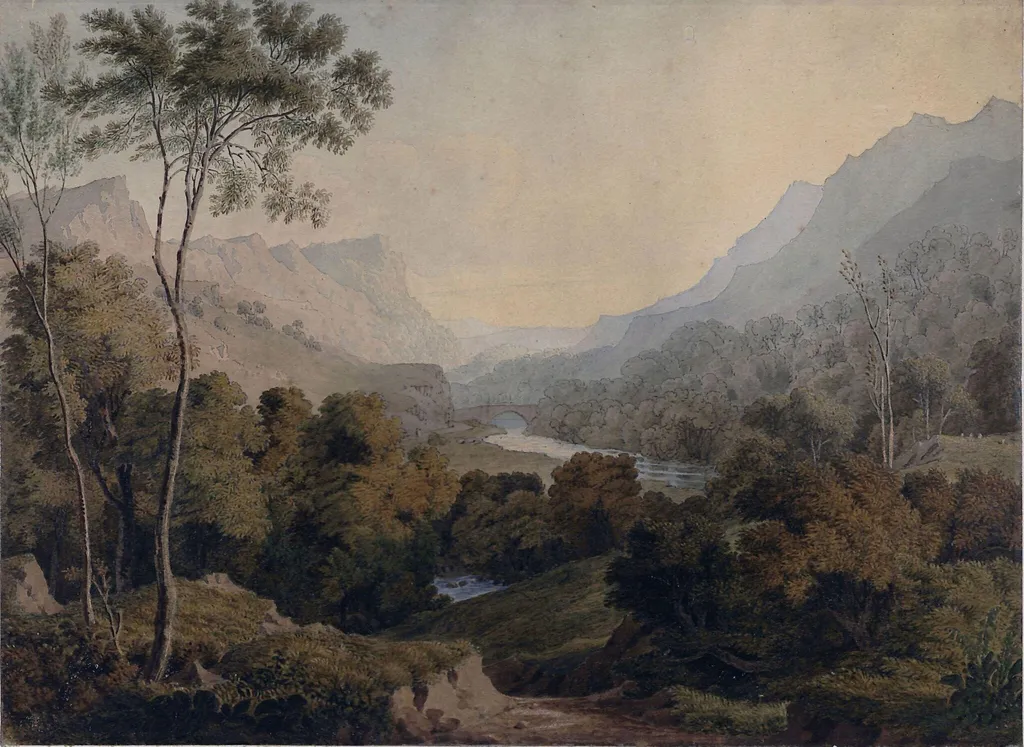
View on the Conwy, near Llanwrstm, Carnarvonshire is a watercolor work on paper by William of Oxford Turner. It dates from 1850 and is held in the collection of the Victoria and Albert Museum. This watercolour portrays a quiet stretch of the Conwy River in north Wales, near Llanwrst.
About this work
Overview
This watercolour portrays a quiet stretch of the Conwy River in north Wales, near Llanwrst. The scene unfolds with gentle topography—rolling hills, dense foliage, and a distant bridge—rendered in soft, atmospheric tones. The composition emphasizes stillness, with no human figures or overt activity, allowing the natural environment to dominate the visual narrative.
Subject & Meaning
The subject is a tranquil rural landscape, unaltered by industrial presence. The river, framed by trees and low hills, suggests a place of quiet endurance. The bridge, faintly visible in the distance, hints at human passage without intrusion. The absence of dramatic elements reinforces a contemplative mood, aligning with 19th-century ideals of nature as a refuge from urban life.
Technique & Style
Executed in watercolour, the work employs layered washes to achieve subtle gradations of light and texture. Greens, browns, and greys are blended delicately, creating a hazy, diffused atmosphere. Foreground vegetation is rendered with precise brushwork, contrasting with the softer, more diffuse treatment of distant hills and sky, enhancing spatial depth through tonal modulation.
History & Provenance
The painting is attributed to William Turner of Oxford, a lesser-known contemporary of J.M.W. Turner, active in the early 1800s. It likely originated as a topographical study, possibly made during sketching tours of Wales. Its survival suggests it was retained within private collections, though its early ownership remains undocumented.
Context
Created during a period when Welsh landscapes were increasingly studied by artists seeking authentic natural scenes, this work reflects a broader trend of topographical watercolour painting. Unlike grand Romantic vistas, it favors intimacy and restraint, aligning with regional artistic practices that valued observation over dramatic interpretation.
Legacy
Though not widely exhibited or reproduced, the painting contributes to the corpus of early 19th-century Welsh landscape watercolours. It offers insight into the quiet, observational approach of provincial artists who documented rural Britain with precision and calm, preserving a visual record of landscapes before widespread industrial change.
Artist & collection
Artist
Turner of Oxford painted quiet English landscapes in watercolour. He framed Wychwood Forest’s tangled oaks and Loch Esteltre’s glassy water with the same careful strokes, catching light on trees and distant spires. See…

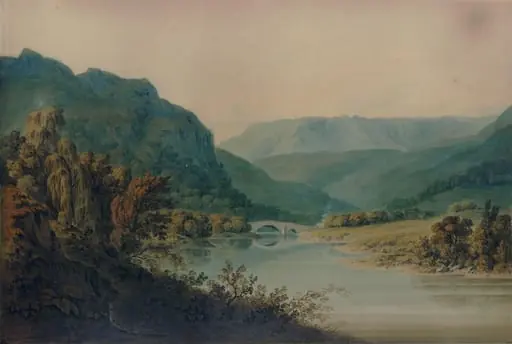 View of Braemar
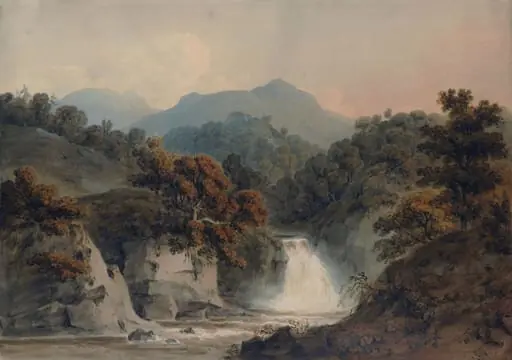 View on the Bran
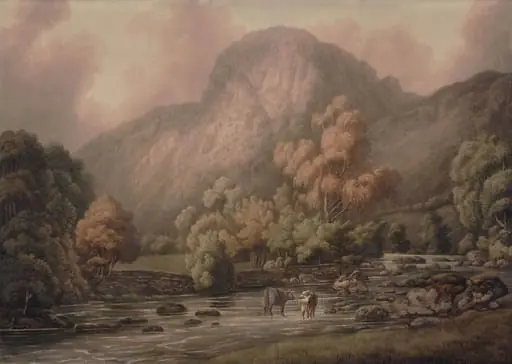 Raven Crag, Wythburn Water, Thirlmere
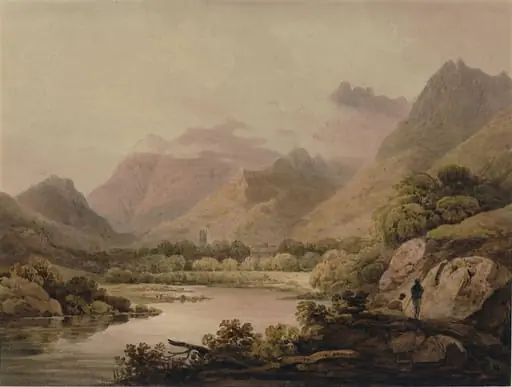 Ghirimeer on the Upper Lake of Killarney
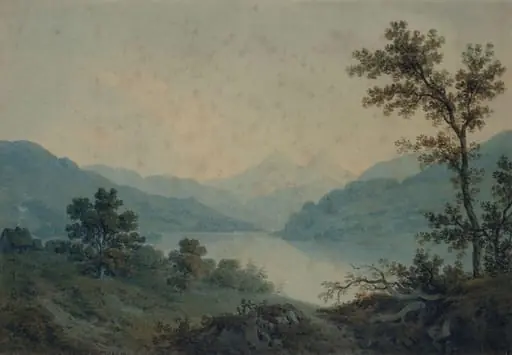 Lake or river scene in the Scottish Highlands
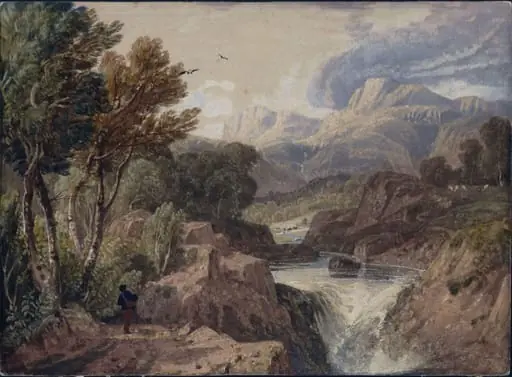 Landscape
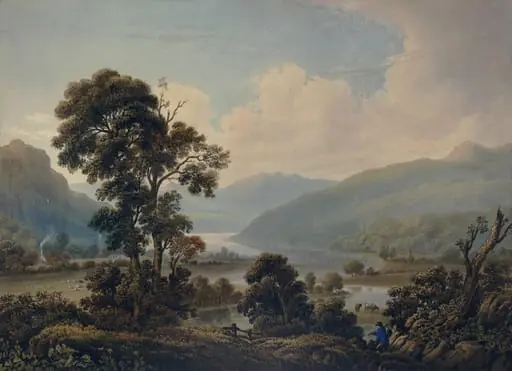 Landscape wih River and Mountains
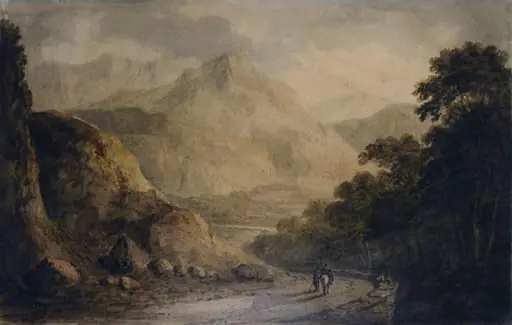 Road leading to Pont Aberglaslyn: View looking into the Vale of Festiniog, North Wales
 Pont Aberglaslyn, North Wales
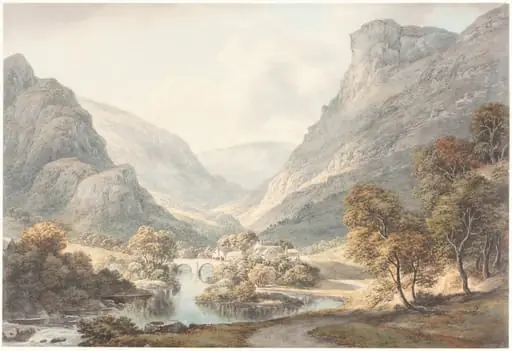 A View of Dovedale