Artwork
Vedere din Londra
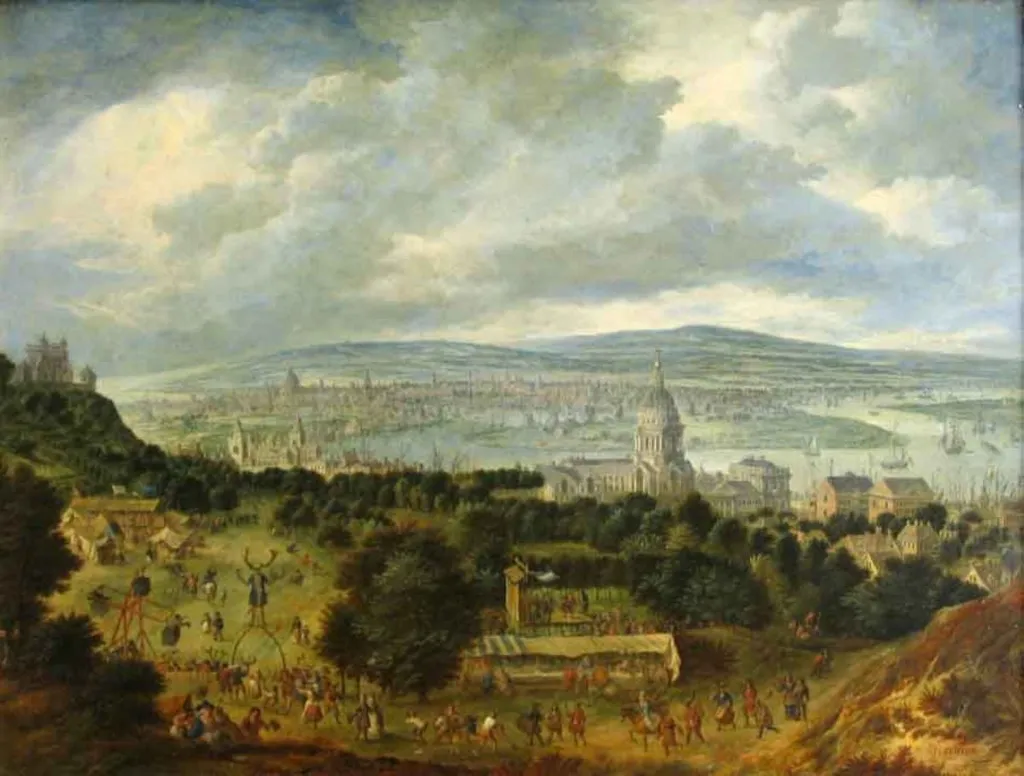
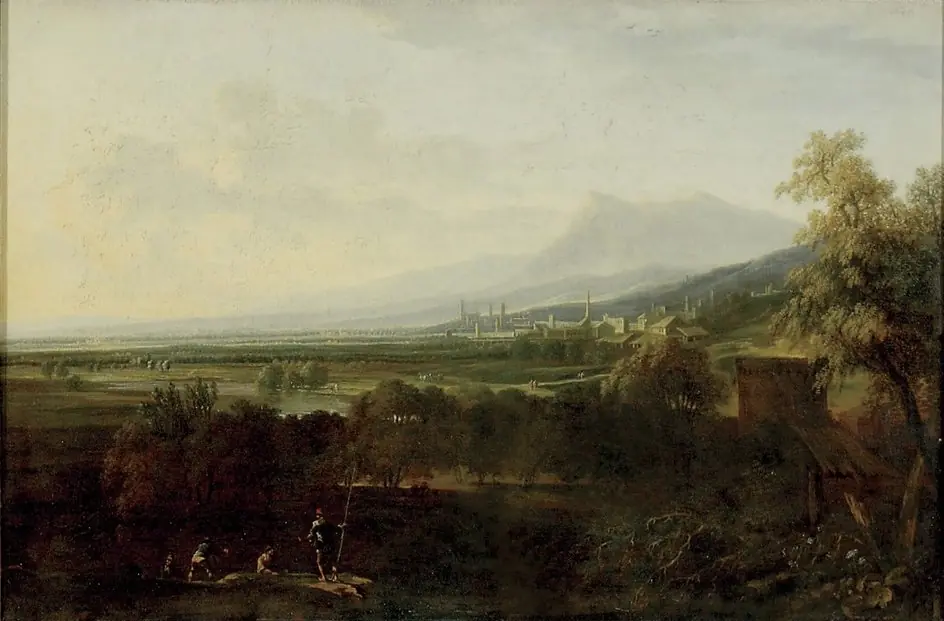
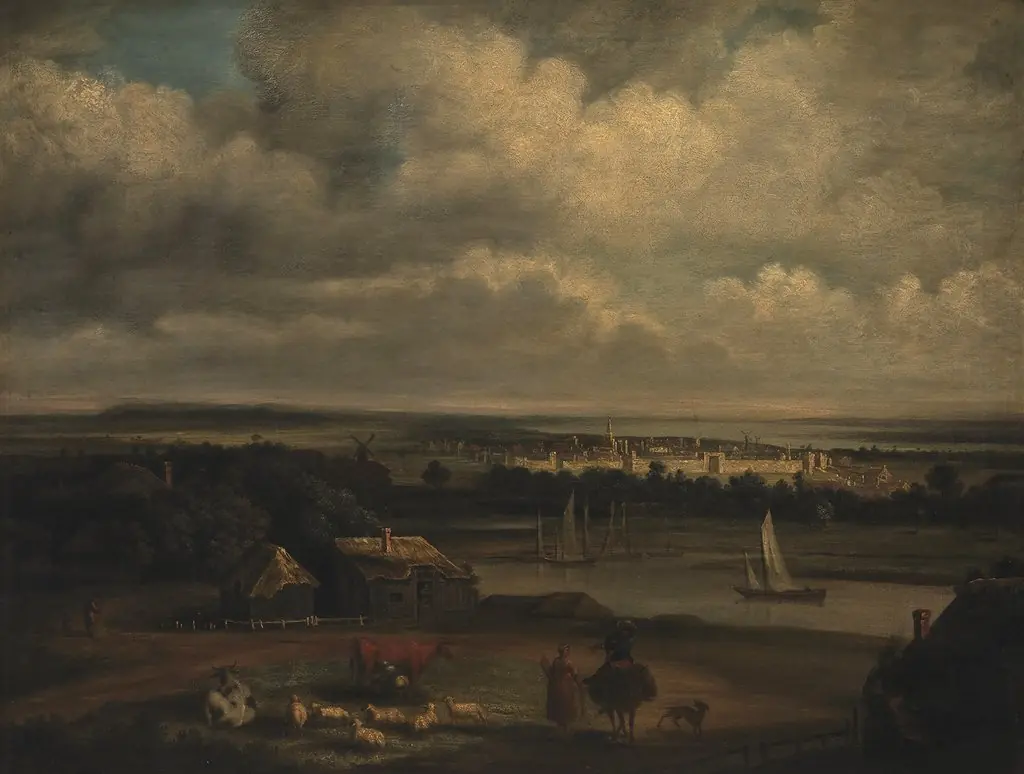
Vedere din Londra is an unspecified painting by the Baroque artist Jan I Griffier. It is held in the collection of the Brukenthal National Museum. This image depicts a rural landscape with a distant urban skyline, framed by rolling hills and dense trees.
About this work
Overview
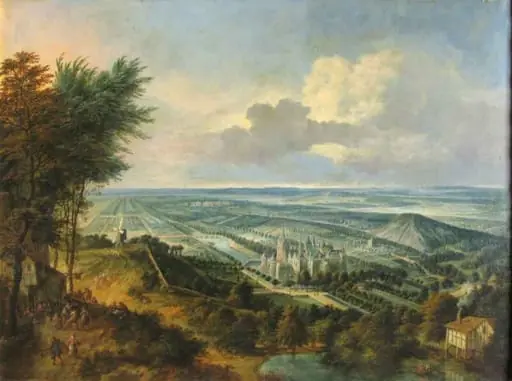
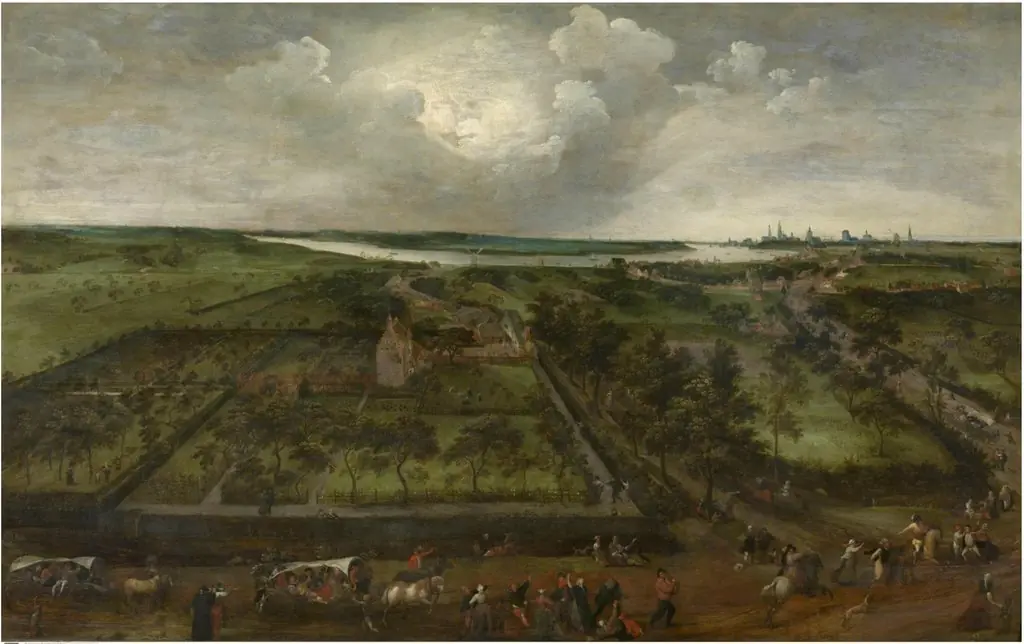
This image depicts a rural landscape with a distant urban skyline, framed by rolling hills and dense trees. Figures are scattered across a field, suggesting daily activity, while boats move across a broad stretch of water. The overcast sky lends a subdued tone, and the composition balances natural elements with signs of human presence, evoking a quiet sense of motion rather than grand spectacle.
Subject & Meaning
The scene captures a moment of ordinary life—people in a field, vessels on water, and a city on the horizon. There is no overt narrative, but the arrangement implies a connection between rural labor and urban centers. The atmosphere is neither celebratory nor melancholic; it presents daily existence as a quiet, ongoing rhythm, grounded in the physical world.
Technique & Style
The painting employs soft, blended brushwork to render atmospheric perspective, with lighter tones receding into the distance.
The painting employs soft, blended brushwork to render atmospheric perspective, with lighter tones receding into the distance. Foreground elements are more defined, while the city and water dissolve into hazy layers. The palette is muted, dominated by grays and earth tones, reinforcing the overcast mood. Compositionally, the scene unfolds diagonally, guiding the eye from foreground figures toward the distant horizon.
History & Provenance
The work is attributed to Jan Griffier I, a Dutch painter active in England during the late 17th century. His landscapes often combined Dutch compositional traditions with English topographical interests. This piece likely originated in the period when Griffier was producing views of the Thames and surrounding countryside, though its exact provenance remains undocumented.
Context
Created during a time when English landowners commissioned landscape views to assert ownership and taste, Griffier’s work reflects a broader European trend of depicting nature as both picturesque and inhabited. His paintings bridged Dutch realism and emerging English sensibilities, offering viewers a familiar yet idealized vision of the countryside near London.
Legacy
Jan Griffier I’s landscapes contributed to the development of topographical painting in England, influencing later artists who sought to document the land with observational accuracy. Though not widely celebrated today, his work remains a quiet record of how 17th-century viewers perceived their environment—not as sublime, but as lived-in and continuous.
Artist & collection
Artist
Jan Griffier painted quiet, detailed scenes of landscapes and city views in the late 1600s.