Artwork
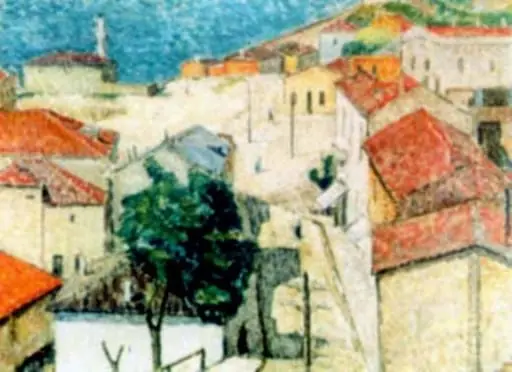
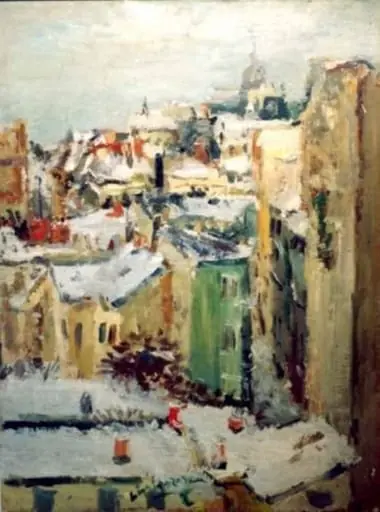
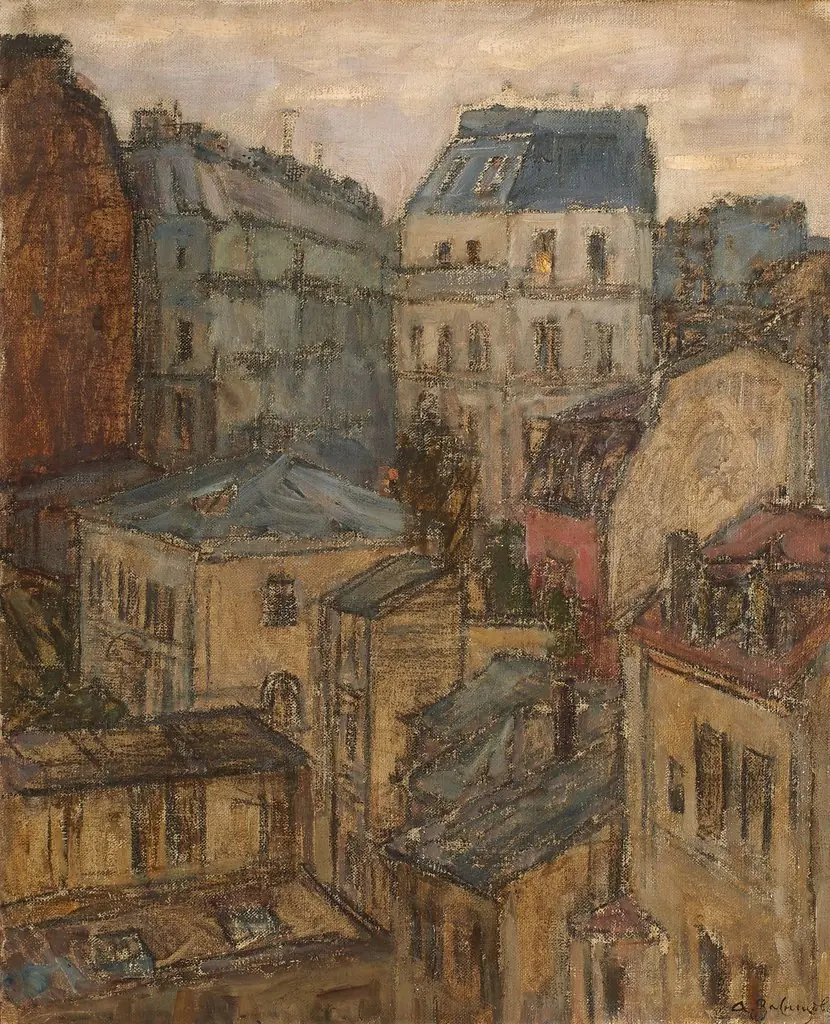
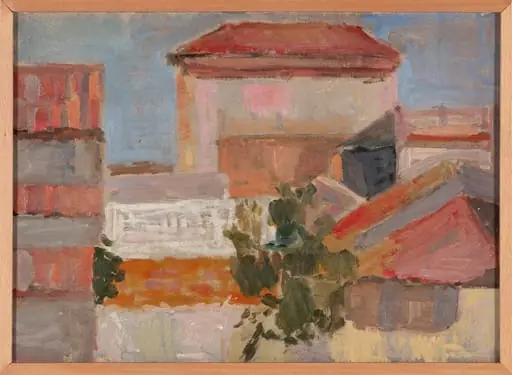
Acoperișuri din Strada Mihai Eminescu
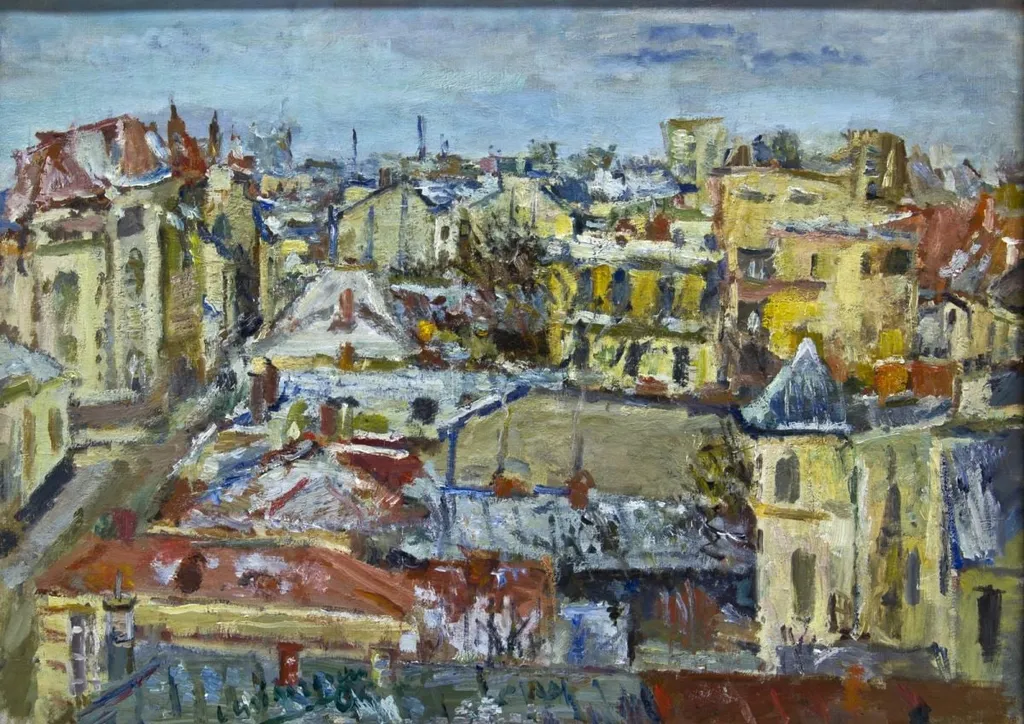
Acoperișuri din Strada Mihai Eminescu is a print by Lucian Grigorescu. It dates from 1942 and is held in the collection of the National Museum of Art of Romania.
About this work
Overview
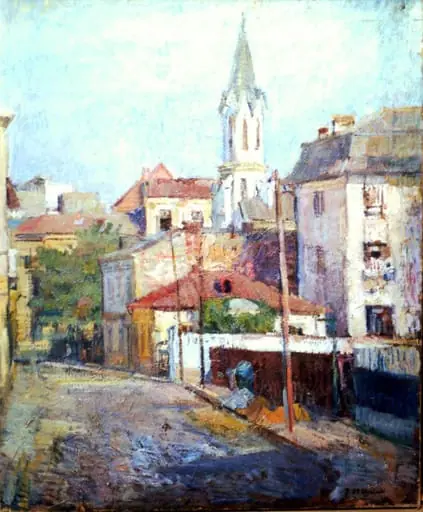
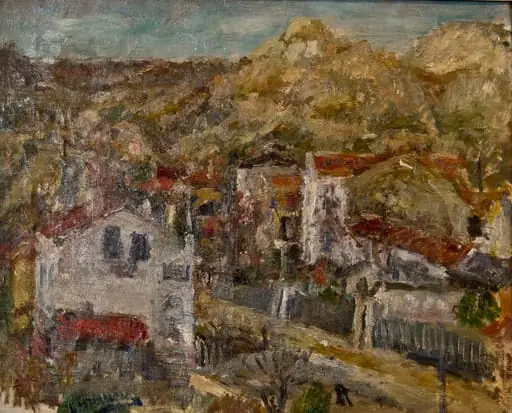
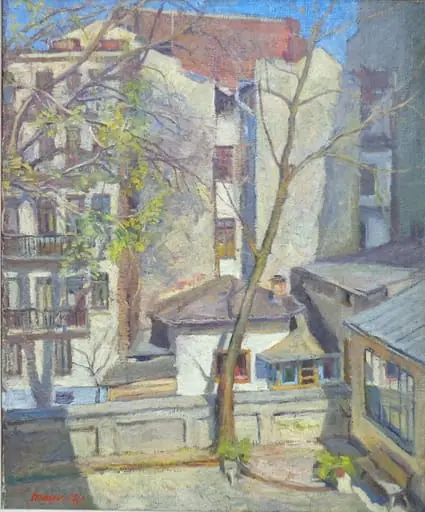
Painted in 1942 by Romanian artist Lucian Grigorescu, this work captures a dense urban landscape along Mihai Eminescu Street in Bucharest.
Painted in 1942 by Romanian artist Lucian Grigorescu, this work captures a dense urban landscape along Mihai Eminescu Street in Bucharest. Grigorescu, active during the mid-20th century, focused on ordinary cityscapes rather than grand historical or mythological themes. The painting reflects his post-impressionist approach, emphasizing texture and color over precise detail, and aligns with his broader interest in the rhythms of everyday life in interwar Romania.
Subject & Meaning
The scene presents a crowded view of residential rooftops, arranged in a chaotic yet harmonious composition. Named after Romania’s national poet, the street grounds the image in cultural memory, though the painting avoids direct reference to literature. Instead, it conveys the quiet persistence of urban life—buildings pressed together, weathered and worn, suggesting the quiet dignity of ordinary spaces amid rapid social change.
Technique & Style
Grigorescu employed thick, deliberate brushstrokes to build the rooftops and walls, using impasto to create a tactile surface. Warm hues of ochre, rust, and terracotta dominate, punctuated by patches of white and gray. The paint is applied with visible energy—some areas appear roughly layered, others scraped or dragged. This unpolished handling rejects academic refinement, favoring emotional resonance and physical presence over illusionistic depth.
History & Provenance
Created during World War II, the painting emerged from a period of political tension and cultural introspection in Romania. Grigorescu, who studied locally and later received recognition from the Romanian Academy in 1948, maintained a quiet, consistent practice focused on domestic subjects. This work likely remained in private hands until entering public collections, reflecting its modest scale and non-propagandistic nature during a time when state-sponsored art favored monumental themes.
Context
In 1940s Romania, urban modernization was reshaping historic neighborhoods, yet many artists turned inward, documenting the textures of daily existence. Grigorescu’s focus on rooftops aligns with a broader trend among Romanian post-impressionists who sought to capture the soul of the city through intimate, unidealized views. His work stood apart from official realism, offering instead a personal, sensory response to the built environment.
Legacy
Though not widely exhibited internationally, Grigorescu’s urban scenes remain significant within Romanian art history for their honest portrayal of mid-century life. His technique influenced later generations of local painters who valued expressive brushwork over academic precision. Today, *Acoperișuri din Strada Mihai Eminescu* is recognized as a quiet testament to the resilience of everyday spaces, preserved through pigment and gesture.
Artist & collection
Artist
Lucian Grigorescu (Romanian pronunciation: ; 1 February 1894, Medgidia – 28 October 1965, Bucharest) was a Romanian post-impressionist painter.