Artwork
Natură moartă
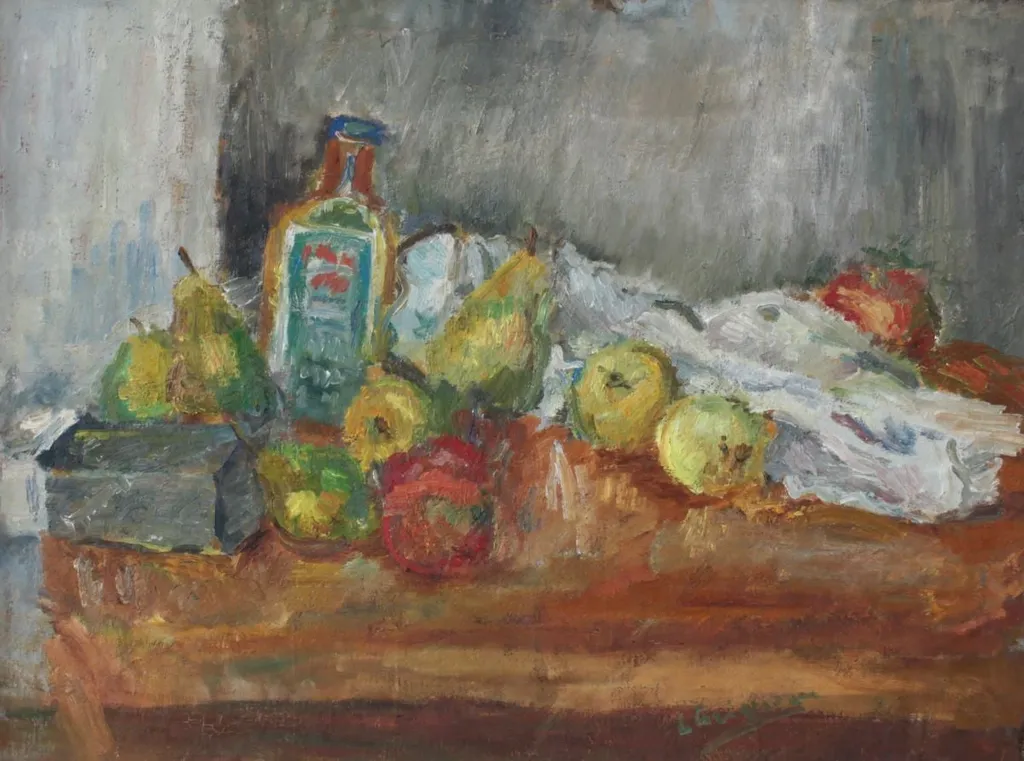
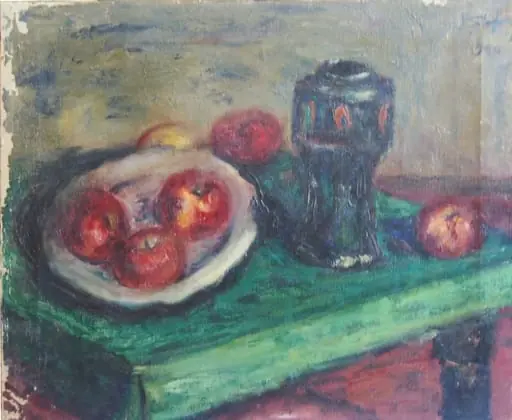
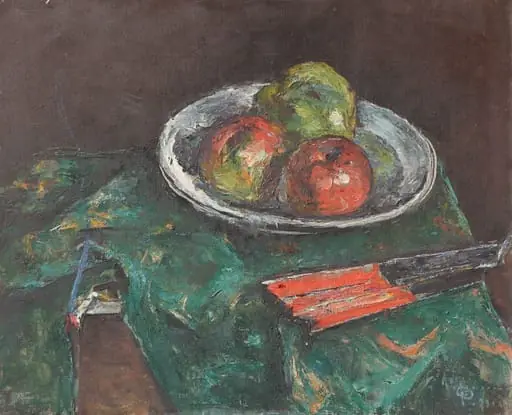
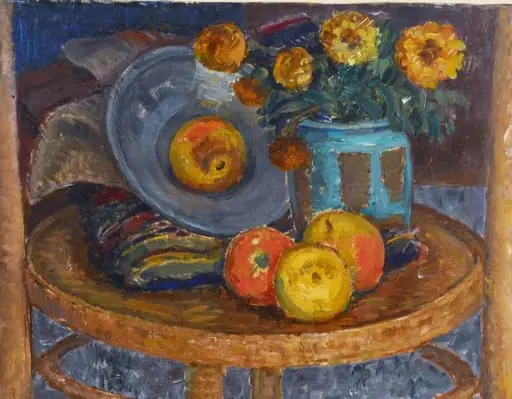
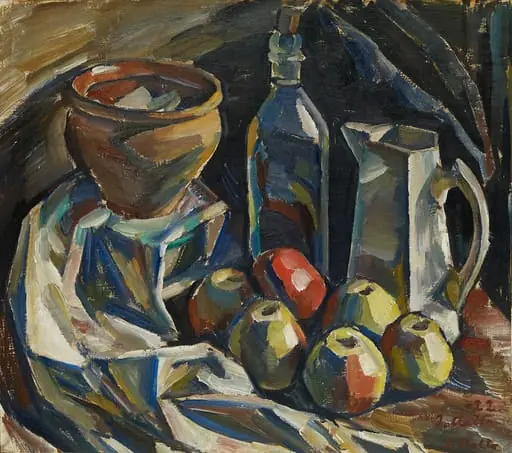
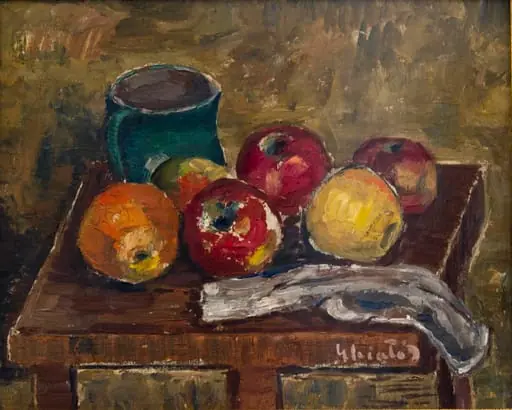
Natură moartă is a print by Lucian Grigorescu. It dates from 1939 and is held in the collection of the Art Museum of Constanta.
About this work
Overview
Its composition centers on everyday objects arranged with deliberate simplicity, avoiding theatricality in favor of intimate presence.
Lucian Grigorescu painted *Natură moartă* circa 1939, during a period of quiet experimentation in Romanian modernism. The work belongs to the Museum of Ethnography’s collection and reflects the artist’s engagement with post-impressionist principles, emphasizing sensory observation over narrative. Its composition centers on everyday objects arranged with deliberate simplicity, avoiding theatricality in favor of intimate presence.
Subject & Meaning
The still life includes green pears, yellow apples, a red tomato, a bottle with a blue label, a cloth draped along the table’s edge, and a small jar. These items carry no symbolic weight beyond their material presence; their value lies in their ordinary, tangible reality. The arrangement suggests a momentary pause, as if the scene was captured mid-day, untouched by human intervention yet imbued with the quiet rhythm of domestic life.
Technique & Style
Grigorescu employed loose, varied brushwork—some strokes thick and textured, others softly blended—to model form through color and light rather than line. The palette favors warm hues against a subdued background, enhancing the luminosity of the fruit and vessel. The surface reveals the artist’s hand: areas of impasto contrast with smoother passages, creating a tactile rhythm that invites closer inspection without demanding grandeur.
History & Provenance
Painted in the late 1930s, the work entered the Museum of Ethnography’s holdings in the decades following its creation. Grigorescu, who studied in Constanța and was later named a corresponding member of the Romanian Academy in 1948, maintained a modest public profile. The painting’s preservation within a cultural institution reflects its recognition as a representative example of interwar Romanian still-life practice, though it never achieved widespread public prominence.
Context
In 1939 Romania, artistic movements were shifting between traditional realism and modernist experimentation. Grigorescu’s approach aligned with regional post-impressionist trends, emphasizing personal perception over academic convention. While European avant-gardes pursued abstraction or distortion, his work retained a grounded, observational quality, resonating with local sensibilities that valued quiet dignity in the commonplace.
Legacy
Though not widely exhibited beyond Romania, *Natură moartă* remains a quiet reference point in studies of interwar Romanian painting. Its restrained composition and tactile brushwork exemplify how local artists adapted broader modernist ideas without abandoning their immediate visual world. The work continues to inform discussions on the role of still life in national art, valued for its sincerity rather than its innovation.
Artist & collection
Artist
Lucian Grigorescu (Romanian pronunciation: ; 1 February 1894, Medgidia – 28 October 1965, Bucharest) was a Romanian post-impressionist painter.