Artwork
Vechi cartier din București
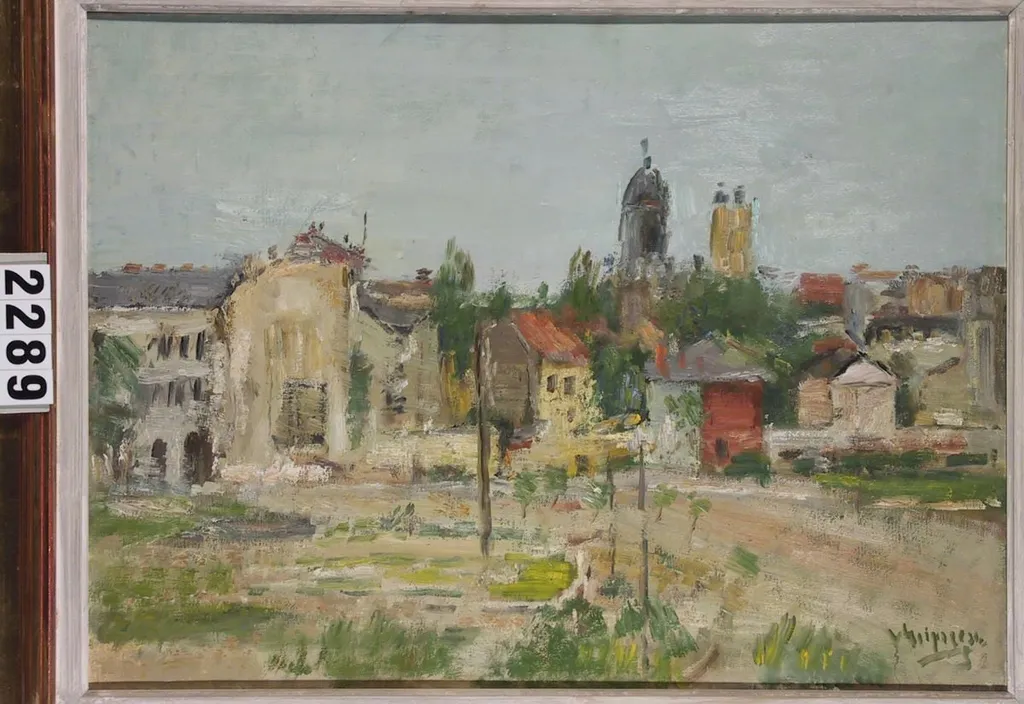
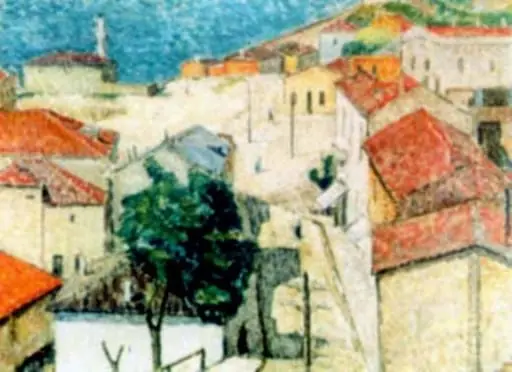
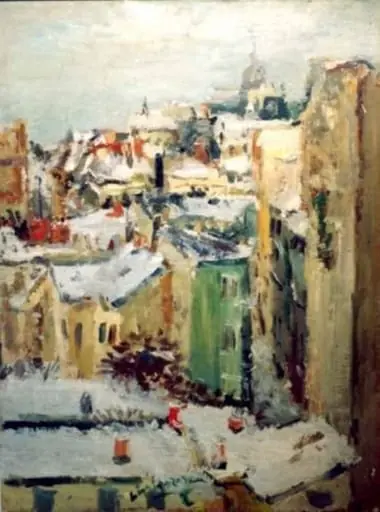
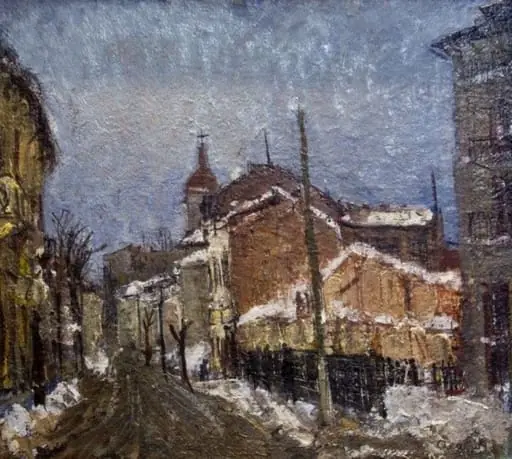
Vechi cartier din București is a print by Lucian Grigorescu. It dates from 1939 and is held in the collection of the Brukenthal National Museum.
About this work
Overview
A Romanian post-impressionist active in the early 20th century, he focused on urban and rural landscapes with a restrained palette and deliberate composition.
Lucian Grigorescu painted *Vechi cartier din București* circa 1939, capturing a quiet corner of Bucharest’s historic neighborhoods. A Romanian post-impressionist active in the early 20th century, he focused on urban and rural landscapes with a restrained palette and deliberate composition. This work reflects his sustained interest in the changing face of Romanian cities, rendered without dramatic action or human presence.
Subject & Meaning
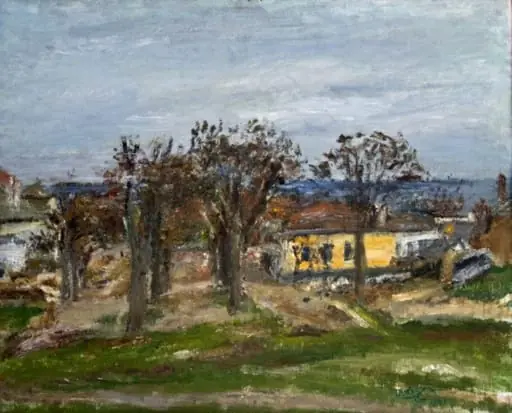
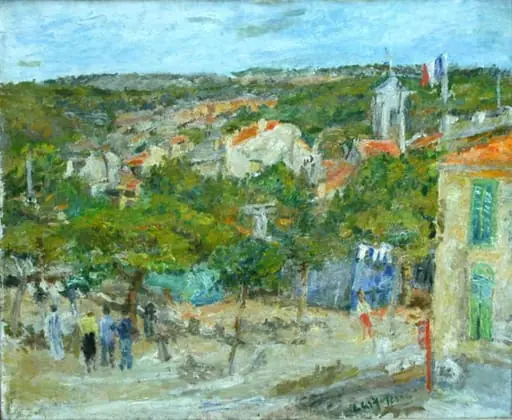
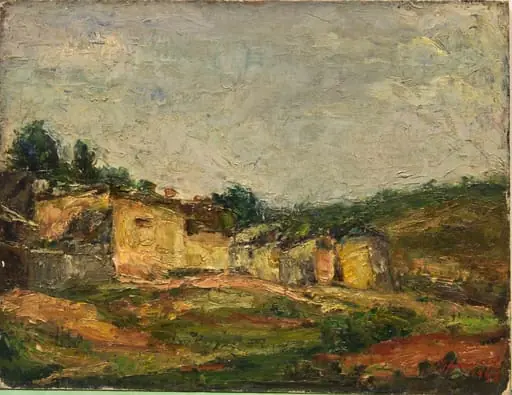
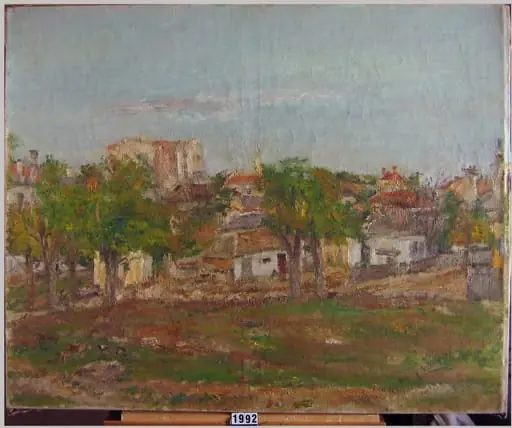
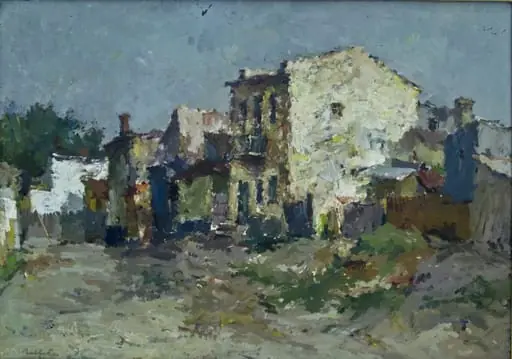
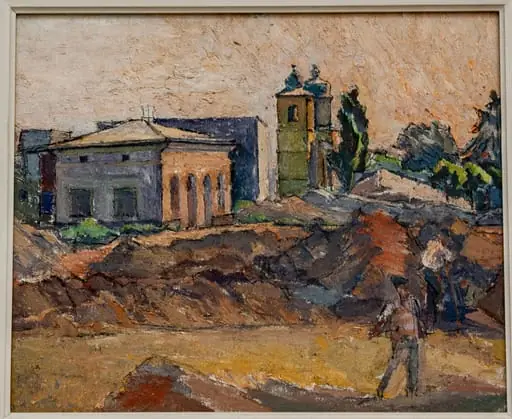
The painting portrays an aging district of Bucharest, featuring modest buildings and a distant church spire. The absence of people and vehicles emphasizes solitude and time’s passage. Rather than documenting architecture for its historical value, Grigorescu conveys a mood of stillness, suggesting contemplation over nostalgia. The scene feels suspended, neither bustling nor decayed—merely existing in quiet endurance.
Technique & Style
Grigorescu employed soft, muted tones—browns, grays, and dull greens—to unify the composition. Brushwork is deliberate but not expressive; forms are simplified yet grounded in observed reality. Perspective is carefully constructed, guiding the eye from foreground trees toward the receding buildings and steeple. The lack of sharp detail enhances the atmospheric calm, aligning with post-impressionist tendencies toward emotional tone over literal representation.
History & Provenance
Created in 1939, the painting emerged during a period of cultural consolidation in Romania, as artists sought to define national identity through local subjects. Grigorescu, who studied in Bucharest and later became a corresponding member of the Romanian Academy in 1948, maintained a consistent focus on domestic scenes. The work’s early provenance is undocumented, but it likely remained within Romanian collections after its completion.
Context
In the late 1930s, Bucharest was undergoing modernization, prompting artists like Grigorescu to record older quarters before they vanished. His work stood apart from both academic realism and avant-garde abstraction, occupying a middle ground that valued quiet observation. This painting reflects a broader trend among Romanian painters to find dignity in the ordinary, resisting both romanticization and industrial progress.
Legacy
Grigorescu’s *Vechi cartier din București* contributes to a modest but enduring body of Romanian post-impressionist urban imagery. While not widely exhibited internationally, it remains significant within national art history for its restrained emotional tone and sensitivity to architectural memory. His approach influenced later generations who sought to portray Romania’s changing landscapes without sentimentality or spectacle.
Artist & collection
Artist
Lucian Grigorescu (Romanian pronunciation: ; 1 February 1894, Medgidia – 28 October 1965, Bucharest) was a Romanian post-impressionist painter.