Artwork
Casa pictorului la Câmpina
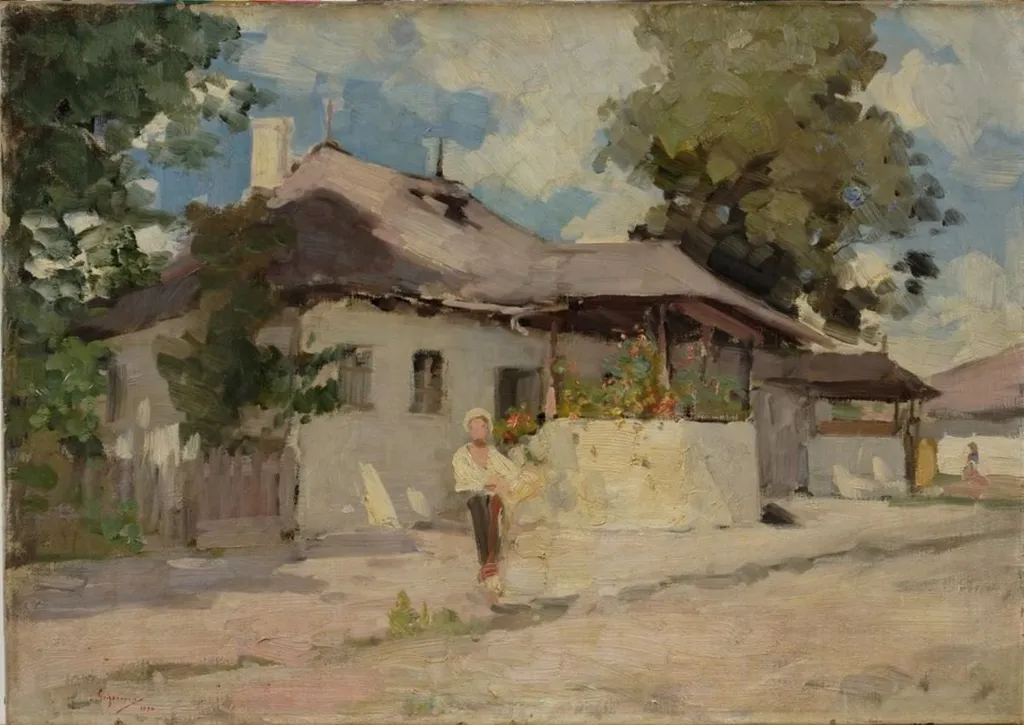
Casa pictorului la Câmpina is a print by Nicolae Grigorescu. It dates from 1850 and is held in the collection of the National Museum of Art of Romania.
About this work
Overview
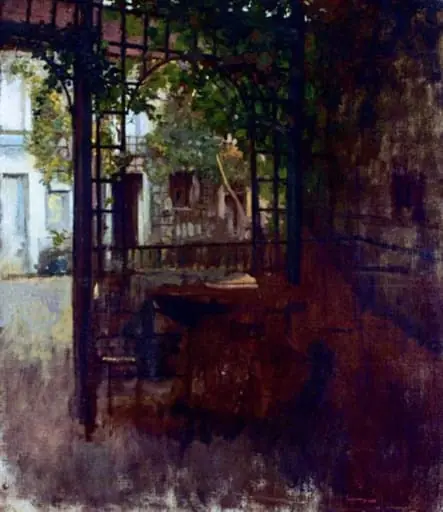
The scene is quiet and unembellished, focusing on a simple house with a brown roof and whitewashed walls, set against a soft sky.
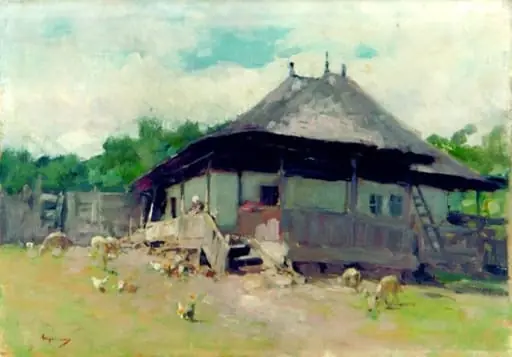
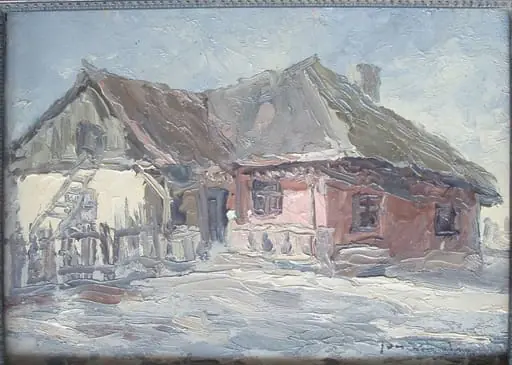
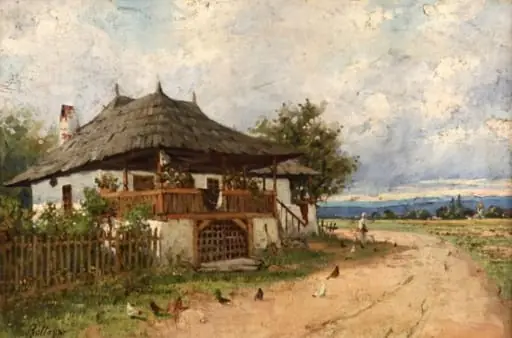
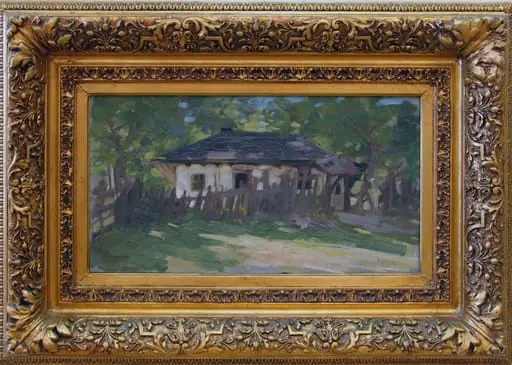
Painted around 1850 by Nicolae Grigorescu, this work depicts a modest rural dwelling in Câmpina, Romania. The scene is quiet and unembellished, focusing on a simple house with a brown roof and whitewashed walls, set against a soft sky. A figure stands near the entrance, engaged with an object in his hand, while scattered items lie at his feet. The composition conveys a sense of stillness and everyday life, characteristic of Grigorescu’s early interest in rural subjects.
Subject & Meaning
The painting captures a moment of quiet contemplation in a peasant household. The man, dressed in plain attire, appears absorbed in an object—perhaps a tool or personal item—suggesting a pause in labor. The flowers on the porch and the tree nearby hint at domestic care and connection to the land. The scene avoids drama, instead honoring the dignity of ordinary rural existence, reflecting a nascent interest in authentic peasant life over idealized narratives.
Technique & Style
Grigorescu employs loose, observational brushwork with muted earth tones and soft atmospheric effects. The white walls and blue sky are rendered with subtle gradations, avoiding sharp outlines. The tree’s foliage is suggested with dabs of green, while the ground and porch are textured with minimal detail. The style is direct and unpretentious, aligning with early realist tendencies in Romanian art, prioritizing light and mood over polished finish.
History & Provenance
The painting was created during Grigorescu’s formative years, before his formal training in Paris. It likely stems from his time spent in the Câmpina region, where he observed rural life firsthand. The work remained in Romanian collections and was later transferred to the Museum of Ethnography, where it is preserved as part of the nation’s early modern artistic heritage, documenting domestic architecture and daily routines of the mid-19th century.
Context
In the 1850s, Romanian art was shifting from academic traditions toward local themes. Grigorescu, influenced by French realism and his own rural surroundings, began documenting peasant life with empathy rather than sentimentality. This painting reflects a broader cultural movement to record vernacular architecture and labor, aligning with emerging national identity and ethnographic interest in the countryside during Romania’s pre-independence era.
Legacy
Though not widely exhibited, this early work illustrates Grigorescu’s foundational commitment to truthful representation of rural Romania. It prefigures his later, more celebrated landscapes and genre scenes, establishing a visual language rooted in observation rather than invention. The painting remains a quiet testament to the artist’s early sensitivity to place and the everyday, influencing subsequent generations of Romanian painters seeking authenticity in their subjects.
Artist & collection

Artist
Nicolae Grigorescu was one of the founders of modern Romanian painting. He is considered by Romanians the greatest Romanian painter, and one of the founders of modern Romanian art. He is most known for paintings…