Artwork
A Masquerade at the King's Theatre, Haymarket
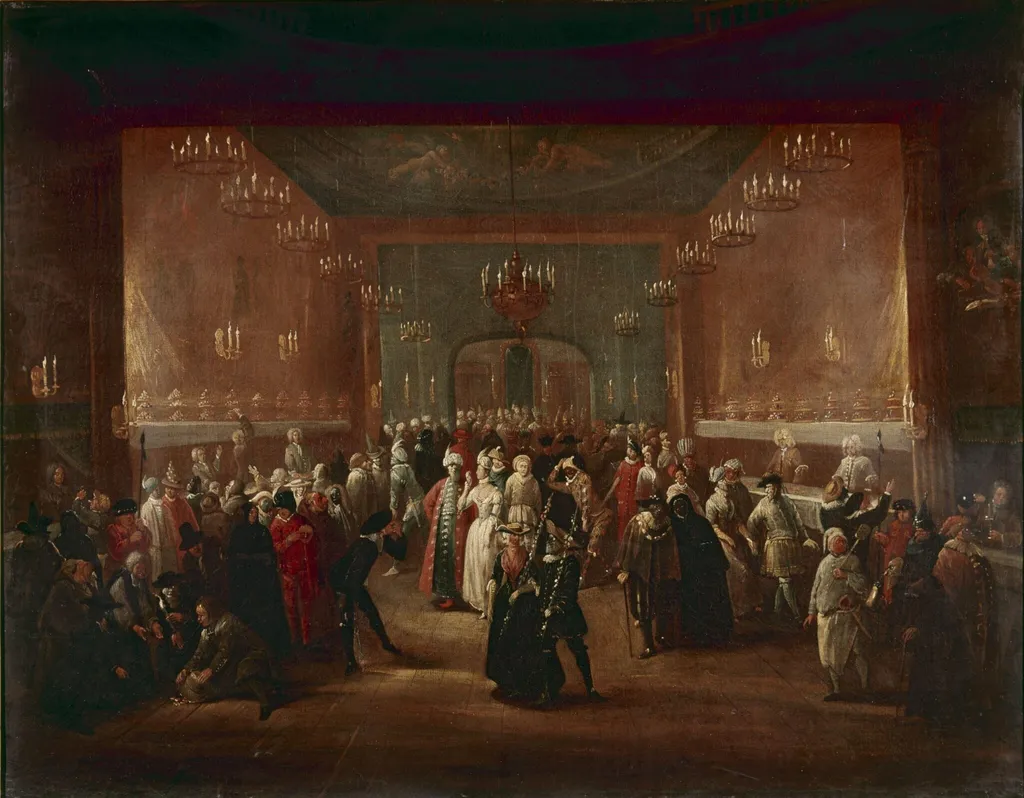
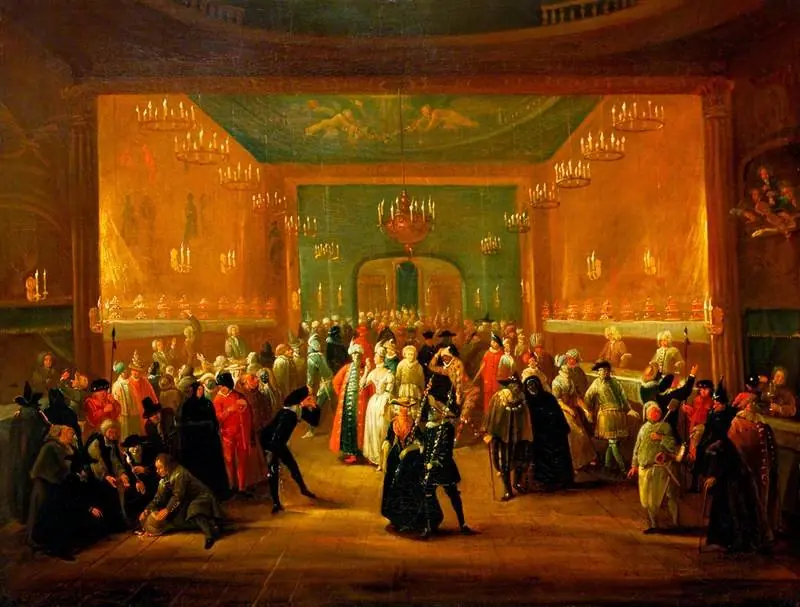
A Masquerade at the King's Theatre, Haymarket is a paint painting by the Baroque artist Giuseppi Grisoni. It dates from 1724 and is held in the collection of the Victoria and Albert Museum. This painting depicts a masquerade at the King’s Theatre in Haymarket, London, during the early 18th century.
About this work
Overview
The scene captures a moment of social spectacle, reflecting London’s growing fascination with masked entertainments.
This painting depicts a masquerade at the King’s Theatre in Haymarket, London, during the early 18th century. Though long attributed to Giuseppe Grisoni, stylistic differences suggest it may be the work of another hand. Grisoni, an Italian artist active in London and Florence, was known for meticulous portraiture, but this piece’s looser handling and theatrical energy diverge from his typical precision. The scene captures a moment of social spectacle, reflecting London’s growing fascination with masked entertainments.
Subject & Meaning
The painting portrays a lively masquerade, a fashionable social event inspired by Venetian carnivals, held within London’s newest theater. Figures in elaborate costumes mingle on stage, blurring the line between performer and spectator. A woman in white, positioned prominently, gazes outward, inviting the viewer into the scene. The event symbolized temporary liberation from social norms, where identity could be concealed and status momentarily suspended through disguise.
Technique & Style
The work employs a vivid, almost tactile rendering of fabrics—satin glints, lace catches light, and wigs are rendered with fine detail. Brushwork is more fluid than Grisoni’s polished style, suggesting a different artist, possibly one influenced by English theatrical portraiture. The composition is dynamic, with figures arranged in layered depth, guiding the eye from foreground revelers to distant performers. Lighting enhances the theatricality, casting soft shadows that heighten the sense of movement.
History & Provenance
The attribution to Grisoni originated from an 18th-century note by George Vertue, but no documentary evidence confirms his authorship. The painting’s style does not align with his known works, which are more refined and less theatrical. It likely entered a British collection in the 1720s–30s, possibly through connections between Italian artists and London’s theater circles. Its early presence in England suggests it was valued as a record of contemporary urban culture rather than as a work by a major name.
Context
In the 1720s, London’s theater scene was expanding rapidly, with the King’s Theatre becoming a hub for opera and masquerades. These events drew aristocrats and the emerging middle class, blending high art with popular entertainment. The masquerade reflected broader European trends, yet in London it took on unique social significance—offering a rare space for cross-class interaction under the veil of anonymity. The painting captures this cultural moment just as such spectacles became central to metropolitan life.
Legacy
Though its authorship remains uncertain, the painting endures as a visual document of 18th-century London’s social rituals. It contributes to the understanding of how theater functioned beyond performance—as a stage for identity, status, and spectacle. Its survival in public collections underscores its value as a record of everyday cultural practice, offering insight into the intersection of art, fashion, and public entertainment in early modern Britain.
Own this work as a print
Artist & collection
Artist
Giuseppe Grisoni worked as a court painter in Florence but spent years in London, where he split his time between grand parties and printmaking in a cluttered attic.

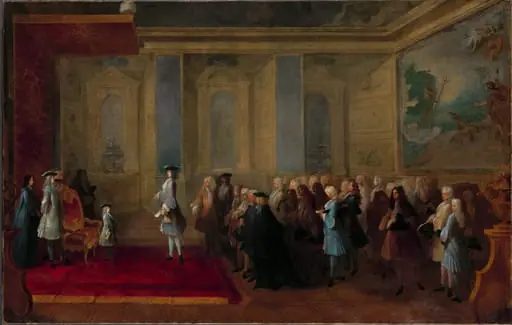 Untitled
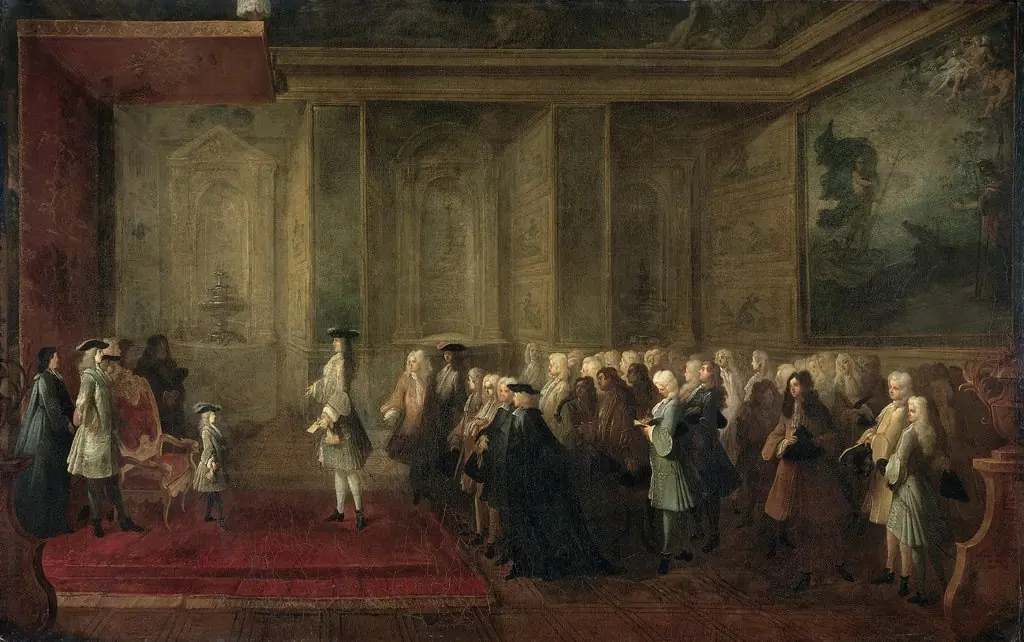 Reception of the Dutch ambassador Cornelis Hop by the French king Louis XV, 24 July 1724
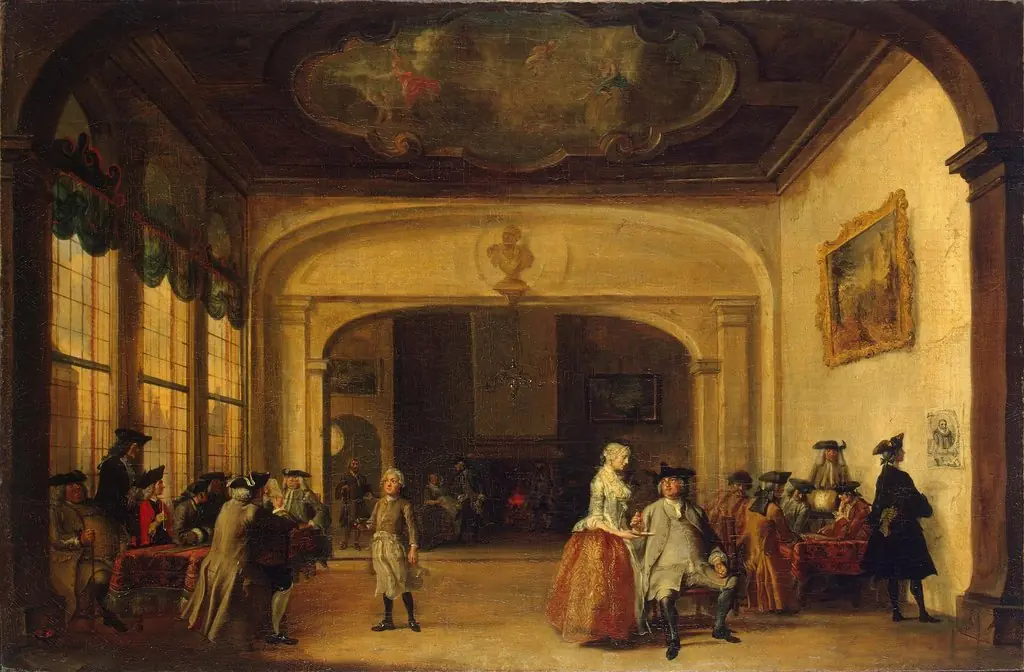 Scene in a Coffee Shop
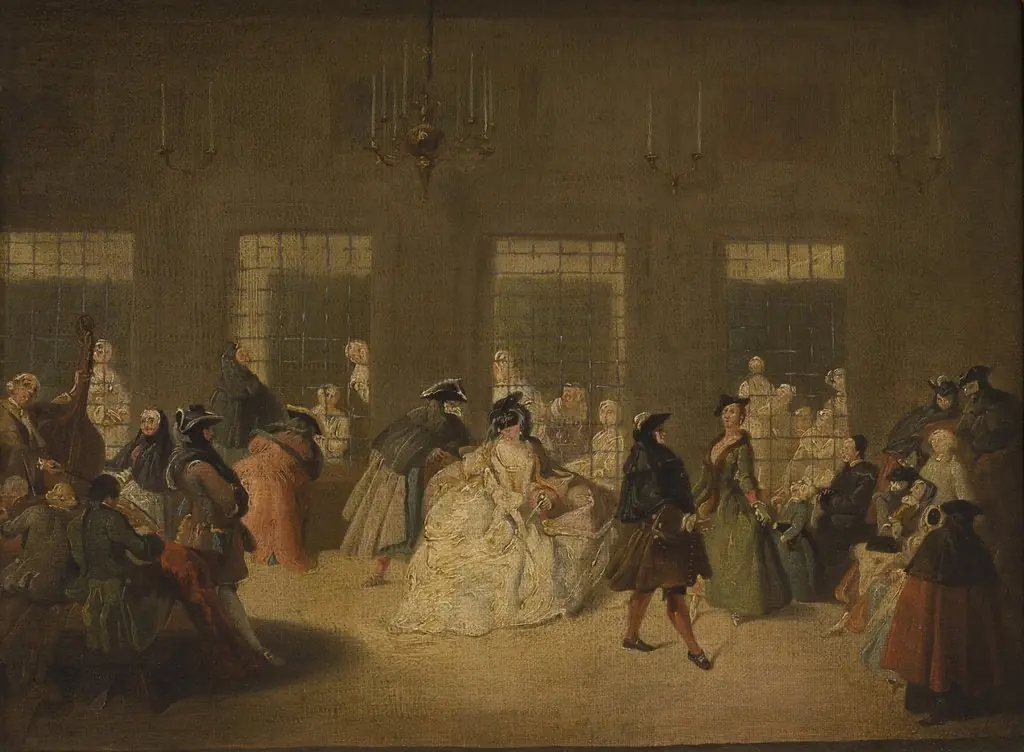 Theme from the Venetian Carnival – In the Parlatory of the Monastery
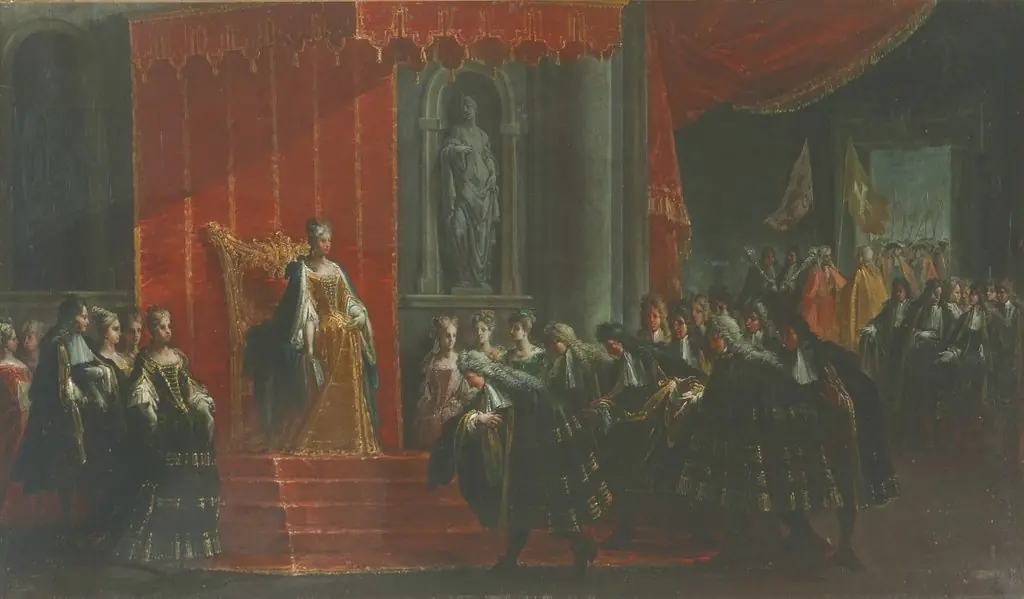 Handkiss by the communities of Parma and Piacenza
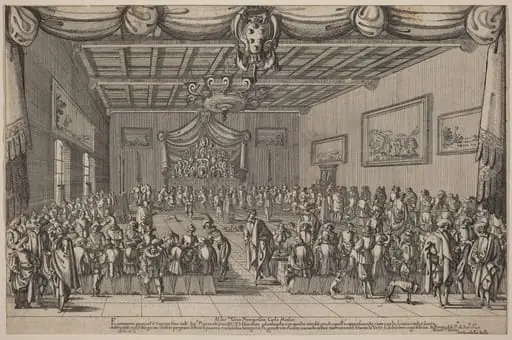 The Banquet of the Piacevoli
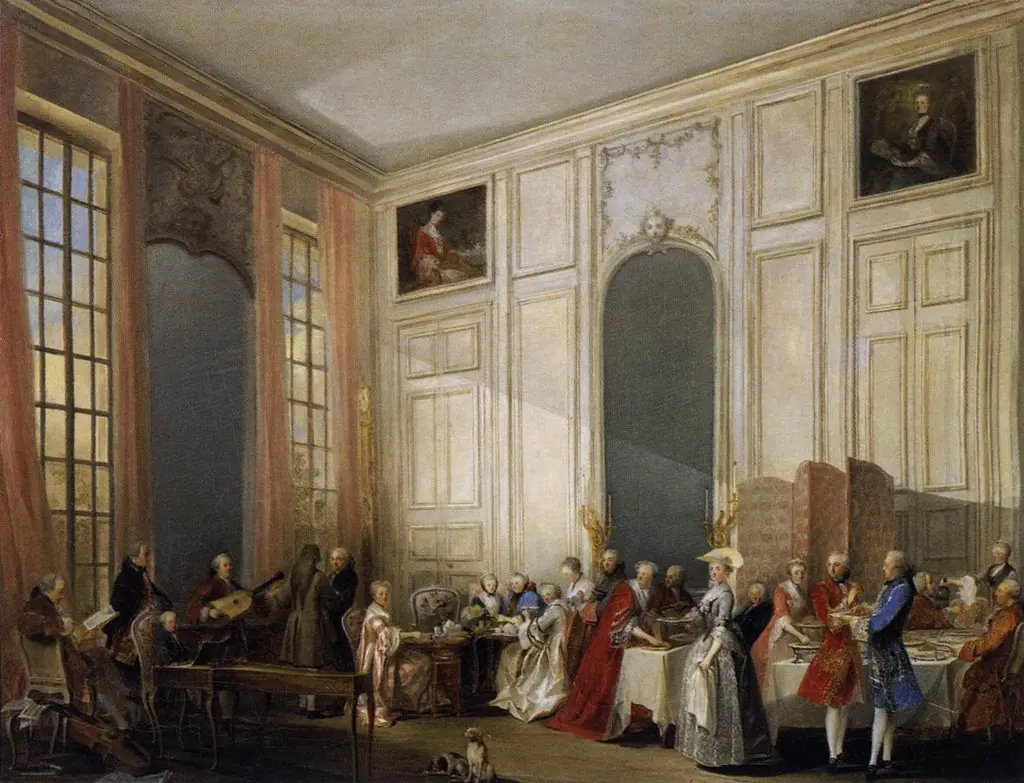 Afternoon Tea at the Temple
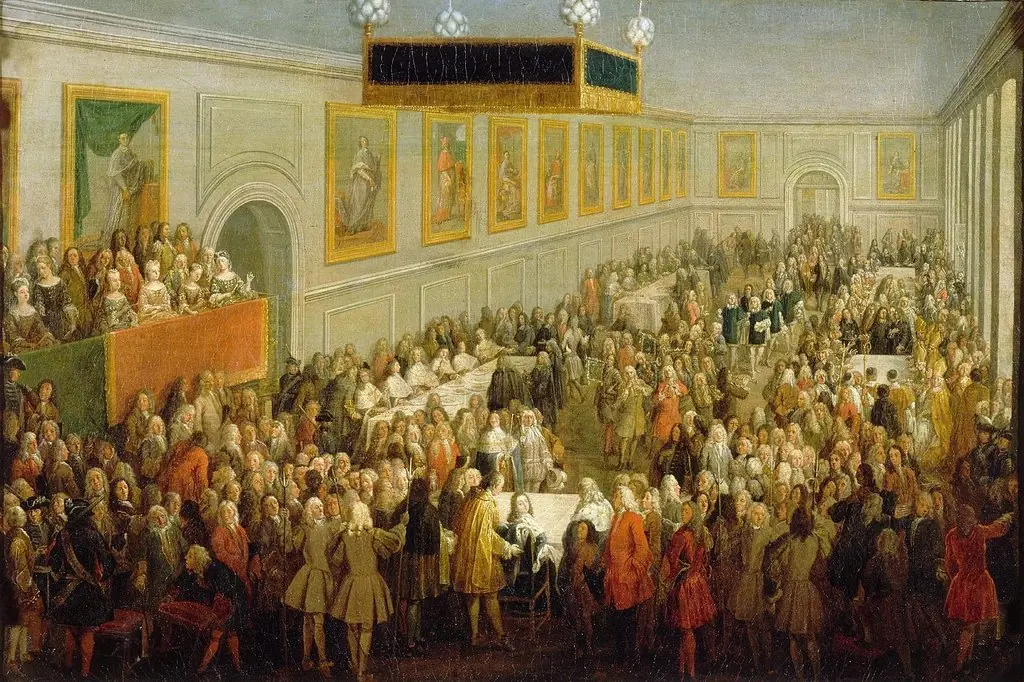 Feast given after the coronation of Louis XV of France
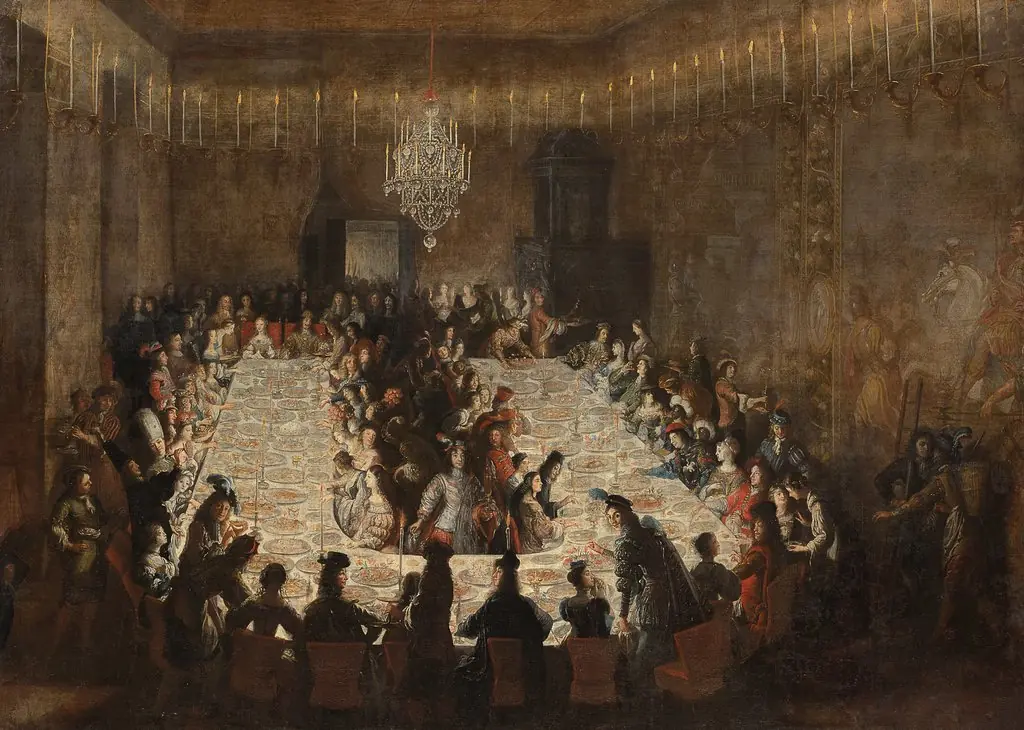 Court table at the time of Emperor Leopold I
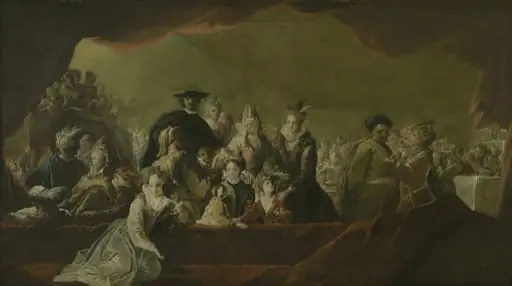 A Fancy-Dress Ball
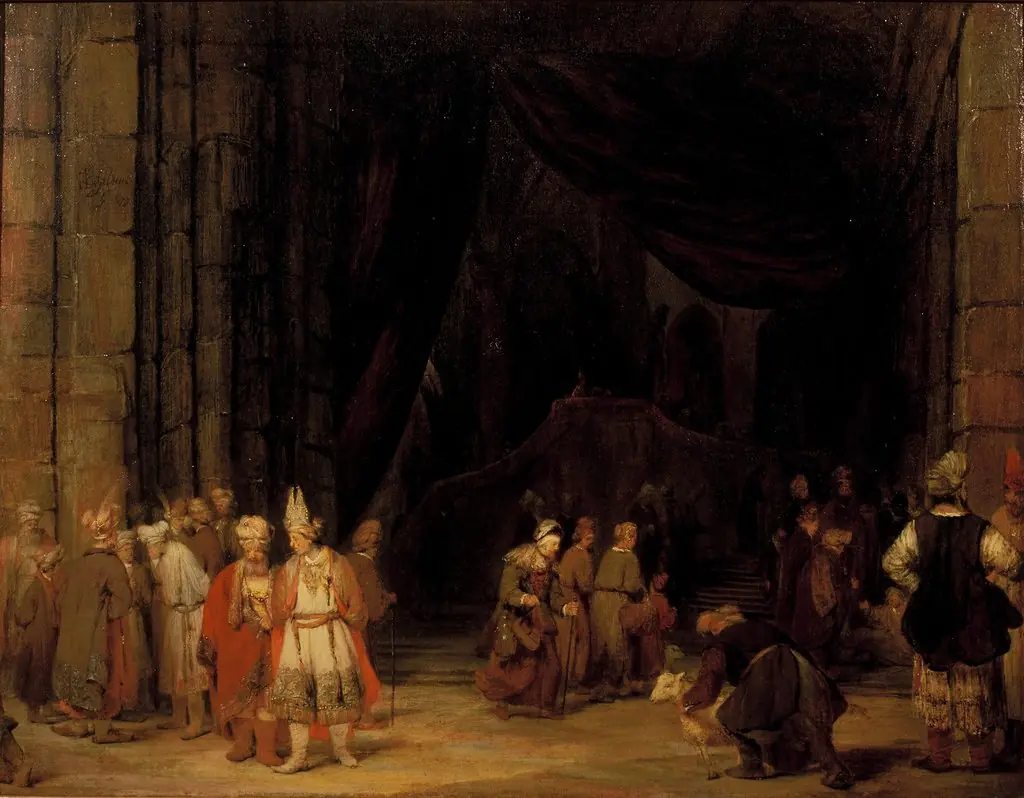 Courtyard of a temple
 A Masquerade at the King's Theatre, Haymarket