Artwork
Peisaj
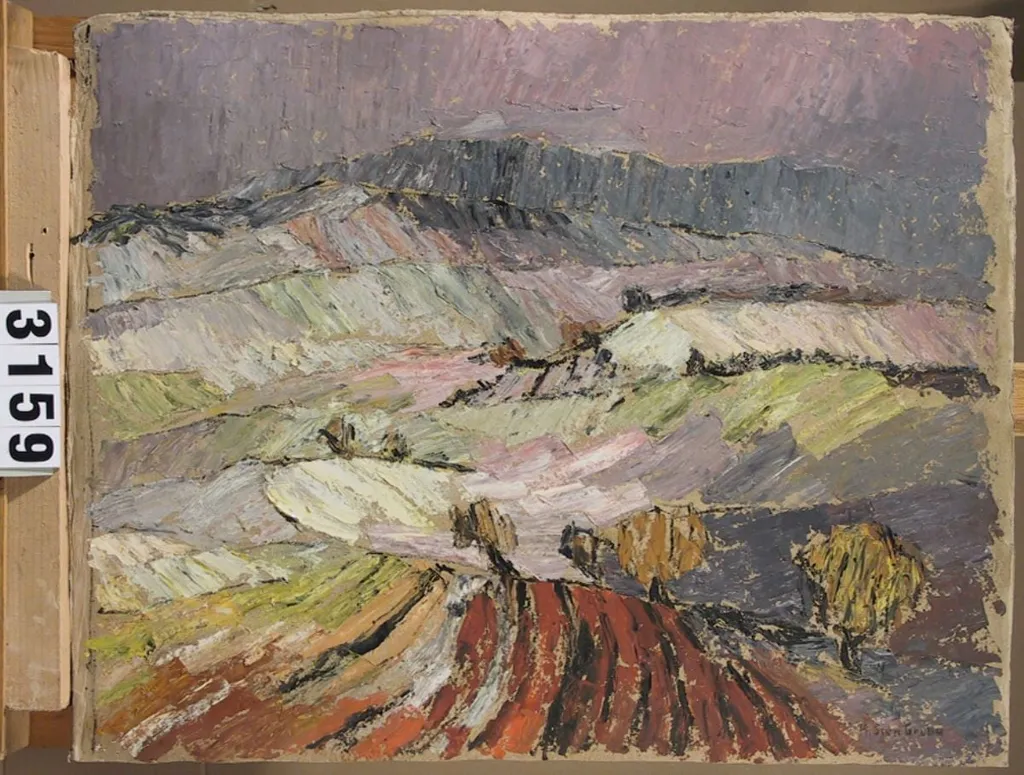
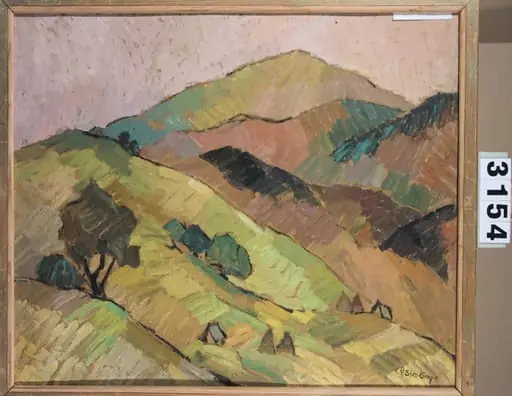
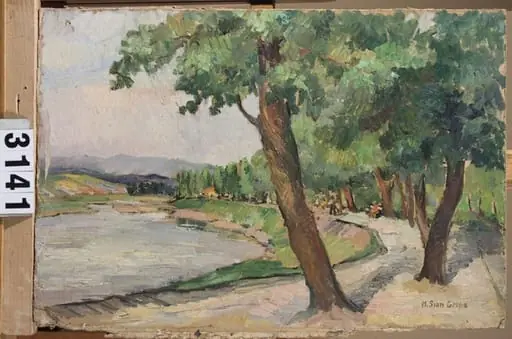
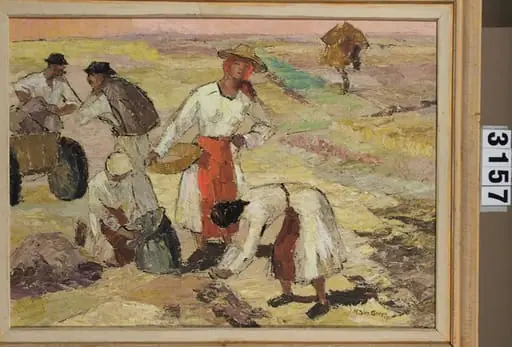
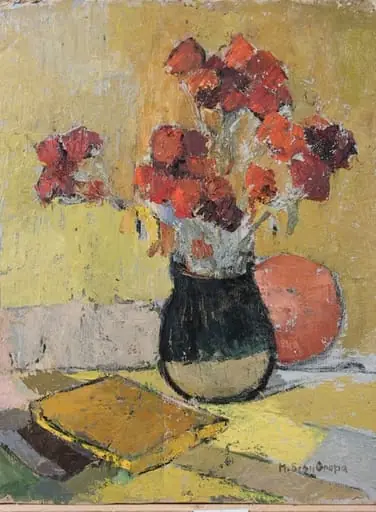
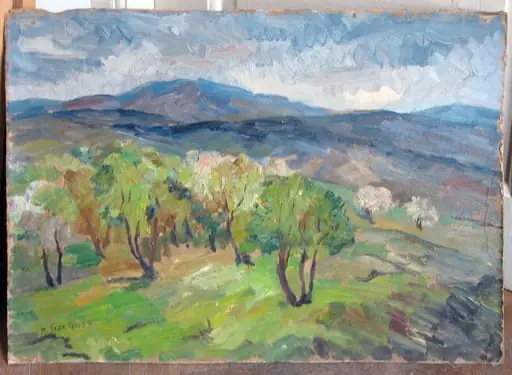
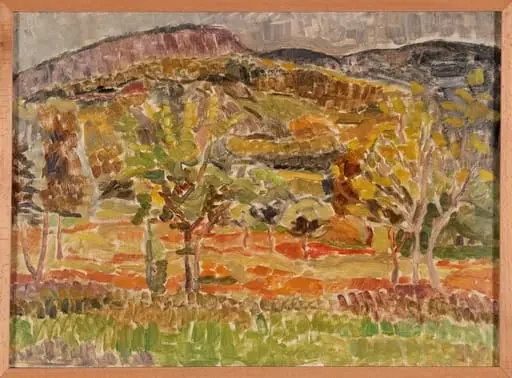
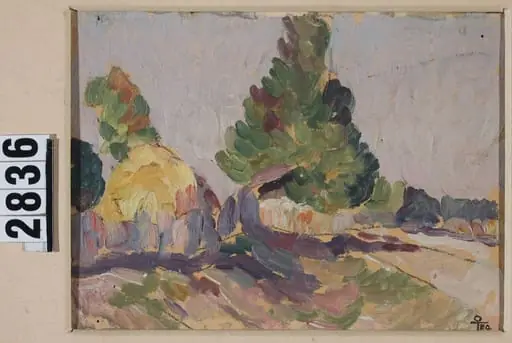
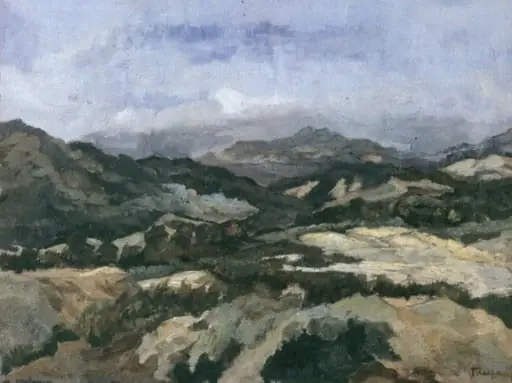
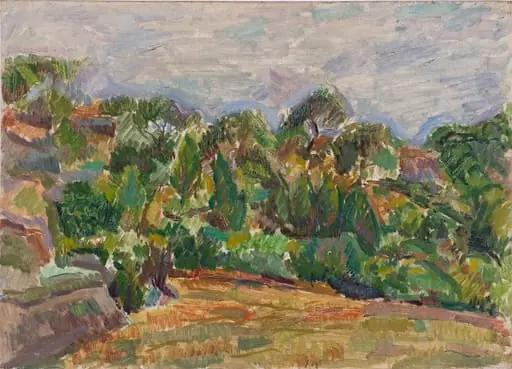
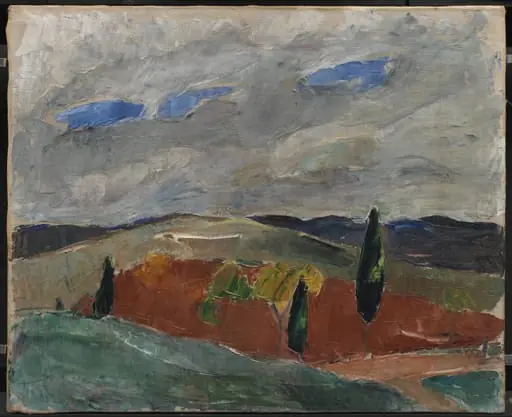
Peisaj is a print by Maria Gropa-Sion. It is held in the collection of the Brukenthal National Museum. This landscape painting presents a rugged terrain rendered with aggressive brushwork and layered pigments.
About this work
Overview
The overall effect suggests immediacy, as if the scene was captured in a single, urgent gesture rather than through careful refinement.
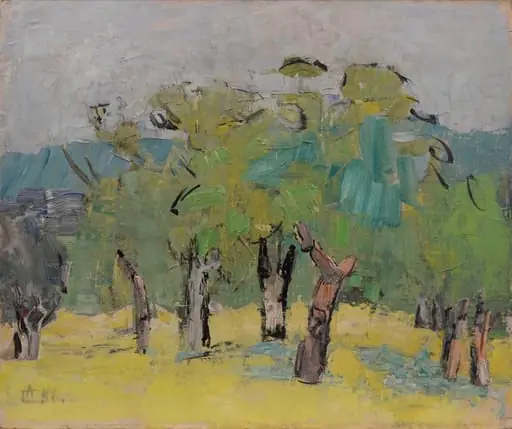
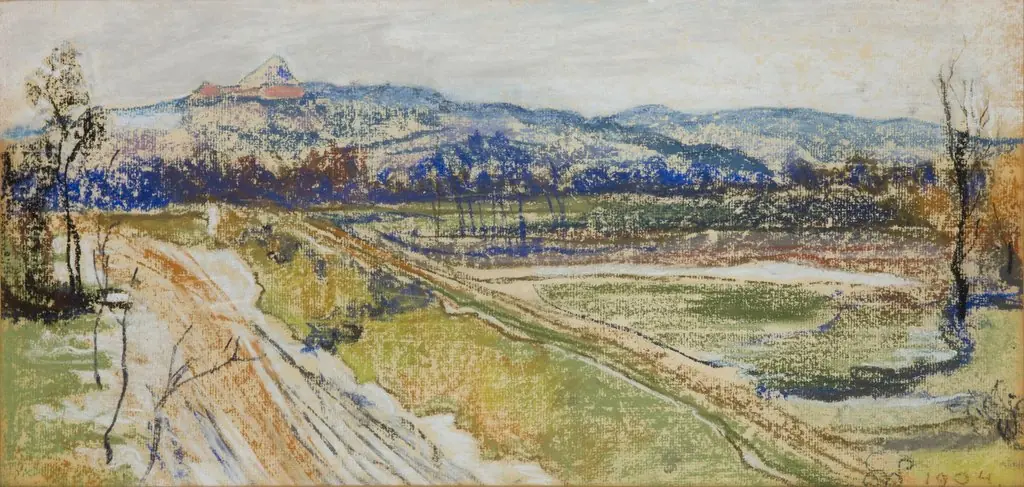
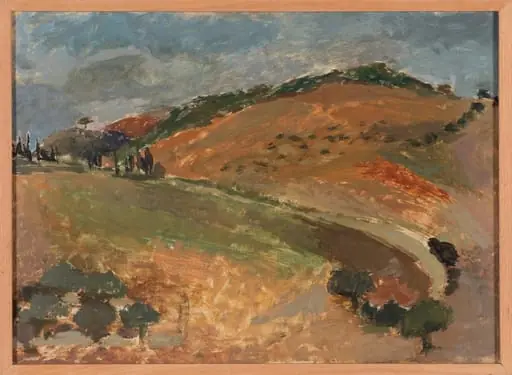
This landscape painting presents a rugged terrain rendered with aggressive brushwork and layered pigments. The composition lacks idealized harmony, instead emphasizing physicality and motion. Thick applications of paint create a tactile surface, where color and texture dominate over precise form. The overall effect suggests immediacy, as if the scene was captured in a single, urgent gesture rather than through careful refinement.
Subject & Meaning
The subject is an abstracted natural environment—hills, earth, and sky rendered without clear landmarks or narrative. The muted brightness and chaotic texture evoke emotional resonance rather than topographical accuracy. The scene feels neither serene nor hostile, but transient, as if recalling a fleeting impression of place. It invites contemplation of memory’s distortion rather than depiction of reality.
Technique & Style
The artist employs impasto to build dense, uneven layers of paint, applying pigment with forceful, directional strokes. Some areas appear scraped or dragged, revealing lower layers and adding a sense of erosion. Colors are saturated yet dulled by mixing, creating a chromatic tension between vibrancy and decay. The brushwork resists smoothness, prioritizing physical presence over illusionistic depth.
History & Provenance
The work’s origin and early ownership are undocumented. It lacks a clear exhibition history or association with known movements or collectors. Its raw execution and absence of signature or date suggest it may have been a private study or experimental piece, not intended for public display. Its survival implies informal preservation, possibly within the artist’s circle.
Context
Created during a period when many artists rejected academic polish in favor of expressive immediacy, this work aligns with broader trends toward material experimentation. While not tied to a specific school, its emphasis on texture and emotional tone echoes contemporaneous explorations in post-impressionist and early expressionist circles, where process often outweighed representation.
Legacy
The painting contributes to a lineage of works that value the physicality of paint over polished finish. Its unrefined surface and emotional intensity influenced later artists seeking to convey inner states through material gesture. Though not widely reproduced, it remains a quiet example of how raw technique can transform landscape into psychological space.
Artist & collection
Artist
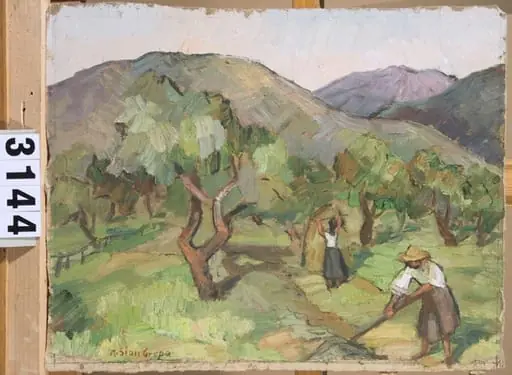
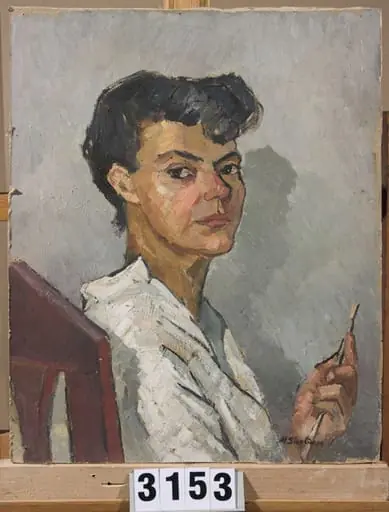
Maria Gropa-Sion painted ordinary people and places with quiet attention. In *La cosit* you’ll see women working in fields, in *Autoportret I* she shows herself looking straight ahead. *Valea Oltețului* is a print of a…