Artwork
Pine-shaded Monastery on a Cloudy Mountain
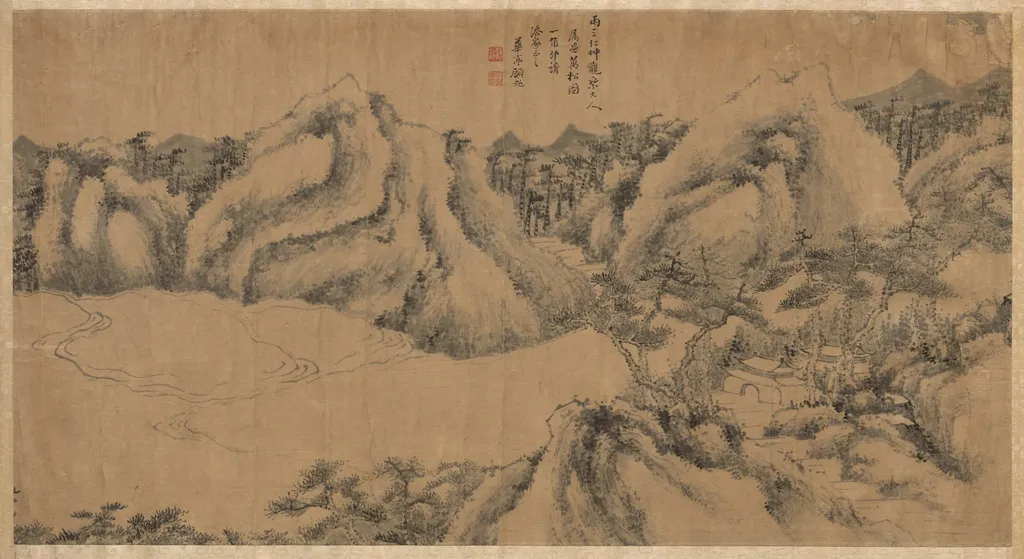
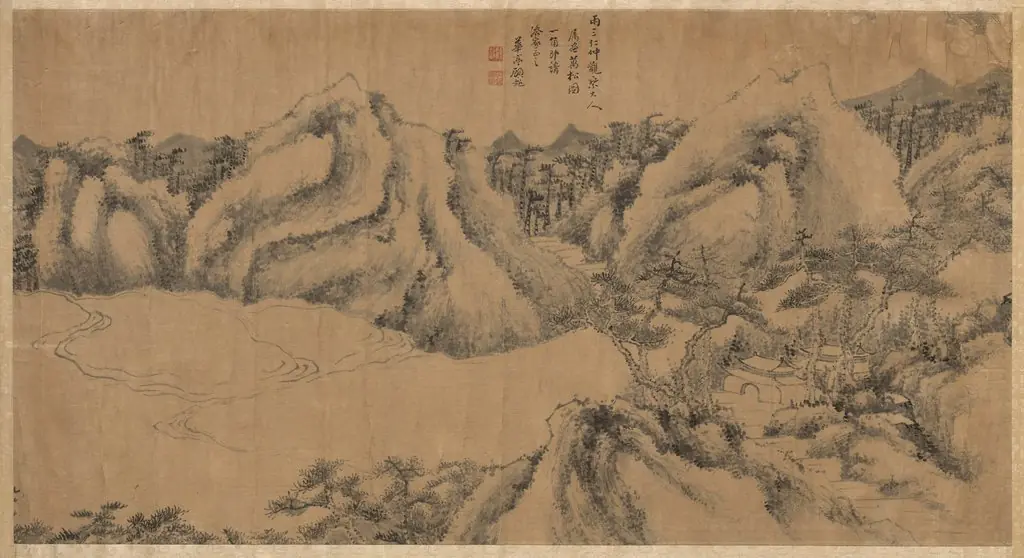
Pine-shaded Monastery on a Cloudy Mountain is an unspecified painting by the Qing dynasty painting artist Gu Chao. It dates from 1704 and is held in the collection of the Cleveland Museum of Art.
About this work
Overview
Painted around 1704 by Gu Chao, this ink-on-paper landscape depicts a secluded monastery nestled against a mist-shrouded mountain.
Painted around 1704 by Gu Chao, this ink-on-paper landscape depicts a secluded monastery nestled against a mist-shrouded mountain. Tall pines frame the composition, their vertical forms contrasting with the horizontal drift of clouds. The work resides in The Cleveland Museum of Art, where its restrained palette and delicate brushwork reflect the literati tradition of southern Chinese painting during the early Qing dynasty.
Subject & Meaning
The monastery, small and vulnerable against the vast mountain, suggests the transience of human endeavors in the face of enduring nature. The swirling clouds appear to envelop the walls, implying nature’s quiet dominance. Rather than celebrating architectural achievement, the painting evokes contemplation—emphasizing harmony, solitude, and the spiritual weight of the natural world over human construction.
Technique & Style
Gu Chao employs fine, controlled brushstrokes to render pine needles and rock textures, while graded ink washes create depth and atmospheric perspective. The tonal range is subtle yet powerful, with dense blacks receding into misty grays. Unlike Western chiaroscuro, which defines form through stark light contrasts, this technique uses graduated ink to suggest volume and mood, rooted in Daoist and Chan Buddhist aesthetics of ambiguity and suggestion.
History & Provenance
The painting was likely created during Gu Chao’s later years, a period when he withdrew from public life to focus on scholarly pursuits and landscape painting. It entered The Cleveland Museum of Art’s collection in the 20th century, having passed through private hands in China before being acquired by Western collectors. Its preservation reflects its status as a refined example of Qing literati painting.
Context
Created in the early 18th century, the work emerges from a tradition where scholar-officials used ink painting as a form of personal expression, distinct from courtly art. Gu Chao’s style aligns with the Wu school’s emphasis on emotional resonance over realism. The theme of a hermitage amid nature resonated with Confucian ideals of retreat and moral integrity, especially among officials disillusioned with political life.
Legacy
Though not widely known outside specialist circles, the painting exemplifies the quiet intensity of late Ming-Qing literati landscapes. Its influence endures in modern Chinese ink painting through its emphasis on atmosphere, restraint, and the spiritual presence of nature. Scholars continue to study its brushwork as a model of controlled expression within a minimalist aesthetic.
Artist & collection

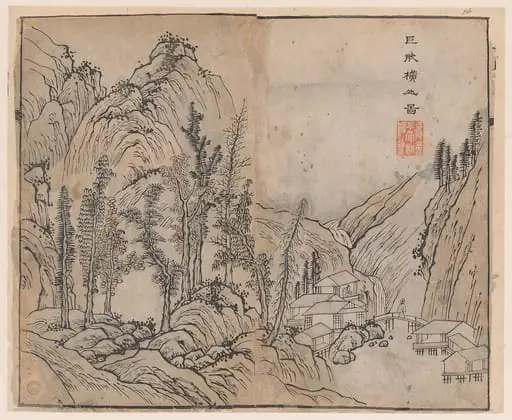 清 王槩 設計,李漁出版 芥子園畫傳 版本|Mt. Heng, after Juran (active ca. 960–965), from the Mustard Seed Garden Manual of Painting
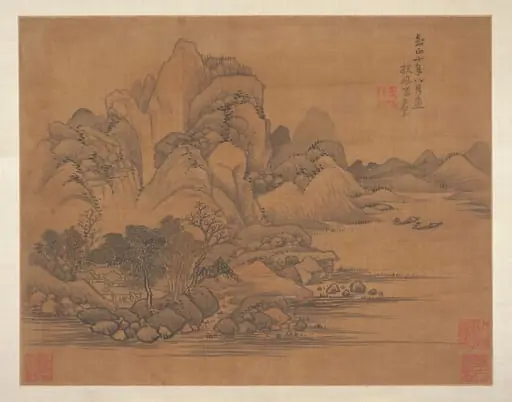 Untitled
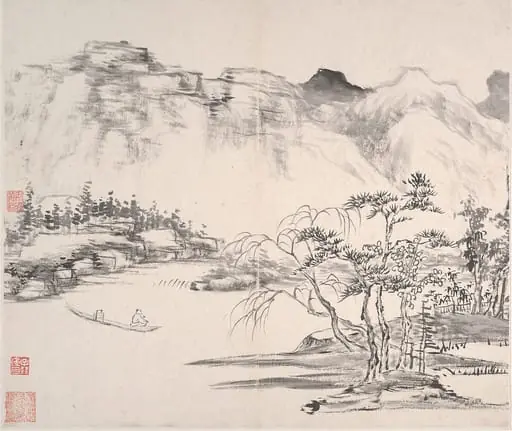 清 伊秉綬 山水 冊|Landscapes
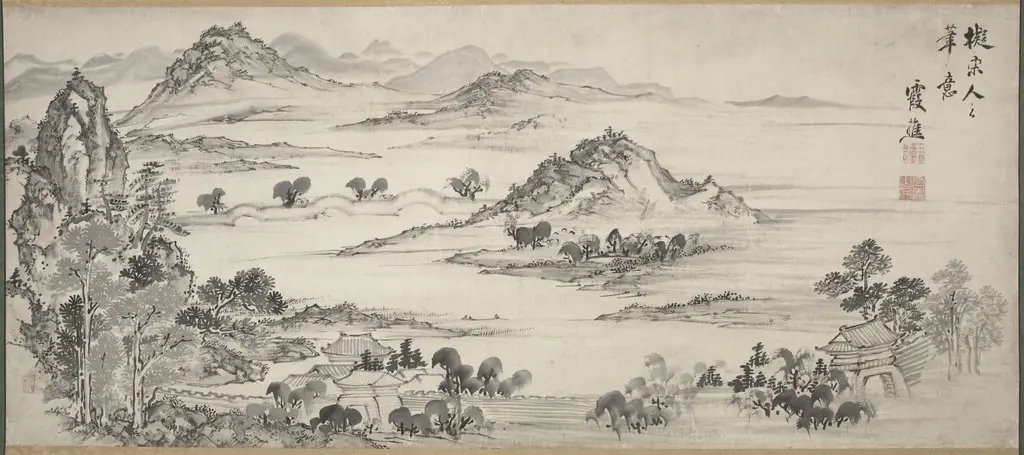 West Lake
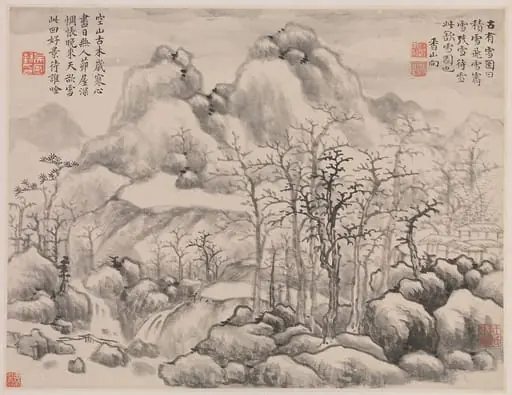 明/清 惲向 欲雪圖 冊頁|Snowscape, from Album for Zhou Lianggong
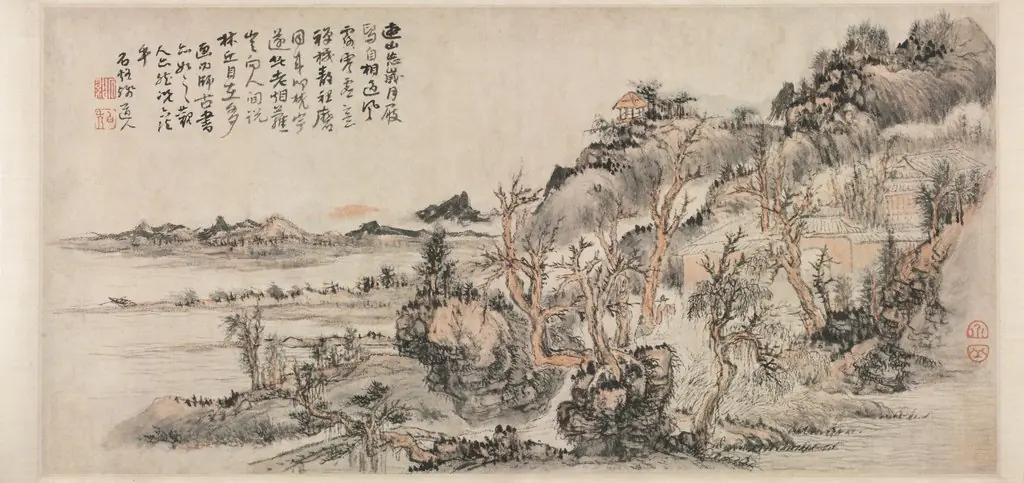 Spring Landscape
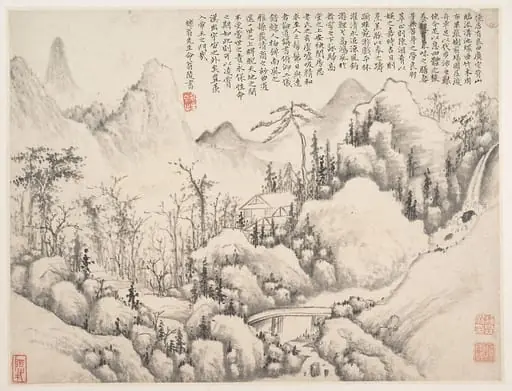 清 施霖 山莊圖 冊頁|Mountain Retreat, leaf from Album for Zhou Lianggong
 清 柳堉 幽谷深林圖 卷|Remote Valleys and Deep Forests
 Recluse Dwellings in the Autumn Mountains
 River and Mountains on a Clear Autumn Day
 Landscape in the Style of Ching Hao
 Pine-shaded Monastery on a Cloudy Mountain