Artwork
明顧正誼開春報喜 軸
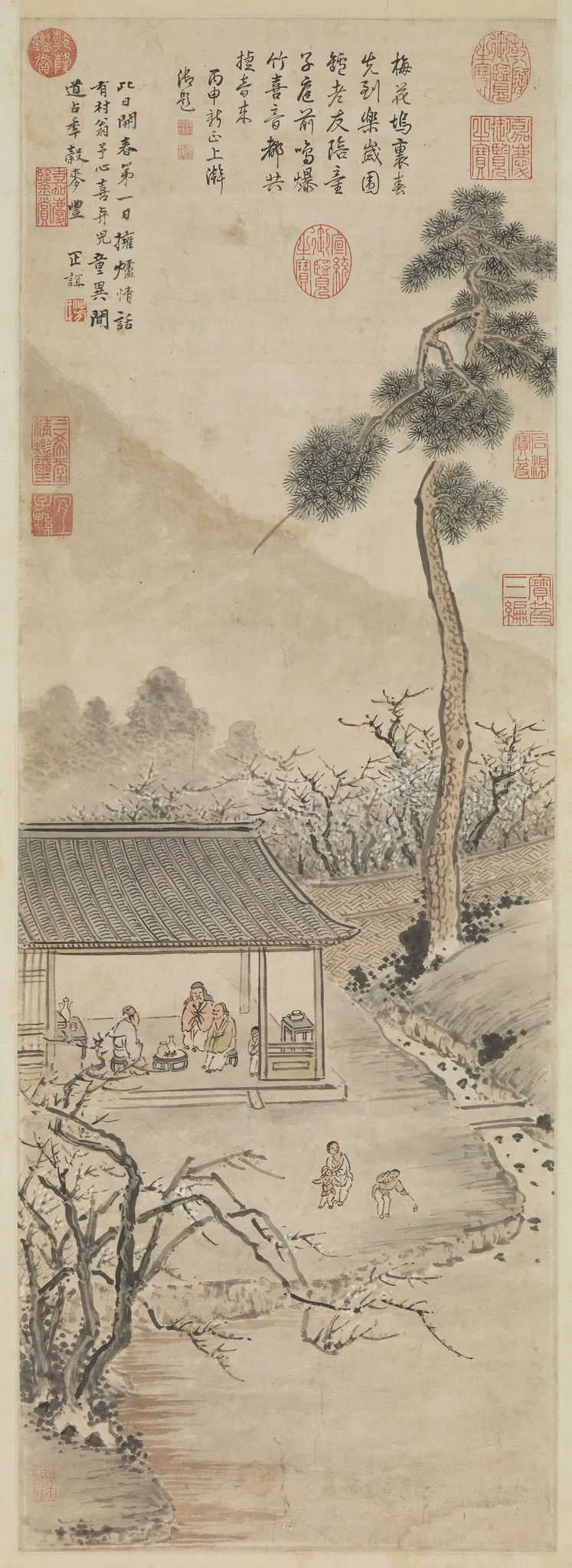
明顧正誼開春報喜 軸 is an unspecified painting by Gu Zhengyi. It is held in the collection of the National Palace Museum.
About this work
Overview
The work, titled 明顧正誼開春報喜 軸, is a painted hand‑scroll depicting a quiet domestic scene.
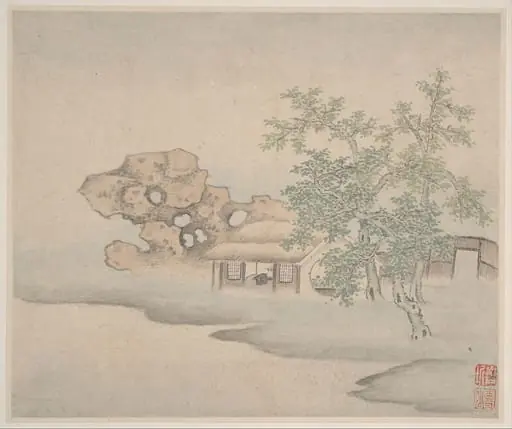
The work, titled 明顧正誼開春報喜 軸, is a painted hand‑scroll depicting a quiet domestic scene. A modest house with a tiled roof opens onto a courtyard where three figures are seated, while another figure stands nearby and a distant individual walks along a path. A large, sparsely branched tree dominates the right side of the composition, complemented by a smaller tree on the left, all set against a muted background of distant foliage.
Subject & Meaning
The painting portrays a moment of seasonal renewal, suggested by the title’s reference to the arrival of spring and the conveyance of good news. The gathering of figures around the home, together with the blossoming landscape, conveys a sense of communal celebration and the optimism associated with the new year.
Technique & Style
Executed in traditional brushwork, the artist employs delicate washes to render the soft, muted tones of the distant scenery, while the foreground trees are outlined with firmer strokes that emphasize their structure. The composition balances detailed figural representation with a restrained landscape, characteristic of literati painting that values simplicity and atmospheric suggestion.
History & Provenance
Attributed to Gu Zhengyi, a painter active in the early Qing period, the scroll has been preserved as a representative example of private devotional art. Its provenance traces through several private collections before entering a museum repository, where it is displayed as part of a broader survey of seasonal genre paintings.
Artist & collection
Artist
Gu Zhengyi (simplified Chinese: 顾正谊; traditional Chinese: 顧正誼; pinyin: Gù Zhèngyì; Wade–Giles: Ku Cheng-i) was a famed Chinese painter active during the late Ming Dynasty and the early Qing Dynasty.

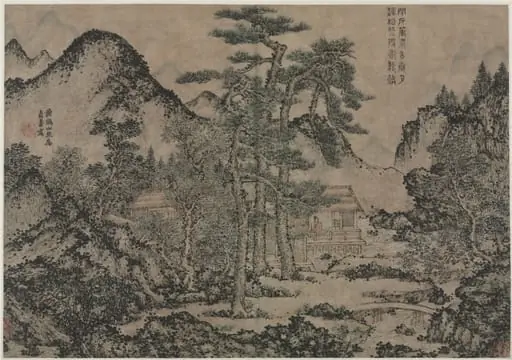 Writing Books under the Pine Trees
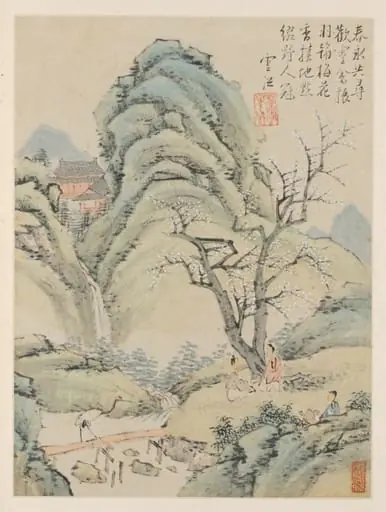 Album of Seasonal Landscapes, Leaf A (previous leaf 4)
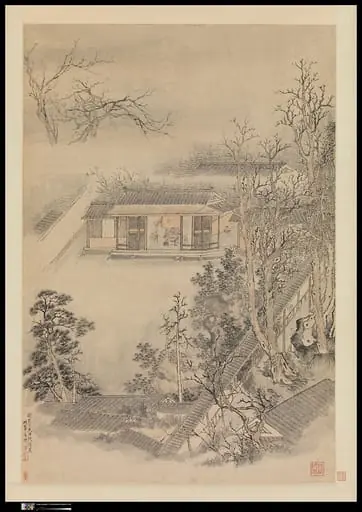 清 羅聘 篠園飲酒圖 軸|Drinking in the Bamboo Garden on the Lantern Festival
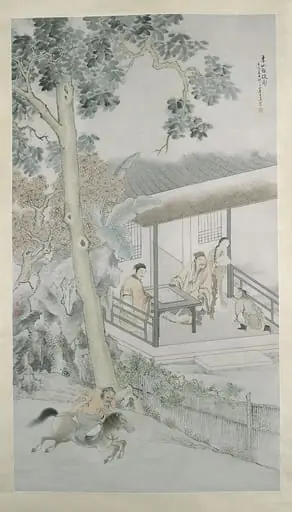 清 王素 東山報捷圖 軸|Bringing the Message of Victory to Dongshan
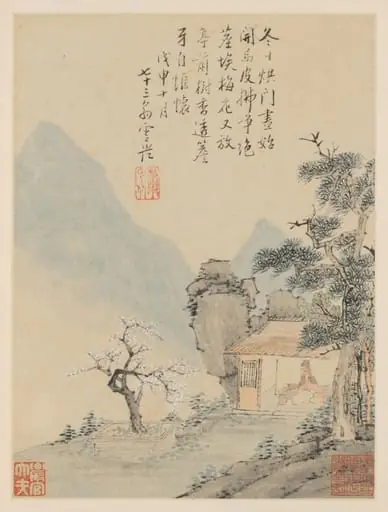 Album of Seasonal Landscapes, Leaf H (previous leaf 8)
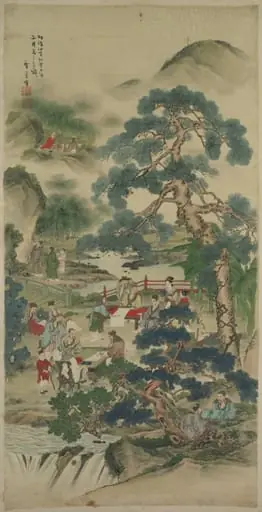 Chinese Sages in a Garden
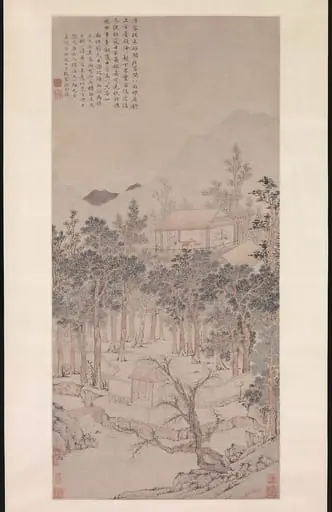 明 文徵明 樓居圖軸|Living Aloft: Master Liu's Retreat
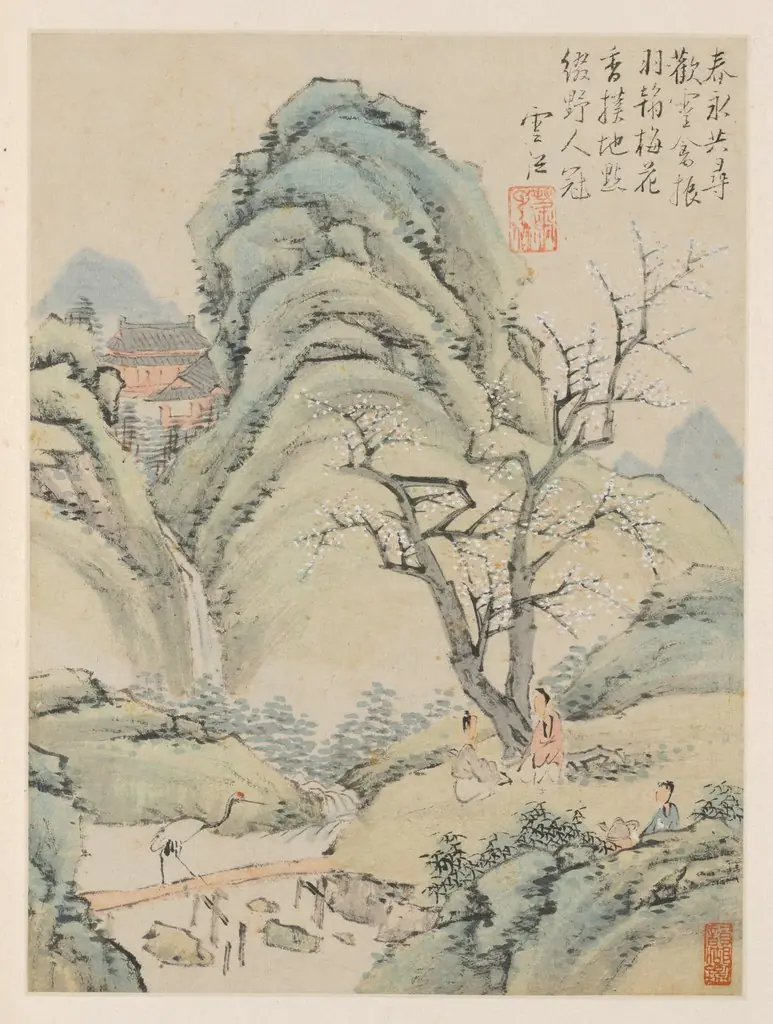 Album of Seasonal Landscapes, Leaf A (previous leaf 4)
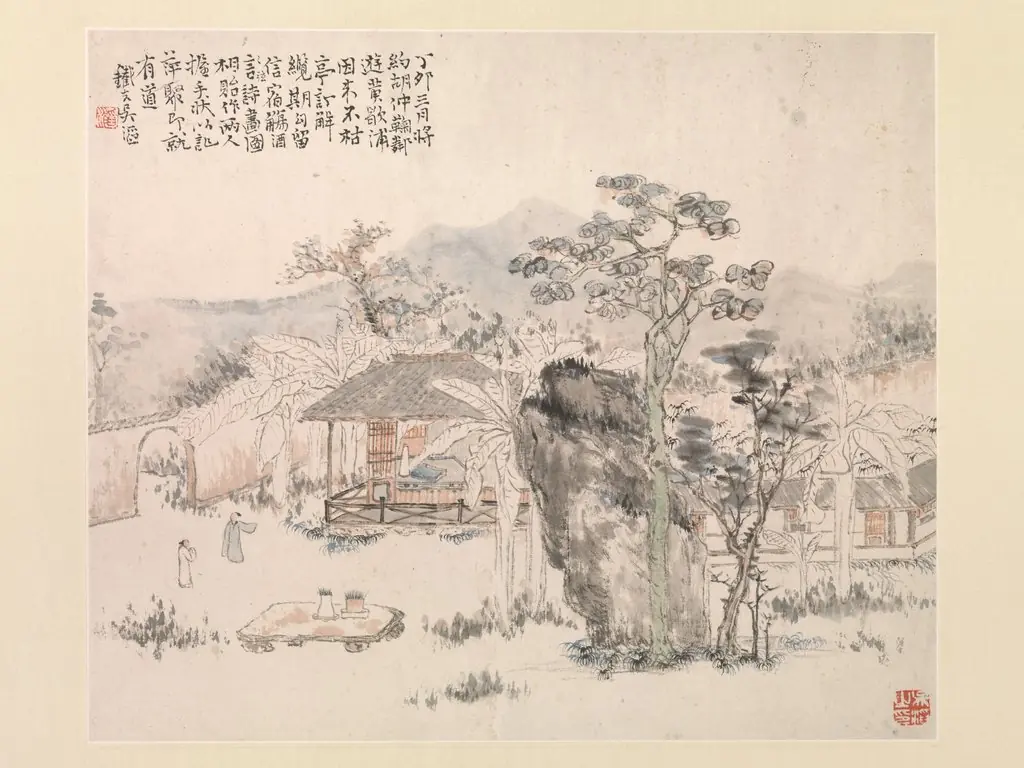 Garden scene
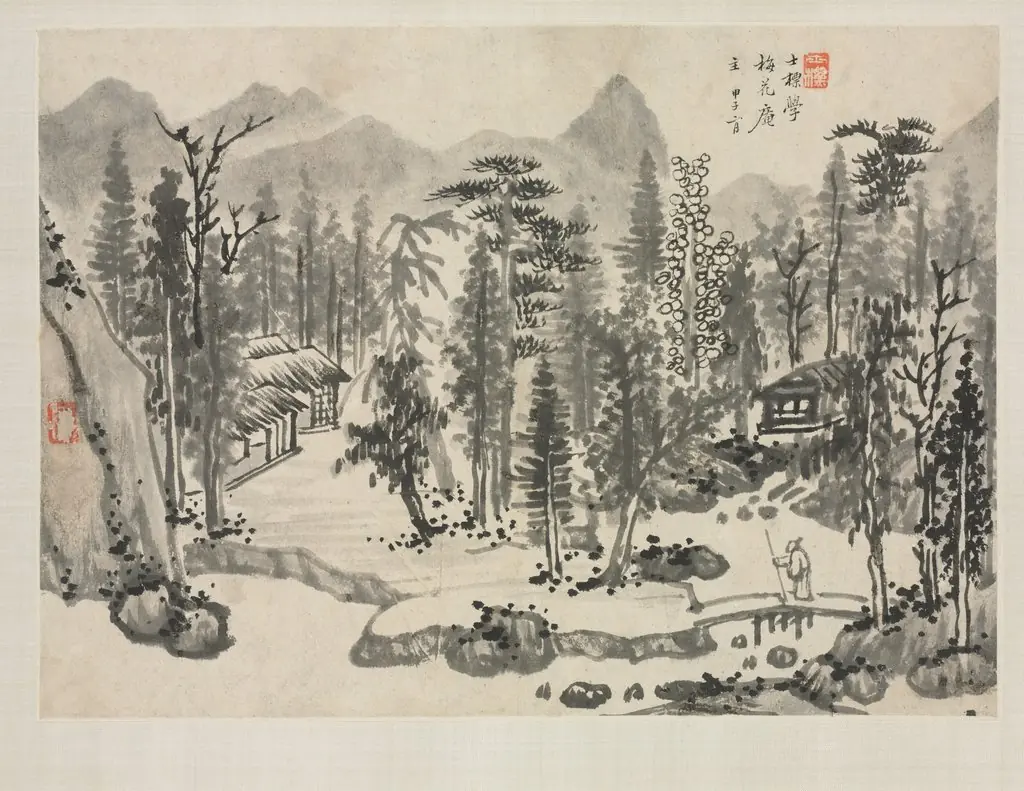 Landscape Album in Various Styles: Landscape after Wu Zhen
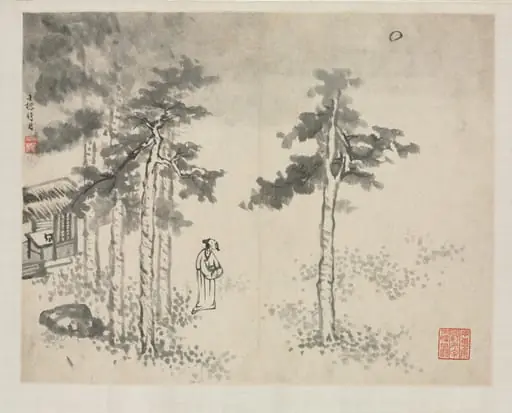 Landscape Album in Various Styles: Shibiao Waiting for the Moon
 清 樊圻 山水圖 冊 紙本|Landscapes