Artwork
Erminia and the Shepherds
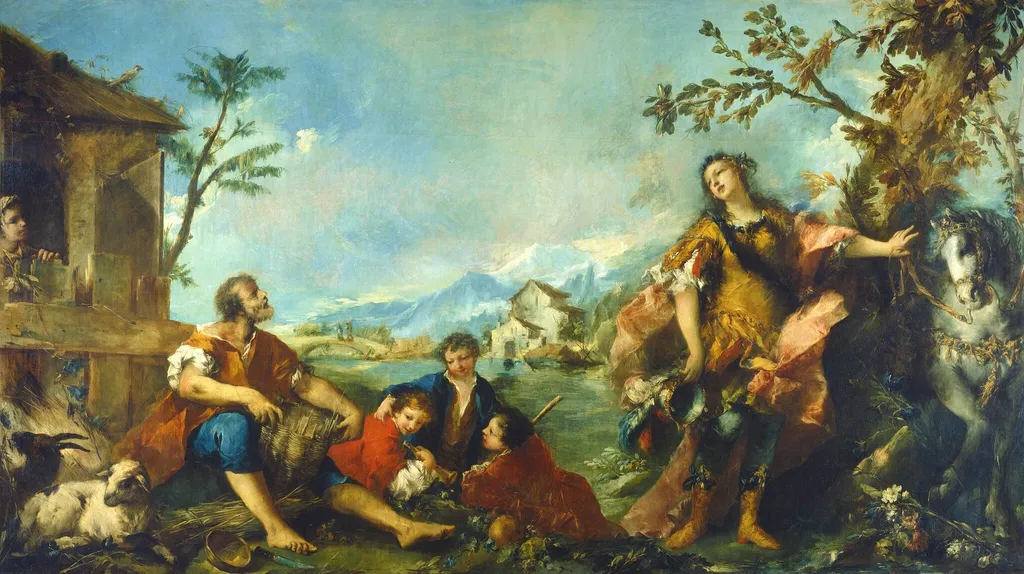
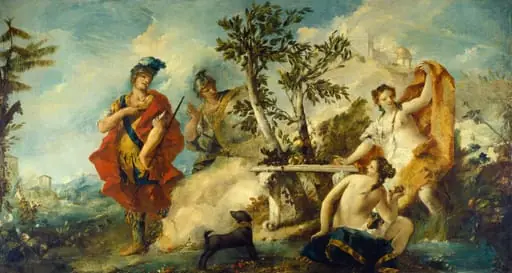
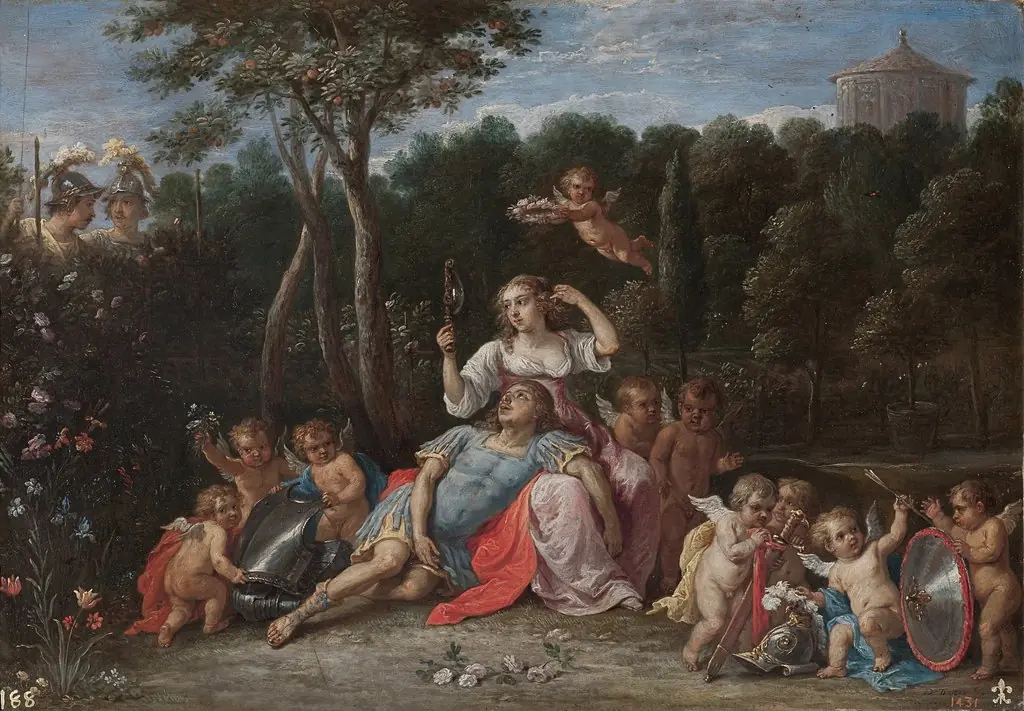
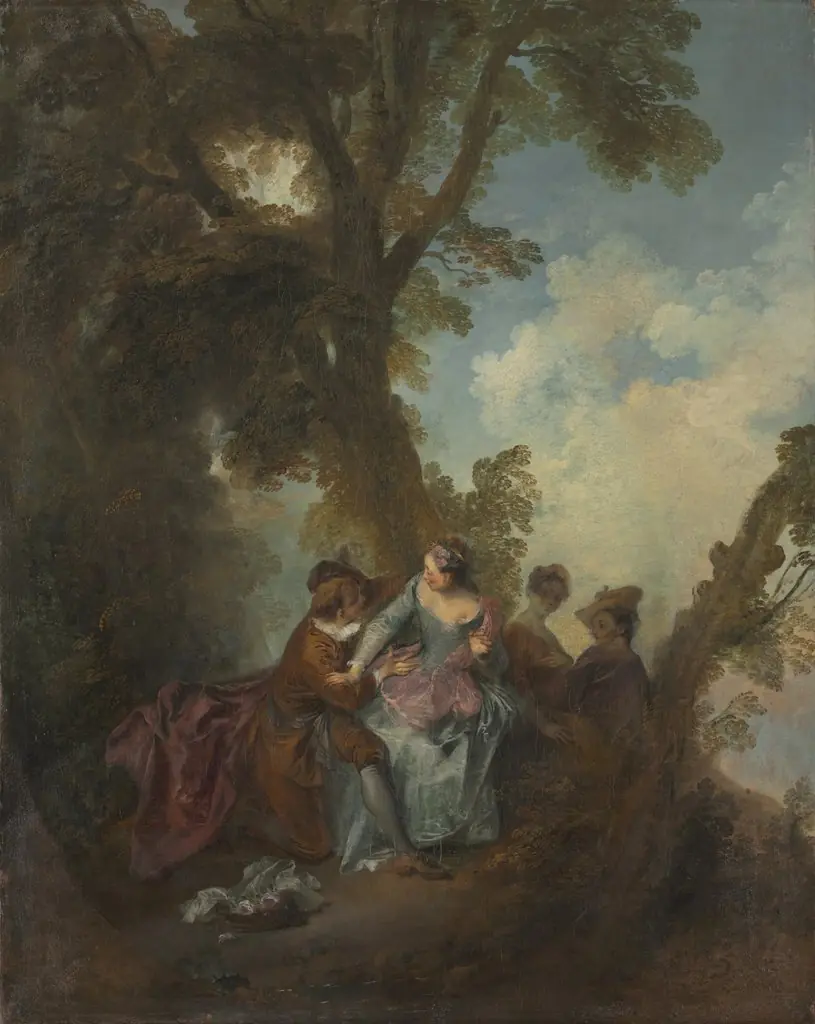
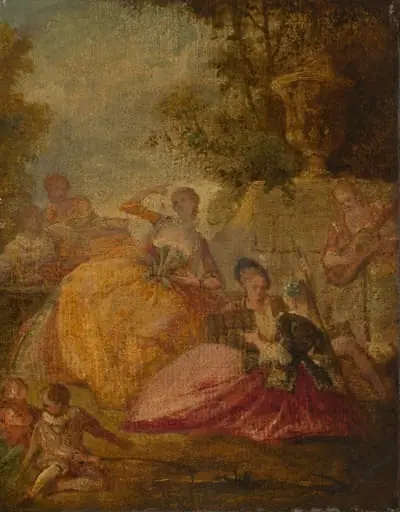
Erminia and the Shepherds is an oil painting by the Rococo painting artist Francesco Guardi. It dates from 1752 and is held in the collection of the National Gallery of Art.
About this work
Overview
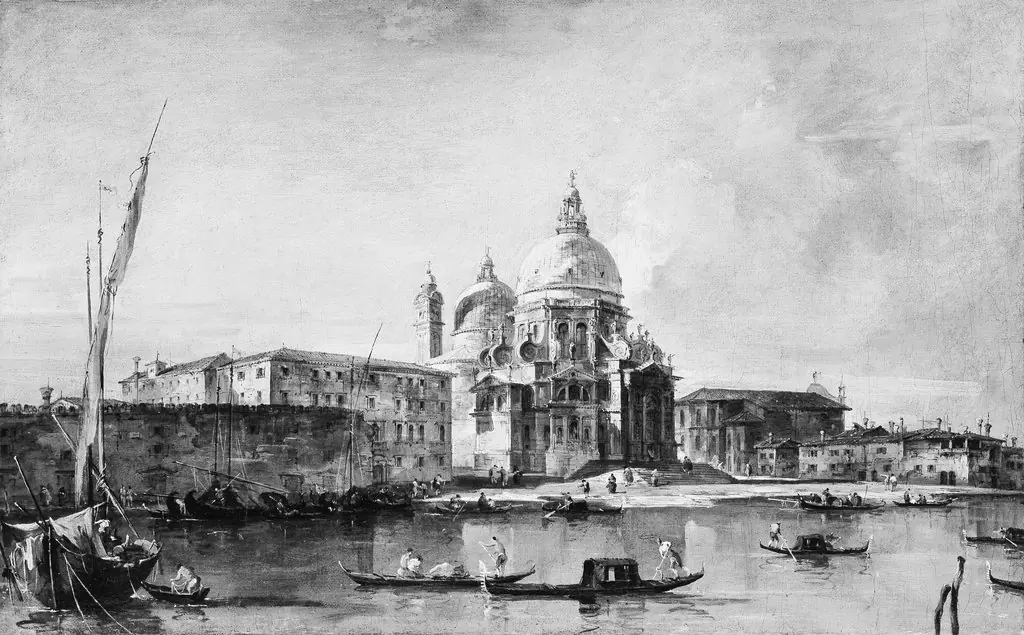
Francesco Lazzaro Guardi’s *Erminia and the Shepherds* (1752) is an oil on canvas executed in the Rococo idiom. Though Guardi later became celebrated for his vedute of Venice, this work departs from his typical cityscapes, presenting a lyrical narrative scene rendered with the lightness and decorative flair characteristic of mid‑eighteenth‑century Venetian painting.
Subject & Meaning
The composition depicts a young woman in a bright yellow dress beside a white horse, engaged with a seated man and two boys amid a pastoral setting. The figures appear to be in the midst of a friendly encounter, suggesting a moment of hospitality or courtship within an idyllic countryside, a theme often explored in Rococo storytelling.
Technique & Style
Guardia employs a delicate palette of pastel tones and soft modeling to convey the sun‑lit atmosphere. The brushwork is fluid, allowing the foliage, architecture, and distant mountains to dissolve into a harmonious background. This approach balances narrative clarity with the ornamental elegance typical of Rococo, while hinting at the emerging naturalism that would later inform his vedute.
History & Provenance
Created in 1752, the painting reflects Guardi’s transitional phase after an early career focused on religious commissions with his brothers. It was likely produced for a private collector interested in genre scenes rather than ecclesiastical subjects. The work entered museum collections in the nineteenth century, where it has been displayed as an example of Guardi’s lesser‑known narrative output.
Artist & collection
Artist
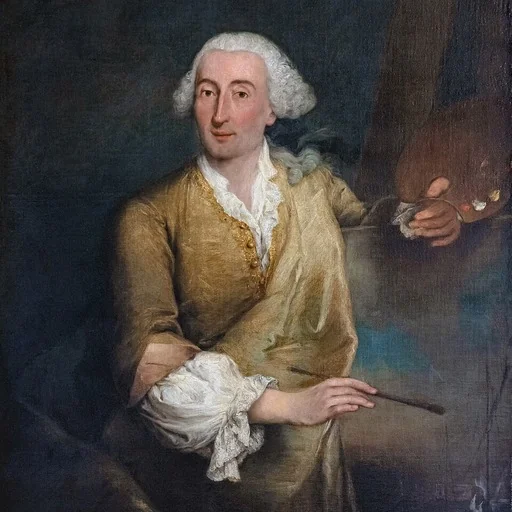
Francesco Lazzaro Guardi (Italian pronunciation: ; 5 October 1712 – 1 January 1793) was an Italian painter, nobleman, and a member of the Venetian School.