Artwork
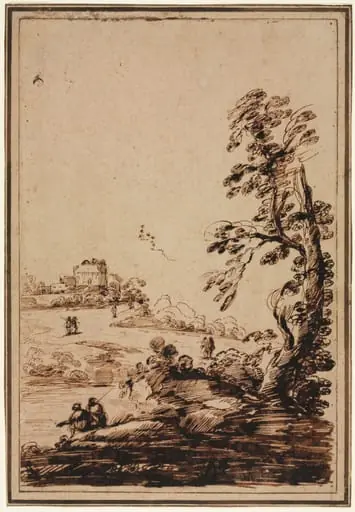
Landscape with a Man Leaning on a Bale
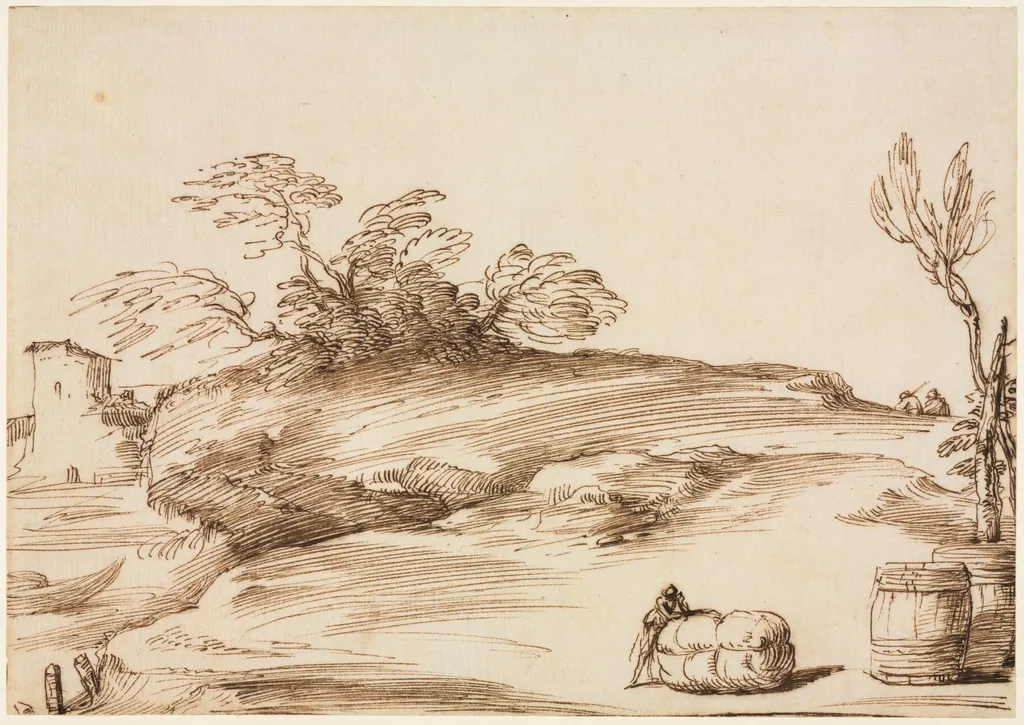
Landscape with a Man Leaning on a Bale is a drawing by the Baroque artist Guercino. It dates from 1640 and is held in the collection of the Cleveland Museum of Art.
About this work
Overview
This ink drawing by Guercino belongs to a tradition of Italian landscape studies that gained momentum in the 17th century.
This ink drawing by Guercino belongs to a tradition of Italian landscape studies that gained momentum in the 17th century. Though primarily known for figural compositions, Guercino turned to drawing to explore natural settings with spontaneity. The work captures a quiet rural moment, rendered in fluid, economical strokes that prioritize atmosphere over detail, distinguishing it from his more formal painted works.
Subject & Meaning
A solitary figure leans against a hay bale in a gently undulating field, his presence subdued against expansive skies and distant hills. The man is not the focus but a quiet anchor within the landscape, suggesting contemplation or rest. The scene holds no narrative or mythological reference, making it unusual for Guercino, who typically embedded figures within dramatic or allegorical contexts.
Technique & Style
Executed in loose, rapid pen strokes, the drawing employs varied line weight and subtle ink washes to suggest form and depth. The composition balances asymmetry with harmony, guiding the eye across the terrain through implied movement. Light and shadow are suggested rather than modeled, reflecting an intuitive grasp of chiaroscuro without heavy contrast.
History & Provenance
The drawing survives as one of a small group of landscape studies by Guercino, likely made as preparatory observations or personal exercises. Its intimate scale and unfinished quality indicate it was not intended for public display. It entered institutional collections in the 19th century, valued for its expressive draftsmanship rather than its subject matter.
Context
While landscape painting was emerging as an independent genre in Italy during the 1600s, most artists still treated nature as a backdrop. Guercino’s drawings stand apart for their focus on the land itself, influenced by northern European sketches and the growing interest in observed reality. His approach reflects a shift toward direct engagement with the natural world.
Legacy
This work exemplifies how 17th-century draftsmen used drawing to investigate nature independently of commission or doctrine. Guercino’s landscape studies influenced later artists seeking to capture atmosphere and spatial depth with minimal means. Though not widely exhibited in his time, they now serve as key documents in the evolution of Italian landscape drawing.
Own this work as a print
Artist & collection
Artist
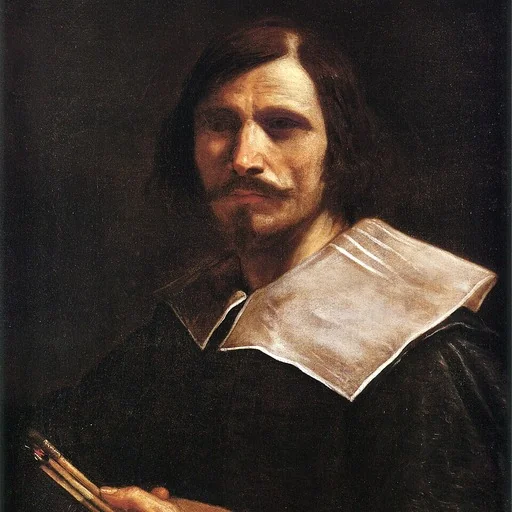
Giovanni Francesco Barbieri (8 February 1591 – 22 December 1666), better known as (il) Guercino (Italian pronunciation: ), was an Italian Baroque painter and draftsman from Cento in the Emilia region, who was active in Rome and Bologna.

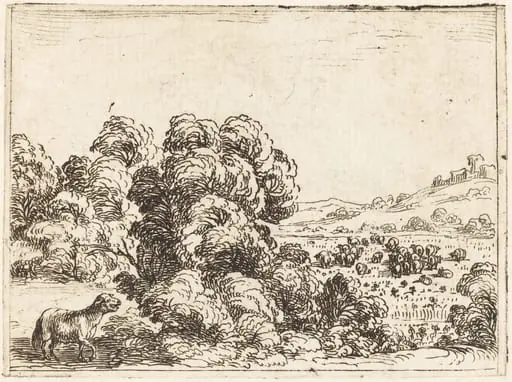 Sheep Calling Lamb
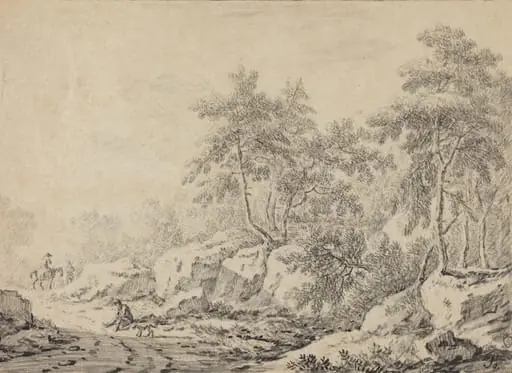 Travelers in a Rocky Wood
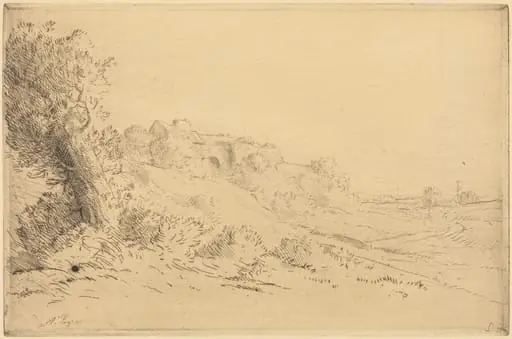 My Farm (Ma ferme)
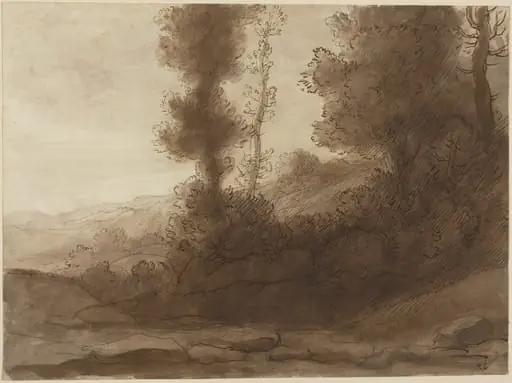 At the Foot of the Hill
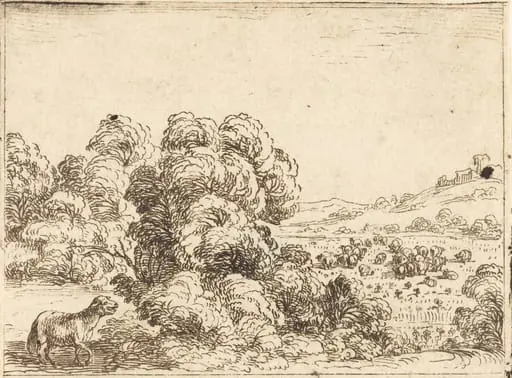 Sheep Calling Lamb
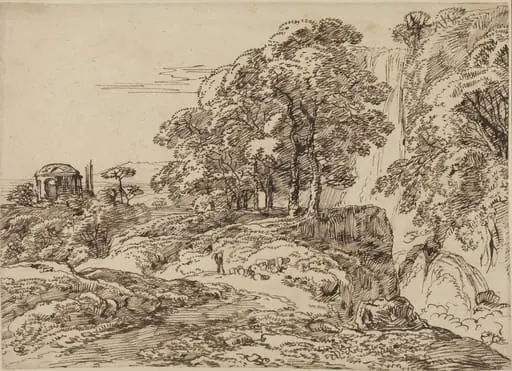 Pastoral Landscape with a Waterfall and a Temple
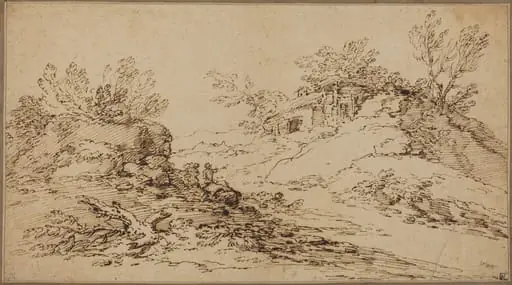 Rocky Landscape with a Rustic House
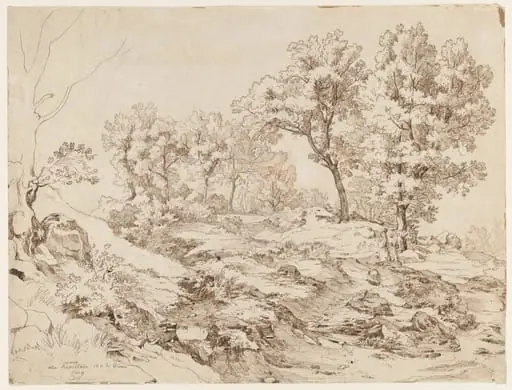 La Serpentara near Olevano
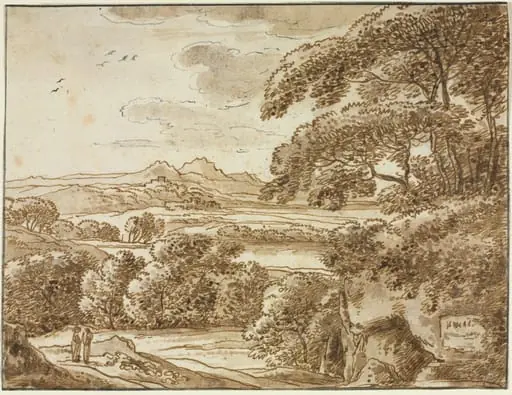 Landscape
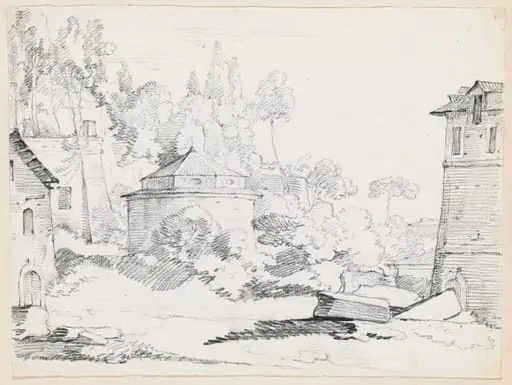 Landscape with the Church of San Teodoro
 Landscape with Small Group of Buildings
 Farmhouse on the Slope of a Hill