Artwork
Landscape with the Church of San Teodoro
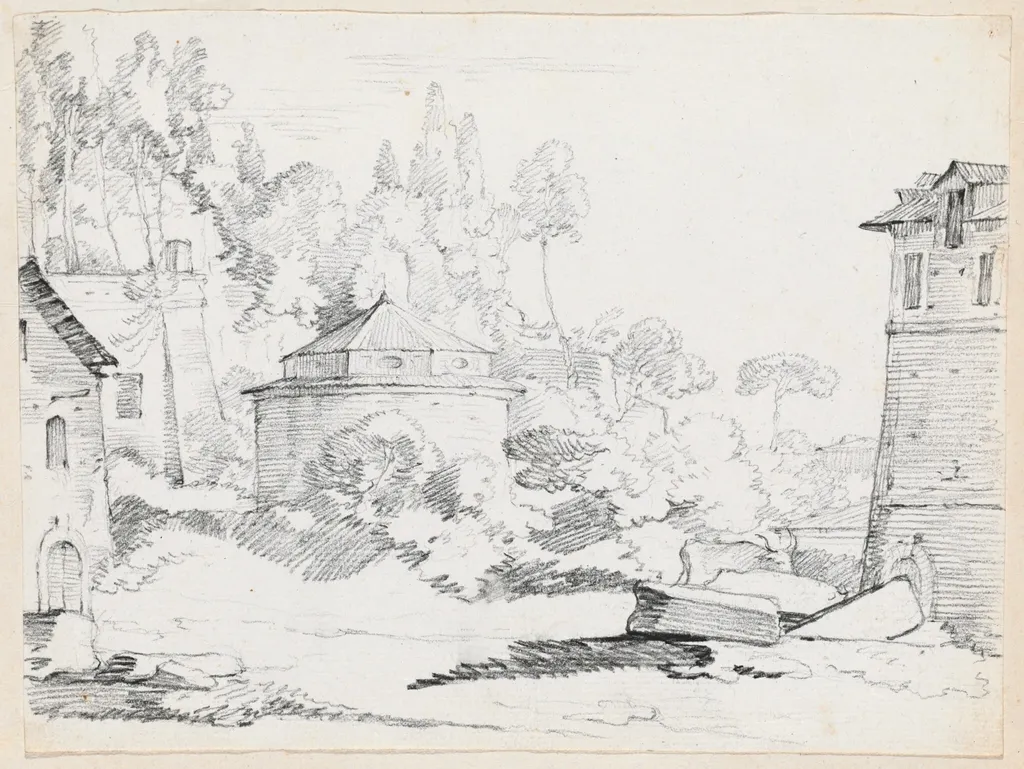
Landscape with the Church of San Teodoro is a graphite drawing by the Baroque artist Joseph-Marie Vien. It dates from 1747 and is held in the collection of the National Gallery of Art.
About this work
Overview
Executed on laid paper, the work belongs to a period when French artists were turning toward observed landscapes rather than idealized compositions.
Created in 1747, this graphite drawing by Joseph-Marie Vien captures a modest rural scene near the Church of San Teodoro. Executed on laid paper, the work belongs to a period when French artists were turning toward observed landscapes rather than idealized compositions. The medium’s simplicity and the quiet subject reflect a shift in artistic focus toward everyday environments, signaling a departure from grand historical or mythological themes.
Subject & Meaning
The drawing presents three modest structures clustered by a body of water, with one elevated on a low platform. The church, identifiable by its curved roof, anchors the composition without dominating it. Surrounding trees and gentle water lines suggest a tranquil, unremarkable locale. There is no narrative or symbolic flourish—instead, the scene conveys a quiet attentiveness to place, valuing observation over embellishment.
Technique & Style
Vien employed graphite with restrained precision, using varied pressure to create subtle tonal gradations across the textured paper. The water is rendered in loose, wavy strokes, while architectural forms are defined by clean, economical lines. The absence of color and the emphasis on line and tone align with preparatory drawing practices of the time, suggesting this may have been a study for a larger work or a personal record of a journey.
History & Provenance
The drawing dates from Vien’s early career, before his appointment as Premier peintre du Roi in 1789. It was likely made during his time in Italy, where many French artists traveled to study classical and Renaissance sites. Though its early ownership is undocumented, its survival as a standalone work indicates it was valued for its observational quality rather than as a mere sketch.
Context
In mid-18th-century France, landscape drawing was gaining legitimacy as an artistic pursuit, influenced by Italian and Dutch precedents. Vien’s work reflects this trend, aligning with a growing interest in naturalism and topographical accuracy. Unlike Baroque drama, this scene avoids theatrical lighting or emotional intensity, instead embracing calm observation—a precursor to the more systematic landscape studies of later decades.
Legacy
This drawing exemplifies a quiet transition in French art: from grand historical subjects to intimate, real-world observations. While Vien is better known for his neoclassical paintings, this graphite study reveals his foundational engagement with nature and place. It stands as a modest but significant record of how artists began to see landscape not as backdrop, but as subject worthy of careful attention.
Artist & collection
Artist
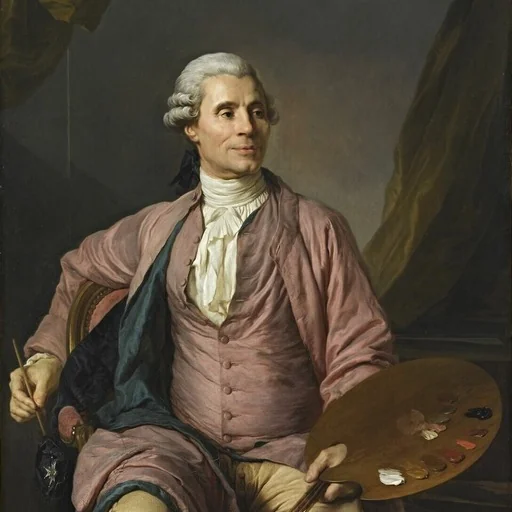
Joseph-Marie Vien (18 June 1716 – 27 March 1809) was a French painter. He was the last holder of the post of Premier peintre du Roi, serving from 1789 to 1791, before it was abolished during the French Revolution.

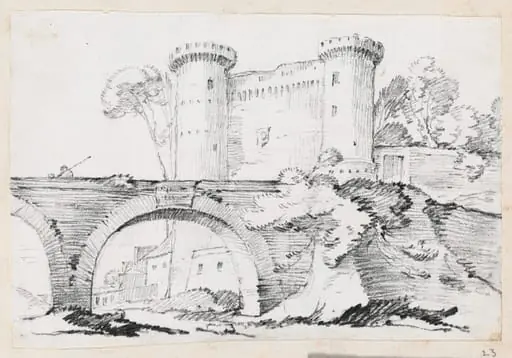
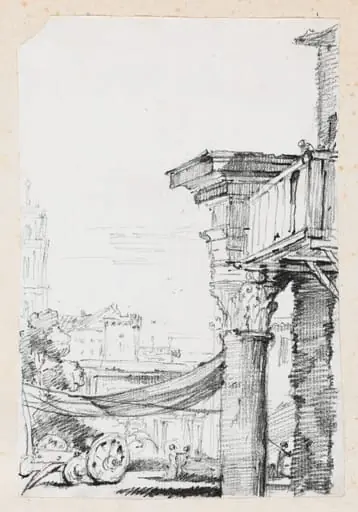
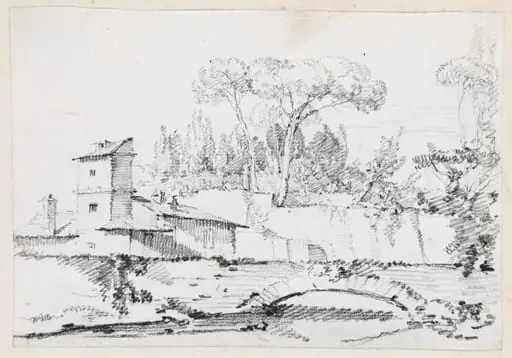 View of the Prato of the Villa Borghese
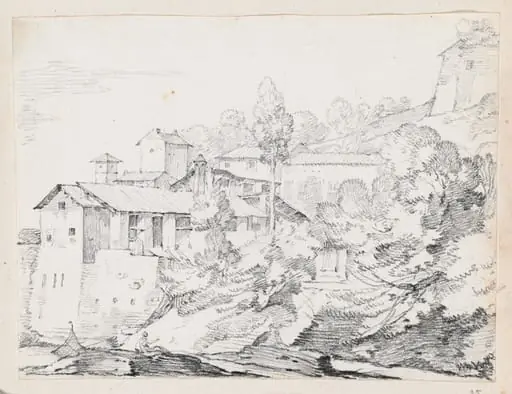 Italian Buildings on a Hillside
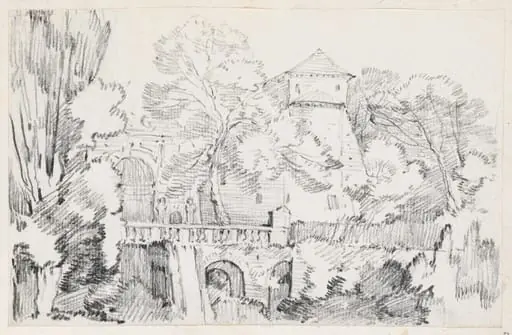 The Water Organ in the Gardens of the Villa d'Este, Tivoli
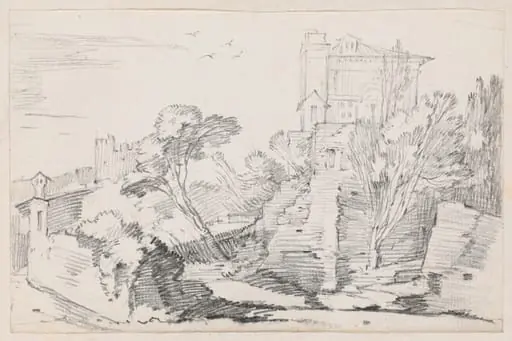 Casino Farnese on the Palatine Hill, Rome
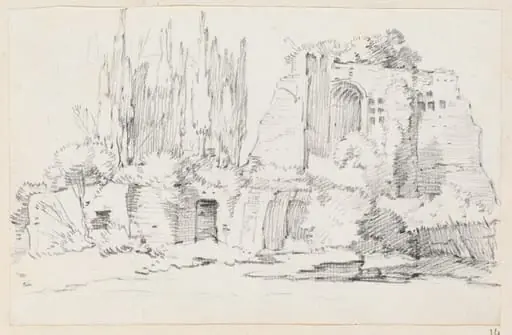 Roman Ruins with a Stand of Cypresses
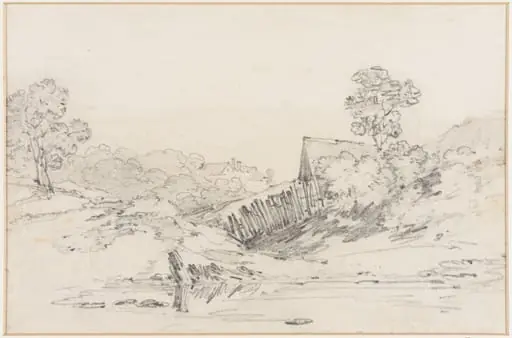 Cottage and landscape at Chirk, North Wales
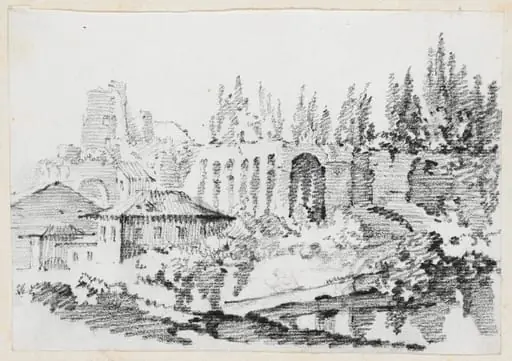 Ruins of the Imperial Palaces on the Palatine Hill
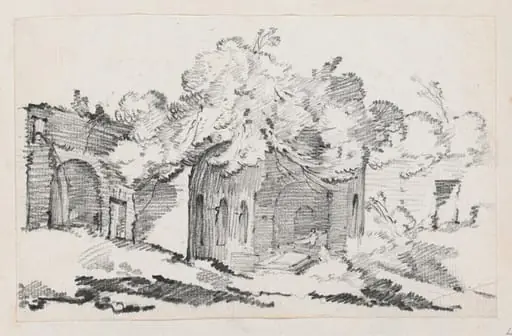 The Grotto of the Nymph Egeria
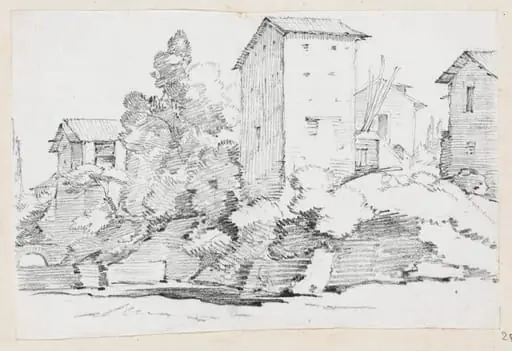 Italian Farm Buildings by a Stream