Artwork
The Triumph of David
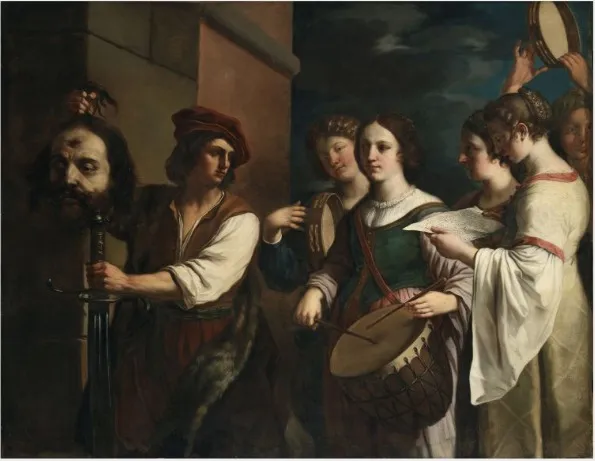
The Triumph of David is an oil painting by the Early Baroque Italian artist Guercino. It dates from 1638 and is held in the collection of the National Gallery of Ireland.
About this work
Overview
The Triumph of David, a circa 1638 oil painting by Guercino, captures a scene following David's defeat of Goliath, characterized by dramatic lighting and a group of figures reacting to the giant's severed head.
Subject & Meaning
The painting depicts the aftermath of David's victory, with the central focus on Goliath's beheaded head held by a figure, juxtaposed with the varied, subdued reactions of the surrounding group, comprising three women and a man playing a lute.
Technique & Style
Guercino employs chiaroscuro, a hallmark of early Baroque, to create dramatic tension through stark contrasts of light and dark, accentuating the faces, clothing, and the pivotal severed head.
History & Provenance
Attributed to Guercino (Giovanni Francesco Barbieri), a prominent Italian Baroque painter, the work is part of the National Gallery of Ireland's collection, reflecting his early dynamic style.
Context
Created during the Italian Baroque period, the painting's indoor setting with figures in simple yet distinctive attire (notably red sashes) and the inclusion of a lute player, adds a layer of domestic intimacy to a biblical narrative.
Artist & collection

Artist
Giovanni Francesco Barbieri (8 February 1591 – 22 December 1666), better known as (il) Guercino (Italian pronunciation: ), was an Italian Baroque painter and draftsman from Cento in the Emilia region, who was active in Rome and Bologna.




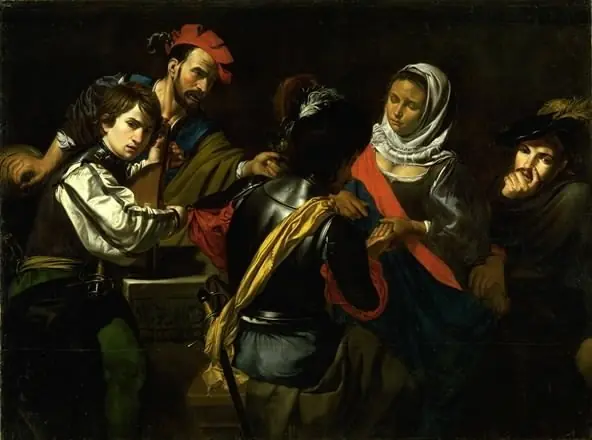 The Gipsy Fortune Teller
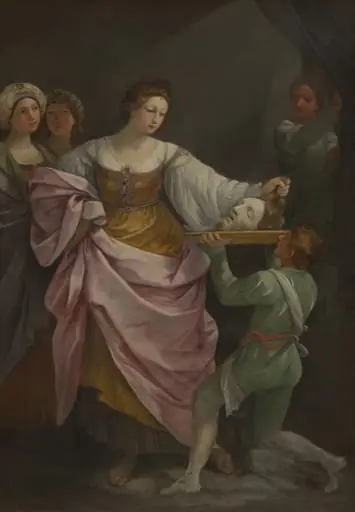 Salome with the Head of Saint John the Baptist
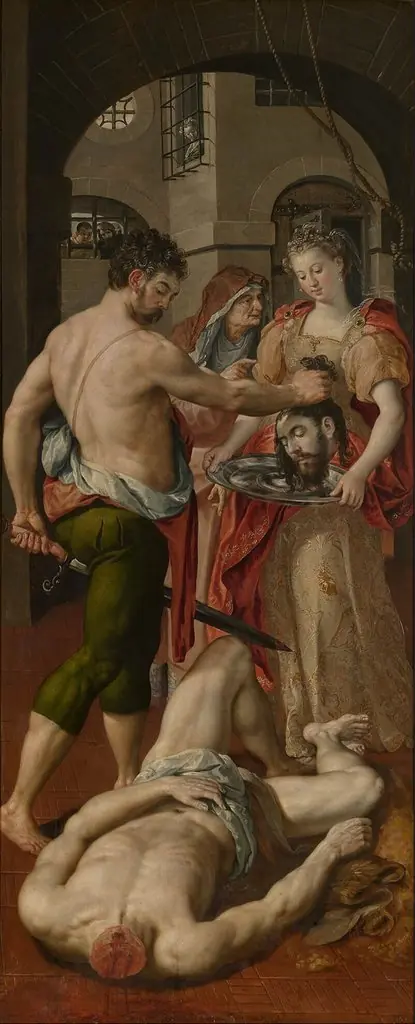 The Beheading of Saint John-Baptist
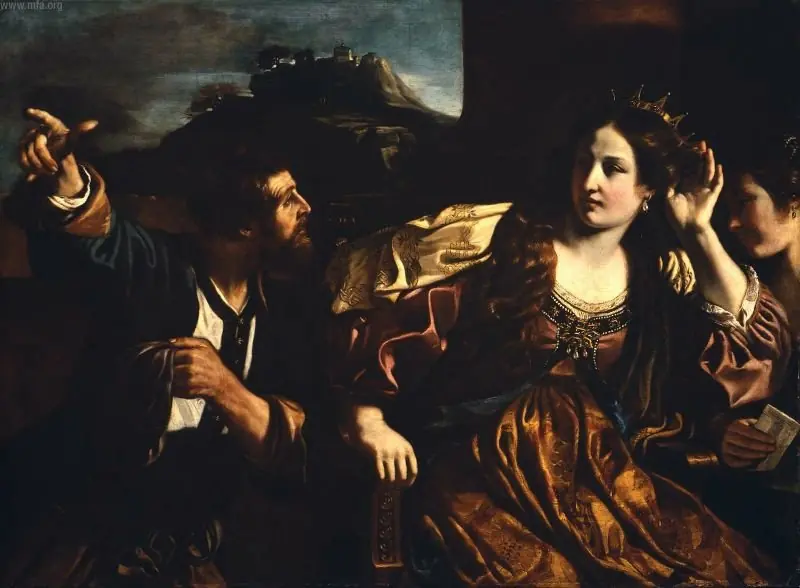 Semiramis Receiving Word of the Revolt of Babylon
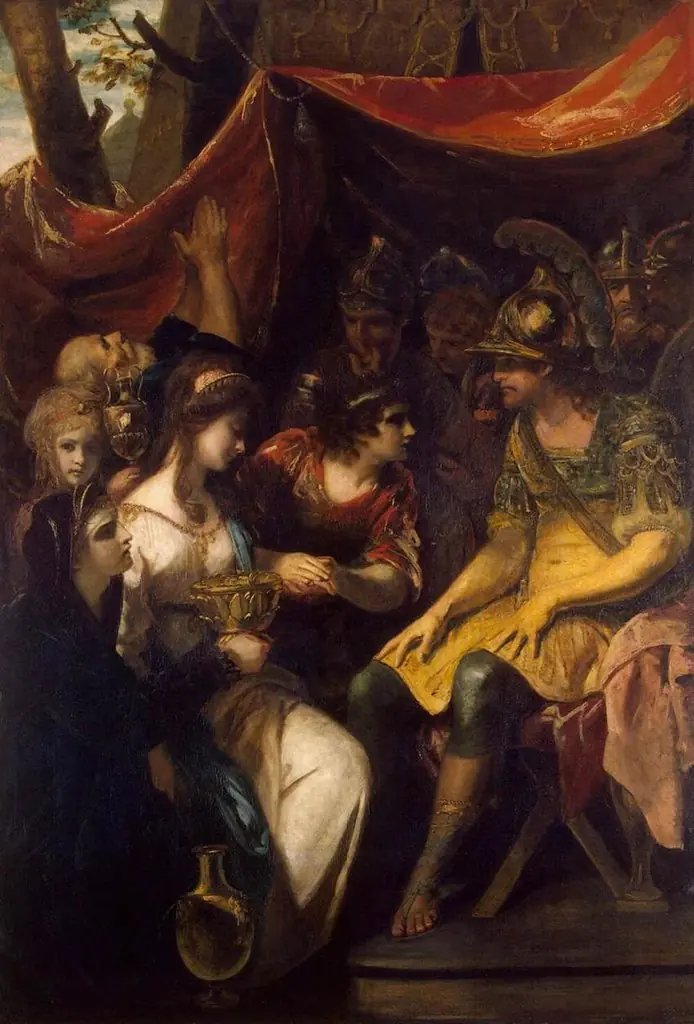 Continence of Scipio
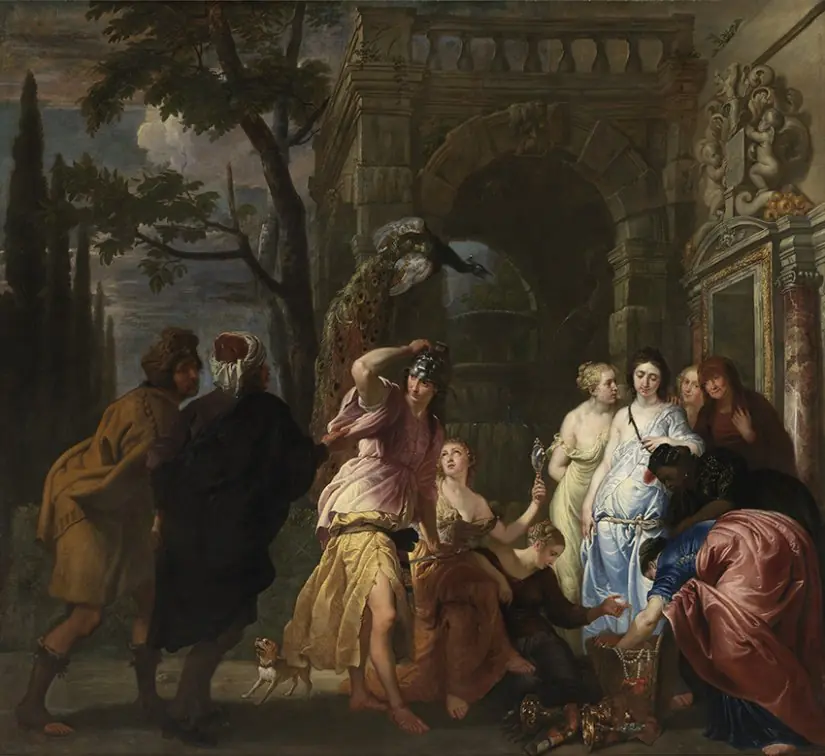 Achilles among the Daughters of Lycomedes
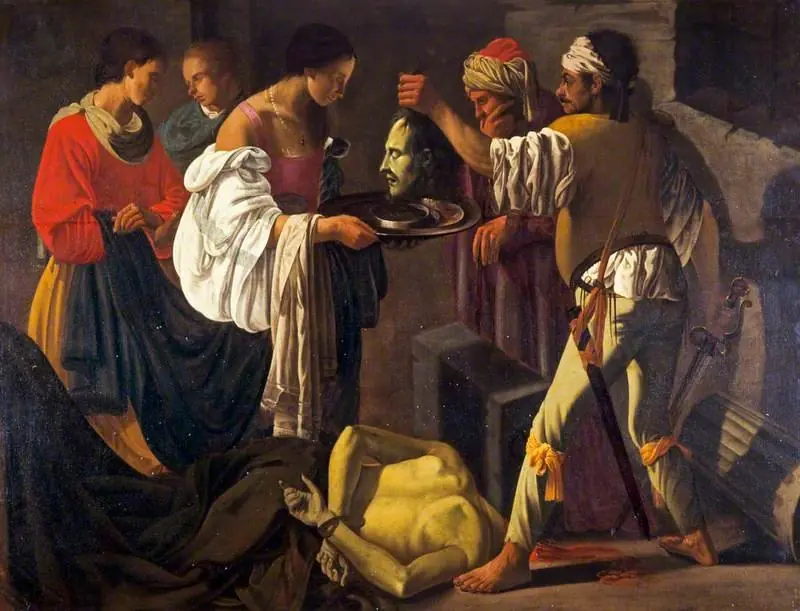 The Beheading of Saint John the Baptist
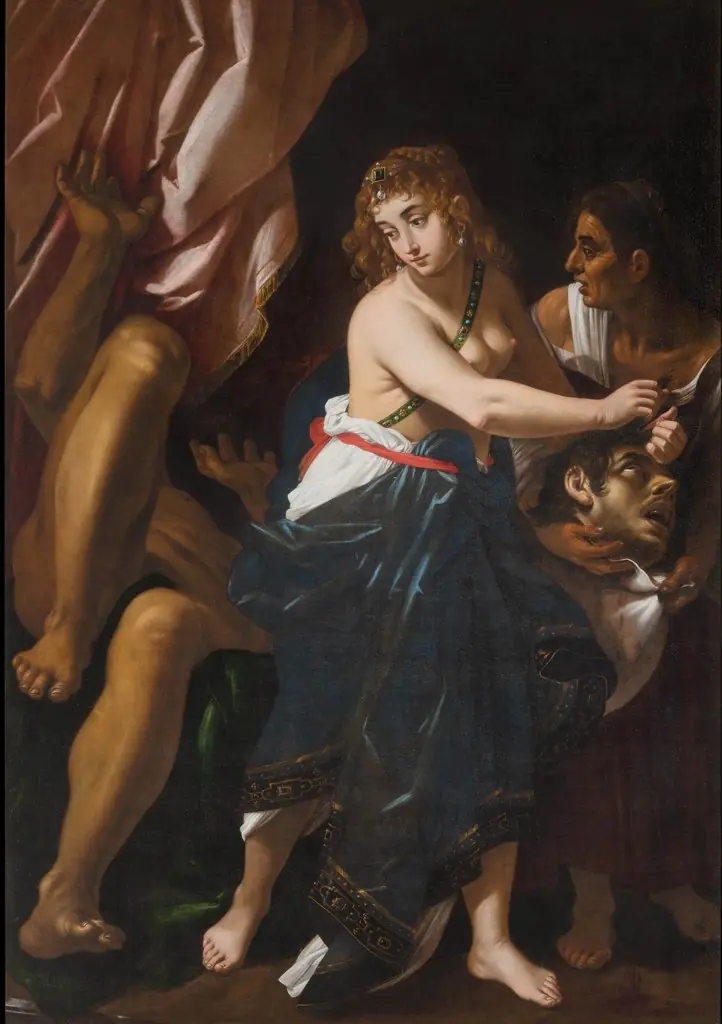 Judith and the Head of Holofernes
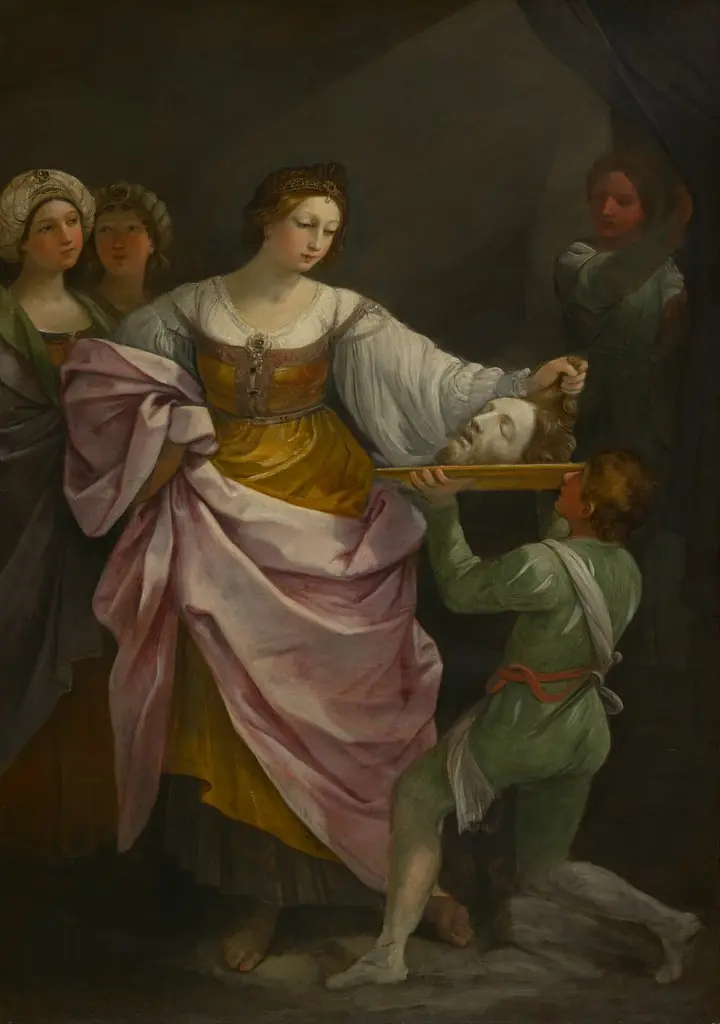 Salome with the Head of Saint John the Baptist