Artwork
Saint Catherine
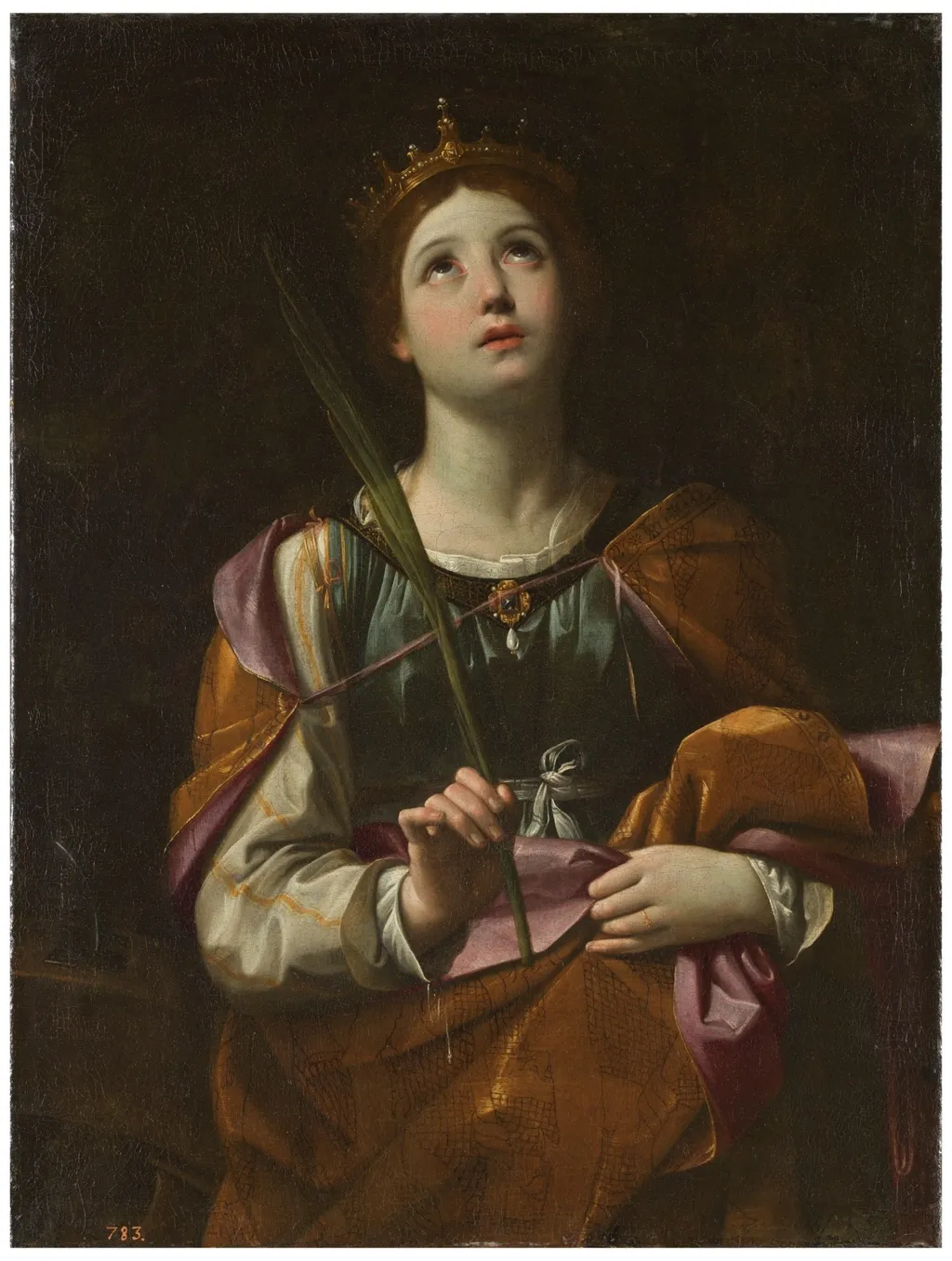
Saint Catherine is an oil painting by the Early Baroque Italian artist Guido Reni. It dates from 1606 and is held in the collection of the Museo del Prado.
About this work
Overview
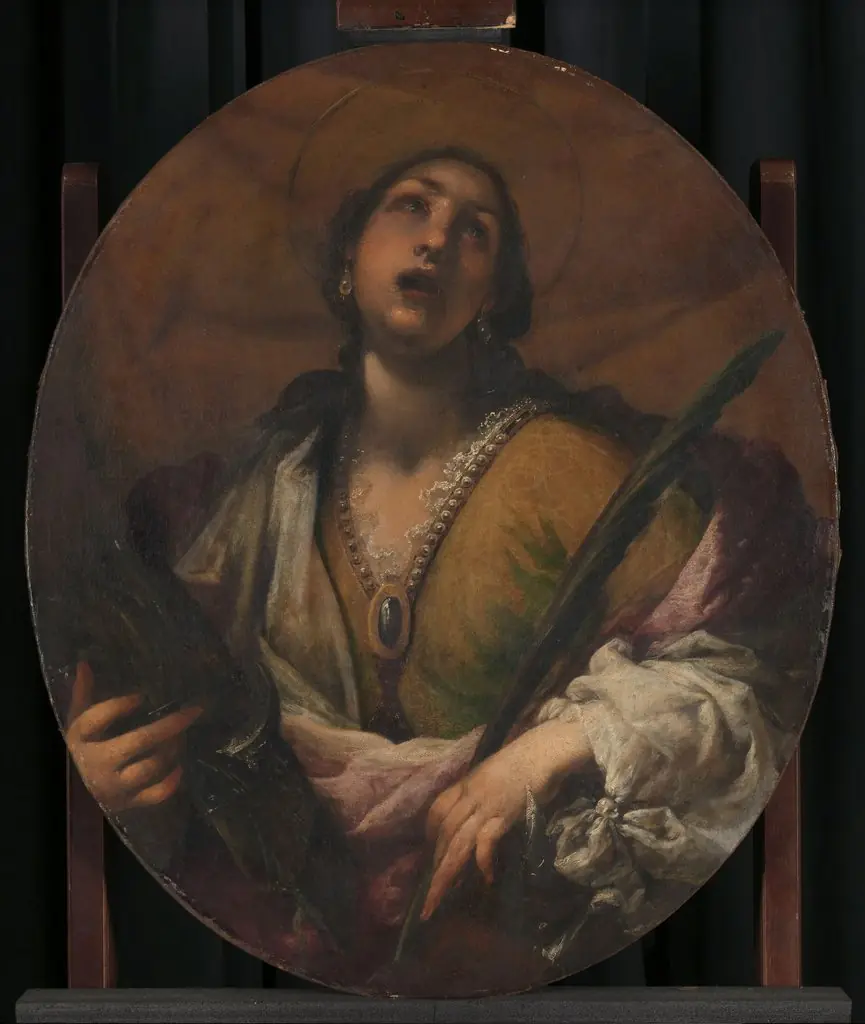
The work depicts Saint Catherine of Alexandria, identifiable by her golden crown and the palm branch of martyrdom she holds in her right hand.
Guido Reni's Saint Catherine, executed in 1606, is a quintessential example of his early Baroque style, characterized by a refined classical idealism and a restrained palette. The work depicts Saint Catherine of Alexandria, identifiable by her golden crown and the palm branch of martyrdom she holds in her right hand. She is dressed in a dark green robe over a white undergarment, with a golden cloth lined in pink draped over her left arm. Reni employs a dark, neutral background to isolate the figure, focusing the viewer's attention on her serene expression and the luminous quality of her skin and drapery. This painting reflects Reni's transition from the Mannerist influences of his teacher, the Carracci, toward a more purified, High Renaissance-inspired aesthetic that would define his mature career. The composition balances naturalistic detail with an idealized grace, emphasizing the saint's spiritual purity and intellectual dignity rather than dramatic action. Created during a period when Reni was establishing his reputation in Rome, the work demonstrates his mastery of oil paint to render soft textures and subtle tonal transitions, securing his status as a leading religious painter of the seventeenth century.
Subject & Meaning
The figure is identified as Saint Catherine of Alexandria, a martyr traditionally shown with a palm branch symbolising victory over death and a crown denoting her royal lineage. The inclusion of a wheel, her customary attribute, is implied by the painting’s title, reinforcing her identity within the iconographic conventions of early‑Baroque hagiography.
Technique & Style
Reni employs chiaroscuro to model the saint’s form, contrasting illuminated flesh and garment against the enveloping darkness. The subtle gradations of light on the gold crown and drapery enhance the three‑dimensional effect, while the restrained palette of greens and golds underscores the solemnity of the subject.
History & Provenance
Created in the early seventeenth century, the work entered the collection of the Museo del Prado, where it remains on display. Its acquisition reflects the museum’s broader effort to assemble representative examples of Italian Baroque religious painting.
Context
Reni’s depiction aligns with contemporary Counter‑Reformation aims, presenting saints as clear, didactic exemplars of faith. The painting’s subdued drama and emphasis on spiritual triumph echo the period’s theological emphasis on personal piety and the visual reinforcement of saintly virtues.
Own this work as a print
Artist & collection
Artist
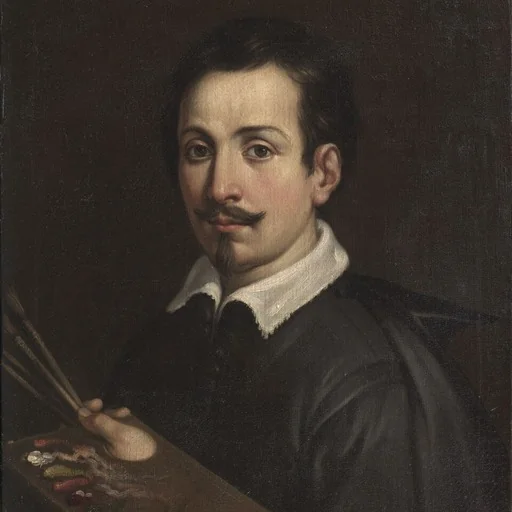
Guido Reni was an Italian Baroque painter, although his works showed a classical manner, similar to Simon Vouet, Nicolas Poussin, and Philippe de Champaigne.