Artwork
The Grotto of Posillipo, Naples
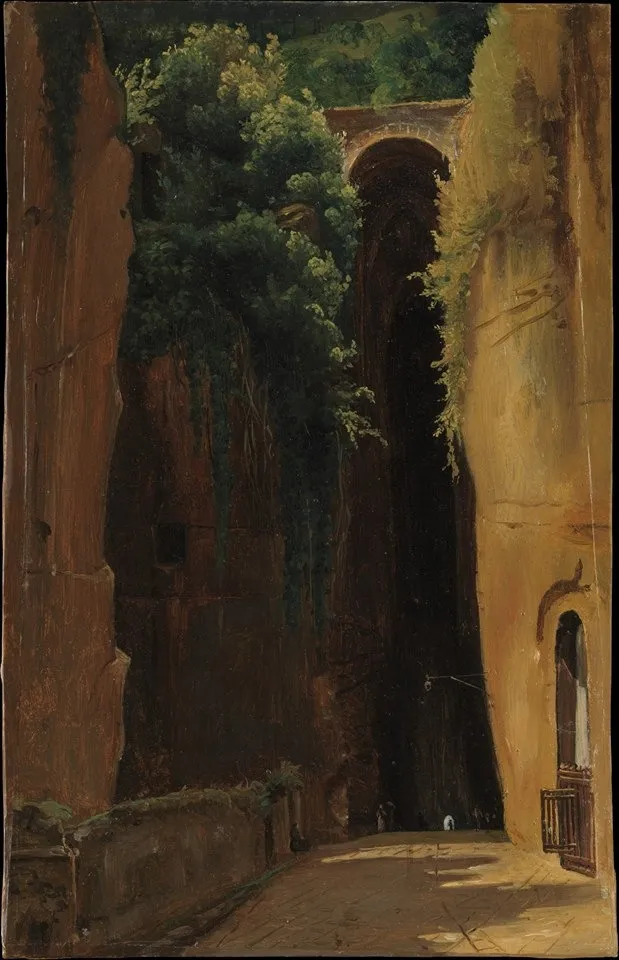
The Grotto of Posillipo, Naples is an unspecified painting by Gustaf Söderberg. It dates from 1820 and is held in the collection of the Metropolitan Museum of Art.
About this work
Overview
Gustaf Söderberg’s 1820 oil painting titled *The Grotto of Posillipo, Naples* captures a cramped passageway set within the coastal cliffs near Naples. The work is part of the Metropolitan Museum of Art’s collection and presents a dimly lit, descending alley that opens onto an arch obscured by dense vegetation.
Subject & Meaning
The composition focuses on a narrow, sloping corridor framed by contrasting stone tones—one side rendered in deep red‑brown, the other in warm yellow. Vines and foliage climb the walls, suggesting nature’s encroachment on human‑made spaces and creating a sense of quiet seclusion within the larger landscape of the Posillipo coast.
Technique & Style
Söderberg employs a pronounced chiaroscuro effect, juxtaposing bright illumination on one wall with deep shadow on the opposite side. The limited light source appears to filter from above, highlighting textures of rough stone and wet ground, while the thick green vegetation is rendered with loose, expressive brushwork that enhances the scene’s atmospheric depth.
History & Provenance
Painted in the early nineteenth century, the work reflects the Romantic fascination with dramatic natural settings. After changing hands among private collectors, the painting entered the Metropolitan Museum of Art, where it remains on view as an example of early European landscape painting that blends topographical observation with emotive lighting.
Artist & collection