Artwork
Farm
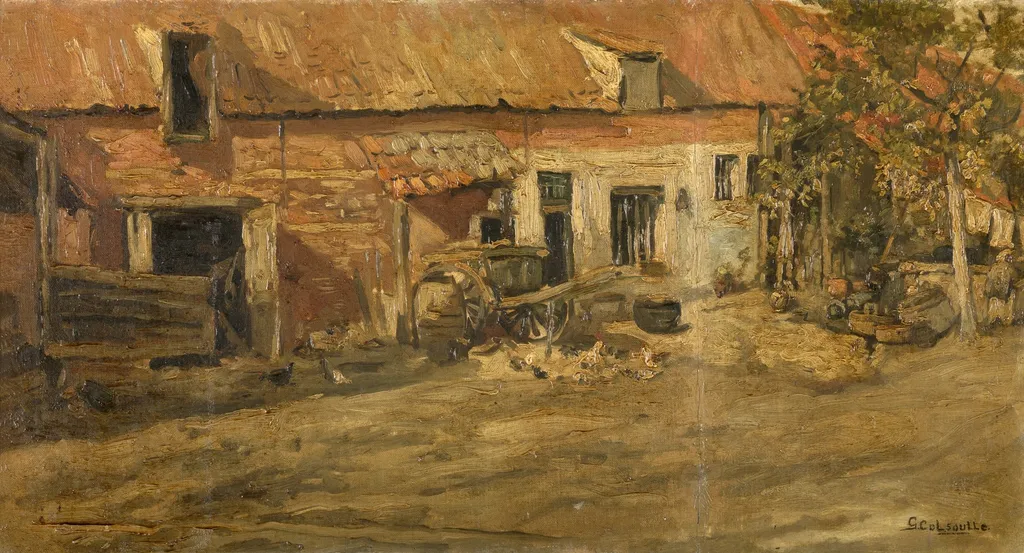
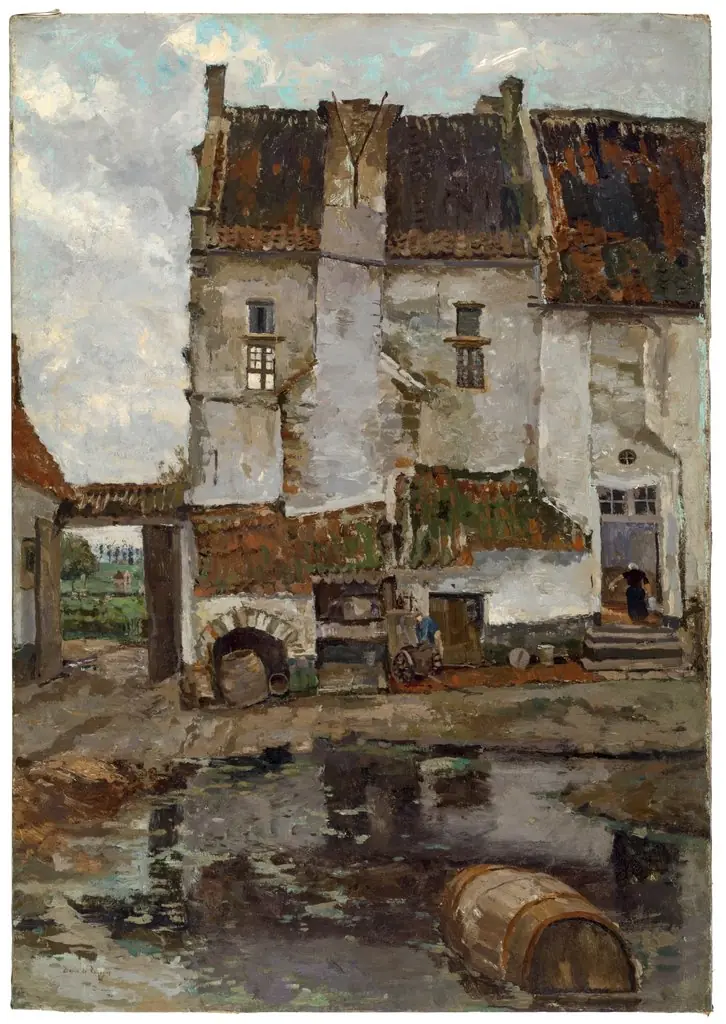
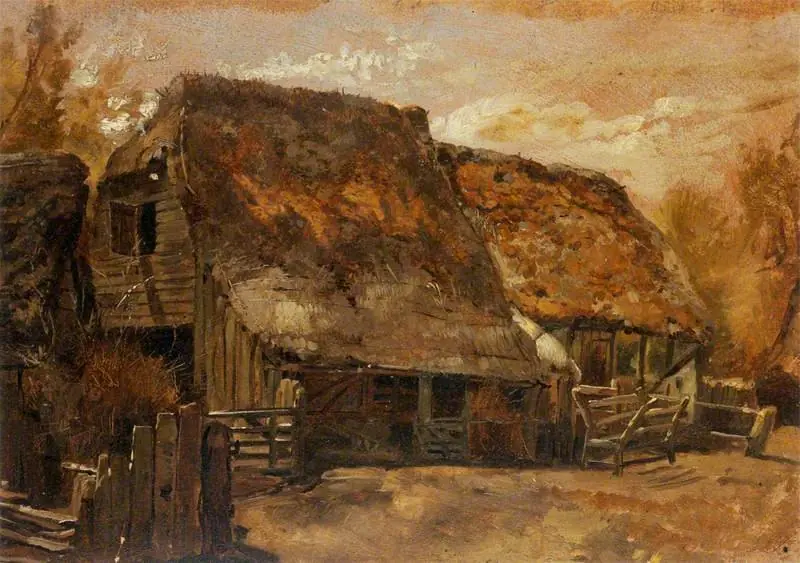
Farm is an oil painting by Gustave Colsoulle. It dates from 1879 and is held in the collection of the Royal Museum of Fine Arts Antwerp.
About this work
Overview
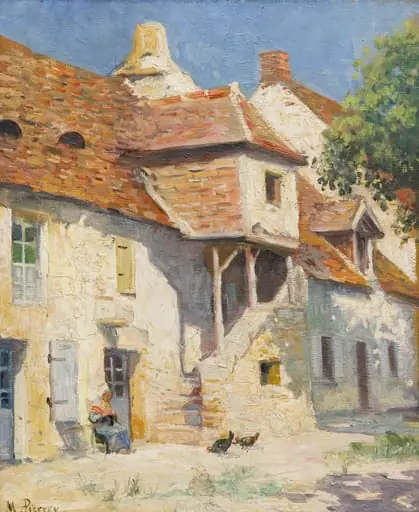
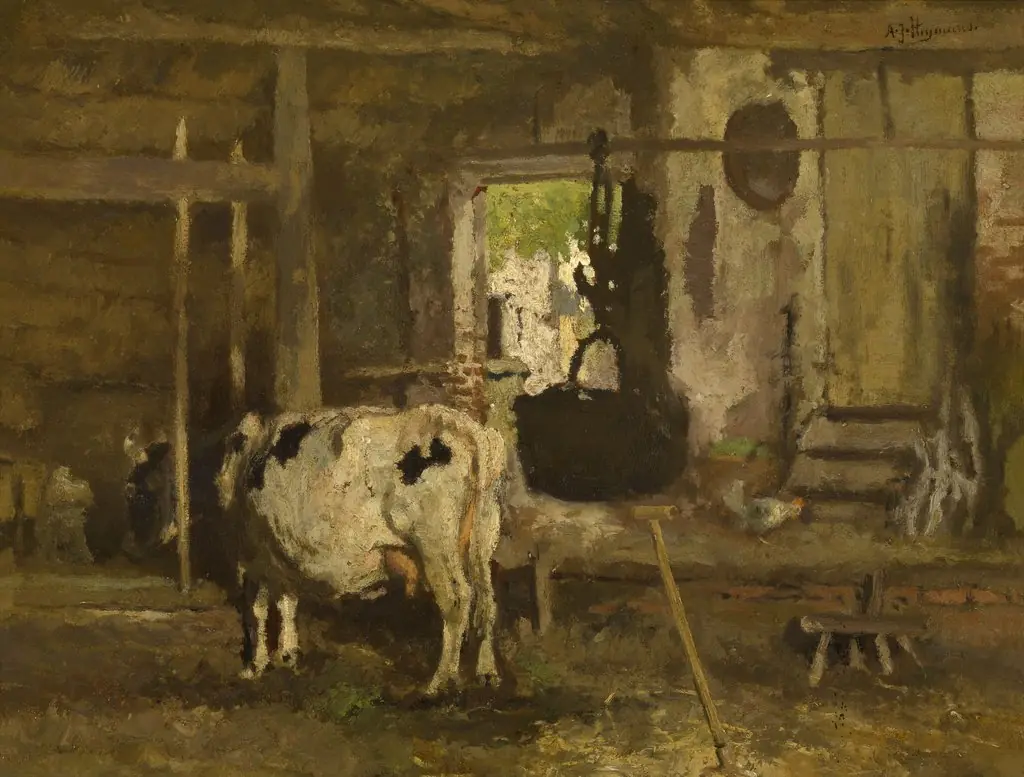
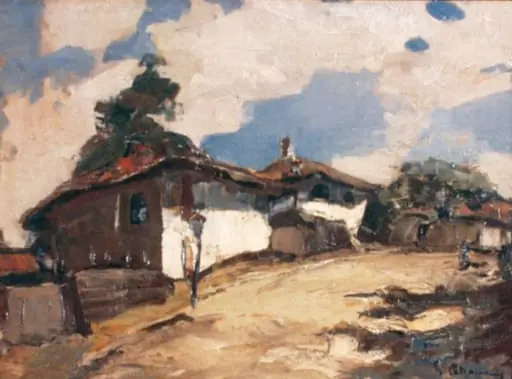
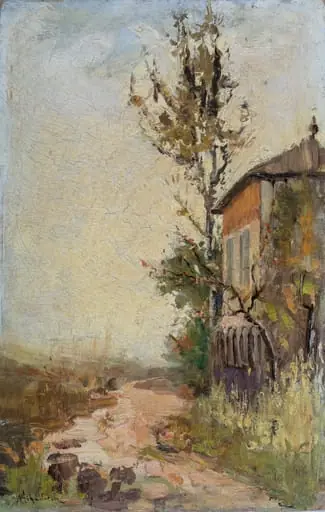
Painted around 1879, Farm is an oil-on-canvas landscape by Gustave Colsoulle, depicting a modest rural structure nestled in a quiet countryside setting.
Painted around 1879, Farm is an oil-on-canvas landscape by Gustave Colsoulle, depicting a modest rural structure nestled in a quiet countryside setting. The work resides in the collection of the Royal Museum of Fine Arts Antwerp. Its composition centers on a weathered farmhouse, rendered with attention to architectural detail and the subtle interplay of light and earth tones. The painting avoids dramatic elements, instead emphasizing stillness and the quiet endurance of agricultural life.
Subject & Meaning
The painting presents a solitary farmstead as the focal point, surrounded by sparse vegetation and undisturbed ground. No figures are present, reinforcing a sense of isolation and timelessness. The absence of human activity invites contemplation of labor, decay, and the quiet rhythm of rural existence. The structure, though worn, stands firm — suggesting resilience rather than neglect, and grounding the scene in the everyday reality of 19th-century peasant life.
Technique & Style
Colsoulle employs thick, deliberate brushwork in the foreground to create a tactile surface that mimics the texture of soil and grass. The building’s walls are rendered in muted earth tones, while the roof appears in deep reddish-brown, contrasting gently with the muted greens of the lone tree. The palette remains restrained, avoiding vivid hues in favor of naturalistic tones. The brushwork is neither polished nor impressionistic, but grounded in observation, prioritizing material presence over atmospheric effect.
History & Provenance
The painting entered the collection of the Royal Museum of Fine Arts Antwerp in the late 19th or early 20th century, likely through acquisition or donation. While little is documented about its early ownership, its presence in the museum’s holdings suggests it was recognized locally as representative of regional rural life. Colsoulle’s relative obscurity outside Belgium may explain the limited archival records surrounding its creation and early reception.
Context
Created during a period when European artists increasingly turned to rural subjects as industrialization reshaped society, Farm reflects a broader interest in authentic, unidealized landscapes. Unlike the romanticized farms of earlier generations, Colsoulle’s scene offers no nostalgia or sentimentality. It aligns with regional realist traditions in Belgium, where artists documented the quiet dignity of agricultural communities without embellishment.
Legacy
Though not widely exhibited beyond Belgium, Farm remains a quiet example of regional realism in 19th-century Belgian art. It contributes to the understanding of how local artists engaged with their immediate surroundings, avoiding grand narratives in favor of intimate, unadorned observation. The work continues to serve as a reference point for studies of rural representation in Belgian painting, valued for its restraint and sincerity.
Artist & collection