Artwork
Marine
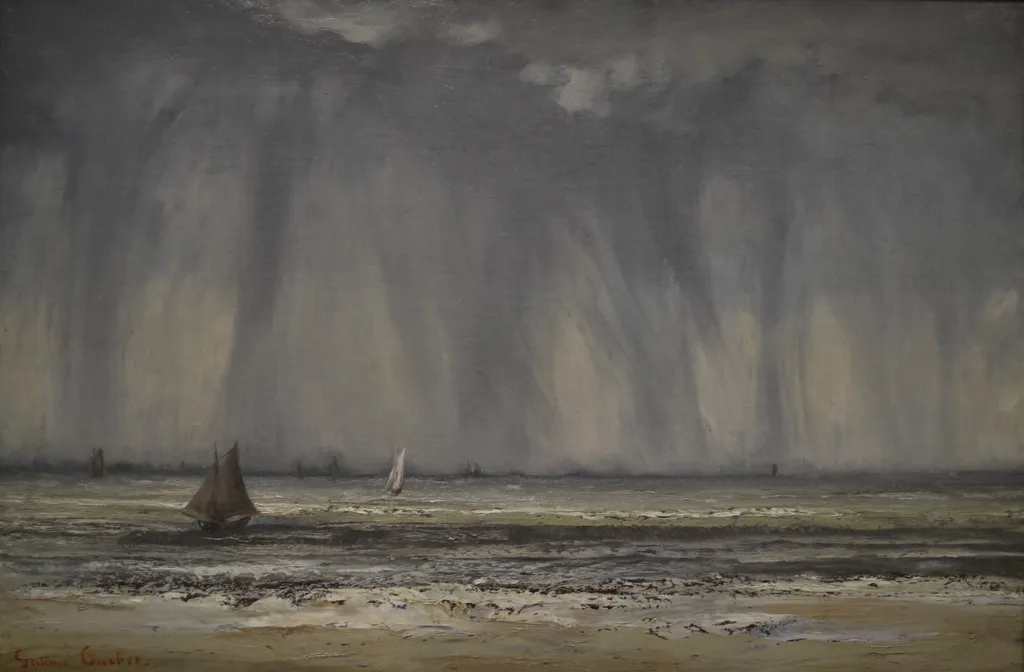
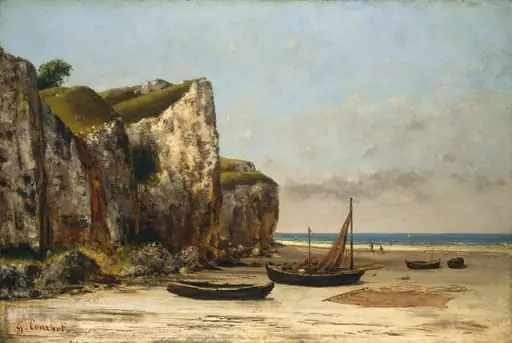
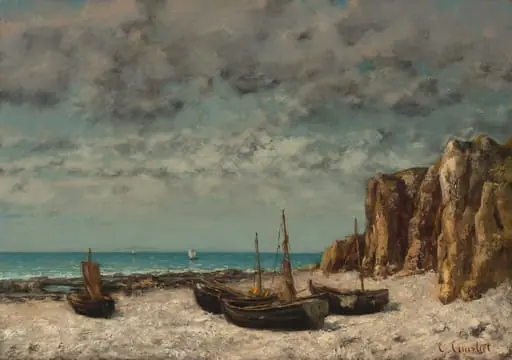
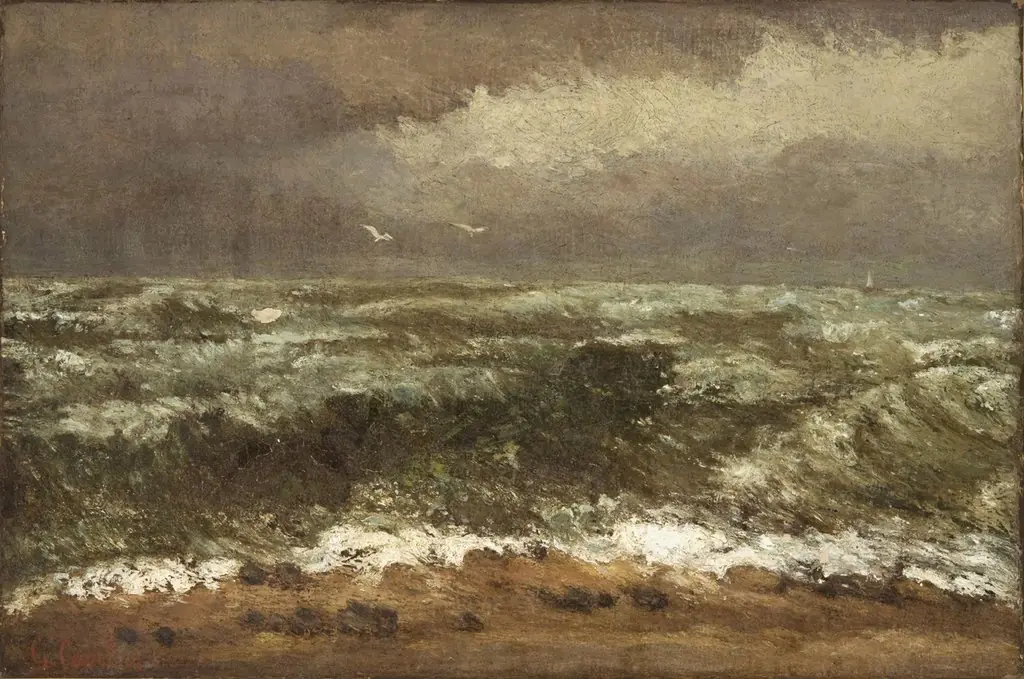
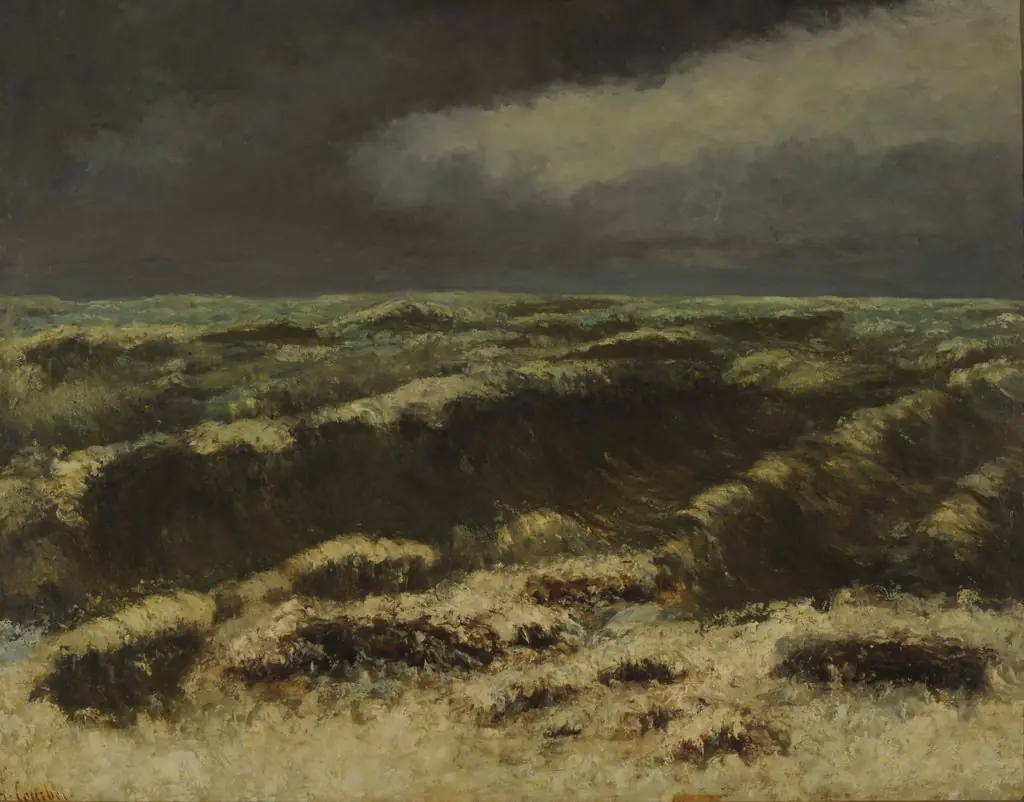
Marine is an oil painting by the Realist artist Gustave Courbet. It dates from 1866 and is held in the collection of the Philadelphia Museum of Art.
About this work
Overview
Gustave Courbet painted *Marine* in 1866 as an oil-on-canvas work that exemplifies his dedication to depicting nature without idealization.
Gustave Courbet painted *Marine* in 1866 as an oil-on-canvas work that exemplifies his dedication to depicting nature without idealization. Unlike the dramatic landscapes favored by academic traditions, this piece captures a quiet moment at sea, emphasizing direct observation over narrative or symbolism. It resides today in the Philadelphia Museum of Art, part of a broader body of work that challenged 19th-century artistic norms.
Subject & Meaning
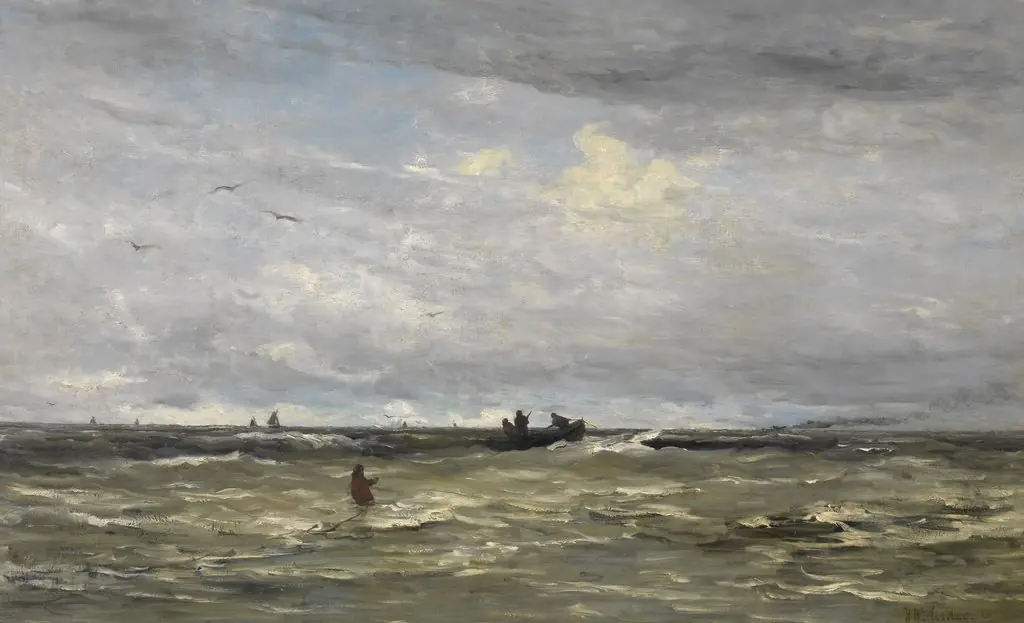
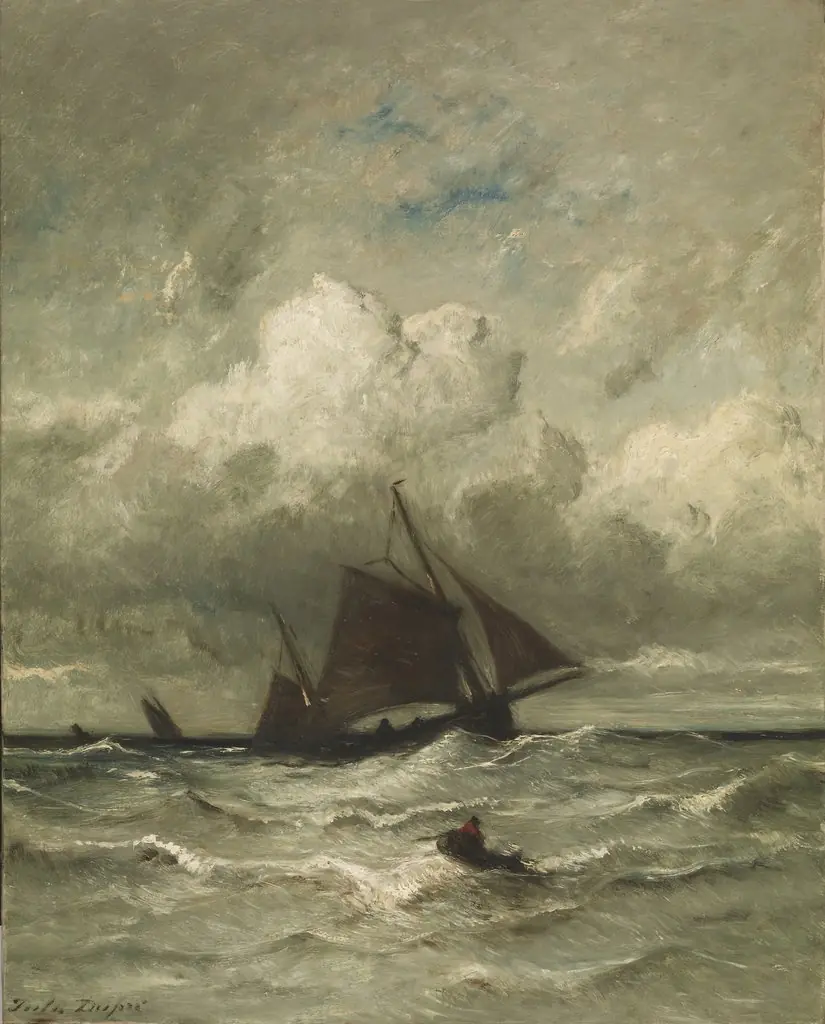
The painting presents a solitary sailboat on calm water, positioned slightly left of center beneath a broad, overcast sky. There is no human figure, no storm, no heroic gesture—only the quiet interaction of wind, water, and vessel. Courbet’s choice to focus on such an uneventful scene reflects his belief in the dignity of ordinary experience, rejecting theatricality in favor of atmospheric truth.
Technique & Style
Courbet applied thick, deliberate strokes of oil paint to convey the texture of sea and sky, using a muted palette of grays and soft blues. The brushwork is neither polished nor hurried; it records the physical presence of the elements with tangible weight. The horizon is deliberately low, emphasizing the sky’s dominance and reinforcing the painting’s meditative tone through spatial economy.
History & Provenance
Completed during Courbet’s mature period, *Marine* was created after he had already established himself as a leading figure in Realism. It entered the Philadelphia Museum of Art’s collection in the early 20th century, following a trajectory common to many European works acquired by American institutions during that era. Its provenance reflects its status as a significant, if understated, example of Courbet’s later output.
Context
In the 1860s, French art was divided between academic traditions and emerging alternatives. Courbet’s rejection of mythological or historical subjects in favor of everyday nature placed him at odds with the Salon system. *Marine* aligns with his broader project: to render the visible world with unembellished honesty, a stance that quietly paved the way for later movements seeking to break from convention.
Legacy
Though not as widely discussed as his larger works, *Marine* contributed to a shift in how artists approached natural subjects. Its emphasis on atmosphere, materiality, and compositional restraint influenced Impressionists in their study of light and Cubists in their treatment of form. Courbet’s insistence on painting what he saw, without embellishment, became a foundational principle for modernist experimentation.
Own this work as a print
Artist & collection
Artist
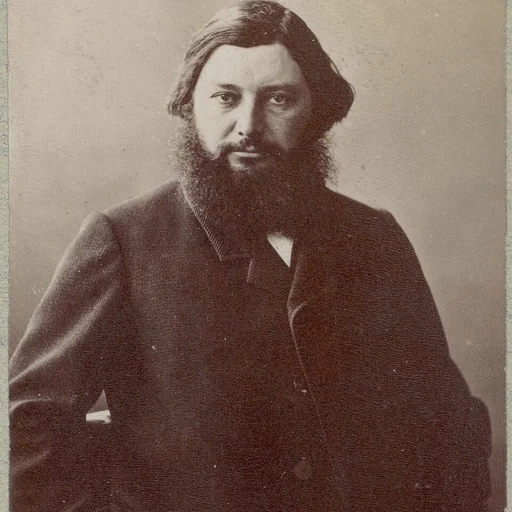
Jean Désiré Gustave Courbet (UK: KOOR-bay; US: koor-BAY; French: ; 10 June 1819 – 31 December 1877) was a French painter who led the Realism movement in 19th-century French painting.