Artwork
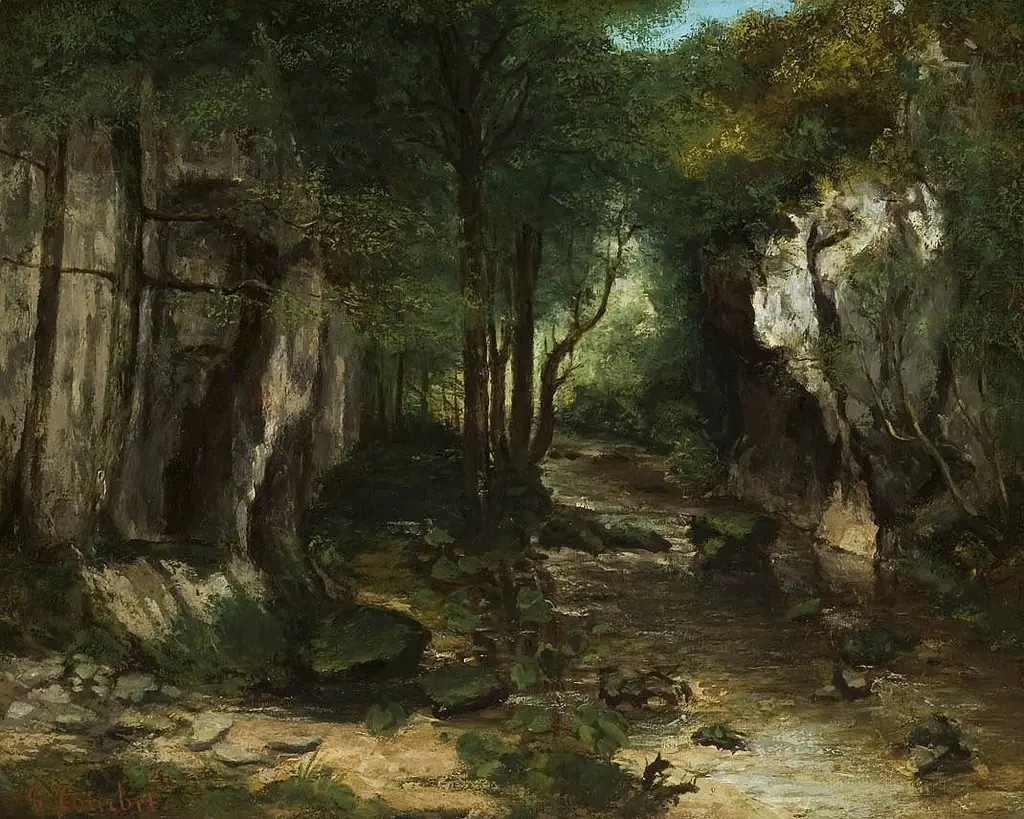
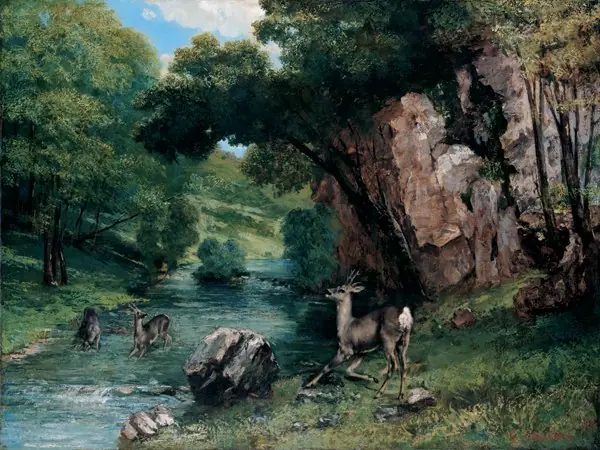
La remise des chevreuils au ruisseau de Plaisir-Fontaine
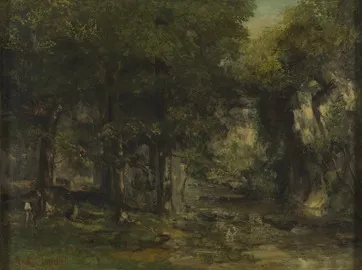
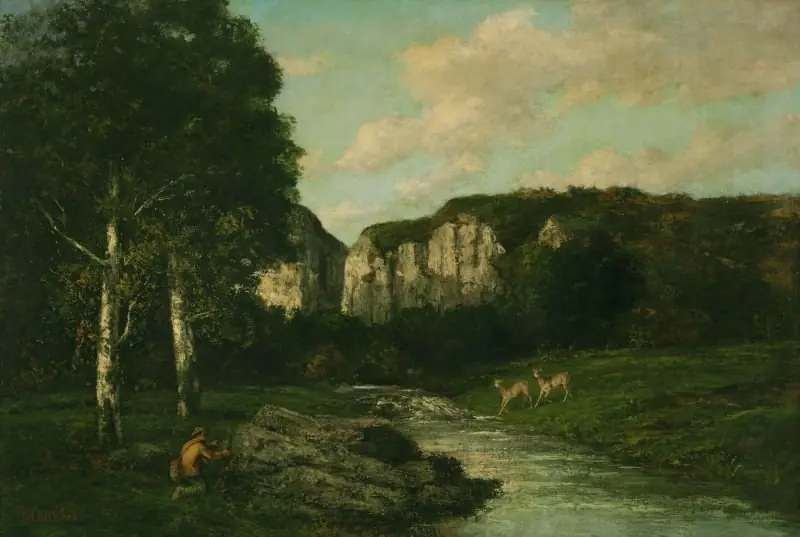
La remise des chevreuils au ruisseau de Plaisir-Fontaine is an oil painting by the Realist artist Gustave Courbet. It dates from 1865 and is held in the collection of the Royal Museums of Fine Arts of Belgium.
About this work
Overview
It depicts a quiet rural scene in which deer are being led to a stream, reflecting the artist’s dedication to depicting everyday life without idealization.
Painted in 1865, *La remise des chevreuils au ruisseau de Plaisir-Fontaine* is an oil on canvas work by Gustave Courbet. It depicts a quiet rural scene in which deer are being led to a stream, reflecting the artist’s dedication to depicting everyday life without idealization. The painting belongs to the collection of the Royal Museums of Fine Arts of Belgium and exemplifies Courbet’s commitment to realism over academic or romanticized subjects.
Subject & Meaning
The scene shows the deliberate act of returning deer to a natural water source, a modest rural ritual rendered without drama or symbolism. Courbet avoids narrative grandeur, instead focusing on the unembellished interaction between humans and nature. The quietness of the moment underscores his belief in art’s capacity to reveal dignity in ordinary, observable acts.
Technique & Style
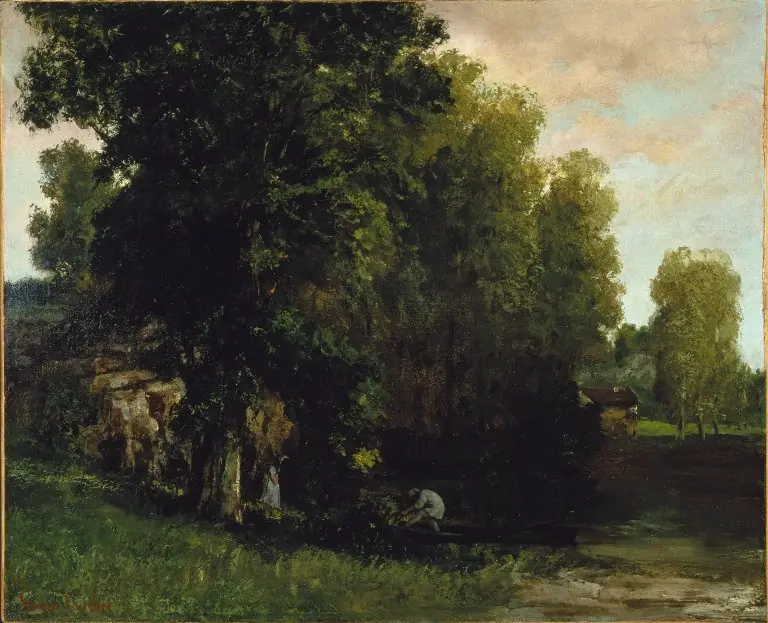
Courbet employed thick, deliberate brushwork and a restrained palette of earth tones—olive, ochre, and muted greens—to convey texture and atmosphere. The composition emphasizes the landscape, with trees and foliage dominating the foreground, while a distant structure suggests human presence without intrusion. His handling of light and form rejects academic polish in favor of tactile, physical presence.
History & Provenance
Created during a period when Courbet was actively challenging the Salon’s dominance, this painting was part of his broader effort to legitimize non-heroic subjects in fine art. It entered the Royal Museums of Fine Arts of Belgium’s collection in the late 19th century, likely through acquisition or donation, and has remained there since, preserving its original context within a European public collection.
Context
In mid-19th-century France, academic painting favored mythological or historical themes. Courbet’s choice to paint a simple rural transaction aligned with his Realist manifesto, which insisted art should reflect contemporary life. This work emerged alongside his broader rejection of Romanticism and contributed to a shift toward observational painting that later influenced Impressionist and even early modernist approaches.
Legacy
Though not among Courbet’s most widely exhibited works, *La remise des chevreuils au ruisseau de Plaisir-Fontaine* exemplifies his enduring influence on the autonomy of landscape and everyday subject matter in modern art. Its quiet realism helped dismantle hierarchical conventions in painting, paving the way for artists who prioritized direct perception over idealized narrative.
Artist & collection
Artist
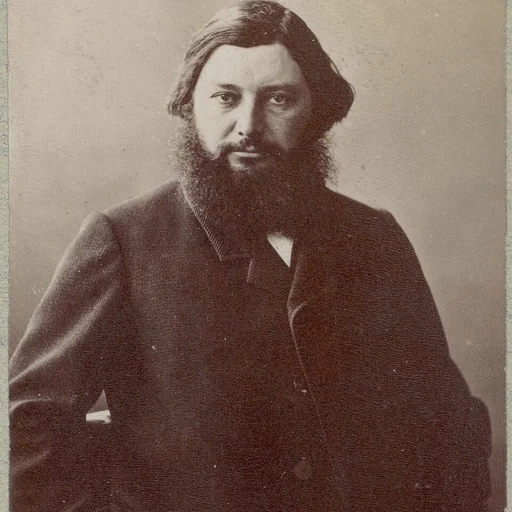
Jean Désiré Gustave Courbet (UK: KOOR-bay; US: koor-BAY; French: ; 10 June 1819 – 31 December 1877) was a French painter who led the Realism movement in 19th-century French painting.

Museum
Royal Museums of Fine Arts of Belgium
Continue through works from the same source collection.