Artwork
The Brook of Les Puits-Noir
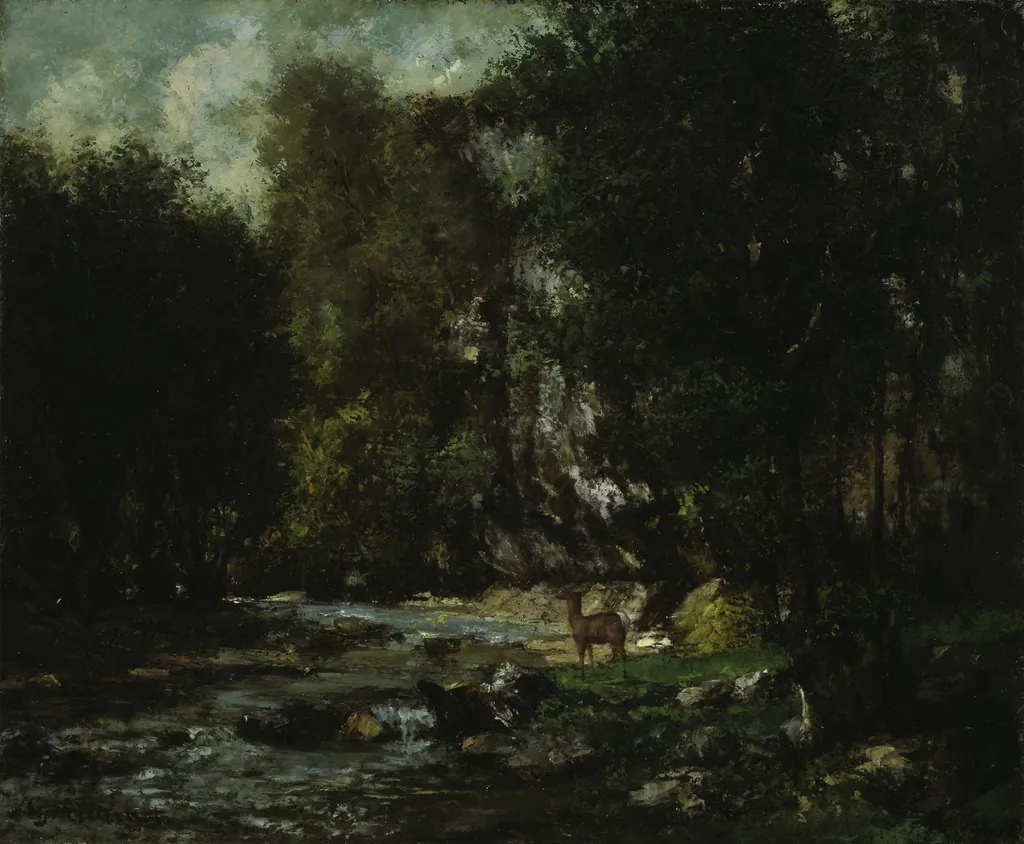
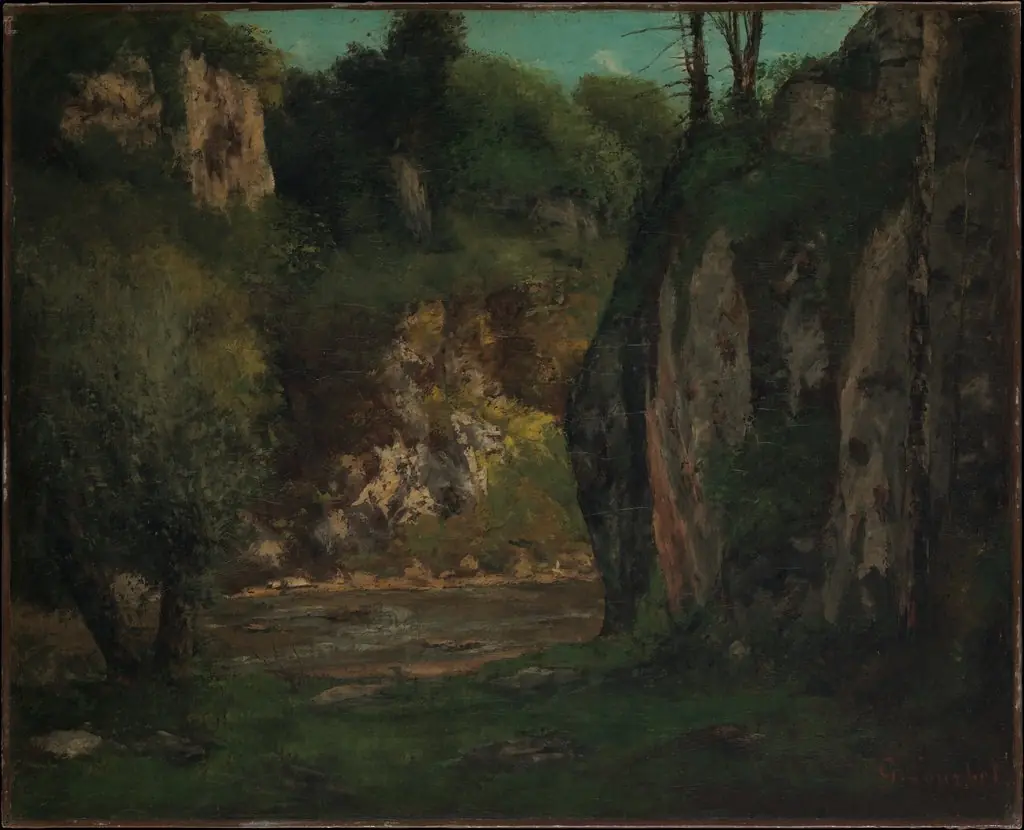
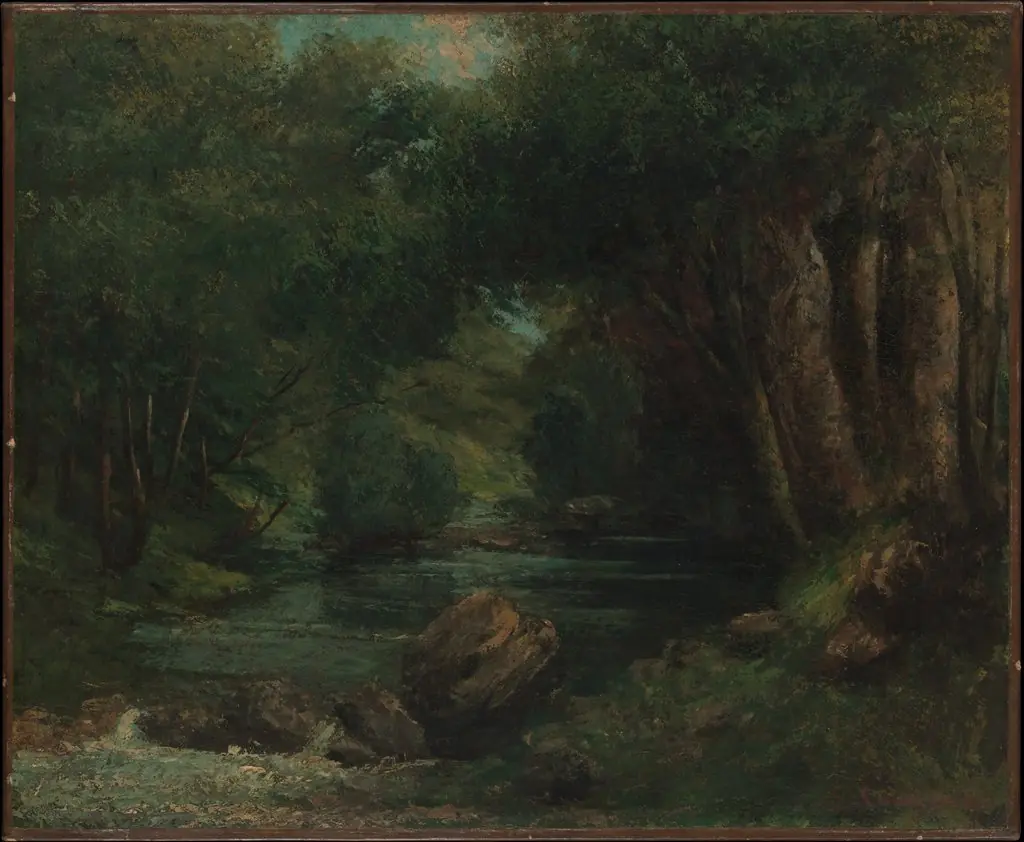
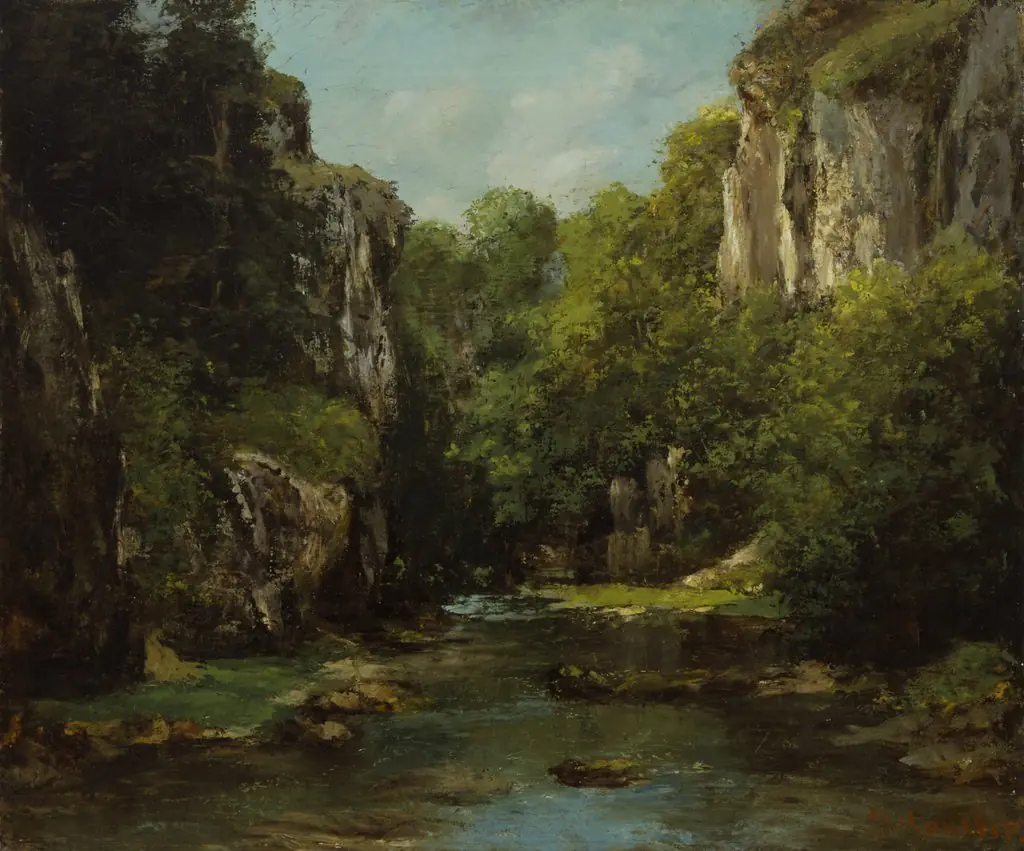
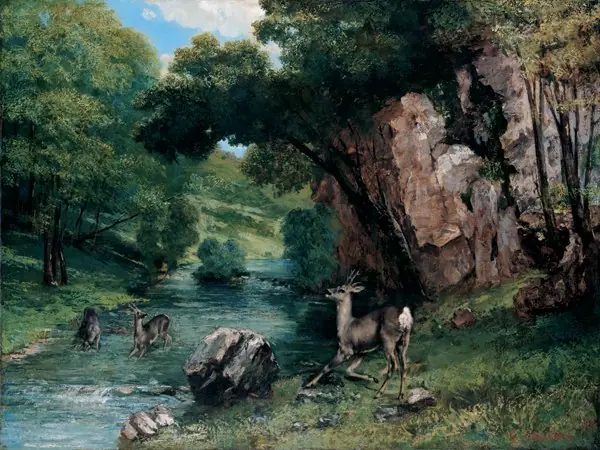
The Brook of Les Puits-Noir is an oil painting by the Realist artist Gustave Courbet. It dates from 1855 and is held in the collection of the Art Institute of Chicago.
About this work
Overview
The work emerged during a period when French art was shifting away from historical and mythological themes toward direct observation of the natural world.
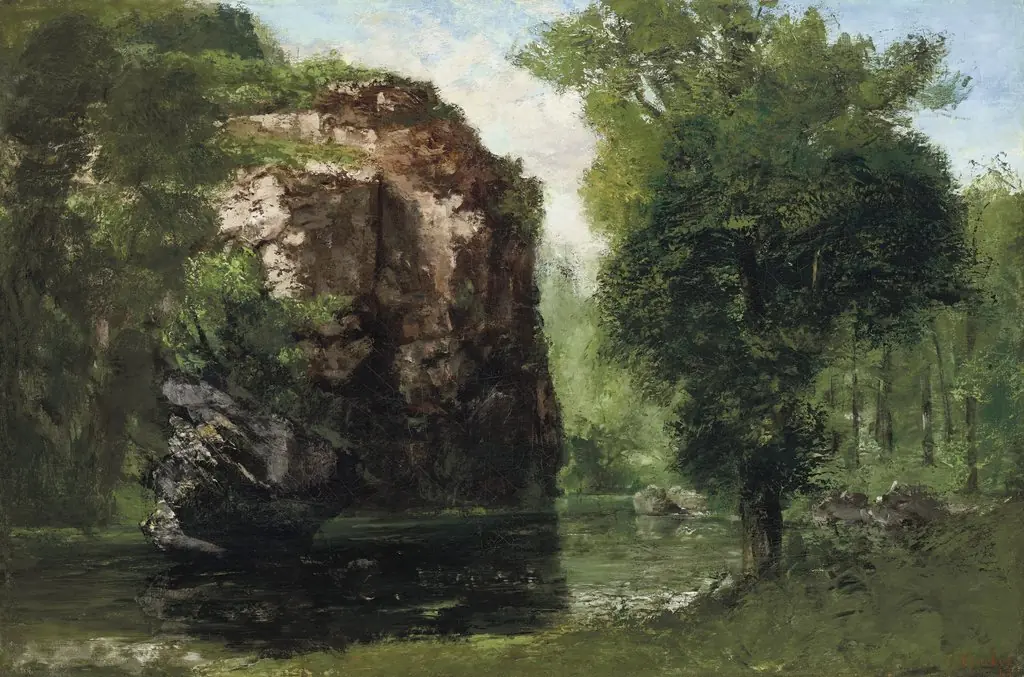
Painted in 1855 by Gustave Courbet, *The Brook of Les Puits-Noir* is an oil-on-canvas landscape that exemplifies the Realist approach to nature. Rather than idealizing the countryside, Courbet rendered a quiet woodland stream with unembellished attention to its actual appearance. The work emerged during a period when French art was shifting away from historical and mythological themes toward direct observation of the natural world.
Subject & Meaning
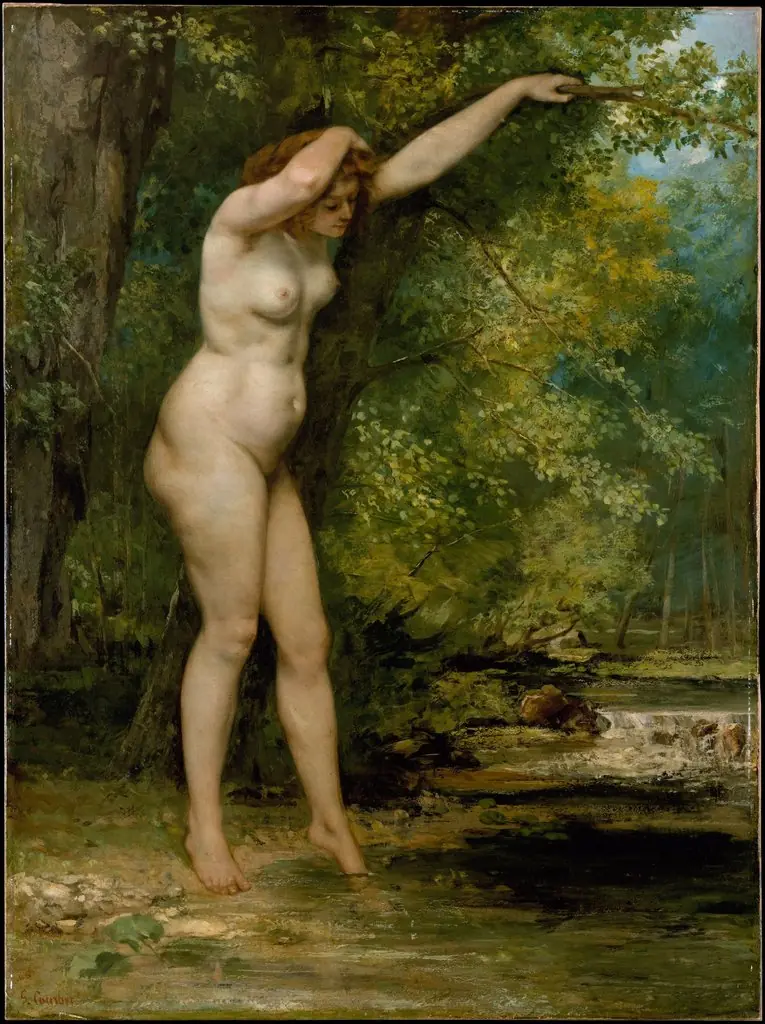
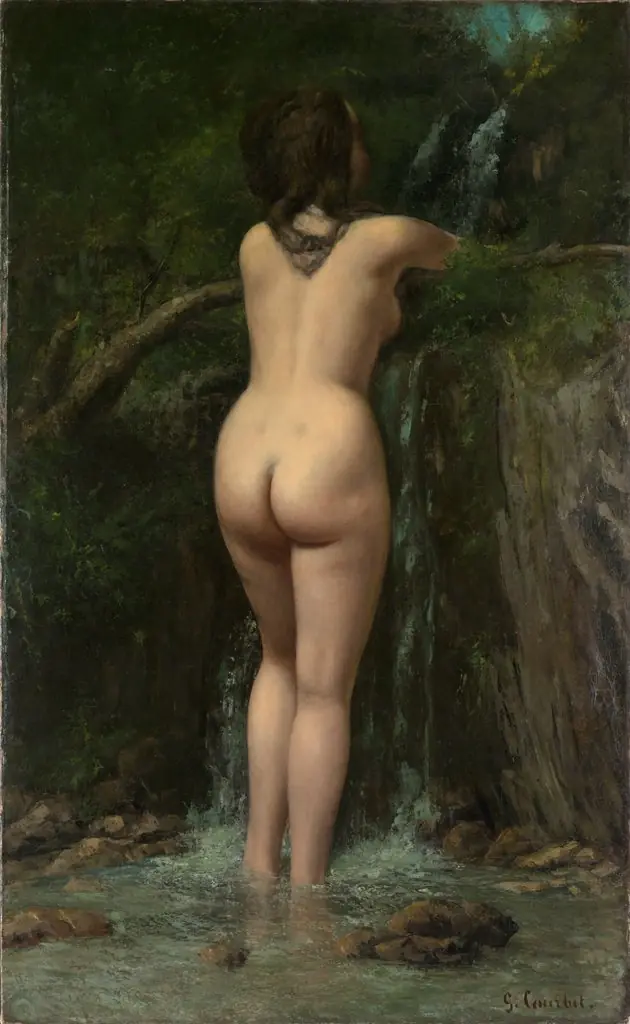
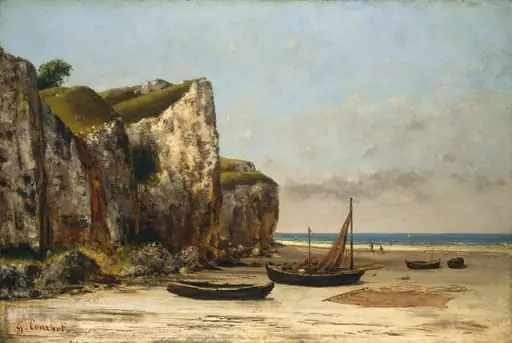
The scene depicts a secluded forest brook, with a deer standing at its edge, undisturbed by human presence. The absence of narrative or symbolic overtones reinforces Courbet’s commitment to depicting ordinary, unmediated nature. The deer, neither heroic nor allegorical, simply inhabits the space, suggesting a quiet coexistence between animal and environment, free from human intervention or moral interpretation.
Technique & Style
Courbet employed thick, deliberate brushwork and a muted palette to capture the textures of bark, water, and foliage. Chiaroscuro is used subtly to model forms and suggest depth, with shafts of light filtering through dense canopy to illuminate the stream and ground. The paint is applied with physical presence, avoiding smooth finishes in favor of a tactile, earthy surface that mirrors the rawness of the landscape itself.
History & Provenance
Created in 1855, the painting was part of Courbet’s broader effort to assert the legitimacy of contemporary rural life in art. It entered the collection of the Art Institute of Chicago in the early 20th century, where it remains today. Its survival and preservation reflect its quiet significance within the Realist canon, though it was never as publicly exhibited as his larger, more controversial works.
Context
In mid-19th-century France, academic art favored grand historical subjects, while Romanticism emphasized emotion and drama. Courbet’s choice to paint an uneventful forest stream was a deliberate counterpoint—affirming that ordinary nature deserved artistic attention. This work aligns with his rejection of studio conventions and his insistence on painting only what he could observe firsthand, a principle central to Realism.
Legacy
Though less known than Courbet’s social scenes or political works, *The Brook of Les Puits-Noir* exemplifies his enduring influence on landscape painting. By treating nature without sentimentality or embellishment, he paved the way for later movements like Impressionism, which also sought to capture light and atmosphere through direct observation. The painting stands as a quiet but persistent statement of artistic integrity.
Own this work as a print
Artist & collection
Artist
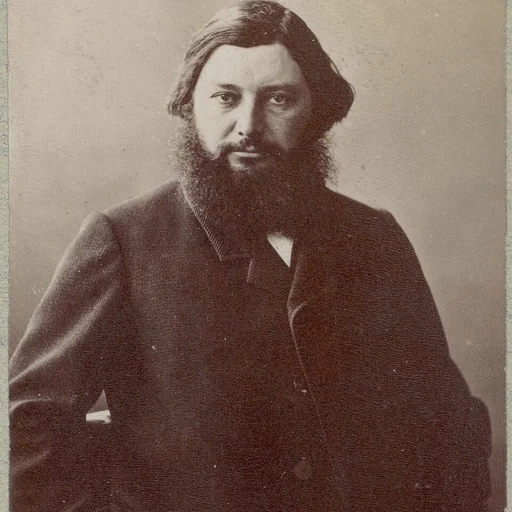
Jean Désiré Gustave Courbet (UK: KOOR-bay; US: koor-BAY; French: ; 10 June 1819 – 31 December 1877) was a French painter who led the Realism movement in 19th-century French painting.