Artwork
Pietà
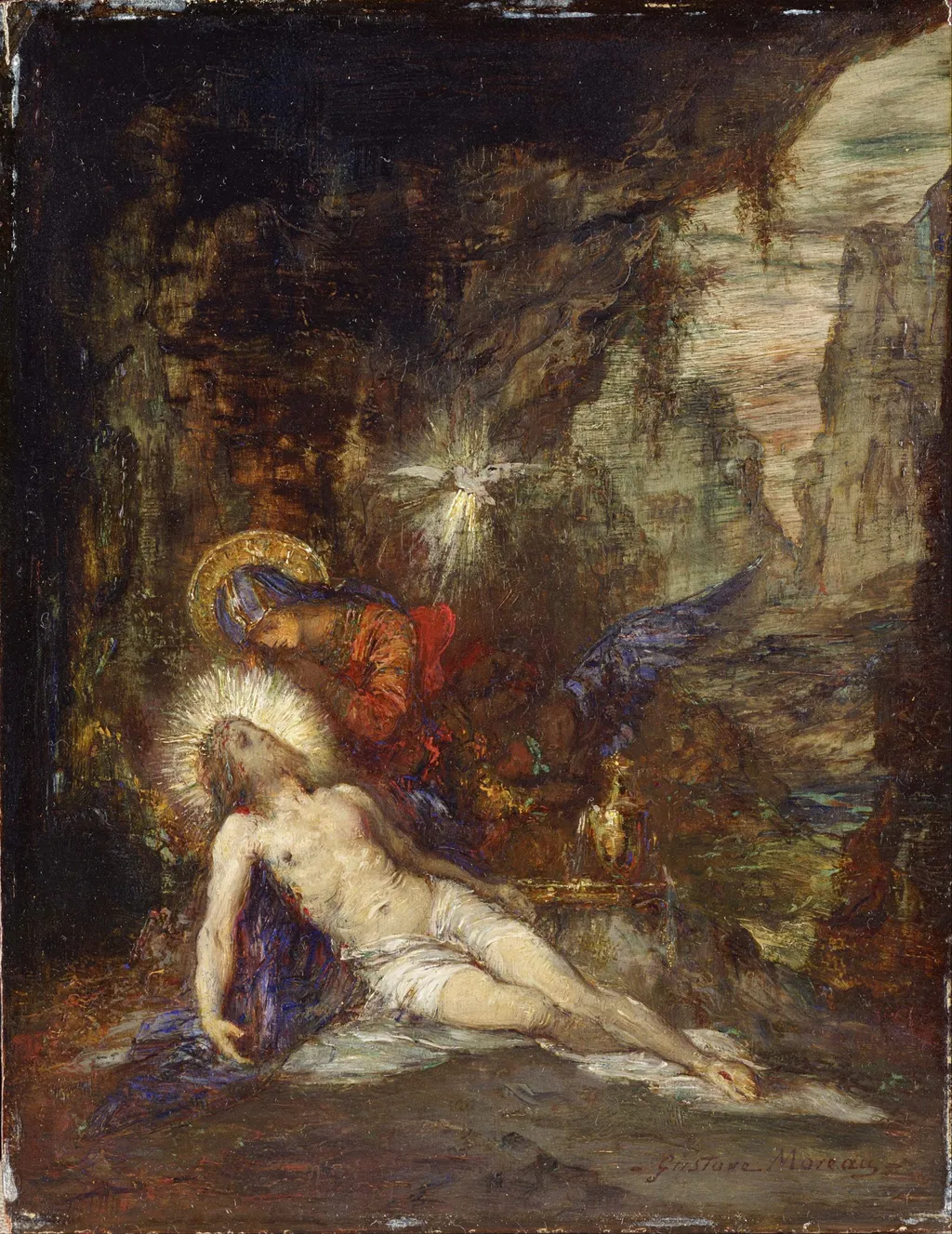
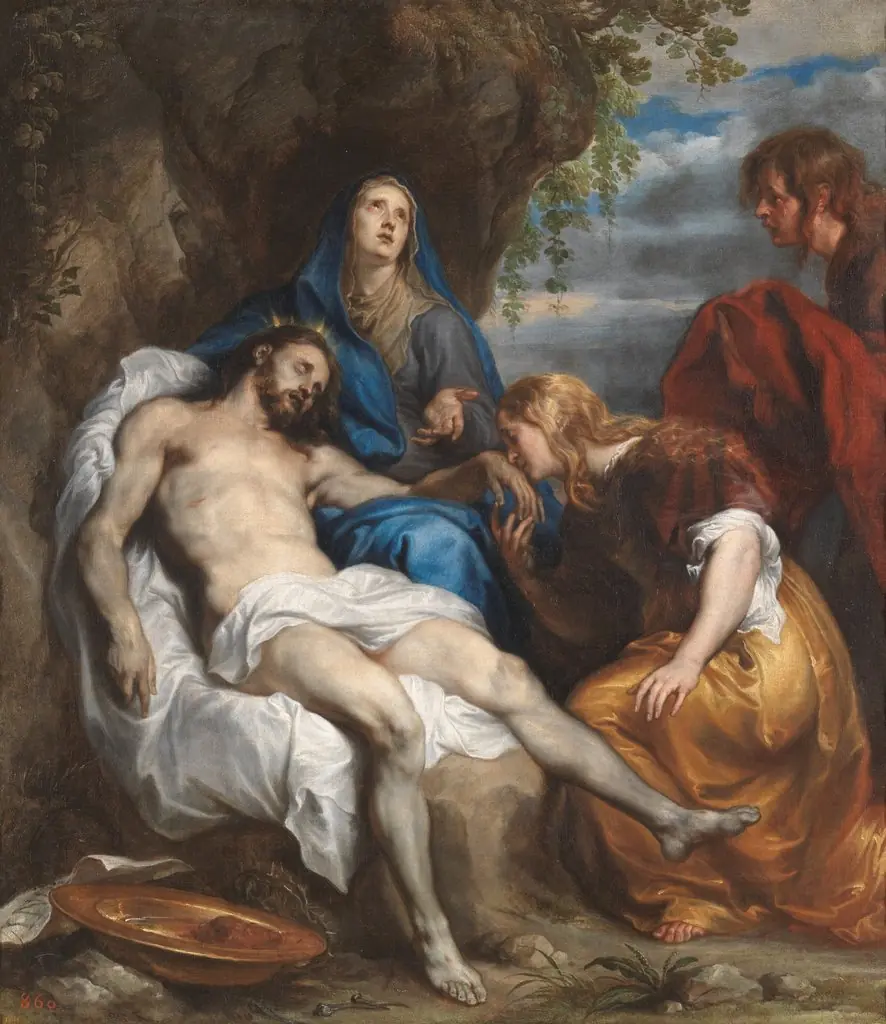
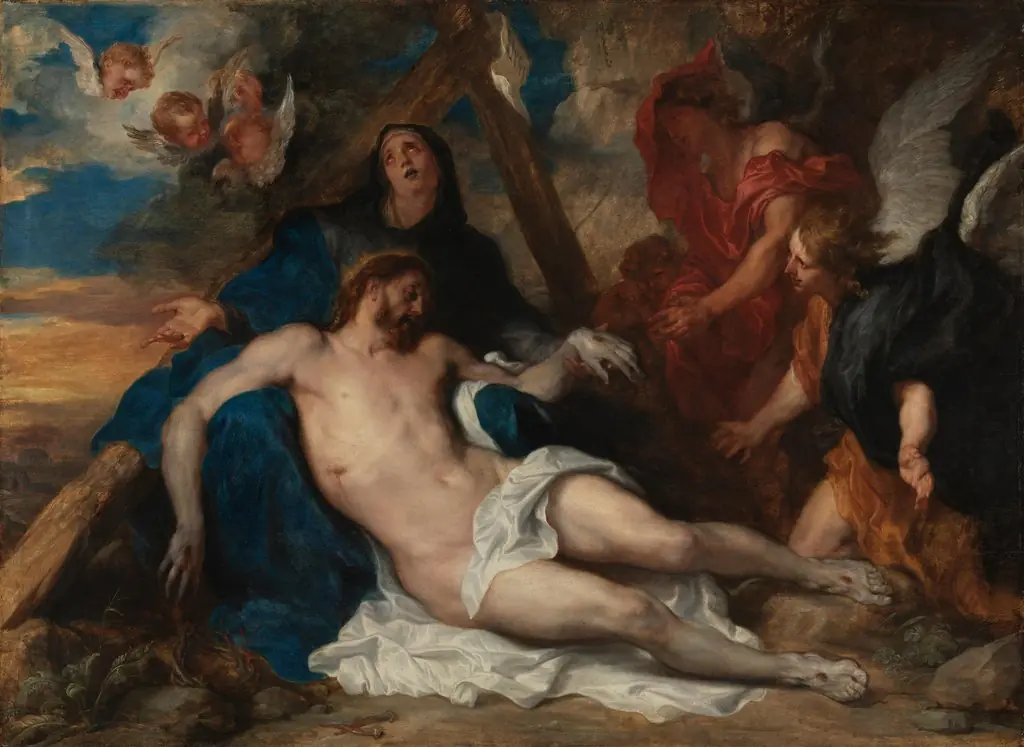
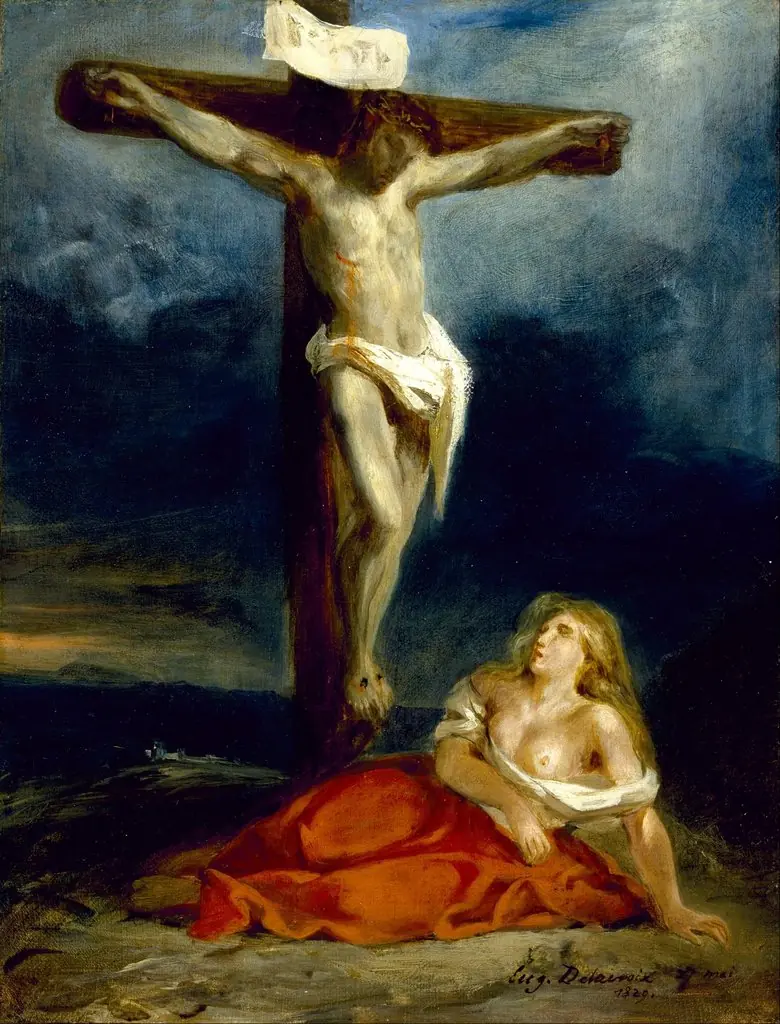
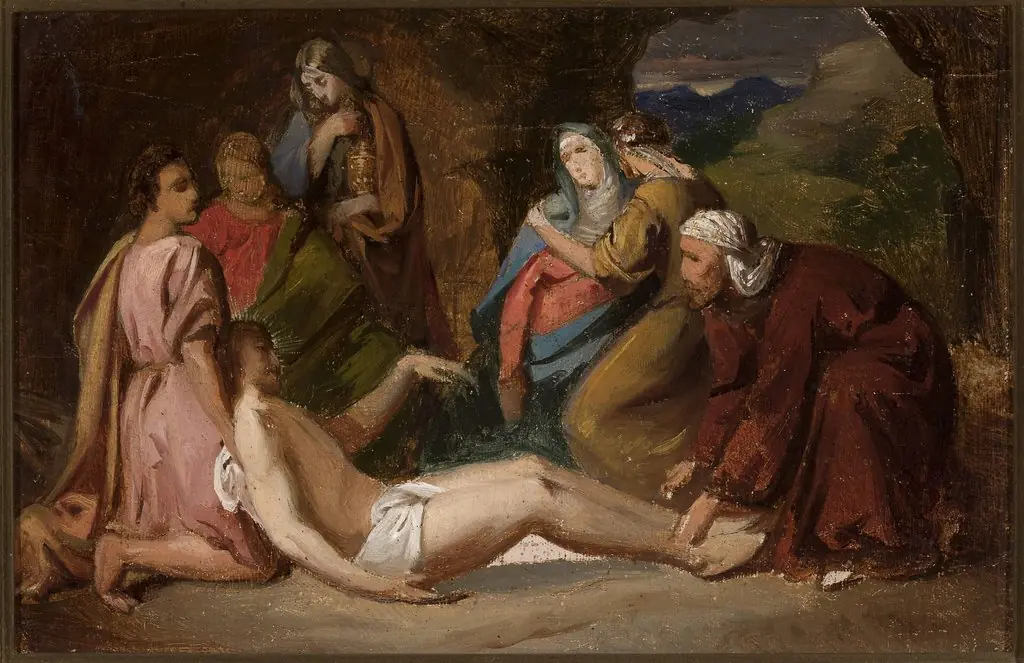
Pietà is an oil painting by the Symbolist artist Gustave Moreau. It dates from 1888 and is held in the collection of the National Museum of Western Art.
About this work
Overview
Pietà is a late 19th-century oil painting by Gustave Moreau, executed in 1888. The work is currently housed at the National Museum of Western Art.
Subject & Meaning
The painting portrays a somber, intimate scene of a woman cradling the lifeless body of a man, identified by a halo as Jesus Christ.
The painting portrays a somber, intimate scene of a woman cradling the lifeless body of a man, identified by a halo as Jesus Christ. The composition conveys profound sorrow and mourning, underscored by the contrast between the woman's vibrant red robe and the desolate, dark background of a rocky cave. A white bird hovering above adds a symbolic layer, potentially alluding to the soul or divine presence.
Technique & Style
Moreau employs muted color tones to establish a melancholic atmosphere, with the exception of the woman's red robe, which serves as a focal point. The overall style blends traditional religious iconography with a more subdued, contemplative approach characteristic of the artist's work.
History & Provenance
Created in 1888, the painting's provenance details are not extensively outlined in available information, but it is known to have been acquired by the National Museum of Western Art, where it remains on display.
Context
Pietà reflects Moreau's interest in religious themes and his deviation from the more common, dramatic depictions of the Pietà scene. Instead, the artist opts for a subdued, emotionally intense interpretation.
Legacy
While specific influence or notable exhibitions of this Pietà are not highlighted in the provided sources, it contributes to the broader understanding of Gustave Moreau's thematic explorations and stylistic nuances in religious art.
Artist & collection

Artist
Gustave Moreau was a French artist and an important figure in the Symbolist movement.