Artwork
Monkeys
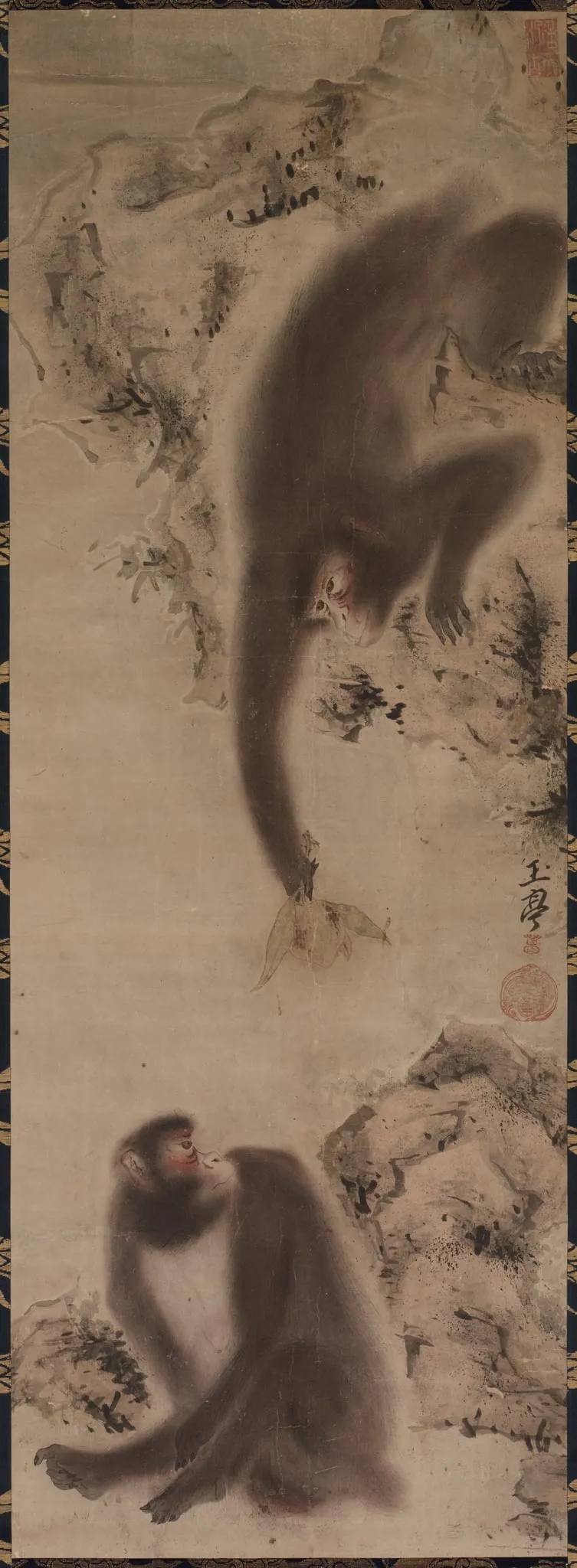
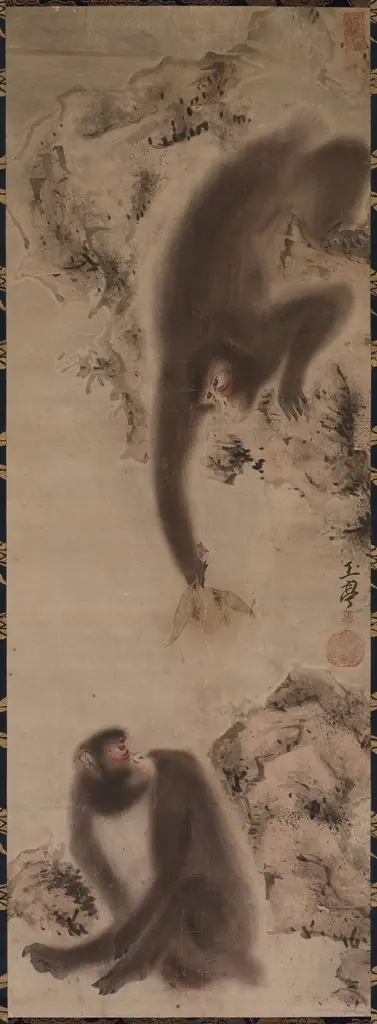
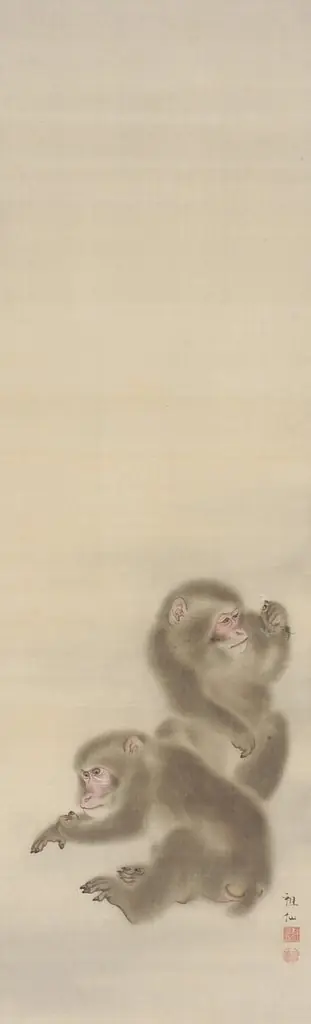
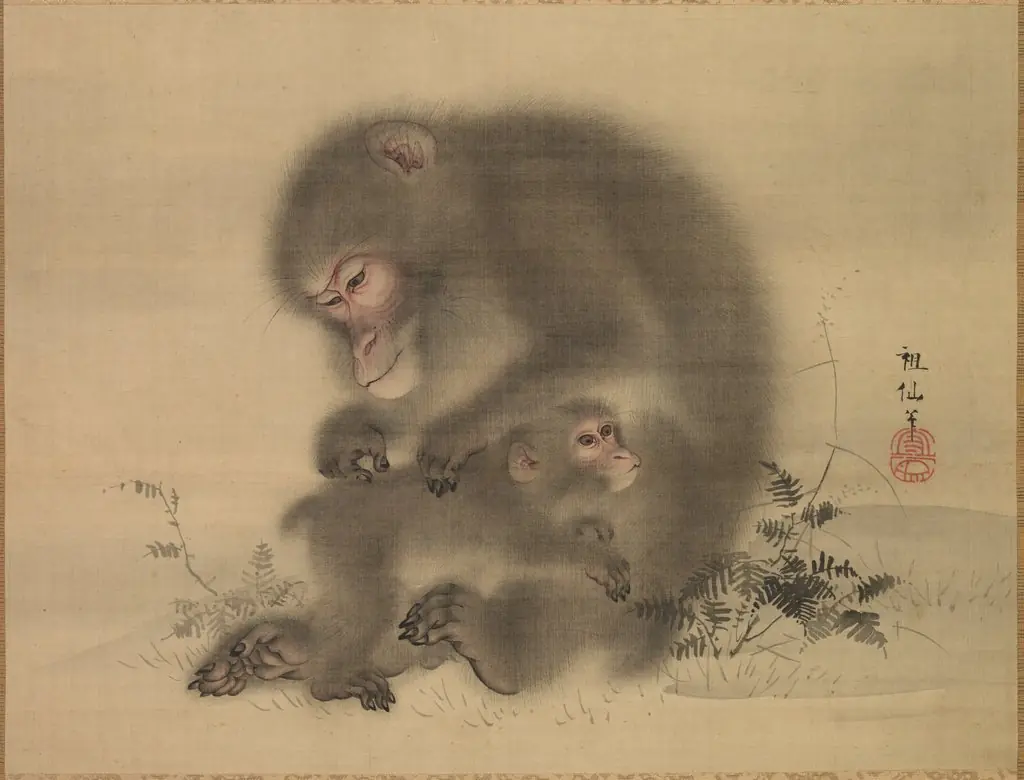
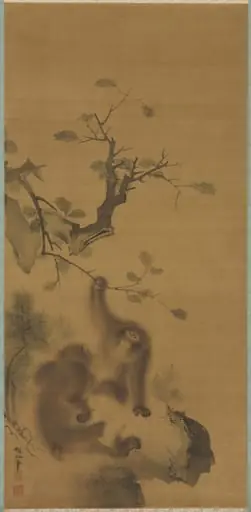
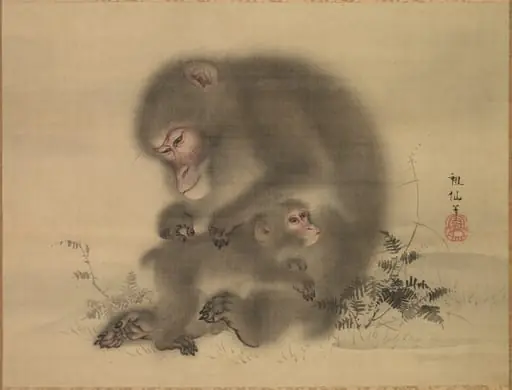
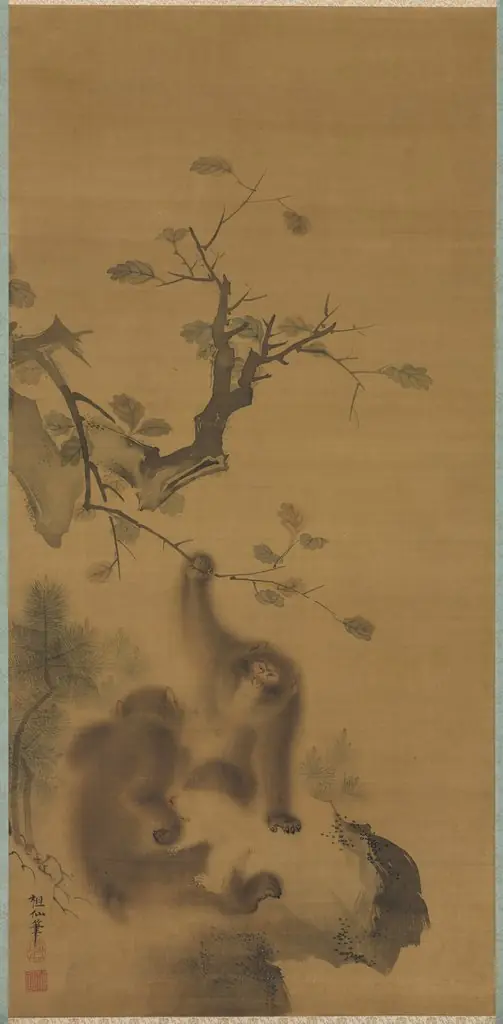
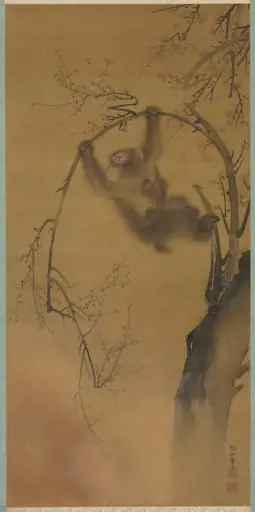
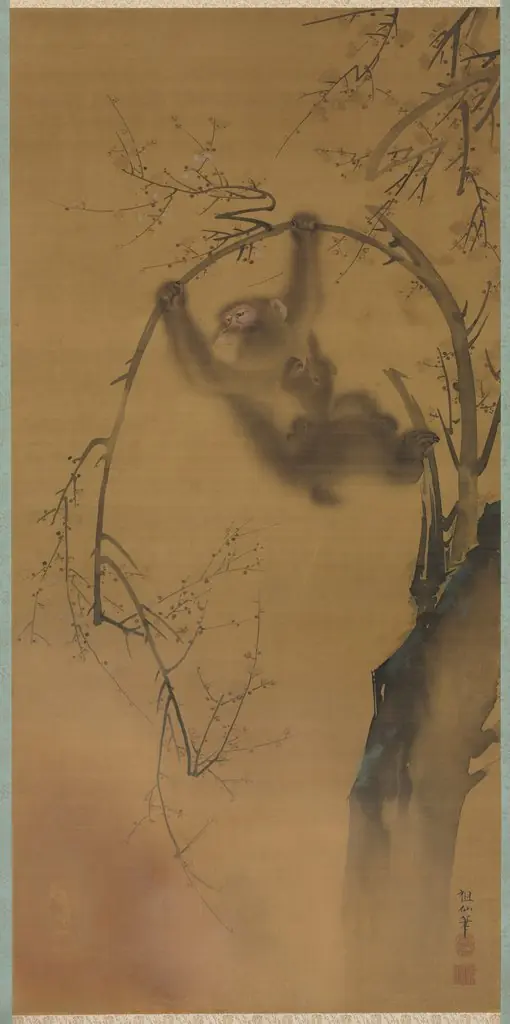
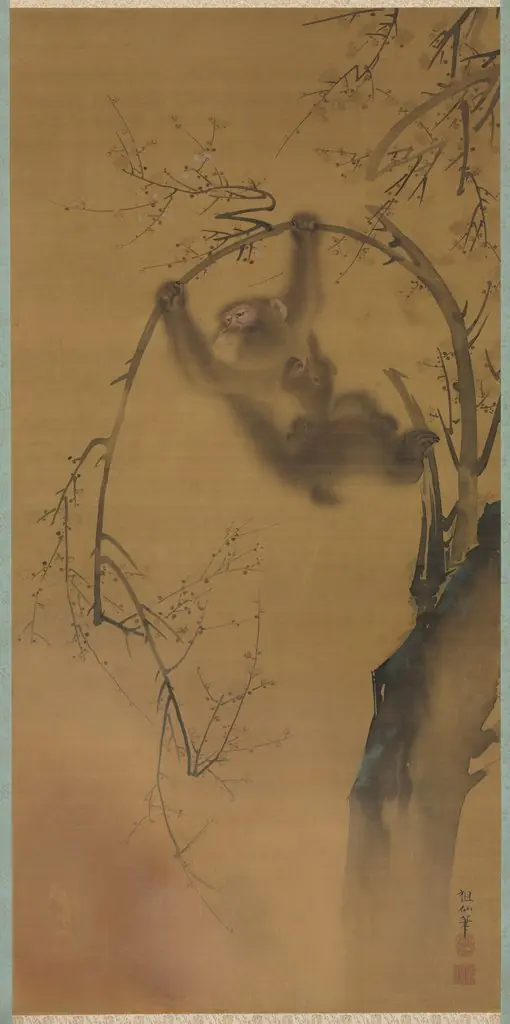
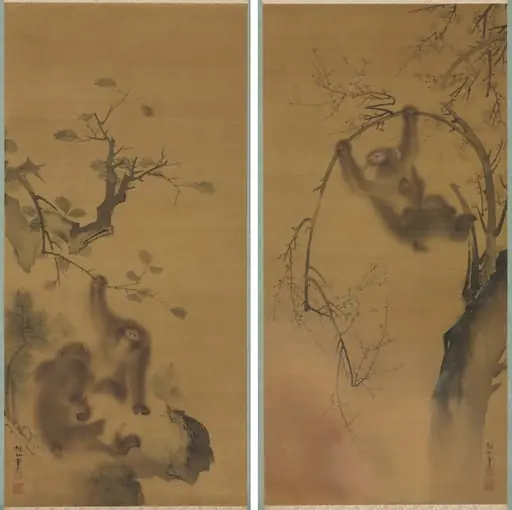
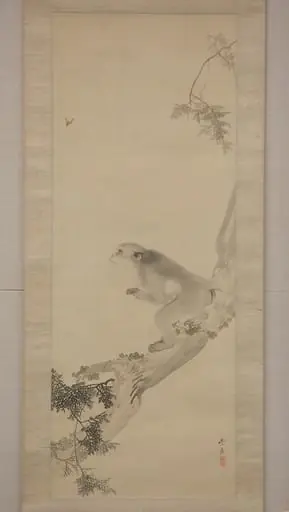
Monkeys is an unspecified painting by the Romanticist artist Gyokutei Katsu. It dates from 1800 and is held in the collection of the Cleveland Museum of Art.
About this work
Overview
Painted around 1800 by Gyokutei Katsu, this small ink-on-paper work depicts three monkeys seated on a branch. Unlike decorative animal motifs of the time, the figures are rendered with deliberate stillness and symbolic gravity. The painting resides in the collection of The Cleveland Museum of Art, where it is noted for its quiet moral tone and restrained composition.
Subject & Meaning
The monkeys are shown performing gestures associated with the Japanese proverb 'see no evil, hear no evil, speak no evil.' One covers its eyes, another its ears, and the third its mouth. These actions function not as whimsy but as a visual admonition against sensory indulgence and moral negligence, reflecting Edo-period Buddhist and Confucian ideals of self-restraint.
Technique & Style
Executed in ink with minimal color, the painting employs fine brushwork to define the monkeys’ fur and the branching structure. The composition is sparse, with negative space emphasizing isolation and contemplation. The figures are rendered with subtle anatomical accuracy, avoiding caricature in favor of solemn, almost human-like expression.
History & Provenance
The work entered The Cleveland Museum of Art’s collection through documented acquisition, though its earlier ownership prior to the 20th century remains unrecorded. It is one of several surviving works by Gyokutei Katsu, a lesser-known Edo-period artist whose output focused on allegorical subjects drawn from classical Japanese and Chinese traditions.
Context
During the Edo period, animal allegories were commonly used in art to convey ethical teachings to a broad audience. Monkeys, often associated with mischief, were repurposed as moral exemplars. This painting aligns with a broader trend in literati painting where nature served as a vehicle for philosophical reflection, particularly among urban intellectuals.
Legacy
While not widely exhibited, the painting remains a representative example of Edo-period moral allegory in Japanese art. Its endurance in a major Western collection reflects its capacity to communicate cross-culturally, even as its original context fades. Scholars continue to reference it in studies of visual ethics in pre-modern East Asian painting.
Artist & collection