Artwork
Two Monkeys
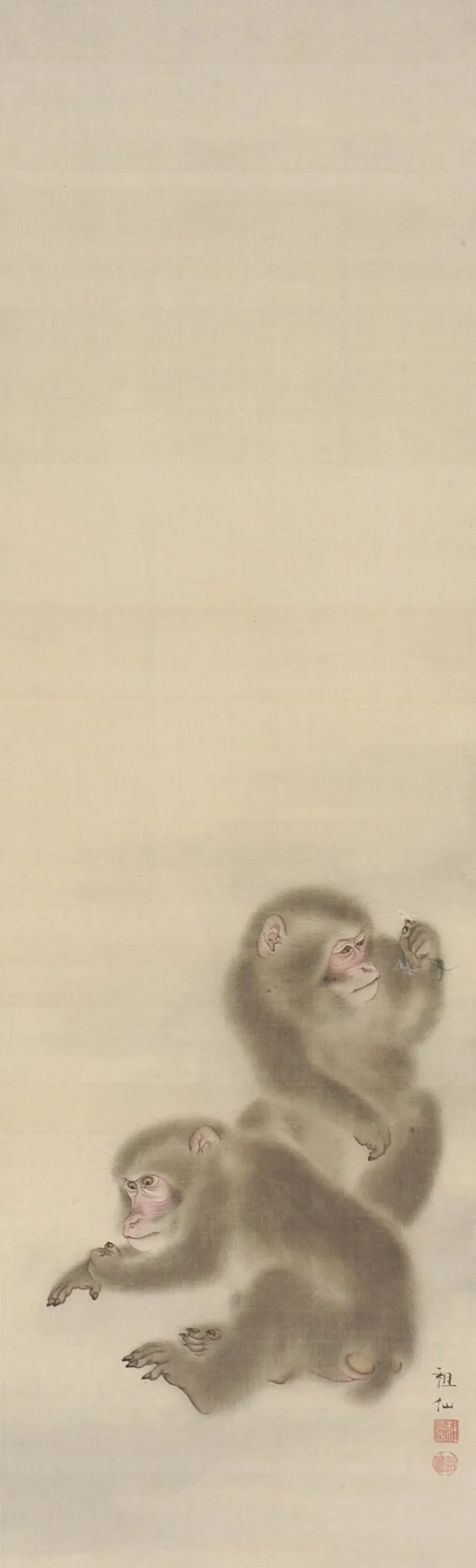
Two Monkeys is an unspecified painting by Mori Sosen. It dates from 1794 and is held in the collection of the Los Angeles County Museum of Art.
About this work
Overview
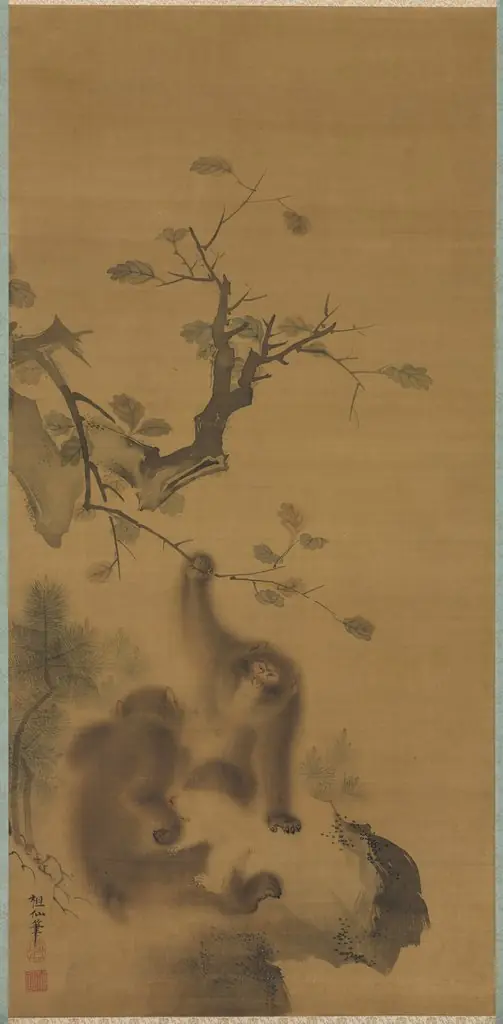
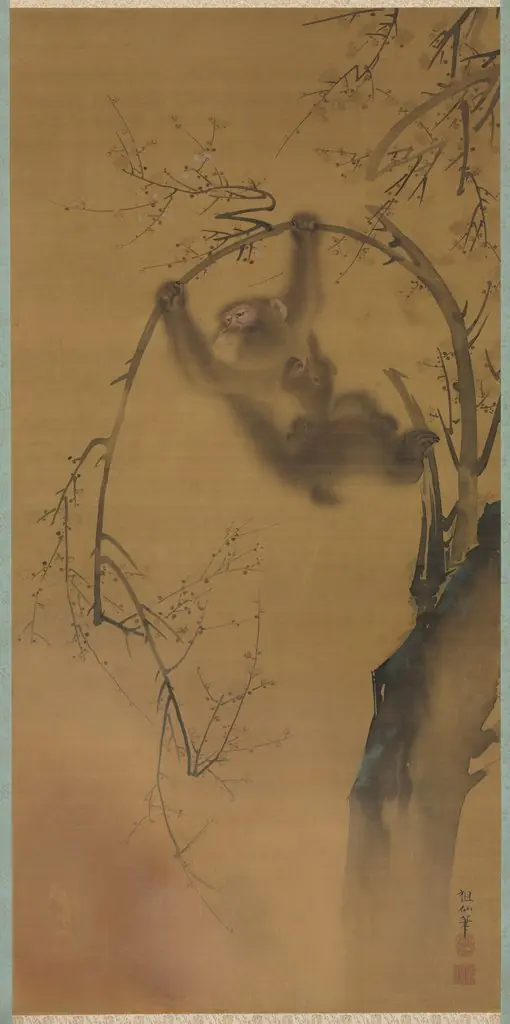
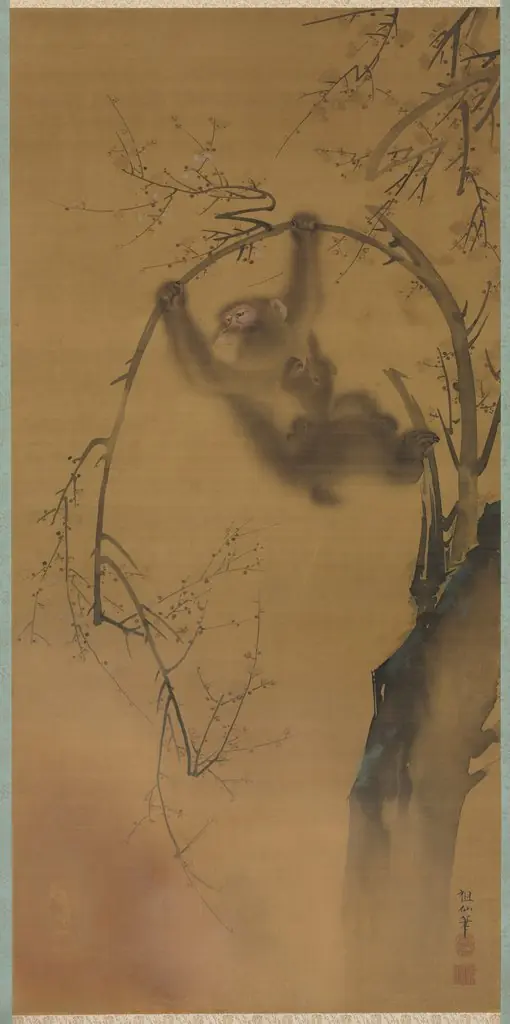
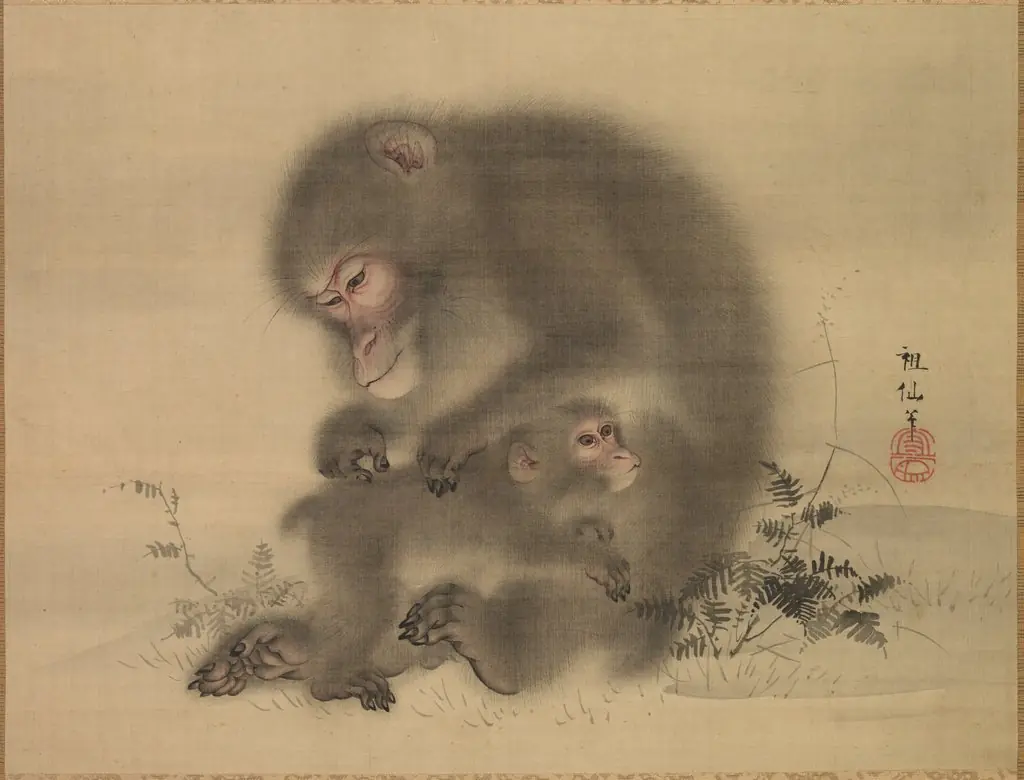
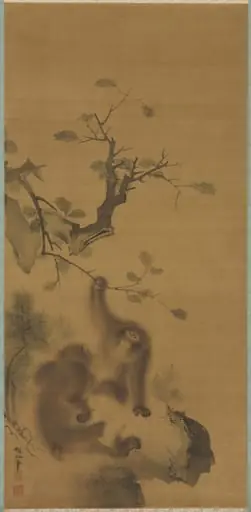
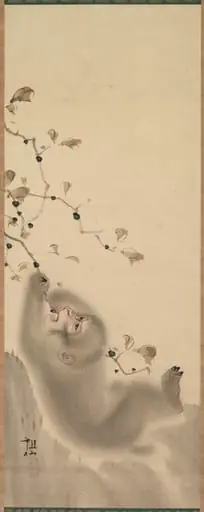
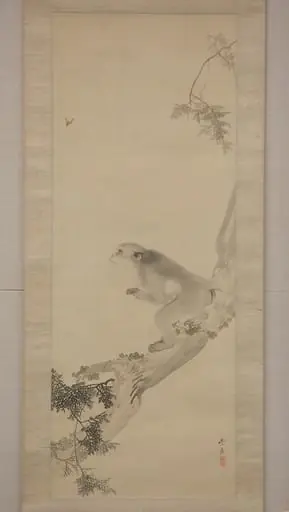
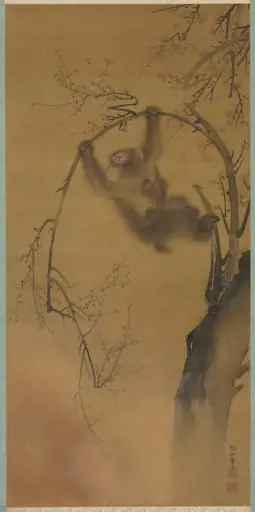
Painted around 1794 by Mori Sosen, this ink-on-paper work depicts two macaques in a quiet, intimate interaction. The composition is deliberately sparse, with no landscape or contextual elements, drawing full attention to the animals. The painting is part of the Los Angeles County Museum of Art’s collection, where it is recognized for its understated observation of animal behavior.
Subject & Meaning
The two monkeys are shown in a physical linkage—one suspended by the other’s tail—suggesting a moment of mutual dependence or playful tension.
The two monkeys are shown in a physical linkage—one suspended by the other’s tail—suggesting a moment of mutual dependence or playful tension. Their gaze, directed leftward, creates an unspoken narrative that resists clear interpretation. Rather than symbolizing specific cultural tropes, the scene invites contemplation of natural behavior, reflecting the artist’s interest in the unidealized life of animals.
Technique & Style
Sosen employed loose, economical brushwork to render the monkeys’ fur, using graded washes of brown and gray ink to suggest texture without detail. The background is left as untouched paper, enhancing the figures’ presence. The absence of shading or perspective emphasizes flatness, aligning with a tradition of observational ink painting that values restraint over ornamentation.
History & Provenance
Created during the late Edo period, the painting reflects Sosen’s reputation for depicting animals with anatomical accuracy and psychological nuance. It entered the Los Angeles County Museum of Art’s collection in the 20th century, likely through a broader acquisition of Japanese ink paintings. Its provenance prior to that remains undocumented in public records.
Context
Mori Sosen was known for his studies of primates, often sketching them in captivity or observing them in zoological settings. His work diverged from idealized depictions common in classical Japanese art, favoring direct, unembellished observation. This painting aligns with a growing Edo-period interest in natural history and the aesthetic of everyday phenomena.
Legacy
Sosen’s approach influenced later artists interested in naturalism within ink painting. 'Two Monkeys' remains a quiet example of how simplicity and focus can convey complexity. It is frequently referenced in studies of Edo-period naturalist art, not for its grandeur, but for its honest portrayal of animal life.
Artist & collection