Artwork
Pyramus and Thisbe
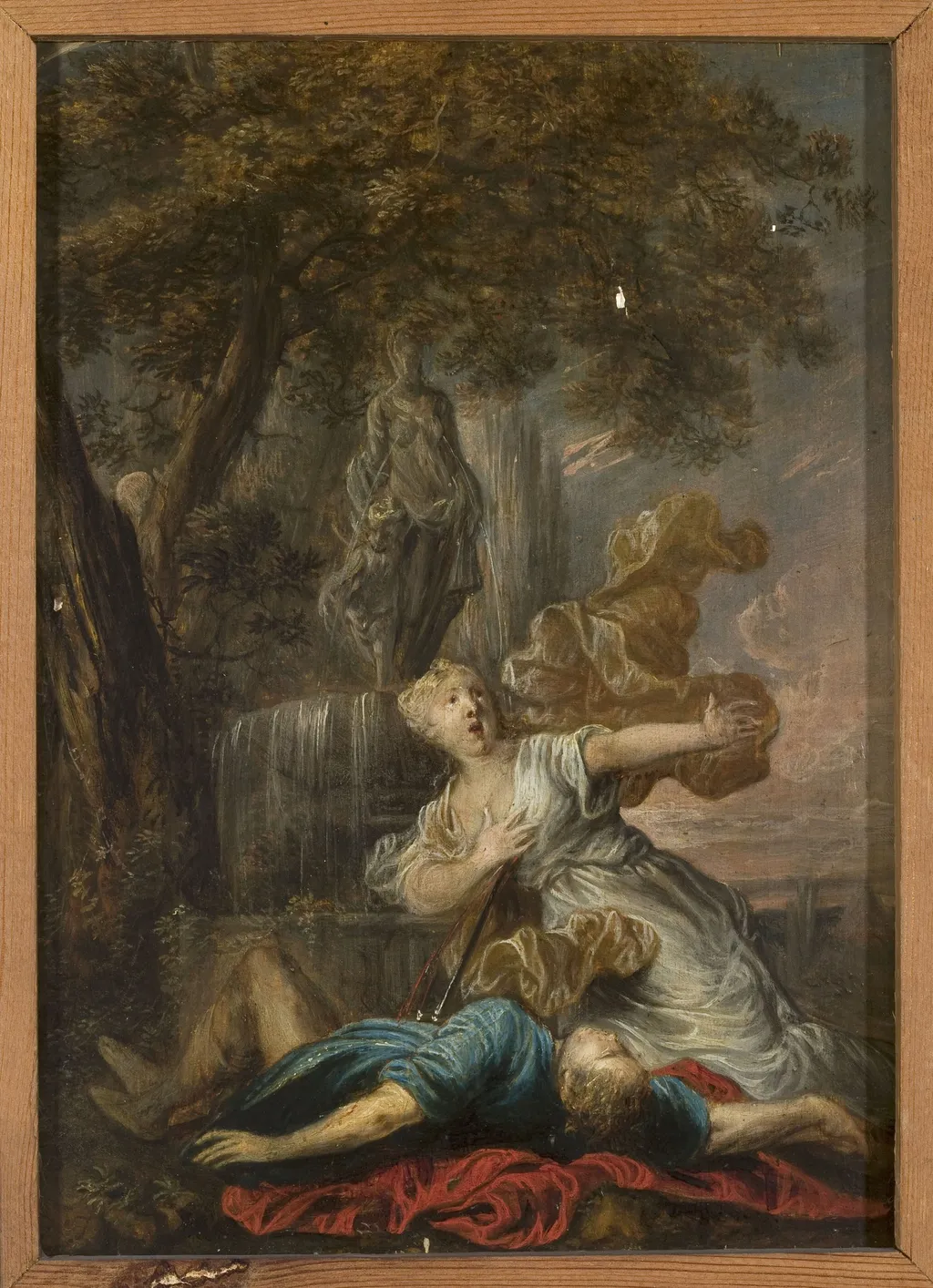
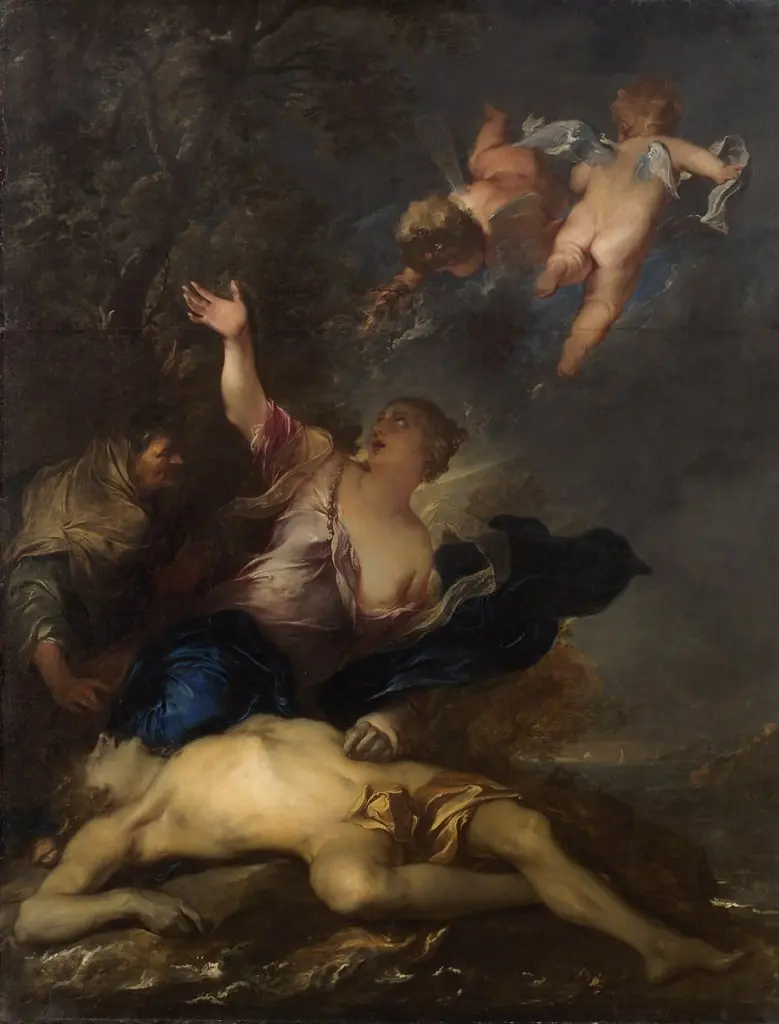
Pyramus and Thisbe is an oil painting by the Flemish Baroque painting artist Gysbrecht Thys. It dates from 1700 and is held in the collection of the National Museum in Warsaw.
About this work
Overview
Thys, active in Antwerp, specialized in mythological and religious subjects, though few of his paintings survive with certainty.
Painted in 1700 by Flemish artist Gysbrecht Thys, this oil-on-canvas work illustrates a moment from Ovid’s Metamorphoses. Thys, active in Antwerp, specialized in mythological and religious subjects, though few of his paintings survive with certainty. The piece is one of the limited number of attributed works by the artist and resides today in the National Museum in Warsaw, representing a rare example of late 17th-century Flemish mythological painting.
Subject & Meaning
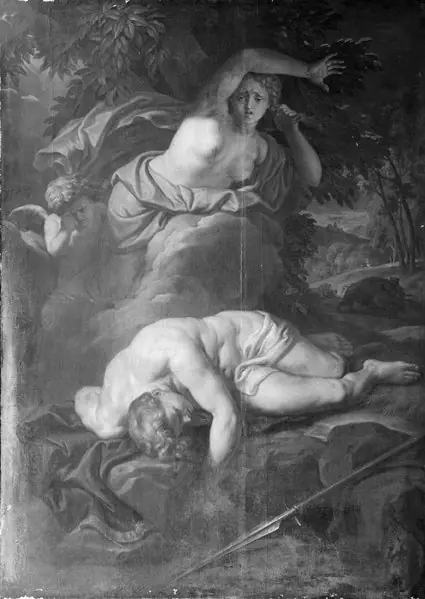
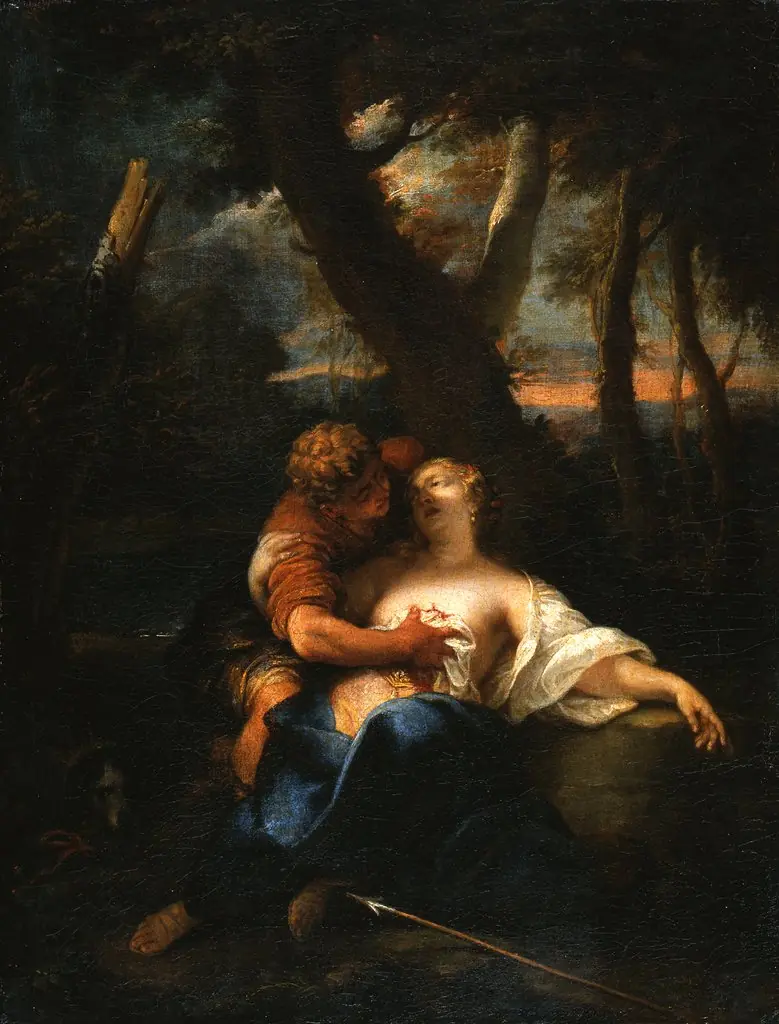
The scene captures the tragic climax of Pyramus and Thisbe, two lovers from ancient Babylon whose families forbade their union. Thisbe, kneeling in anguish, calls out to her dead lover Pyramus, who lies lifeless beneath her. Her raised arms and the bloodstained cloth beneath him underscore the fatal misunderstanding that led to their deaths. The moment embodies themes of doomed love and irreversible loss, drawn from classical literature and rendered with emotional gravity.
Technique & Style
Thys employs chiaroscuro to heighten the drama, casting the figures in stark contrast against a dim, twilight forest. The woman’s pale dress and face are illuminated from below, creating an eerie, almost spectral glow that isolates her grief. Dark, swirling trees and clouds frame the scene, enhancing the sense of isolation. Brushwork is controlled yet expressive, with attention to fabric folds and the stillness of the fallen figure reinforcing the scene’s solemnity.
History & Provenance
The painting’s documented history is sparse, but it entered the collection of the National Museum in Warsaw in the early 20th century. Its attribution to Gysbrecht Thys is based on stylistic comparison with other known works and archival references to his mythological output. No earlier provenance records are publicly available, and the painting’s journey from Antwerp to Warsaw remains unclear, though it likely passed through private collections in Central Europe.
Context
Created at the close of the 17th century, the painting reflects the enduring appeal of classical myths in Flemish art, even as Baroque grandeur gave way to quieter, more introspective styles. Thys worked in a tradition that valued emotional narrative and moral allegory, common in Catholic regions where mythological tales served as vehicles for humanist themes. His limited output suggests he may have been overshadowed by contemporaries like Rubens or Van Dyck.
Legacy
Though Thys is not widely studied today, this painting remains a quiet testament to the persistence of mythological storytelling in Flemish painting beyond its golden age. Its restrained composition and psychological intensity distinguish it from more theatrical Baroque treatments of similar subjects. As one of the few surviving works by the artist, it offers insight into a lesser-known strand of 17th-century Northern European art.
Artist & collection
Artist
Gysbrecht Thys or Gysbrechts Thys (baptized on 20 January 1617, Antwerp – after 1661) was a Flemish painter active in Antwerp known for his religious and mythological works as well as for his nudes.