Artwork
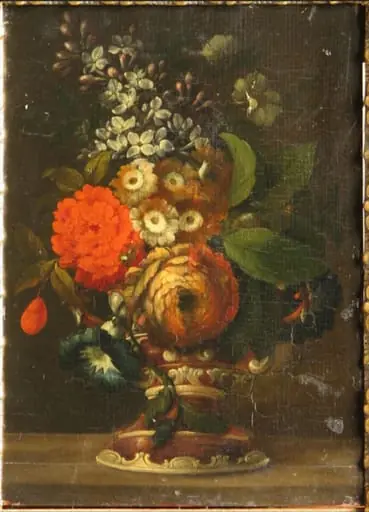
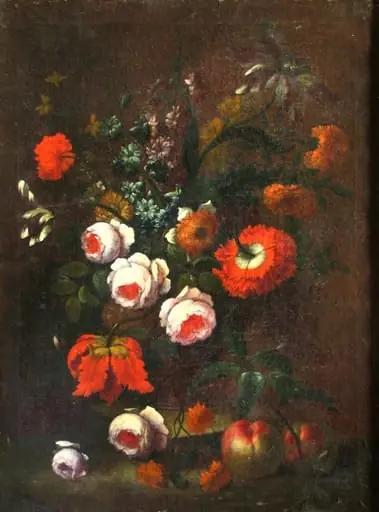
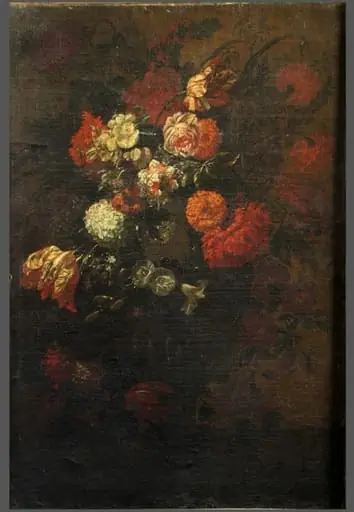
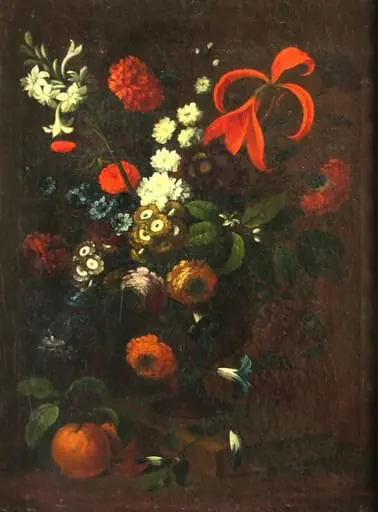
Buchet cu flori de lămâi; pandant: Buchet de flori cu anemone
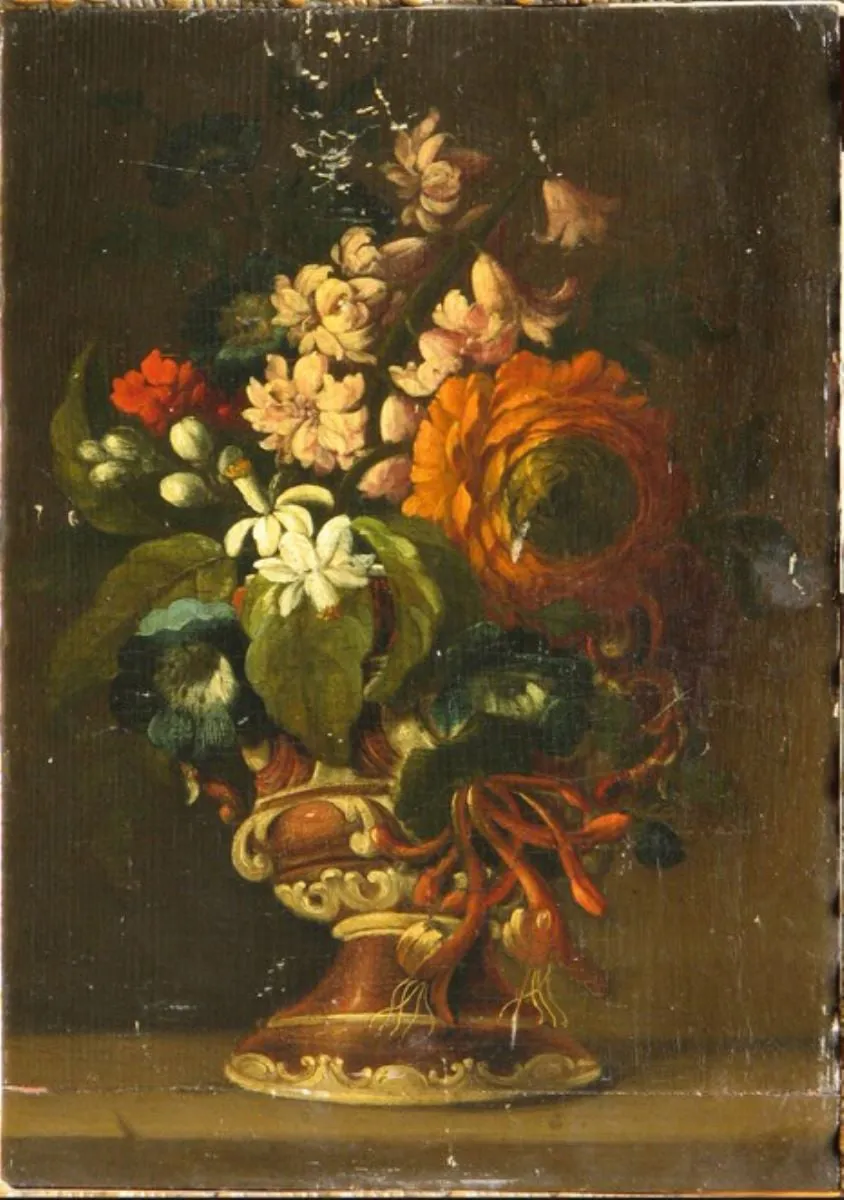
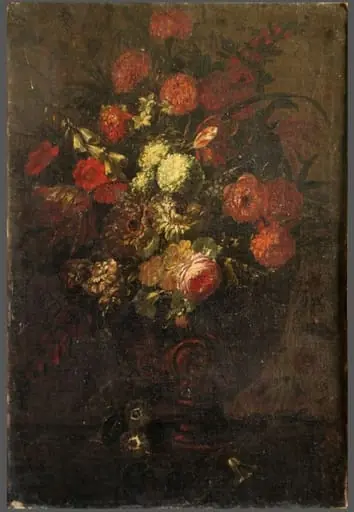
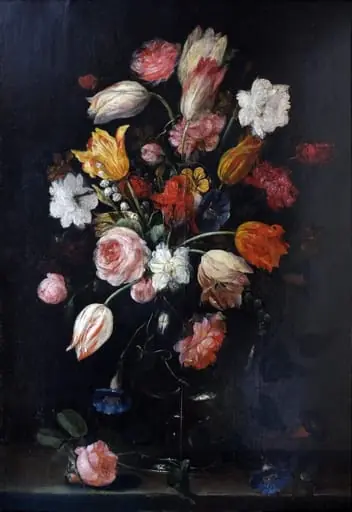
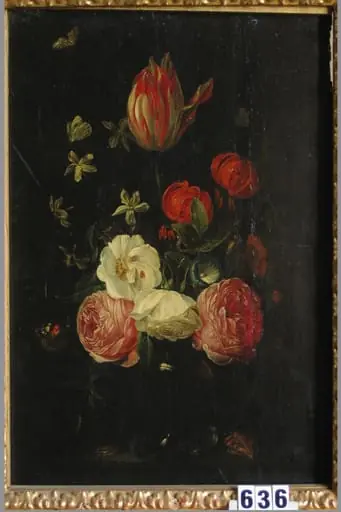
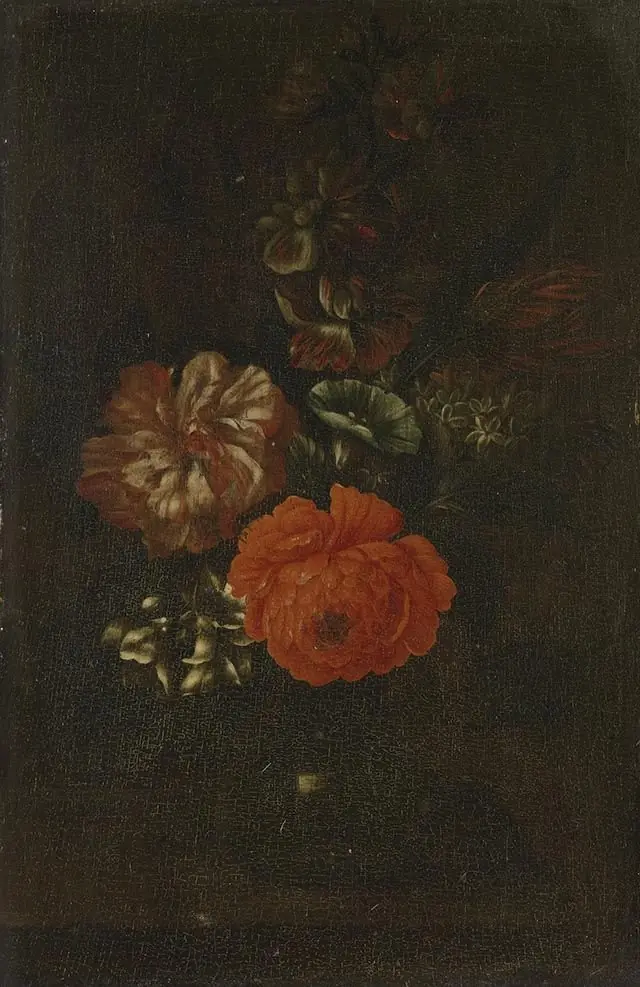
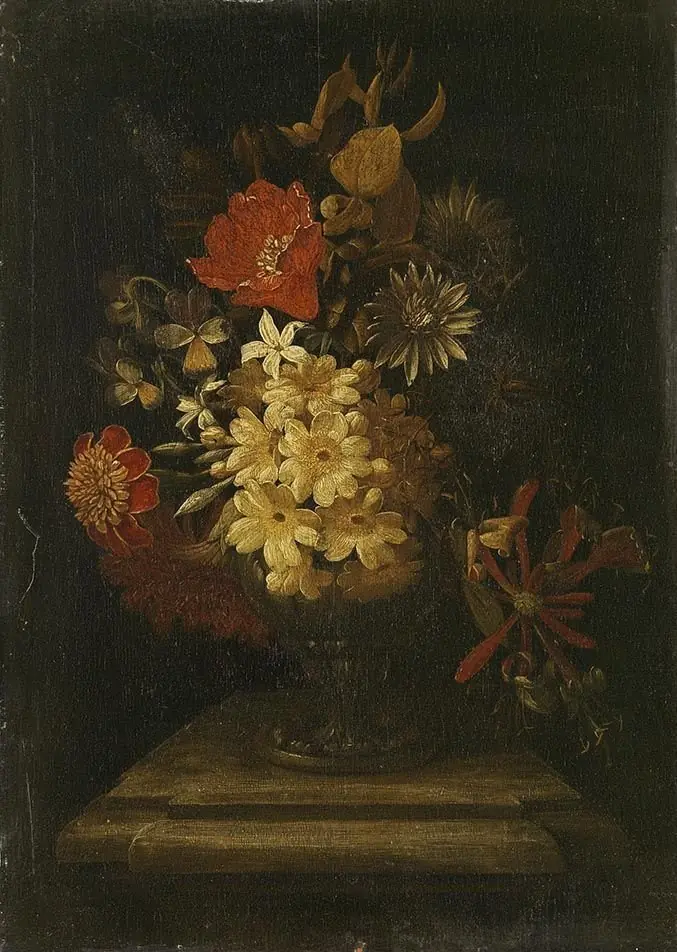
Buchet cu flori de lămâi; pandant: Buchet de flori cu anemone is a print by the Baroque artist Johann Baptist Hälszel. It is held in the collection of the Brukenthal National Museum. A dark ceramic vase rests on a shallow shelf, holding a loose arrangement of flowers that overflow its rim.
About this work
Overview
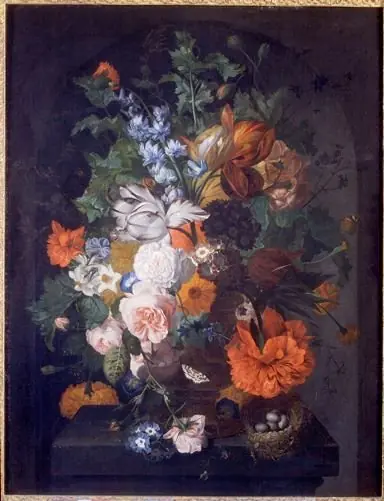
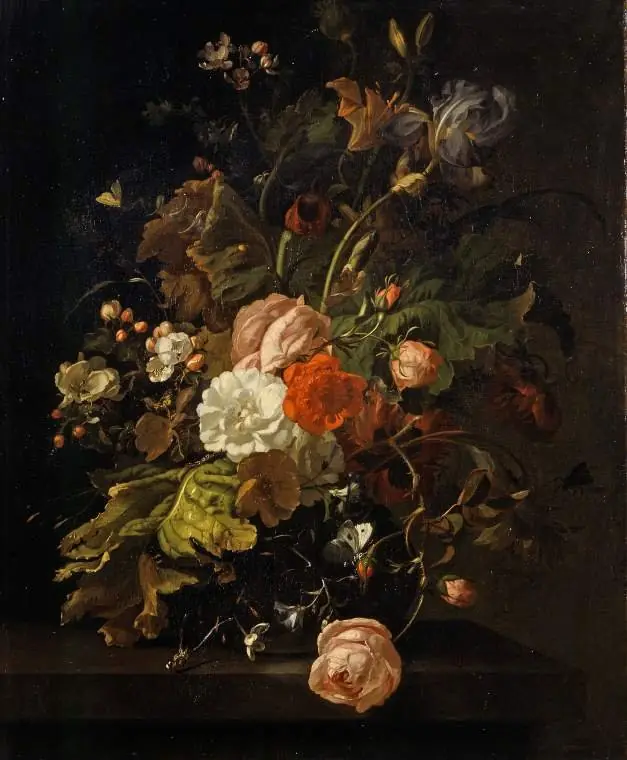
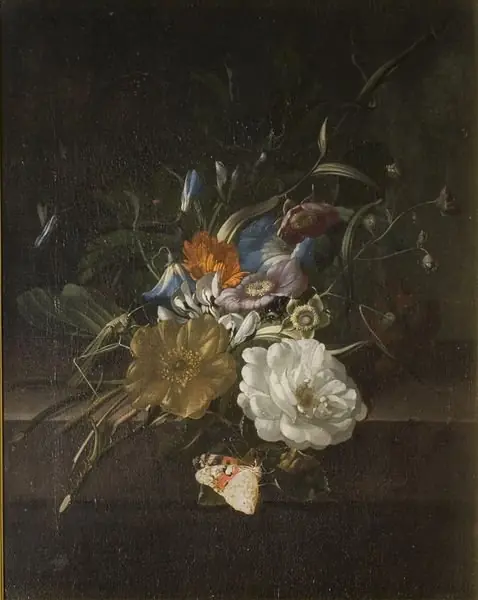
A dark ceramic vase rests on a shallow shelf, holding a loose arrangement of flowers that overflow its rim. The blooms—red, white, and yellow—are rendered with careful attention to their natural forms, interspersed with green foliage and unopened buds. The background recedes into muted shadow, heightening the vibrancy of the blossoms and anchoring the composition in quiet realism.
Subject & Meaning
The arrangement features common garden flowers, including anemones, presented without symbolic or narrative intent. The focus lies in the quiet observation of nature’s transient beauty, emphasizing texture, color, and form rather than allegory. The composition invites contemplation of the ordinary, elevating the floral still life through attentive depiction.
Technique & Style
The artist employs chiaroscuro to model each petal and leaf, using subtle gradations of light and shadow to suggest volume and surface. Highlights catch the edges of petals, while deeper tones recede, creating a sense of depth and soft luminosity. The brushwork is precise yet unobtrusive, avoiding overt brushstrokes to maintain a naturalistic illusion.
History & Provenance
The work belongs to a tradition of 17th-century Flemish still lifes, where detailed floral arrangements were prized for their technical precision and quiet elegance. Though the artist’s identity remains unconfirmed, the piece aligns with regional practices of the period, likely created for private collectors who valued botanical accuracy and refined composition.
Context
During the early modern period, still-life painting flourished in the Low Countries as a reflection of growing interest in natural science and domestic aesthetics. Botanical accuracy became a mark of artistic skill, and floral works like this one catered to patrons who appreciated both horticultural knowledge and visual harmony in the home.
Legacy
This work contributes to a sustained tradition of floral still life that influenced later European painting. Its restrained palette, controlled lighting, and emphasis on natural detail set a standard for observational realism. Though not widely exhibited, it remains a representative example of its genre’s quiet discipline and enduring appeal.
Artist & collection
Artist
A painter of still-life bouquets and fruit, Hälszel balanced delicate flowers like anemones and lemons with ripe peaches or oranges.