Artwork
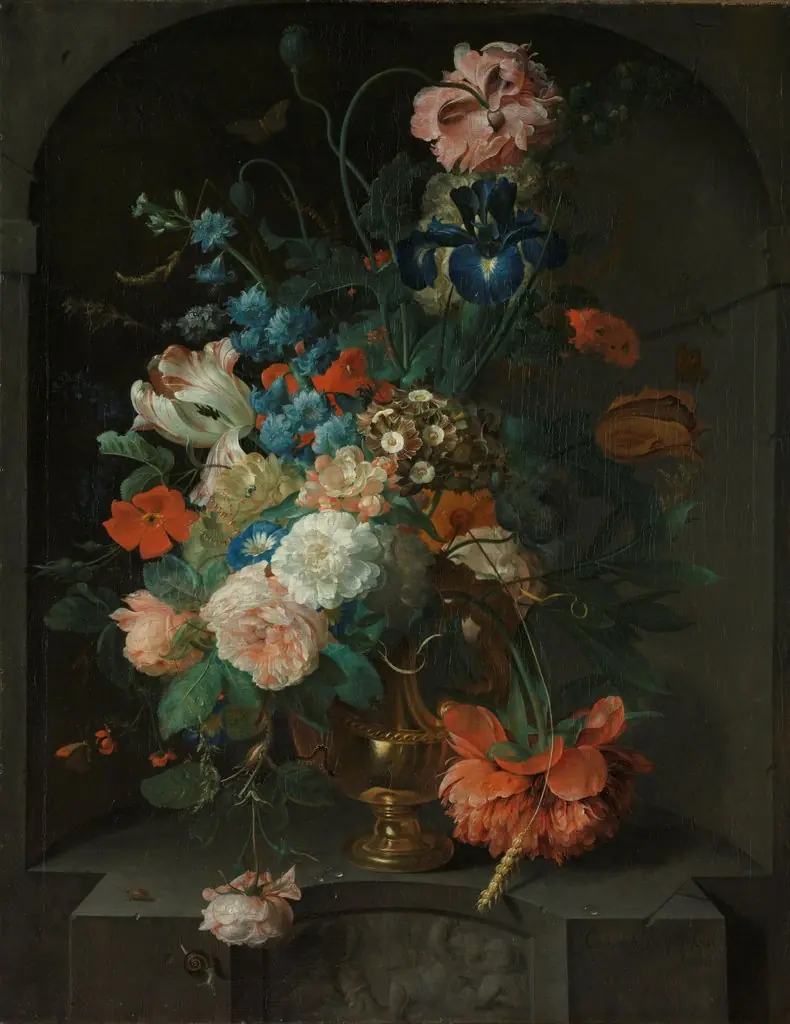
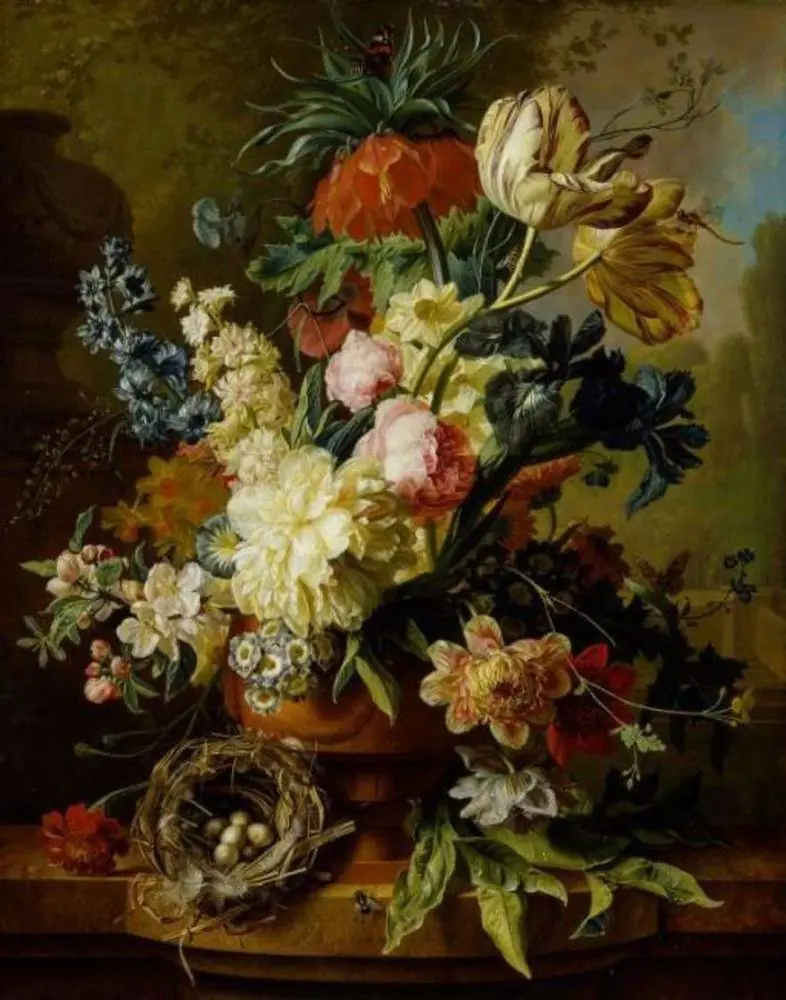
Flowers on a stone ledge with a bird's nest
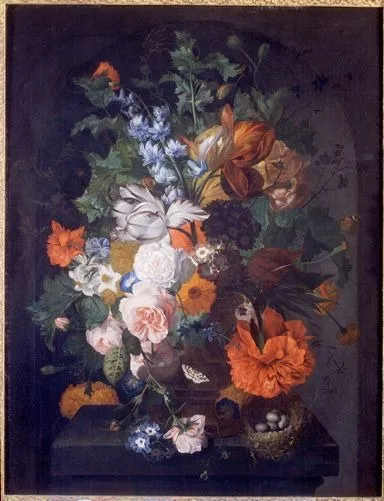
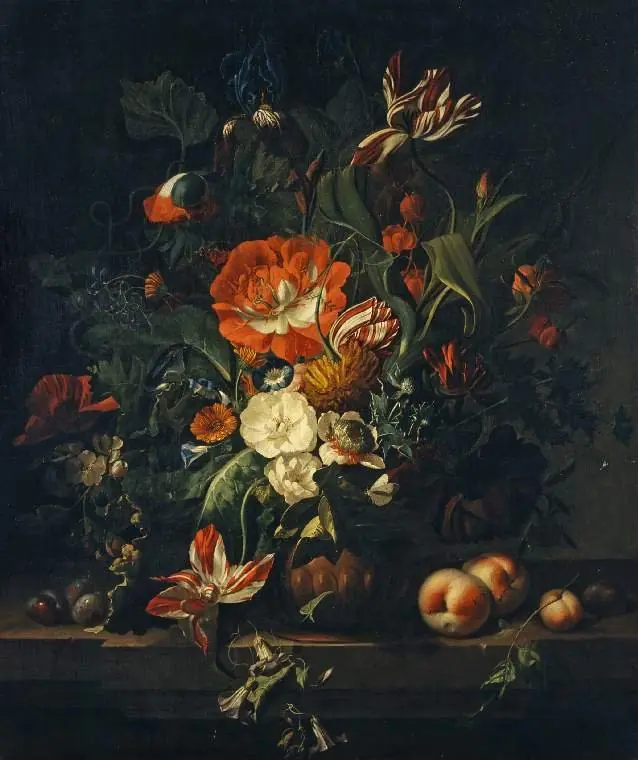
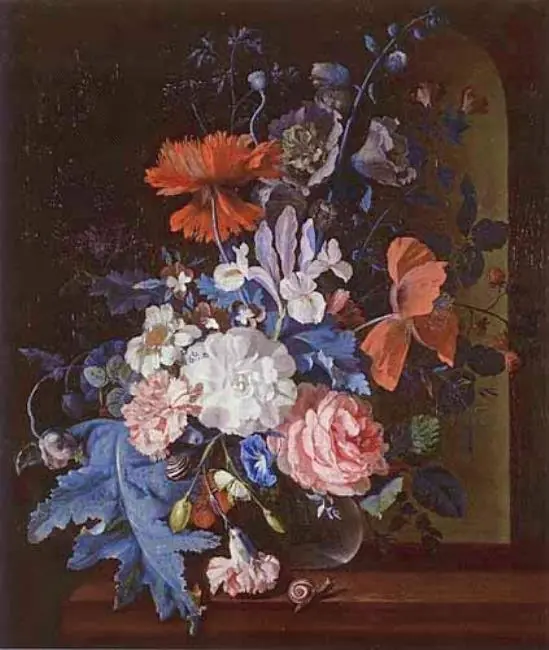
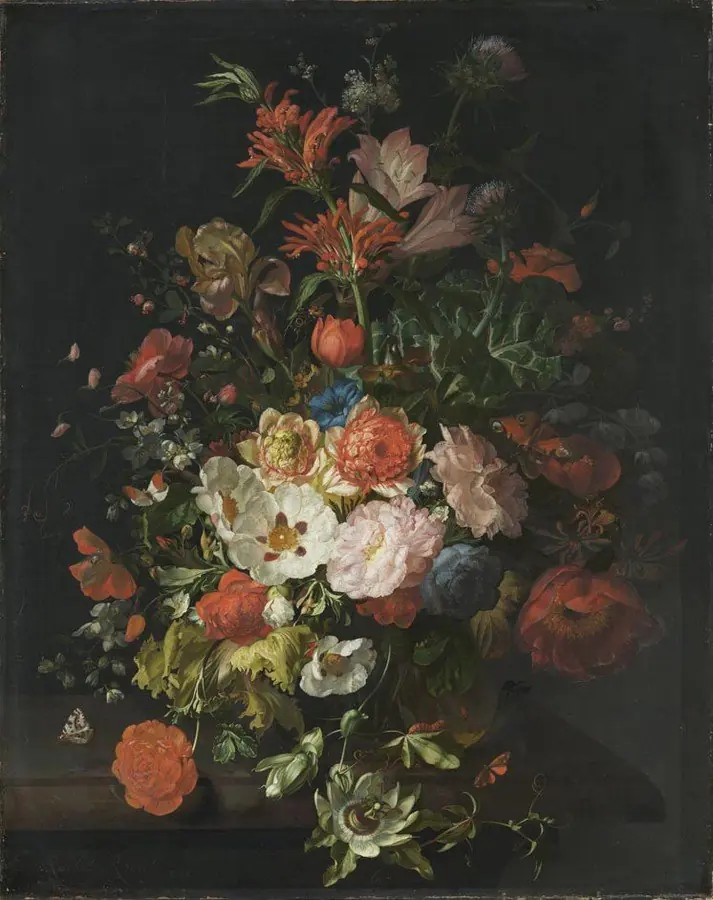
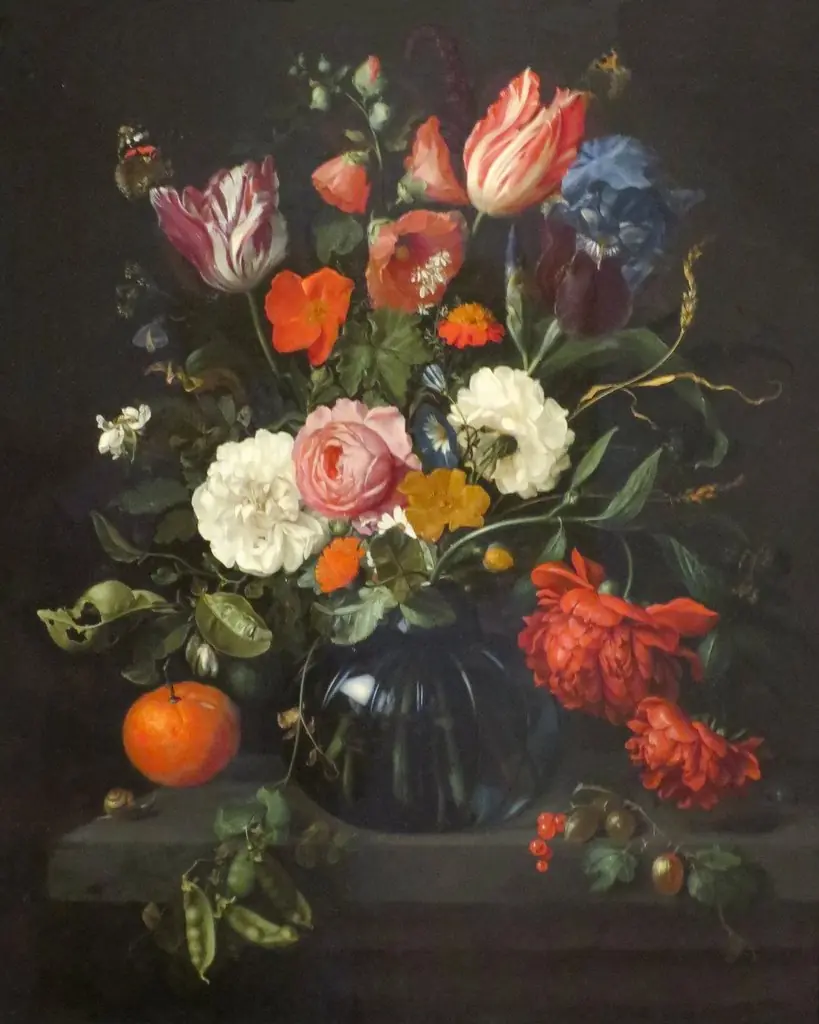
Flowers on a stone ledge with a bird's nest is an oil painting by the Rococo painting artist Coenraet Roepel. It dates from 1733 and is held in the collection of the Hermitage Museum.
About this work
Overview
Painted in 1733 by Dutch artist Coenraet Roepel, this oil-on-canvas work presents a quiet still life composed of wildflowers and a bird’s nest resting on a weathered stone ledge. The composition avoids theatricality, favoring a modest arrangement that suggests an accidental encounter in a garden. The painting resides today in the State Hermitage Museum in Saint Petersburg.
Subject & Meaning
The arrangement includes a loose bouquet of seasonal blooms—orange, pink, white, and purple—with green foliage spilling naturally over the ledge. Beside it, a small nest with eggs implies life emerging from the earth. Together, the elements evoke transience and renewal, common themes in Dutch still lifes, without overt symbolism or moralizing tone.
Technique & Style
Roepel employed oil paint to render subtle variations in petal texture, leaf translucency, and the rough grain of stone. Brushwork is precise yet unobtrusive, allowing light to define form rather than dramatic contrast. The colors remain vivid but muted by naturalism, avoiding artificial brightness to preserve the scene’s quiet authenticity.
History & Provenance
The painting entered the Hermitage collection in the 18th century, likely acquired during a period of increased interest in Dutch and Flemish still lifes by Russian imperial patrons. Its documented provenance traces back to Roepel’s active years in Amsterdam, though earlier ownership records remain sparse.
Context
Created during the late Baroque period, the work aligns with Dutch still-life traditions that emphasized observation over allegory. While contemporaries often included skulls or hourglasses, Roepel’s focus on organic simplicity reflects a quieter, more intimate branch of the genre, aligned with domestic tranquility and natural observation.
Legacy
Roepel’s work is rarely cited in major art historical narratives, yet his paintings contribute to the understated evolution of Dutch still life in the early 18th century. This piece exemplifies a shift toward naturalism and restrained composition, influencing lesser-known regional artists who prioritized quiet beauty over grandeur.
Artist & collection