Artwork
Sih-Chidä and Mahchsi-Karehde
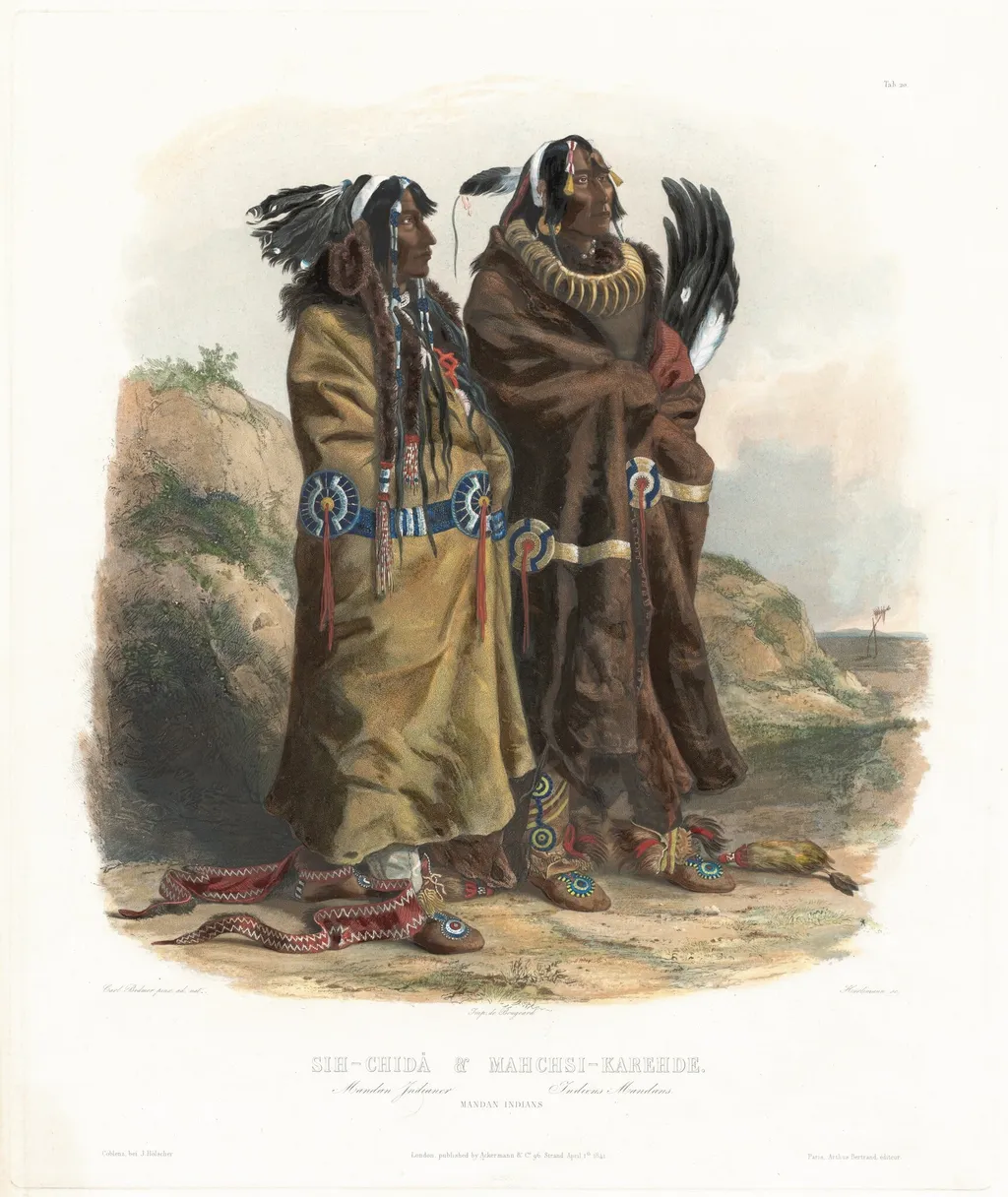
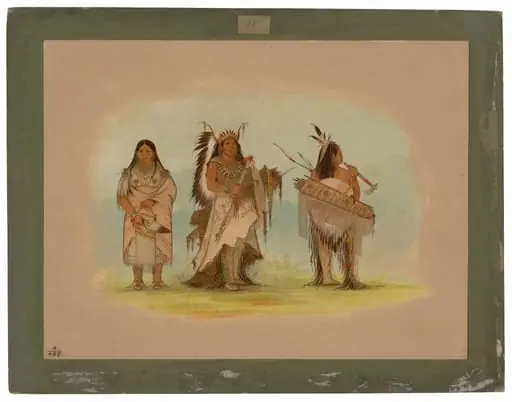
Sih-Chidä and Mahchsi-Karehde is an ink print by the Romanticist artist Johann Hürlimann. It dates from 1841 and is held in the collection of the National Gallery of Art.
About this work
Overview
The work belongs to a series of ethnographic portraits produced during a period of heightened European interest in Native American cultures.
Created in 1841 by Johann Hürlimann, this print combines engraving, etching, aquatint, and mezzotint on wove paper to portray two Indigenous men in formal attire. The work belongs to a series of ethnographic portraits produced during a period of heightened European interest in Native American cultures. Its layered printing techniques allow for subtle tonal variation, enhancing the solemn presence of the figures.
Subject & Meaning
The two figures, identified as Sih-Chidä and Mahchsi-Karehde, stand side by side, facing left, their postures upright and composed. Their attire—feathered headdresses, long coats, and moccasins—reflects cultural specificity, while the feathers held in their hands suggest ceremonial significance. The direct gaze toward the viewer conveys a quiet authority, resisting caricature and instead presenting individual dignity within a colonial-era documentation framework.
Technique & Style
Hürlimann employed multiple intaglio methods to achieve depth and texture: etching defined fine lines in clothing and hair, aquatint rendered soft gradients in the sky and rock, and mezzotint added rich shadows to the figures’ forms. The hand-coloring, applied with care, enhances the naturalism of skin tones and fabric, while the muted palette—gray sky, earthy coats, and restrained accents—supports the solemn tone of the composition.
History & Provenance
The print was produced in Switzerland during a wave of illustrated ethnographic publications. Hürlimann likely based the imagery on earlier sketches or descriptions from travelers, as direct access to the individuals depicted is unverified. The work circulated in European collections and institutions, often grouped with other portraits of Indigenous peoples, reflecting 19th-century curatorial practices focused on classification rather than cultural context.
Context
Produced during a time of westward expansion in North America and increasing displacement of Native nations, this print emerged alongside European efforts to document 'vanishing' cultures. While visually respectful, it reflects the limitations of its era: the subjects are named but their tribal affiliations are unspecified, and their representation is filtered through a foreign lens, prioritizing aesthetic order over lived experience.
Legacy
The print survives as a historical artifact of 19th-century visual anthropology, valued today for its technical precision and the humanity it affords its subjects. While no longer interpreted as ethnographic truth, it is studied for how European artists constructed Indigenous identity through form and technique. Its preservation in museum collections underscores its role in the evolving discourse on representation and cultural memory.
Artist & collection


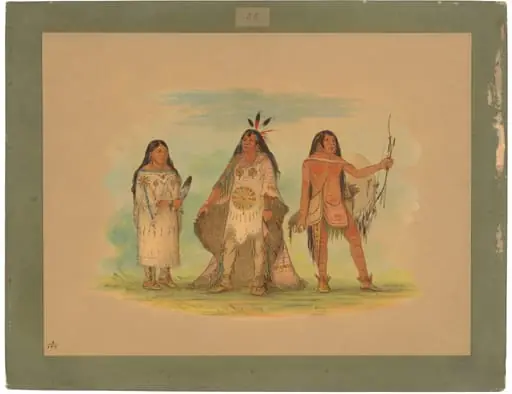 Three Minatarree Indians
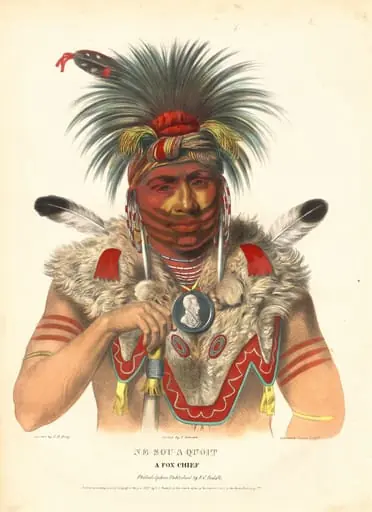 Ne-Sou-A Quoit, a Fox Chief
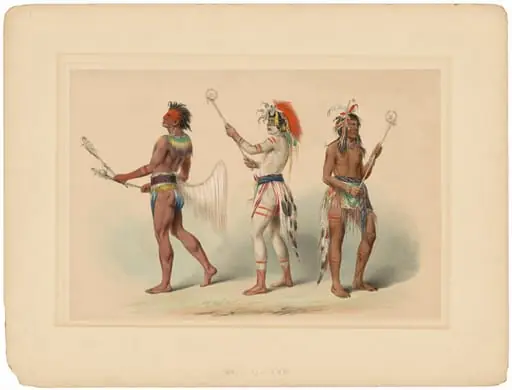 Ball Players
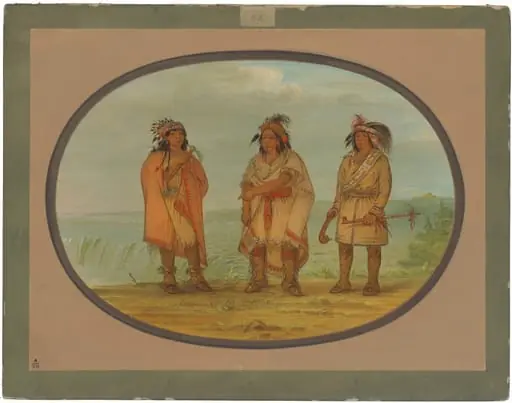 Seneca Chief, Red Jacket, with Two Warriors
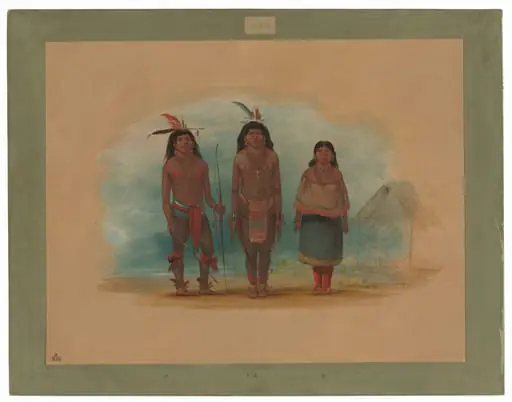 Three Taruma Indians
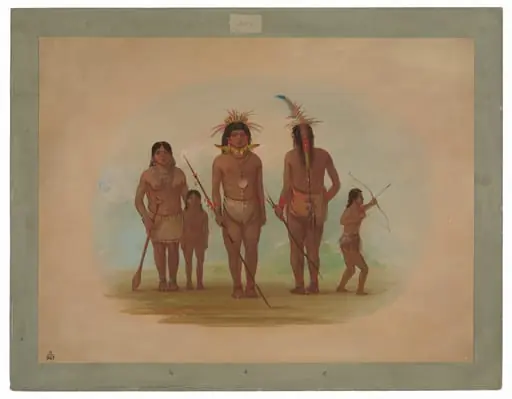 Five Iquito Indians
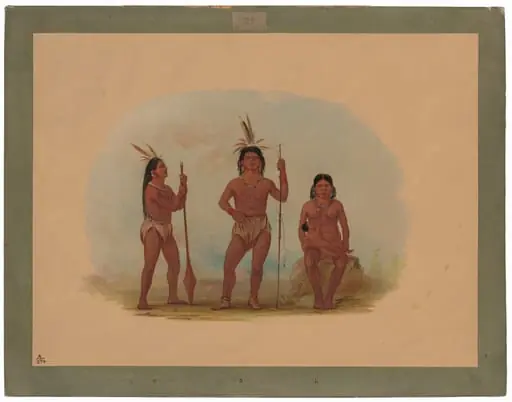 Klahoquaht Chief, His Wife, and Son
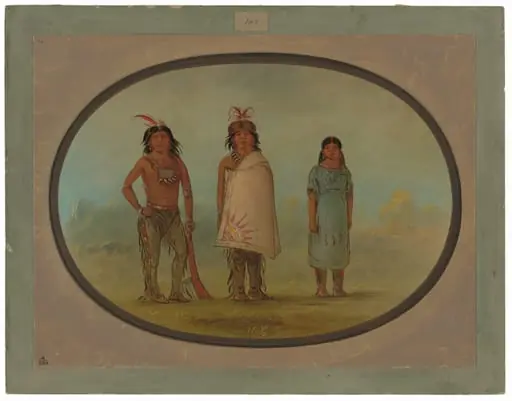 Two Chippewyan Warriors and a Woman
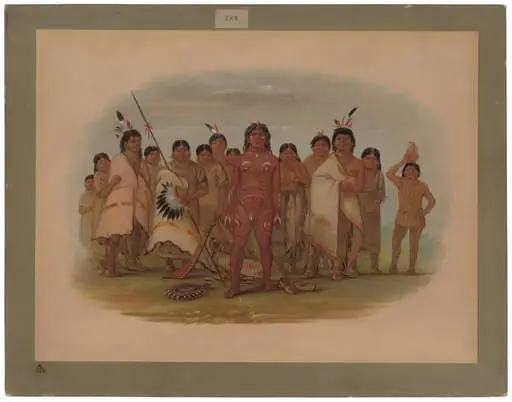 "Paint Me" - Apachee
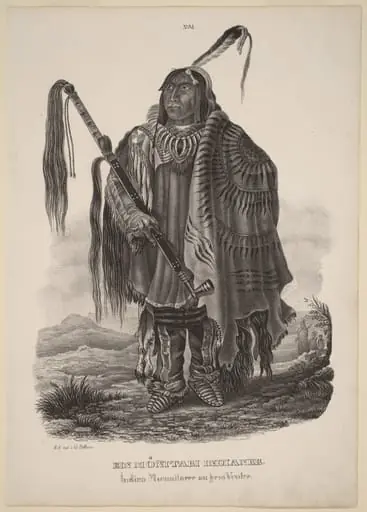 Ein Monitari Indianer
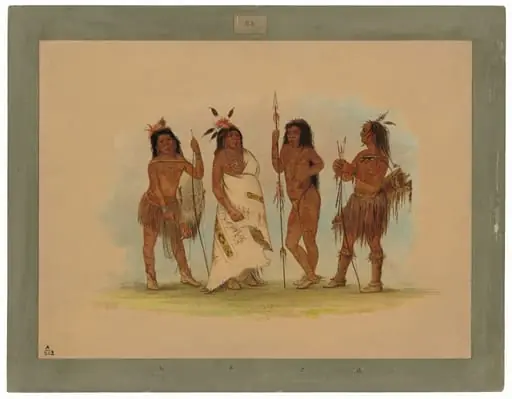 Apachee Chief and Three Warriors
 Omaha Chief, His Wife, and a Warrior