Artwork
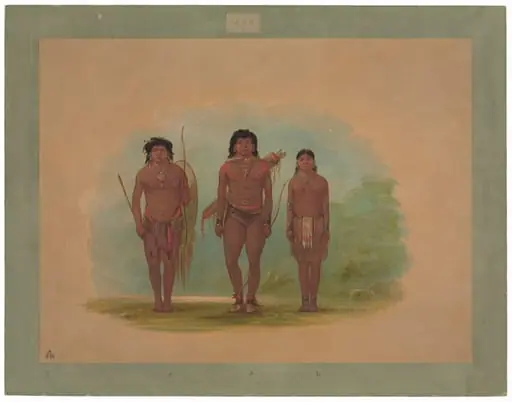
Klahoquaht Chief, His Wife, and Son
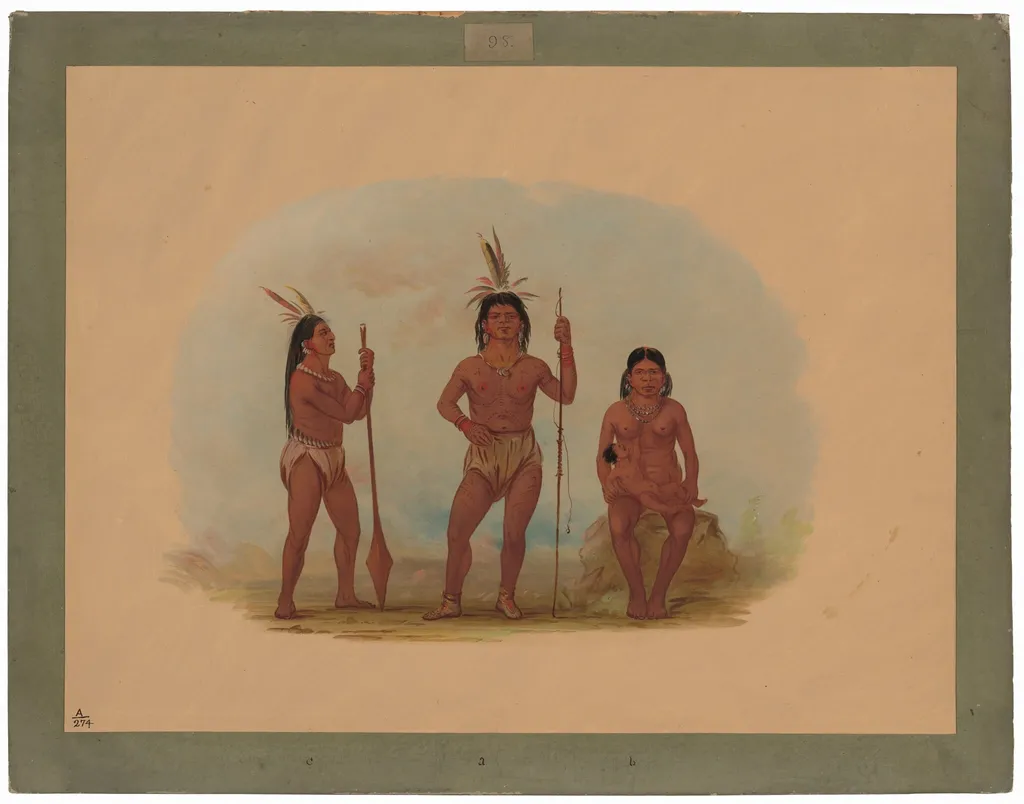
Klahoquaht Chief, His Wife, and Son is an oil painting by the Impressionist artist George Catlin. It dates from 1862 and is held in the collection of the National Gallery of Art.
About this work
Overview
Klahoquaht Chief, His Wife, and Son is a portrait painted by George Catlin in 1862, executed in oil on card mounted on paperboard. It is part of a larger body of work documenting Native American life.
Subject & Meaning
The painting depicts three figures, likely a family, in a natural setting. The central male figure wears a loincloth and holds two spears, while a seated woman holds a baby, and a standing figure, possibly their son, also holds a spear.
Technique & Style
The figures are rendered in muted, earthy tones against a soft, gradient sky, creating a sense of quiet dignity and intimacy. The use of chiaroscuro, a technique employing contrasts of light and dark, adds depth to the portrait.
History & Provenance
George Catlin, a lawyer-turned-artist, made multiple trips to the American West in the 1830s, documenting Native American communities. This portrait is a later work, created in 1862, and is part of his broader documentation of Plains Indian life.
Artist & collection

Artist
George Catlin ( KAT-lin; July 26, 1796 – December 23, 1872) was an American lawyer, painter, author, and traveler, who specialized in portraits of Native Americans in the American frontier.

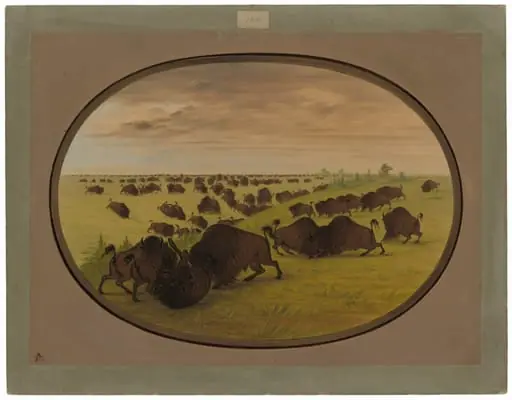 Bulls Fighting
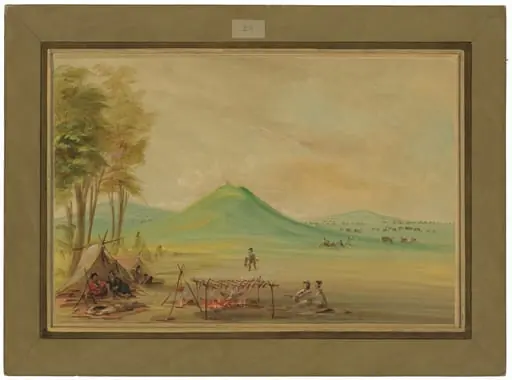 Expedition Encamped on a Texas Prairie. April 1686
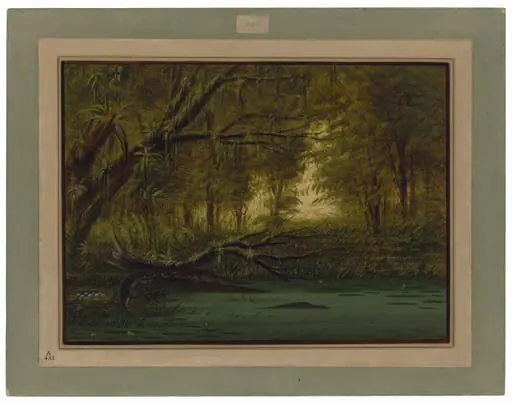 An Alligator's Nest
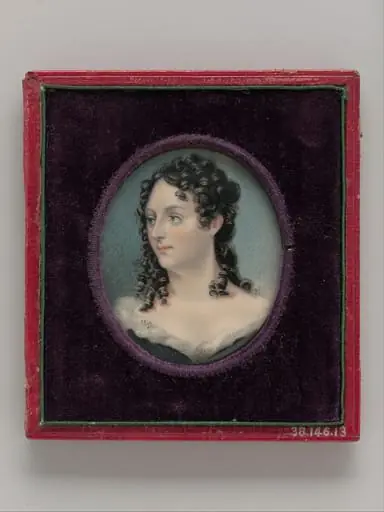 Mrs. George Catlin (Clara Bartlet Gregory)
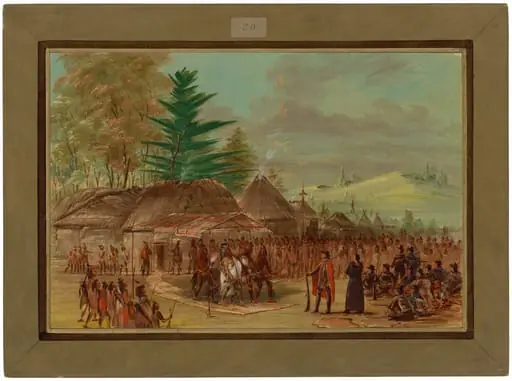 Chief of the Taensa Indians Receiving La Salle. March 20, 1682
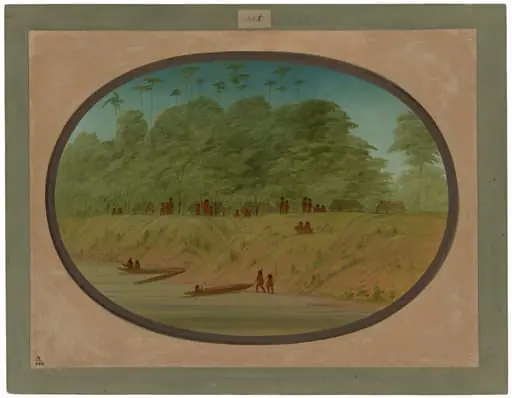 A Small Village - Payaguas Indians
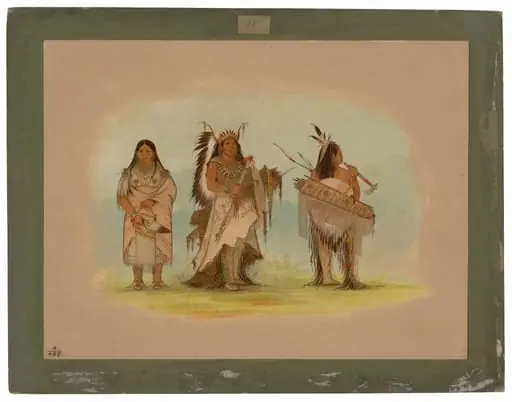 Omaha Chief, His Wife, and a Warrior
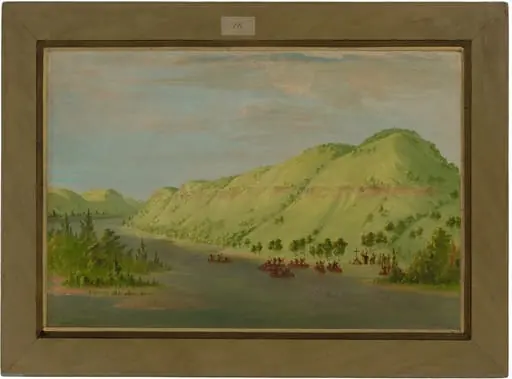 Father Hennepin Leaving the Mississippi to Join La Salle. May 8, 1680
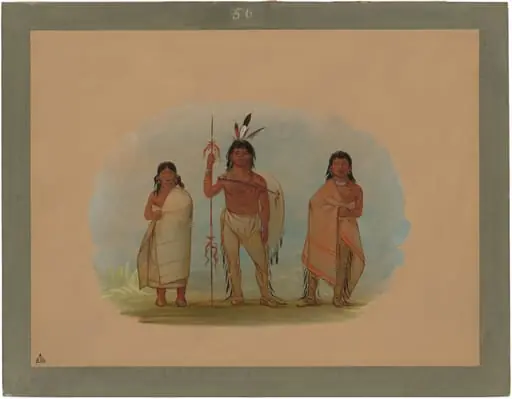 Ottowa Chief, His Wife, and a Warrior
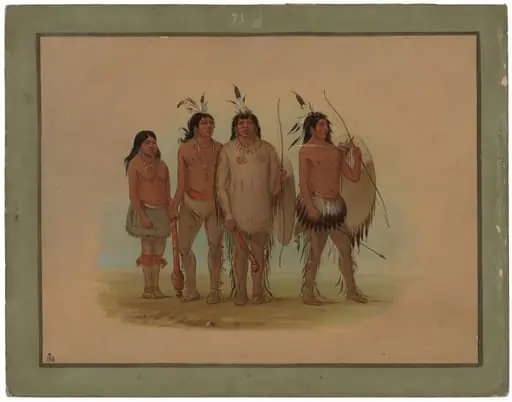 Kiowa Chief, His Wife, and Two Warriors
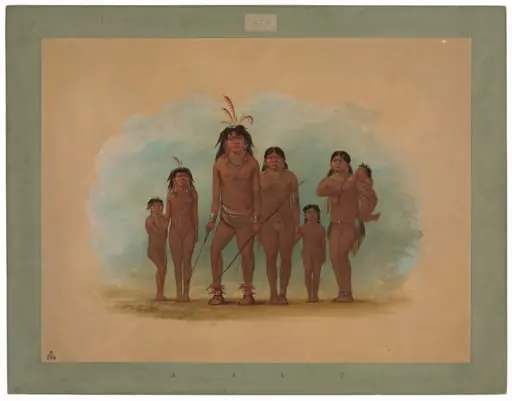 Lengua Chief, His Two Wives, and Four Children
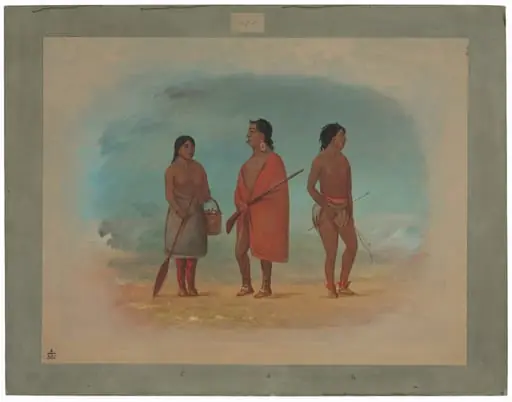 Botocudo Chief, His Wife, and a Young Man
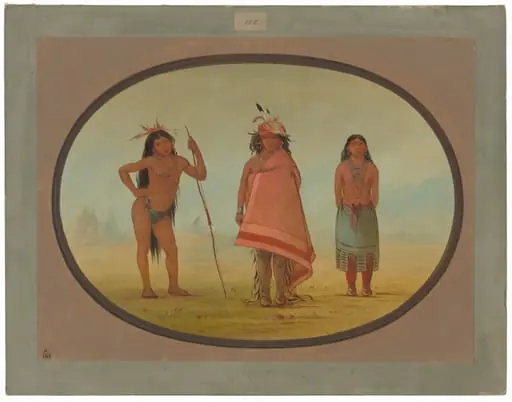 Cochimtee Chief, His Wife, and a Warrior
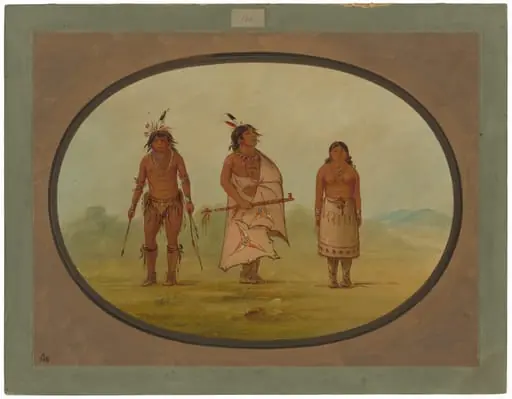 Mohave Chief, a Warrior, and His Wife
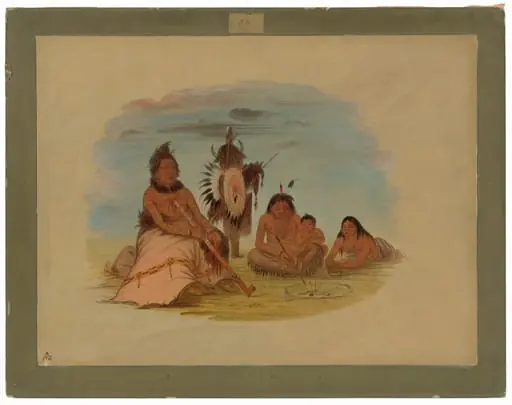 An Aged Minatarree Chief and His Family
 Chaco Chief, His Wife, and a Warrior