Artwork
Case din Târnovo
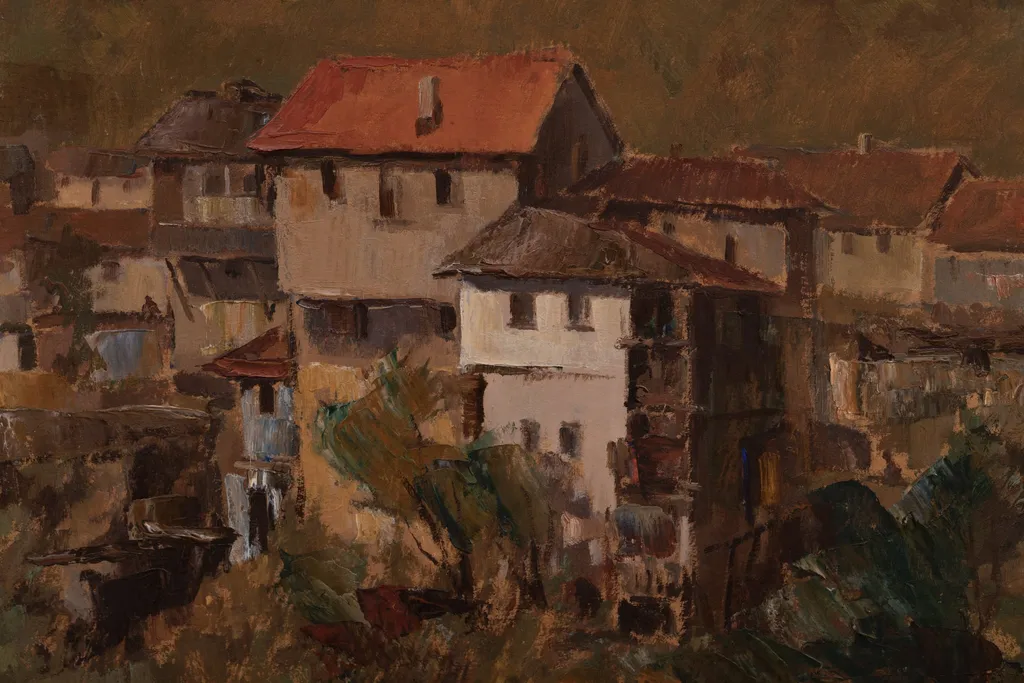
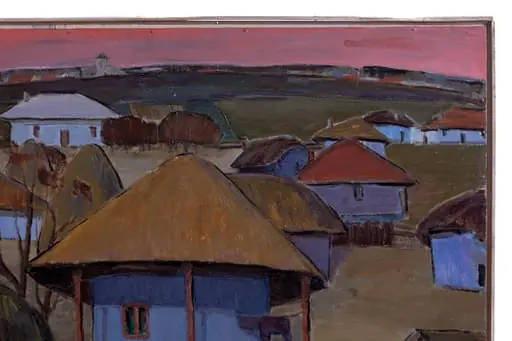
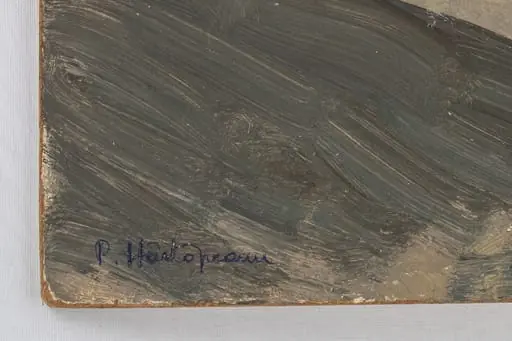
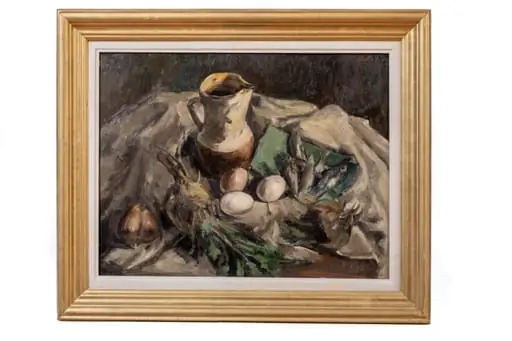
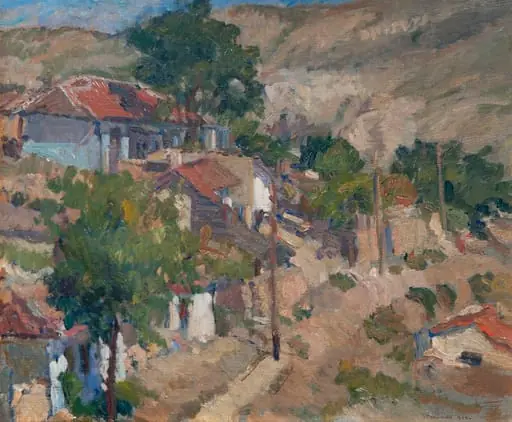
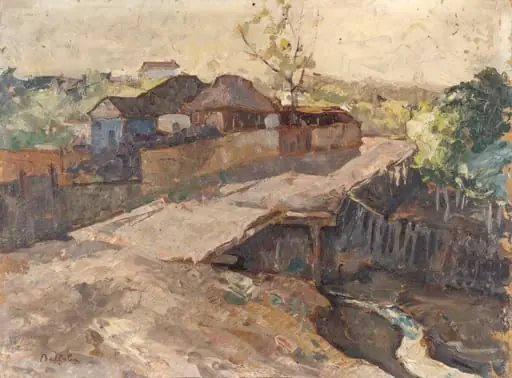
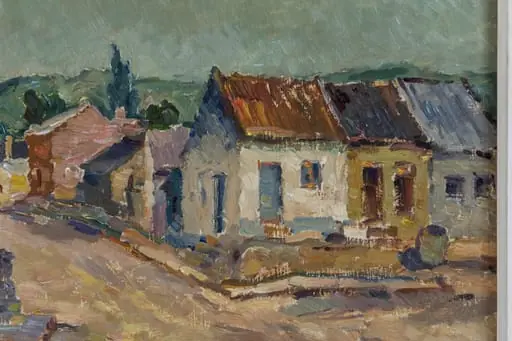
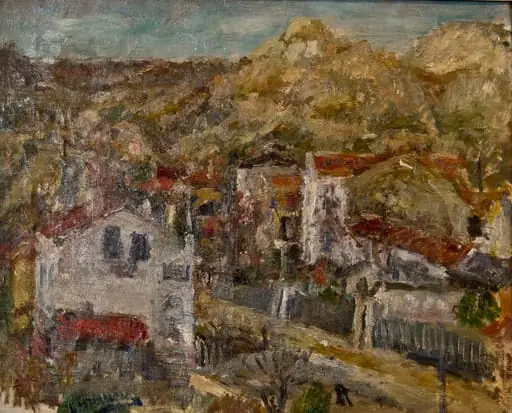
Case din Târnovo is a print by Hârtopeanu Petru. It dates from 1957 and is held in the collection of the Moldova National Museum Complex.
About this work
Overview
Its restrained palette and deliberate composition suggest a contemplative engagement with place rather than dramatic expression.
Created around 1957 by Romanian-German artist Petre Hârtopeanu, *Case din Târnovo* is a landscape painting that captures a quiet residential scene in the historic town of Târnovo. The work reflects Hârtopeanu’s dual identity as a painter and educator, rooted in early 20th-century European traditions. Its restrained palette and deliberate composition suggest a contemplative engagement with place rather than dramatic expression.
Subject & Meaning
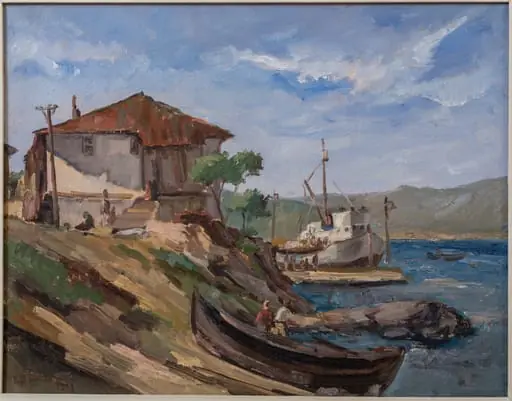
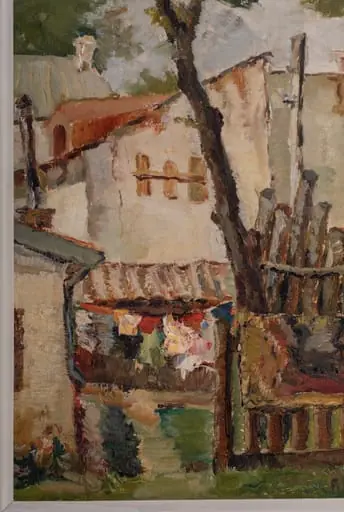
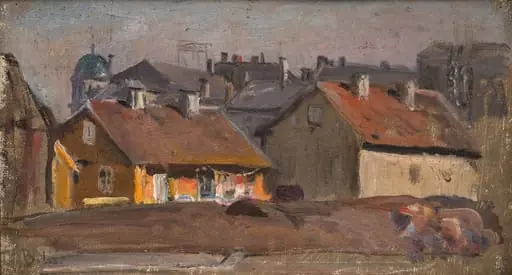
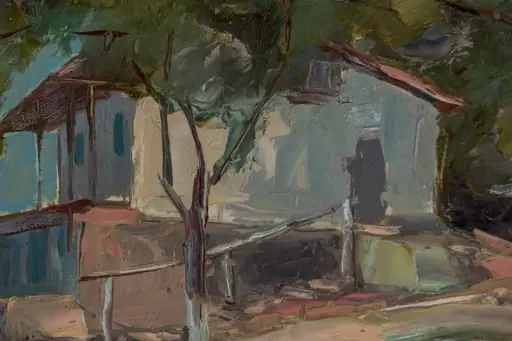
The painting portrays a row of modest dwellings with red-tiled roofs, set against a soft, natural backdrop. Târnovo, a town with deep cultural significance in Romanian history, serves as both literal subject and symbolic anchor. The absence of figures and the stillness of the scene imply a meditation on continuity, memory, and the quiet endurance of everyday life in a changing world.
Technique & Style
Hârtopeanu employs layered earth tones—ochres, umbers, and soft beiges—to model the architecture and terrain with subtle gradations. The red roofs act as rhythmic accents, guiding the eye across the composition. Brushwork is deliberate but unobtrusive, favoring texture over detail. Trees and shrubs in the foreground frame the view, enhancing spatial depth without disrupting the scene’s calm equilibrium.
History & Provenance
The painting emerged during Hârtopeanu’s mature period, following his years teaching art in Romania and later in Germany. While specific ownership history is not widely documented, its creation around 1957 situates it within a phase of personal reflection, possibly influenced by his displacement and cultural hybridity. The work remains part of private or institutional collections focused on postwar Eastern European art.
Context
In the late 1950s, Romania was under communist rule, and artistic expression was often constrained. Hârtopeanu’s choice of a tranquil, non-political subject may reflect a quiet resistance to ideological pressure, favoring personal observation over state-sanctioned themes. His German-Romanian background also positioned him between cultural spheres, allowing a perspective that avoided overt nationalism.
Legacy
Though not widely exhibited internationally, *Case din Târnovo* exemplifies a quieter strand of 20th-century Romanian painting that prioritized atmosphere over ideology. Hârtopeanu’s influence as an educator helped shape a generation of artists who valued observation and technical discipline. The work endures as a quiet testament to place, memory, and the dignity of ordinary architecture.
Artist & collection
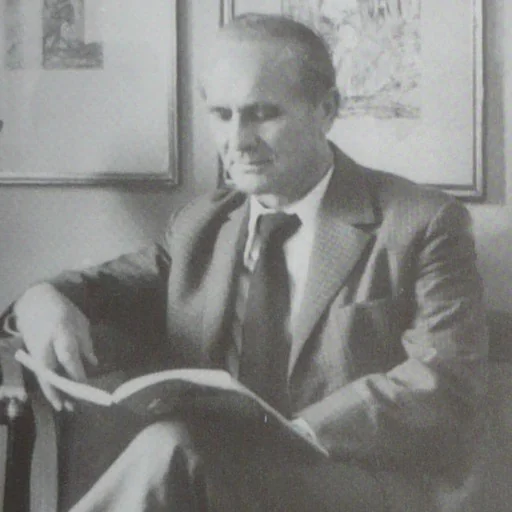
Artist
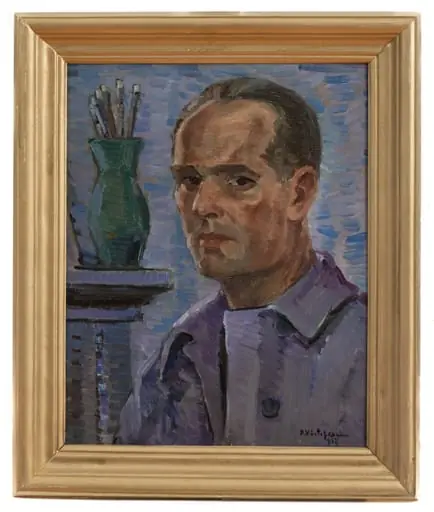
Petre Hârtopeanu (15 June 1913, Dângeni, Botoșani County, Romania — 22 March 2001, Frankfurt-am-Main) was a Romanian-German painter and art professor.