Artwork
Petunii
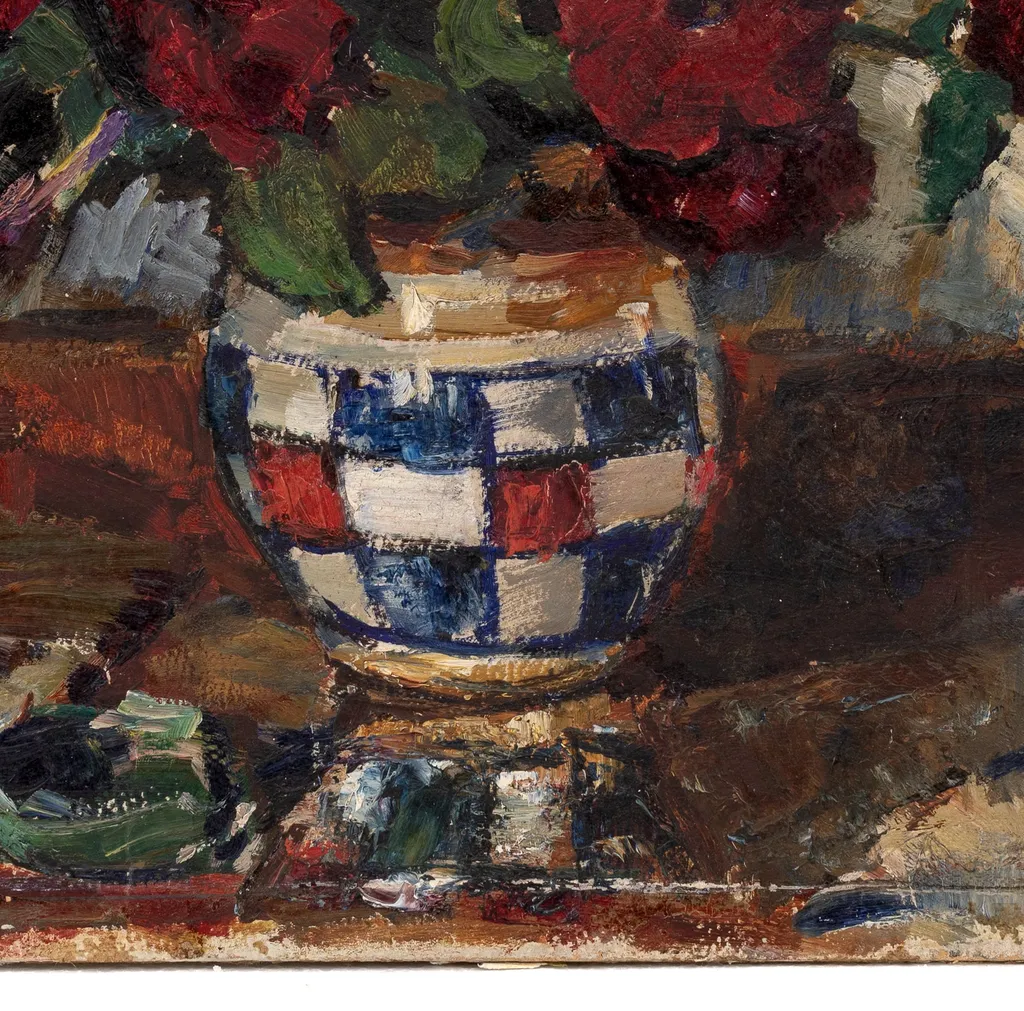
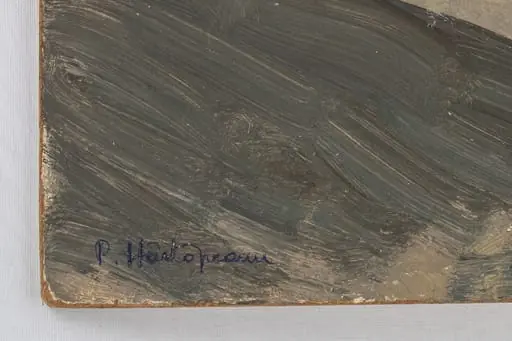
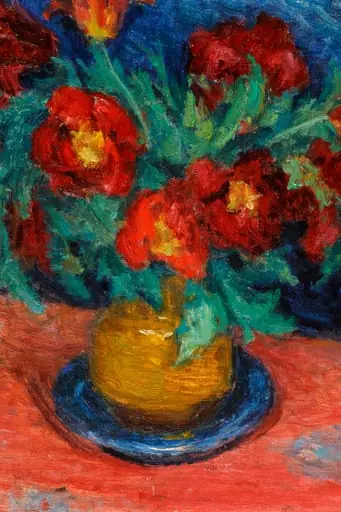
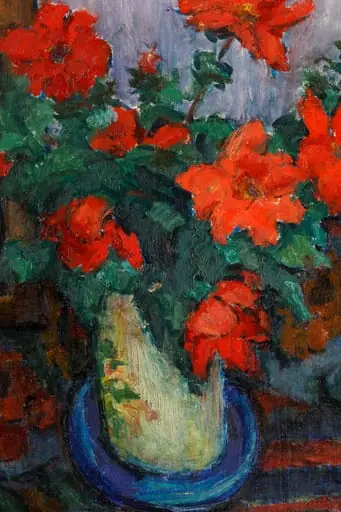
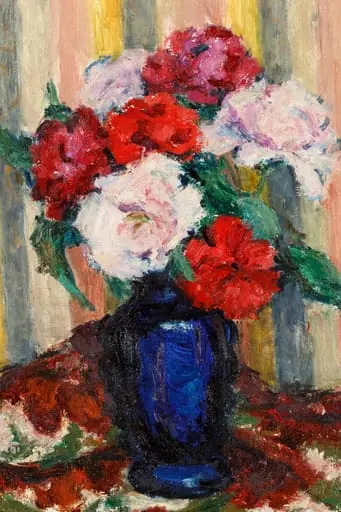
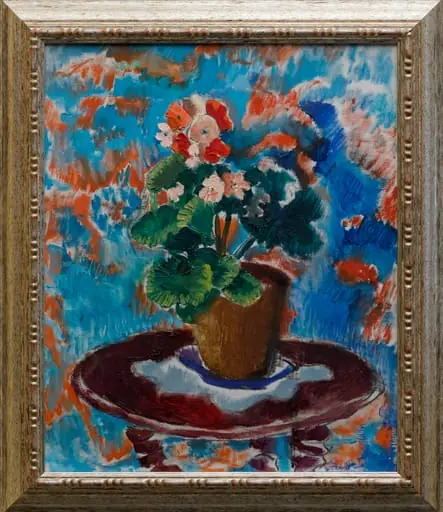
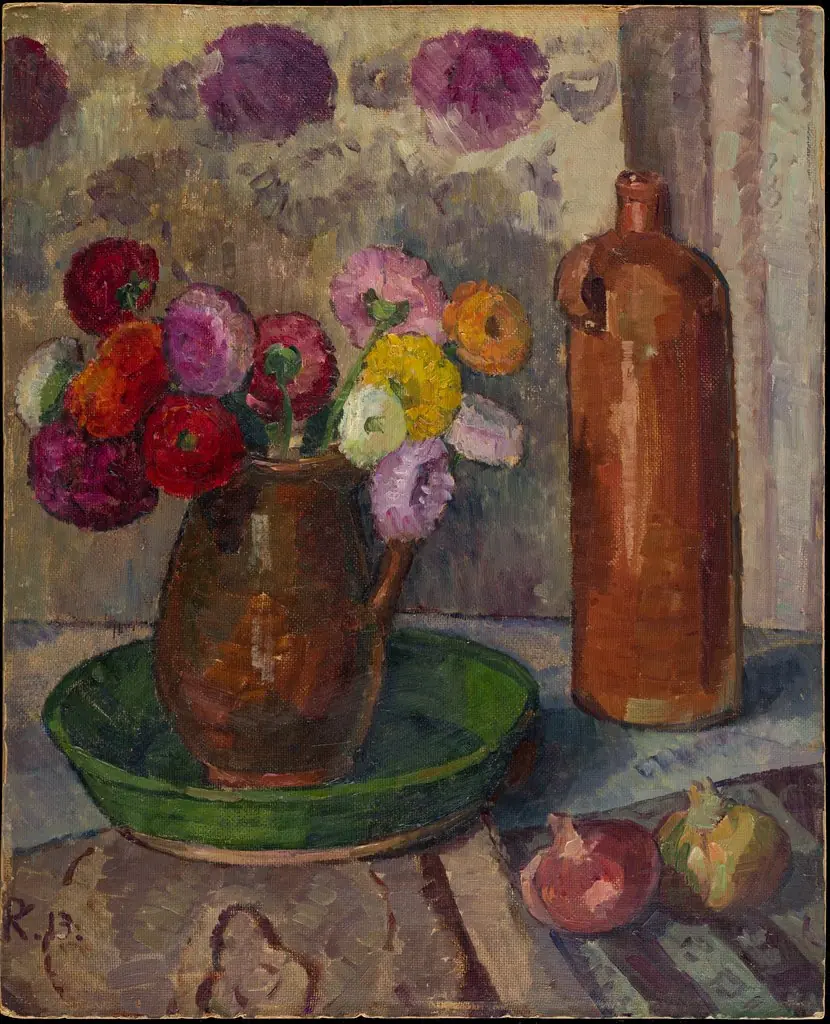
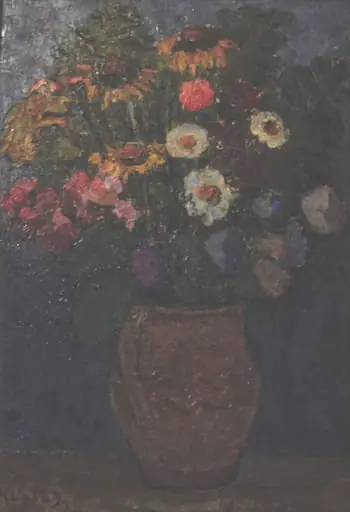
Petunii is a print by Hârtopeanu Petru. It dates from 1957 and is held in the collection of the Moldova National Museum Complex.
About this work
Overview
Though the title references petunias, the central form resembles a vessel, suggesting a shift from literal representation to sensory interpretation.
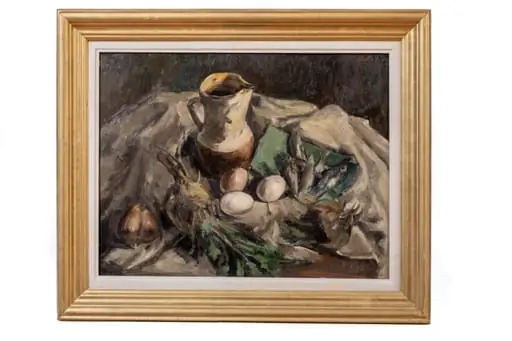
Created around 1957 by Romanian-German artist Petre Hârtopeanu, *Petunii* is an oil painting that engages with still-life tradition through an abstracted, tactile approach. Though the title references petunias, the central form resembles a vessel, suggesting a shift from literal representation to sensory interpretation. The work reflects Hârtopeanu’s dual identity as painter and educator, emphasizing material presence over narrative clarity.
Subject & Meaning
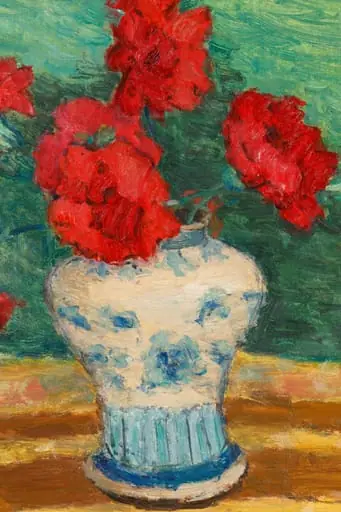
The painting’s title points to flowers, yet the dominant shape is a cylindrical object with striped patterning and a blue band, more suggestive of a ceramic jar or vase. Surrounding brushwork evokes foliage without defining it clearly. This ambiguity invites viewers to consider the interplay between naming and perception, where the floral reference becomes a starting point rather than a description, deepening the work’s introspective tone.
Technique & Style
Hârtopeanu applied paint thickly and unevenly, using visible, directional brushstrokes that build texture across the surface. The red-and-white stripes of the central form contrast with the chaotic greens and browns of the background, creating a sense of depth through layering rather than perspective. The impasto technique emphasizes the physicality of paint, prioritizing gesture and material over refined finish.
History & Provenance
The painting emerged during Hârtopeanu’s active period in Romania, following his training and teaching at art institutions. While its early ownership is undocumented, its creation aligns with postwar Romanian art’s move toward expressive abstraction, even within traditional genres like still life. The work remained in private hands until its inclusion in public collections, where it is now studied as part of his broader oeuvre.
Context
In mid-20th century Romania, artists navigated state expectations while exploring personal expression. Hârtopeanu’s work, though not overtly political, aligned with a quiet shift toward material experimentation. *Petunii* reflects this climate—its abstracted form and textured surface echo broader European trends in postwar painting, where the act of painting itself became as significant as the subject depicted.
Legacy
Though not widely exhibited, *Petunii* contributes to understanding Hârtopeanu’s role in Romanian modernism. Its emphasis on texture and ambiguity distinguishes it from more conventional still lifes of the era. The painting remains a quiet example of how personal vision could persist within a constrained artistic environment, influencing later generations interested in the tactile potential of paint.
Artist & collection
Artist
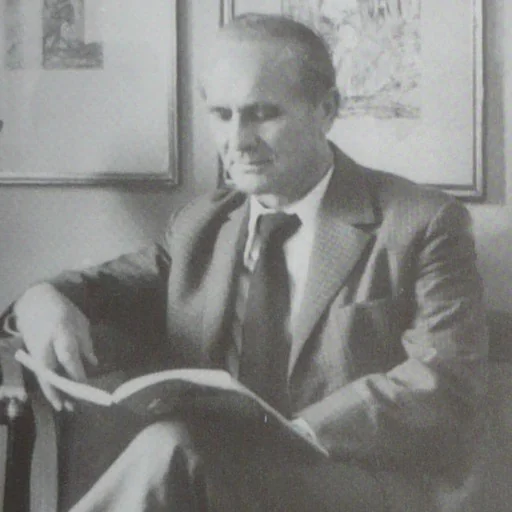
Petre Hârtopeanu (15 June 1913, Dângeni, Botoșani County, Romania — 22 March 2001, Frankfurt-am-Main) was a Romanian-German painter and art professor.