Artwork
The Improvisatore in Prison
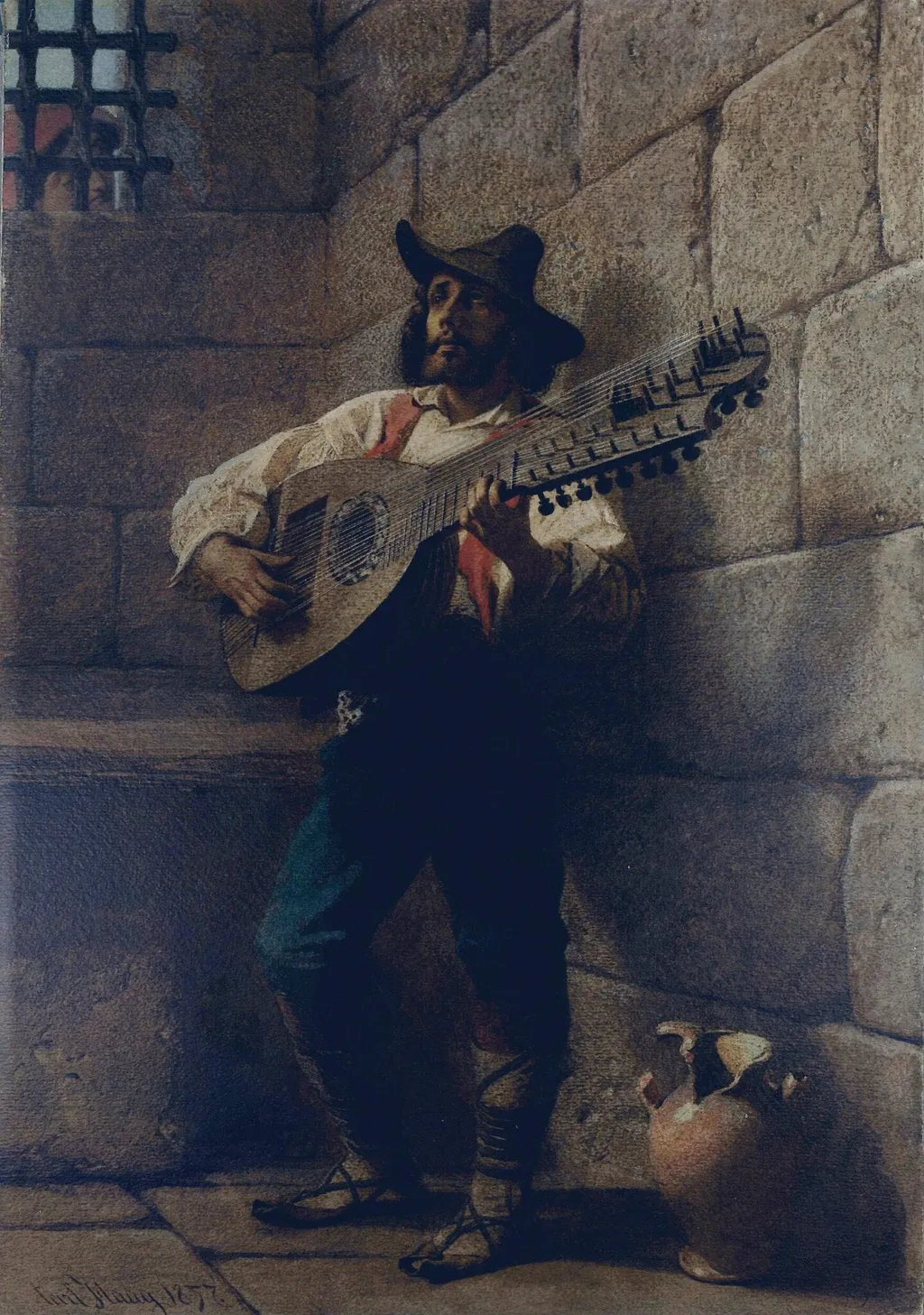
The Improvisatore in Prison is a watercolor work on paper by the Impressionist artist Haag. It dates from 1857 and is held in the collection of the Victoria and Albert Museum.
About this work
Overview
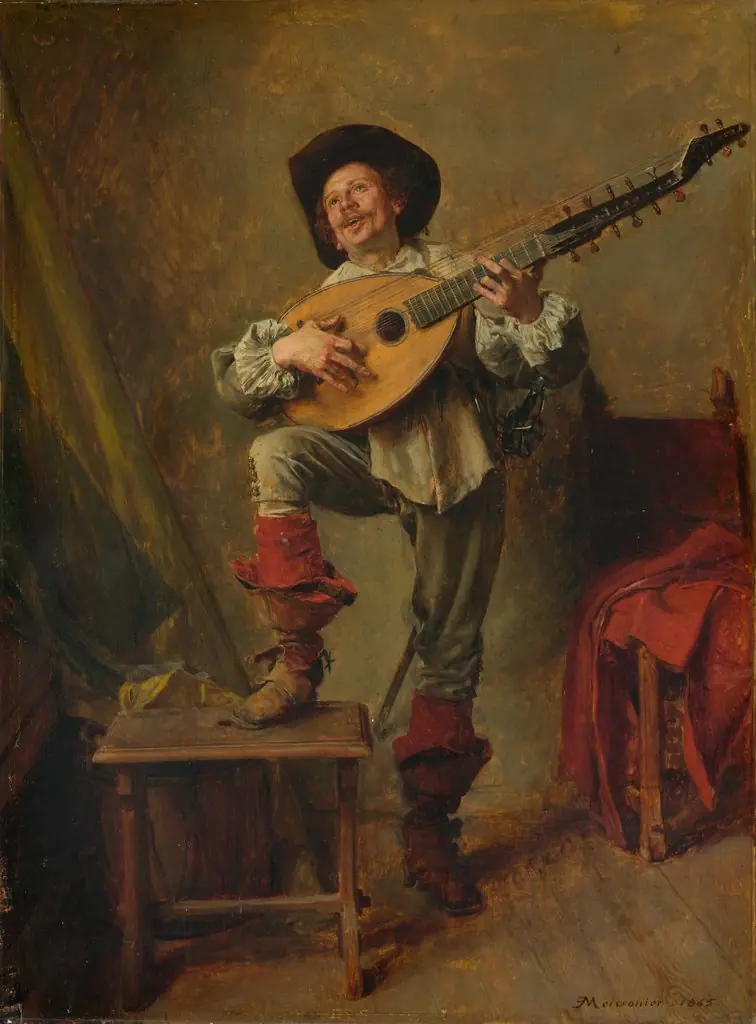
Created in 1857 by Haag, this watercolour portrays a solitary figure in a prison cell, holding a lute. The work is signed and dated by the artist, indicating its personal significance. Rendered in delicate washes, the scene captures a moment of quiet endurance rather than overt suffering. The composition centers on the figure, framed by bare stone walls that emphasize isolation.
Subject & Meaning
The figure, dressed in 19th-century attire and wearing a hat, appears lost in thought, his gaze directed upward. The lute in his hands suggests music as both solace and protest, hinting at a performer silenced by confinement. His expression is solemn, not despairing, implying inner resilience. The scene evokes the tension between artistic spirit and institutional repression.
Technique & Style
Chiaroscuro is subtly applied through graded washes, creating depth in the stone walls and defining the figure’s form without harsh shadows.
Haag employs watercolour with restrained precision, using thin layers to build tone and texture. Chiaroscuro is subtly applied through graded washes, creating depth in the stone walls and defining the figure’s form without harsh shadows. The limited palette—earthy browns, muted grays, and faint highlights—enhances the somber mood, while the absence of detail in the background focuses attention on the subject’s solitude.
History & Provenance
The work’s early ownership is undocumented, but its signature and date suggest it was produced during Haag’s active period in mid-19th-century Europe. It likely originated as a personal study or commission, possibly inspired by contemporary narratives of artists or poets imprisoned for political or social dissent. No public exhibition history is recorded prior to its modern acquisition.
Context
In the 1850s, European artists increasingly depicted marginalized figures—prisoners, beggars, performers—as subjects of moral or social reflection. Haag’s image aligns with this trend, reflecting broader cultural interest in individual dignity under oppression. The lute, a symbol of troubadour tradition, connects the figure to older ideals of art as resistance, even in confinement.
Legacy
Though not widely known, the painting contributes to a quiet tradition of 19th-century genre scenes that elevate private moments of suffering into dignified contemplation. Its restraint and emotional nuance distinguish it from more dramatic depictions of imprisonment. Today, it remains a modest but resonant example of how watercolour could convey psychological depth without spectacle.
Own this work as a print
Artist & collection
Artist
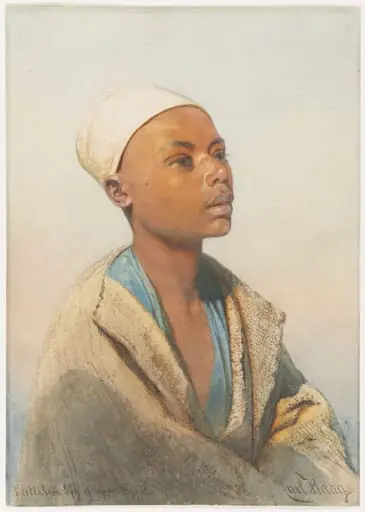
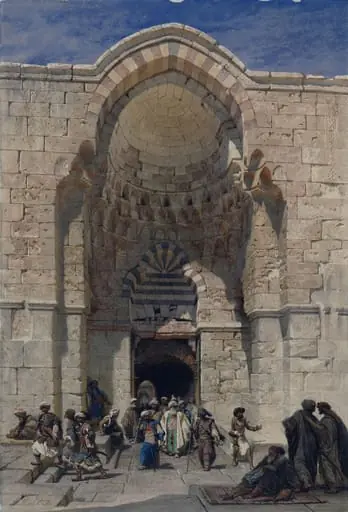
Haag painted scenes from Europe and the Middle East in watercolour. See a boy from Upper Egypt in *Hassan: A Fellah Boy of Upper Egypt*, peek through the gate *Bab-el-Khataneen* in Jerusalem, or enter a prison with *The…