Artwork
A Peach, Seville
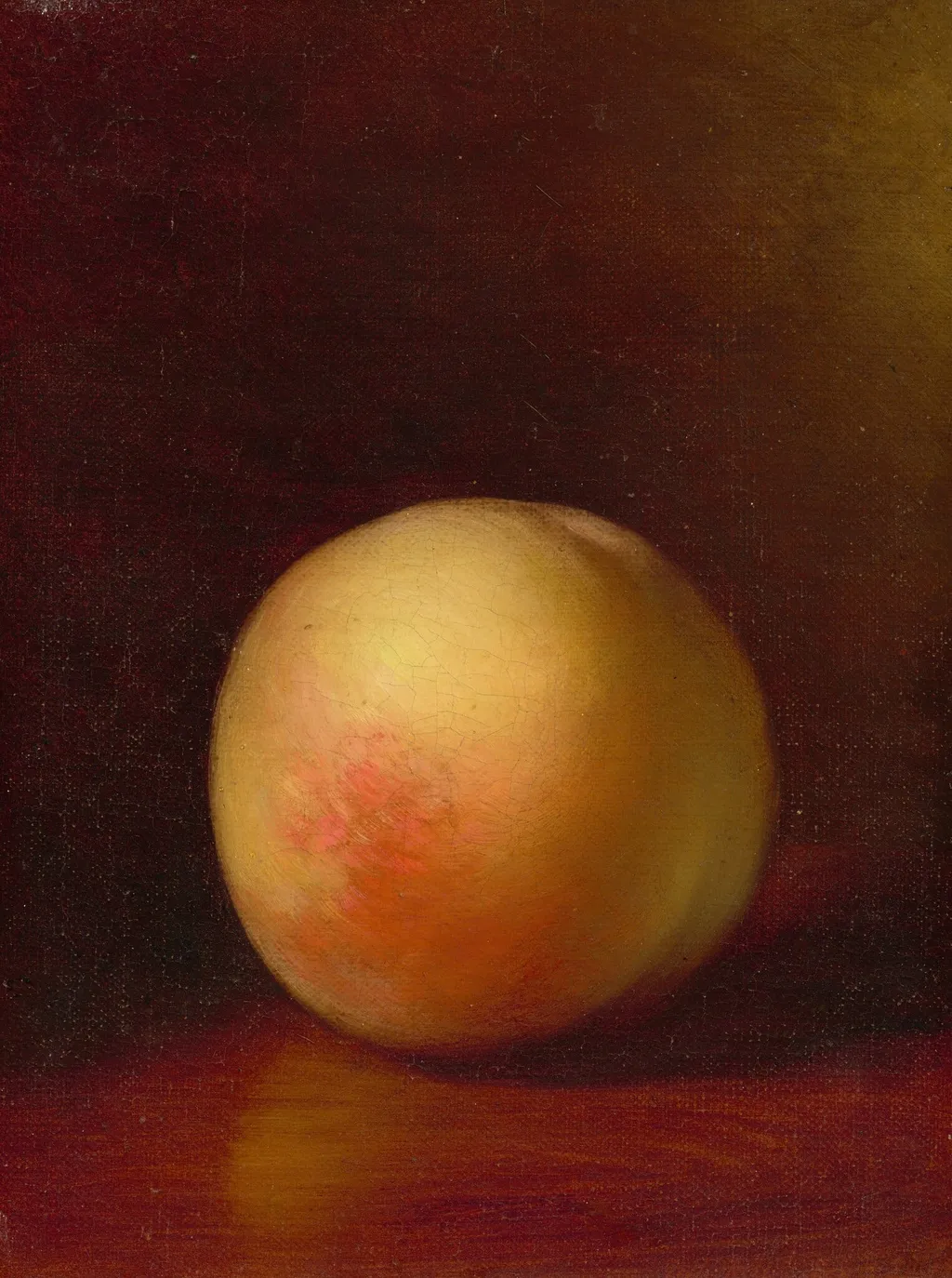
A Peach, Seville is an oil painting by the Impressionist artist George Henry Hall. It dates from 1866 and is held in the collection of the National Gallery of Art.
About this work
Overview
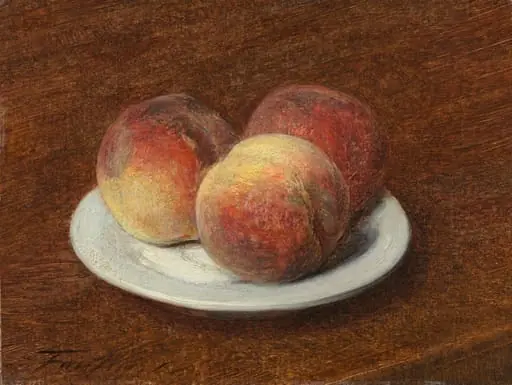
George Henry Hall’s 1866 oil painting titled *A Peach, Seville* presents a solitary peach perched on a flat stone ledge. Rendered in a modestly sized canvas, the work exemplifies the Realist focus on everyday subjects, capturing the fruit with precise, naturalistic detail.
Subject & Meaning
The composition isolates a single, ripe peach, allowing the viewer to contemplate its texture, color, and form. By emphasizing the fruit’s tactile qualities, Hall invites a quiet, meditative engagement with an ordinary object, a common aim of 19th‑century realist still lifes.
Technique & Style
Executed in oil on canvas, the painting employs a restrained palette and careful modeling of light. A left‑hand light source creates a gentle glow on the peach’s fuzzy skin and a soft, uncomplicated shadow on the stone, enhancing the illusion of three‑dimensionality without decorative excess.
History & Provenance
Hall, an American painter born in 1825, studied in Düsseldorf and Paris before establishing his career in New York. He produced *A Peach, Seville* during a period of frequent travel between Europe and the Catskills, reflecting his ongoing engagement with European realist traditions while working from his American base.
Context
In the mid‑1800s, still‑life paintings of food served both as demonstrations of technical skill and as reflections on the material world. Hall’s focus on a single fruit aligns with this tradition, positioning the work within a broader realist discourse that valued accurate observation over allegorical content.
Artist & collection

Artist
George Henry Hall (1825–1913) was an American still-life and landscape artist. He studied art in Düsseldorf and Paris and he worked and lived in New York City, the Catskills of New York and in Europe. His works are in…