Artwork
Untitled
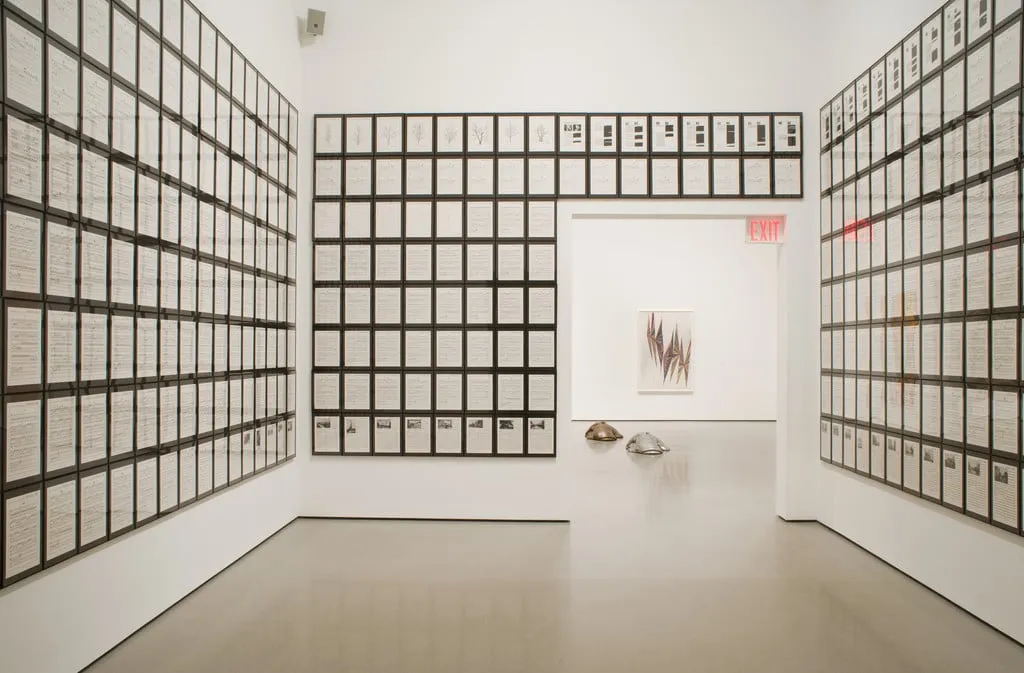
Untitled is an ink print by Hanne Darboven. It dates from 1980 and is held in the collection of the Museum of Modern Art.
About this work
Overview
Housed in The Museum of Modern Art, the piece functions as a multi-sensory archive, merging visual notation with auditory elements.
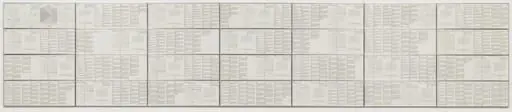
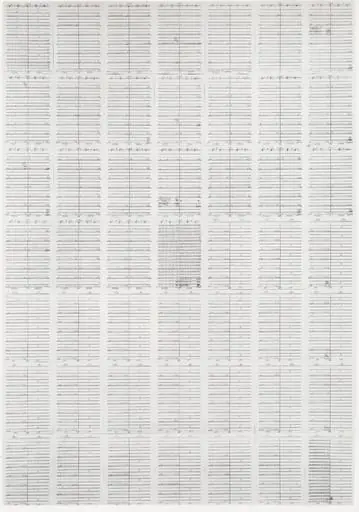
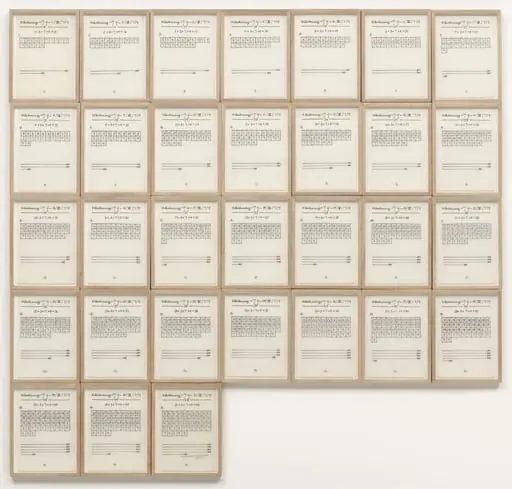
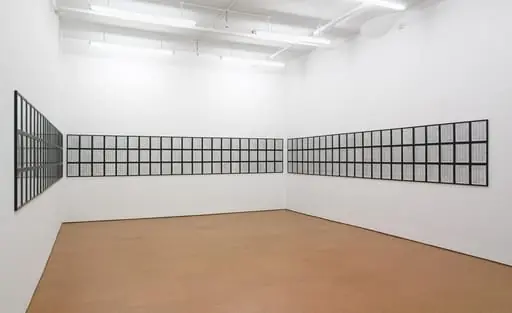
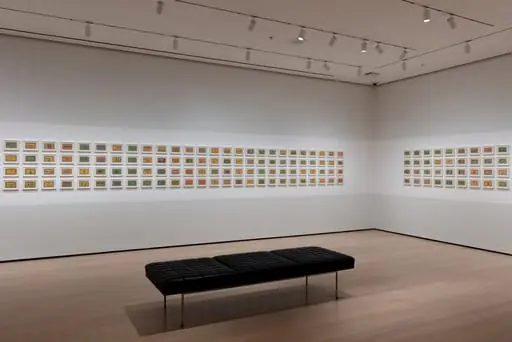
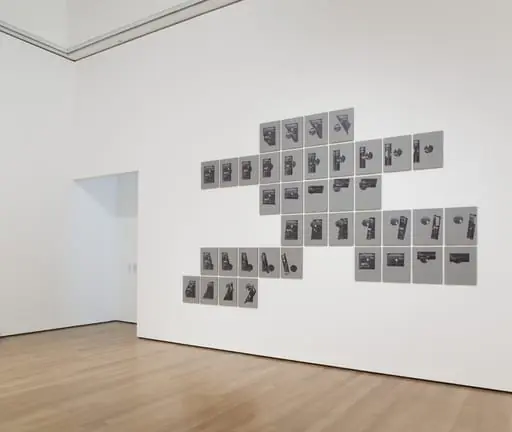
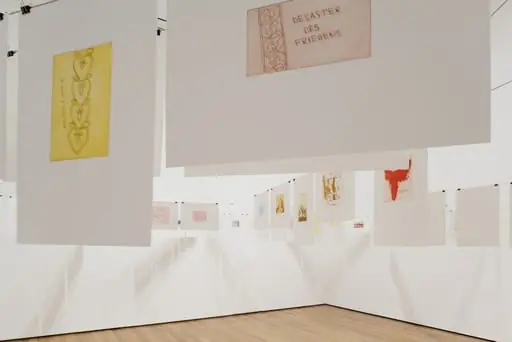
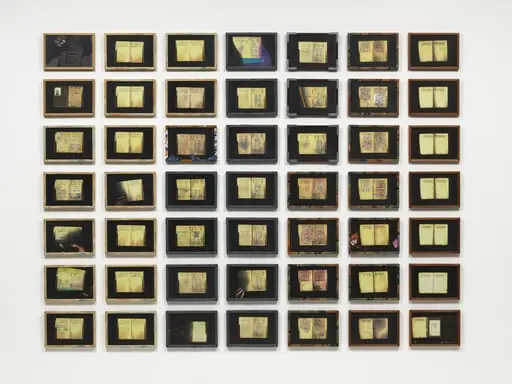
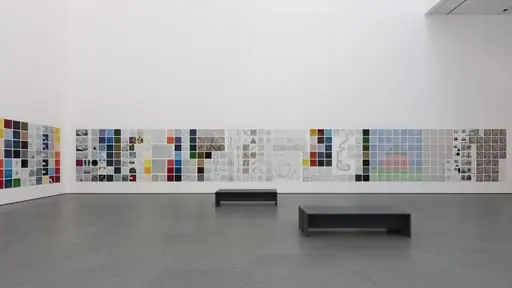
Created in 1980 by German artist Hanne Darboven, Untitled is a comprehensive conceptual work comprising 416 lithographs, eleven vinyl records, and one duplicated print. Housed in The Museum of Modern Art, the piece functions as a multi-sensory archive, merging visual notation with auditory elements. The lithographs, uniformly sized and arranged in dense rows, form a structured yet open-ended system of recorded time, while the records introduce a temporal layer through sound.
Subject & Meaning
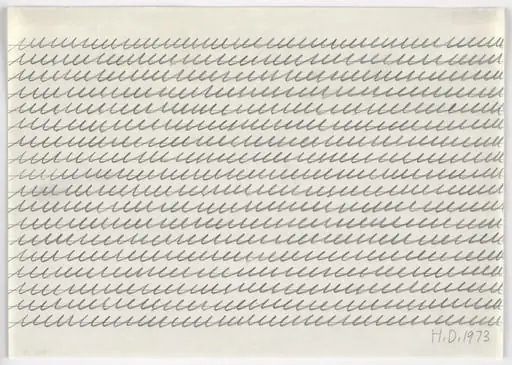
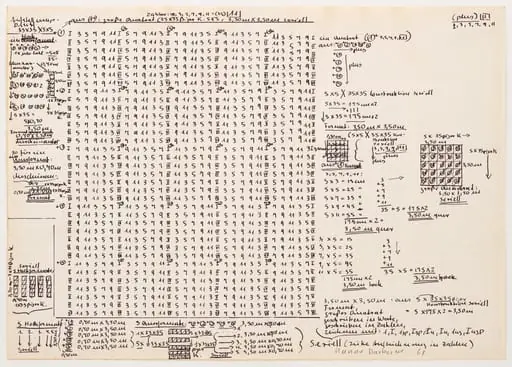
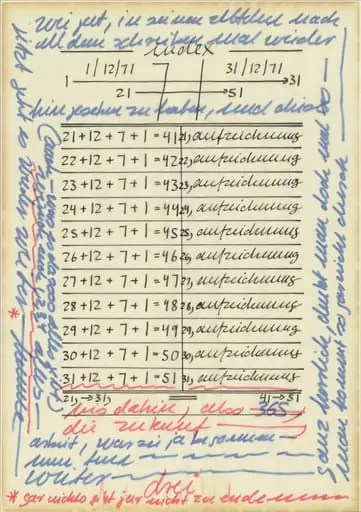
The work explores time as a measurable, repetitive structure through systematic handwriting. Each lithograph contains dense clusters of numbers, dates, and symbols, organized according to personal and historical calendars. Darboven treats writing not as communication but as a performative act—each mark a unit of elapsed time. The inclusion of vinyl records, likely containing spoken or musical sequences, extends this temporal logic into sound, reinforcing the idea of art as a durational experience.
Technique & Style
The lithographs are offset-printed to ensure uniformity, yet each retains the appearance of handwritten script, blurring the line between mechanical reproduction and personal gesture. The visual style is austere: monochrome text on white fields, arranged in grid-like formations. The vinyl records, though separate, are conceptually integrated, offering an auditory counterpart to the visual rhythm. The duplicate lithograph introduces a subtle disruption, questioning notions of originality and repetition within the system.
History & Provenance
Darboven produced Untitled during a period of intense focus on time-based systems, following earlier works using handwritten numerals. The portfolio was assembled in 1980 and entered The Museum of Modern Art’s collection shortly thereafter. Its inclusion in a major institution affirmed its significance within post-conceptual art practices. The work’s physical arrangement—shelved like books, with records placed nearby—reflects Darboven’s interest in institutional frameworks as part of the artwork’s meaning.
Context
Emerging from the German conceptual art scene of the 1970s, Darboven’s work responded to broader movements that prioritized process over objecthood. Her use of systems—mathematical, calendrical, linguistic—echoed contemporaries like Joseph Kosuth and Lawrence Weiner, but with a distinctly personal, almost diaristic tone. Untitled reflects a post-war German preoccupation with order, memory, and the weight of historical time, while resisting narrative resolution in favor of structural contemplation.
Legacy
Untitled remains a pivotal example of how conceptual art can materialize abstract ideas through accumulation and repetition. Its influence is visible in later practices that treat archives, data, and time as artistic media. The work’s quiet, immersive presence—resembling a library or laboratory—has inspired installations that prioritize viewer immersion over spectacle. Darboven’s integration of writing, sound, and object continues to inform contemporary explorations of information as form.
Artist & collection
Artist
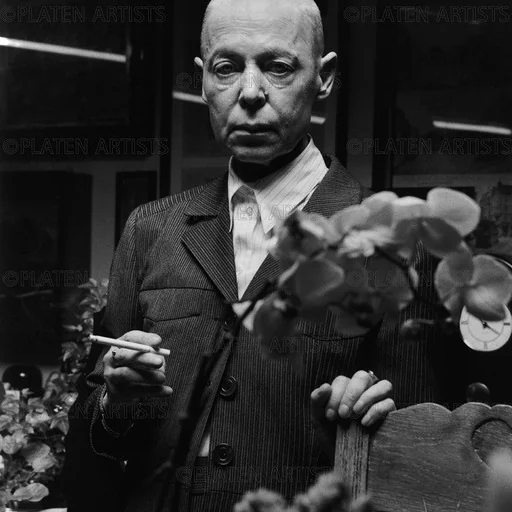
Hanne Darboven (29 April 1941 – 9 March 2009) was a German conceptual artist, best known for her large-scale minimalist installations consisting of handwritten tables of numbers.