Artwork
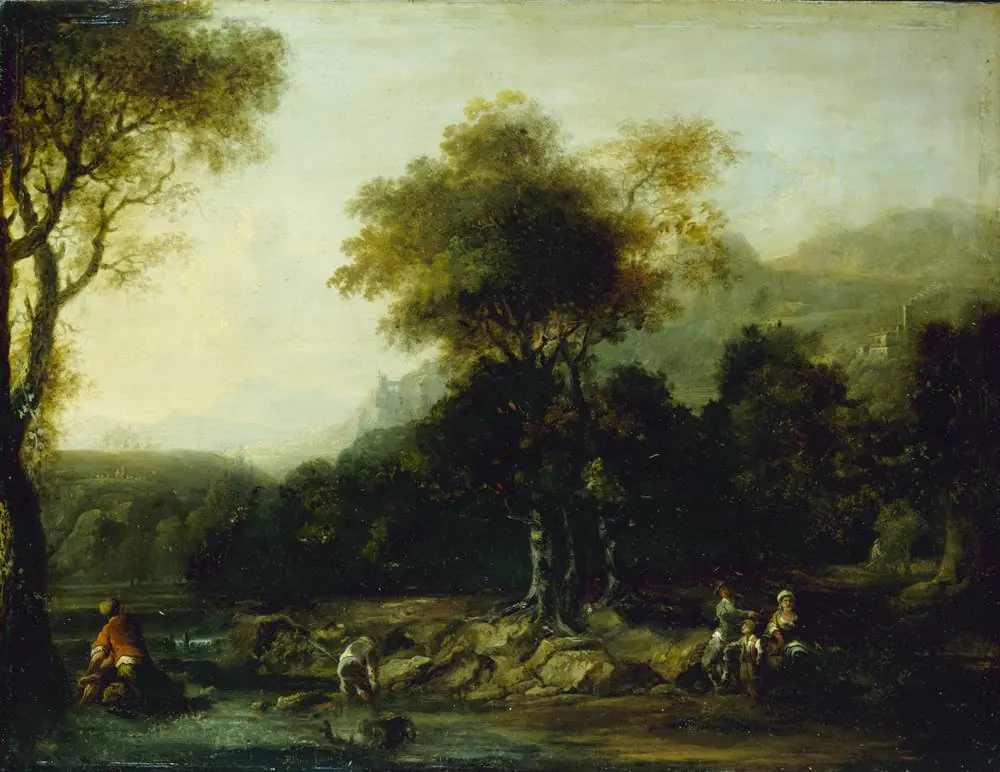
Italian Mountain Landscape with Travelers at a Well
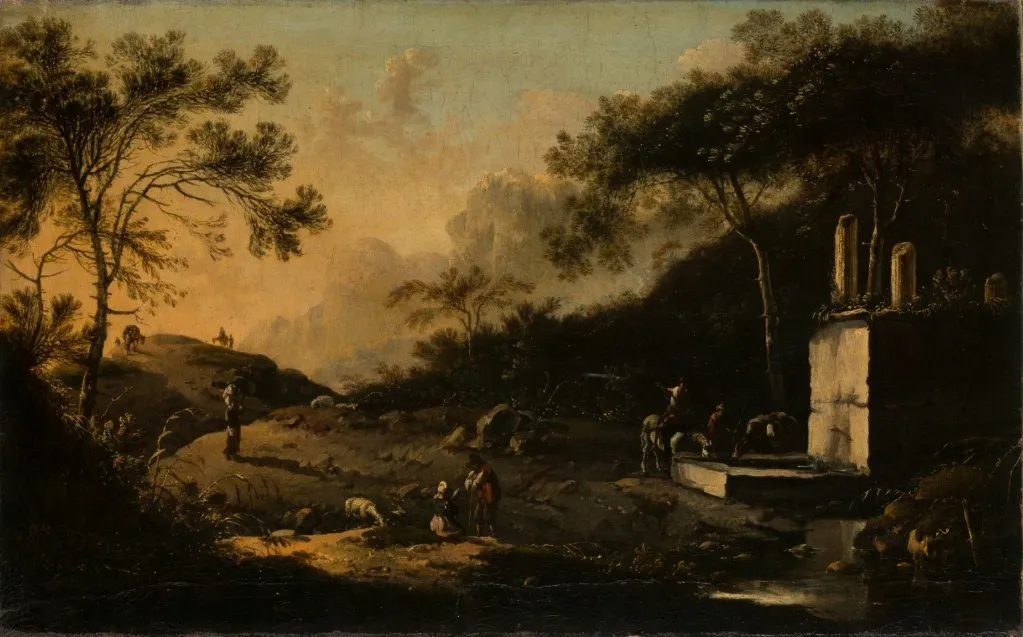
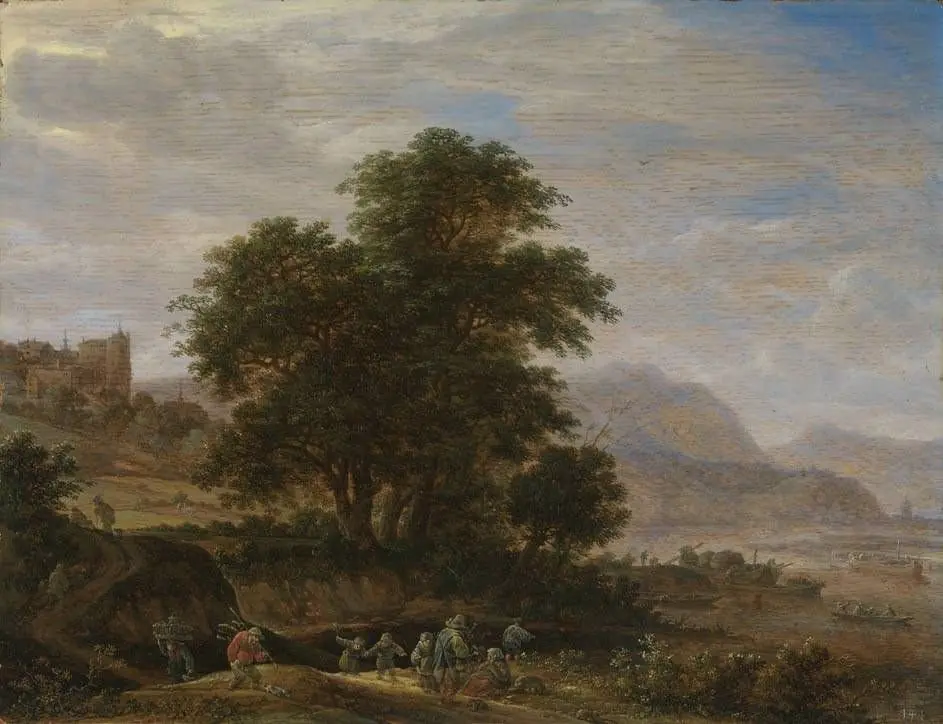
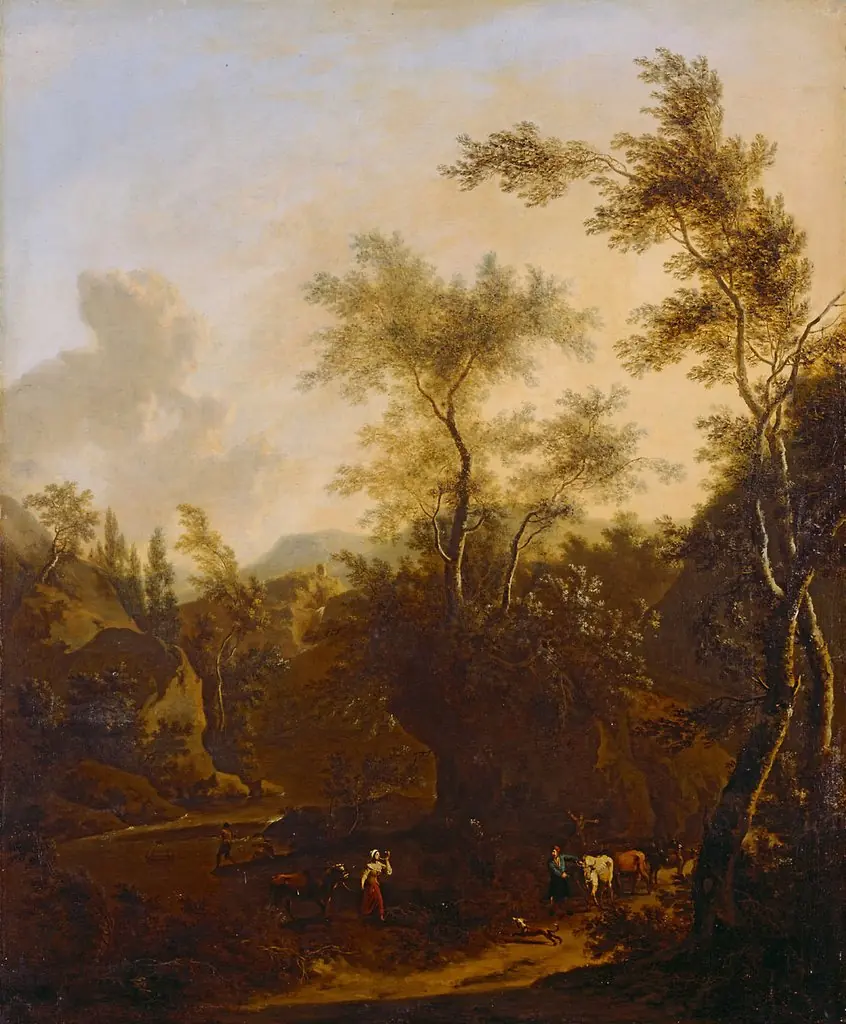
Italian Mountain Landscape with Travelers at a Well is an oil painting by the Dutch Golden Age artist Hans de Jode. It dates from 1675 and is held in the collection of the Städel Museum.
About this work
The painting is called Italian Mountain Landscape with Travelers at a Well.
It was created by Hans de Jode in 1675.
The artist used oil paint to bring this scene to life, and the fact that it's from the 17th century makes it interesting because it shows how artists worked with landscapes back then.
You can learn more about the artist's style and other works at the Städel Museum.
Overview
The composition combines rugged terrain with a tranquil gathering, offering a glimpse of 17th‑century itinerant life set against a sweeping landscape.
Hans de Jode’s 1675 oil painting presents a dramatic Italian mountain scene where a small group of travelers pauses beside a stone well. The composition combines rugged terrain with a tranquil gathering, offering a glimpse of 17th‑century itinerant life set against a sweeping landscape. The work exemplifies the Dutch Golden Age’s fascination with foreign vistas, rendered through a Northern European lens.
Subject & Meaning
At the centre of the canvas, figures in modest dress congregate around a well, suggesting a moment of rest and communal exchange during a journey. The surrounding cliffs and distant sky frame the scene, emphasizing both the isolation of the travelers and the timeless allure of the natural environment. The painting subtly conveys themes of pilgrimage, trade routes, and human interaction with the landscape.
Technique & Style
De Jode employs a layered oil technique that builds depth through translucent glazes, allowing the mountainous backdrop to recede while the foreground figures retain crisp detail. His palette balances warm earth tones with cool blues, a hallmark of Italianate landscape painters who merged Dutch realism with the luminous atmosphere of southern Europe.
History & Provenance
Created during de Jode’s productive period in Venice and later Vienna, the painting reflects his connections with Dutch and Flemish artists serving the Imperial court. Though its early ownership records are sparse, the work eventually entered the collection of the Städel Museum, where it remains a reference point for the artist’s Italianate oeuvre.
Context
The piece belongs to a broader tradition of 17th‑century Dutch artists who traveled to Italy and incorporated its topography into their work. De Jode’s experience in the Venetian art world and his exposure to courtly patronage informed his blend of meticulous detail and romanticized scenery, situating the painting within the cross‑cultural exchange that defined the period’s landscape genre.
Artist & collection
Artist
Hans de Jode or Jan de Jode (The Hague, 1630 – Vienna, after 1662) was a Dutch painter known for his marine paintings, harbour scenes and Italianate landscapes.