Artwork
Landschaft mit Hirten und Herde
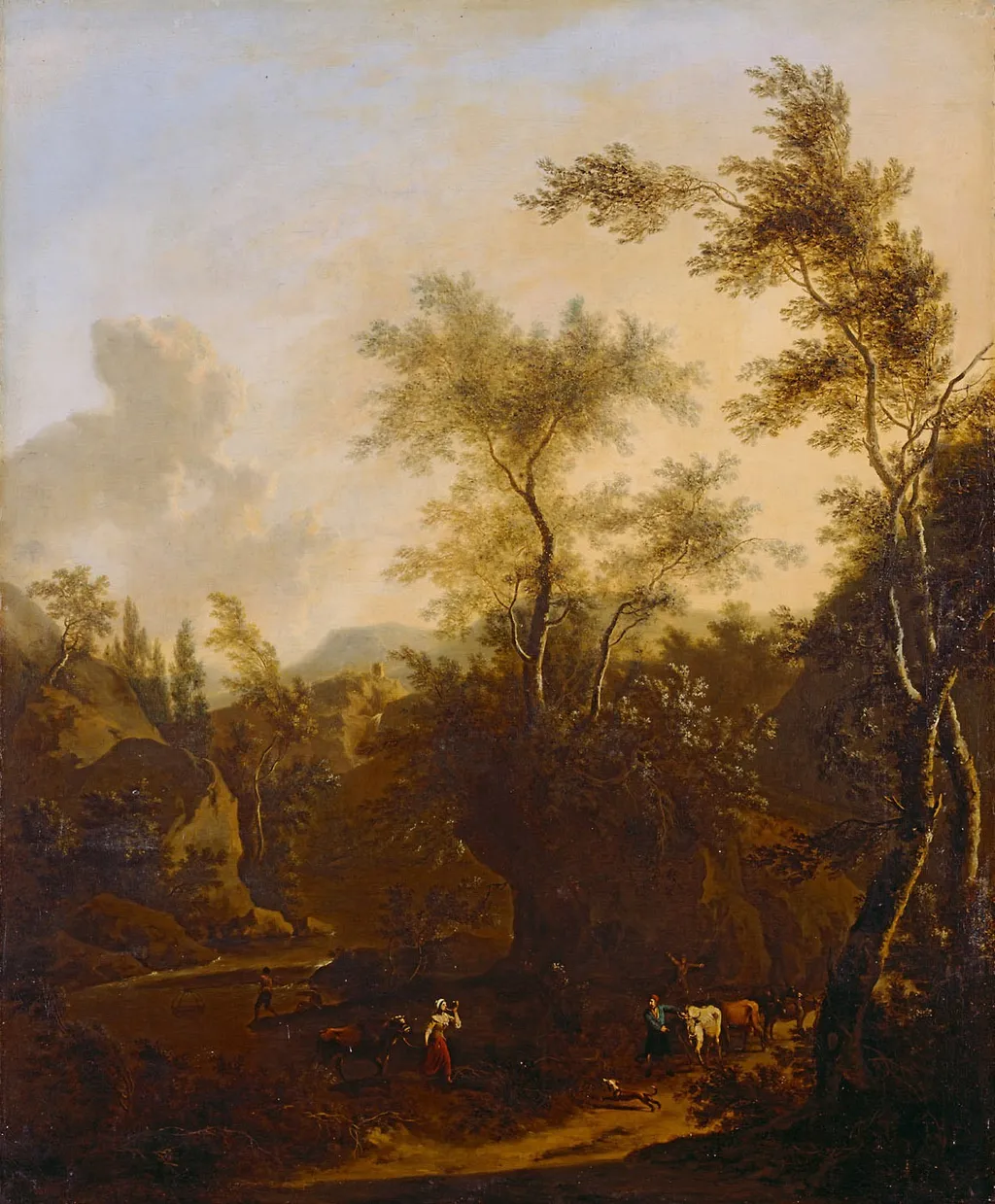
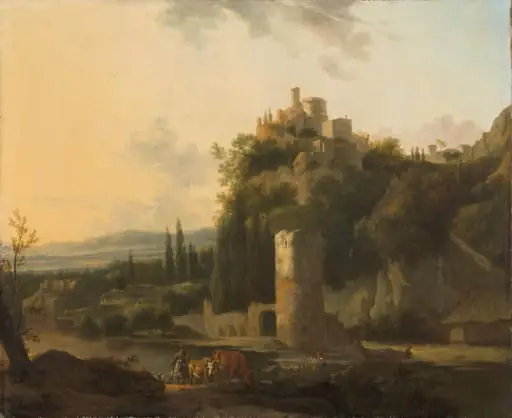
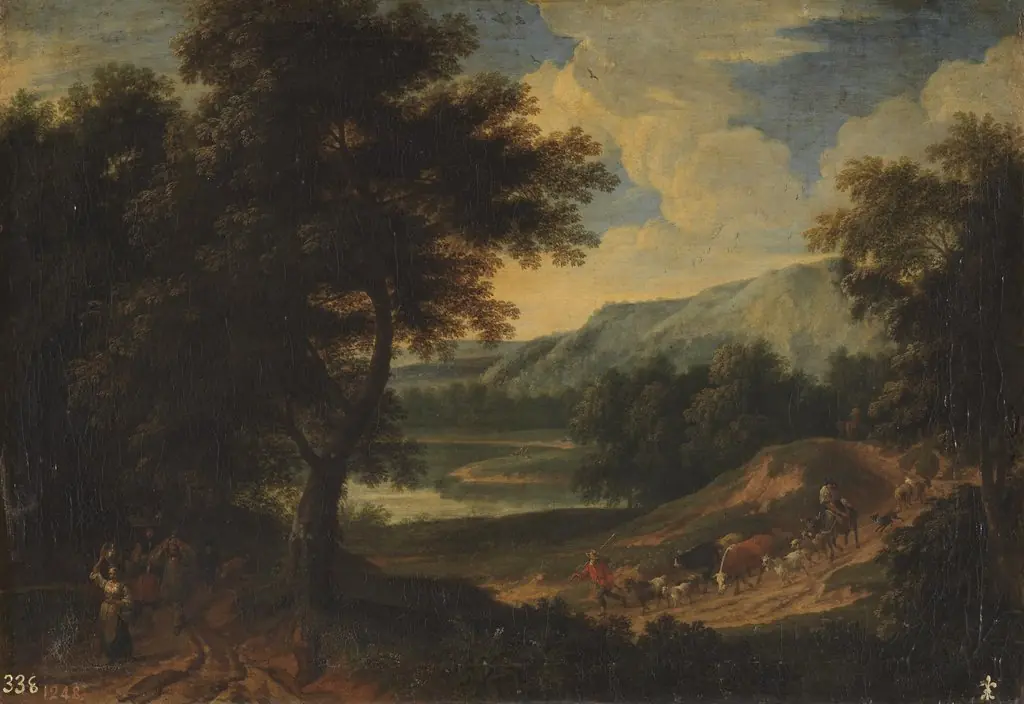
Landschaft mit Hirten und Herde is an unspecified painting by the Dutch Golden Age artist Frederik de Moucheron. It dates from 1669 and is held in the collection of the Kunsthistorisches Museum. Created circa 1669, this oil painting presents a tranquil woodland setting where a narrow track winds among craggy hills.
About this work
Overview
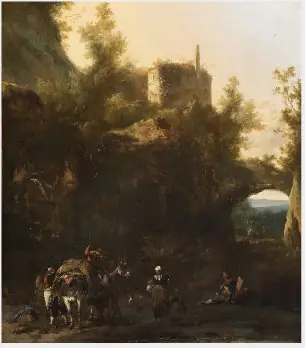
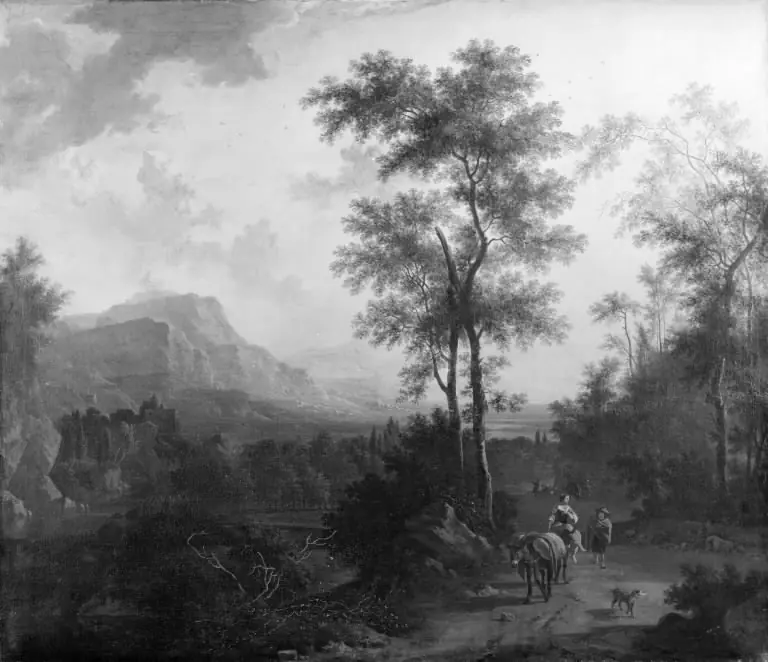
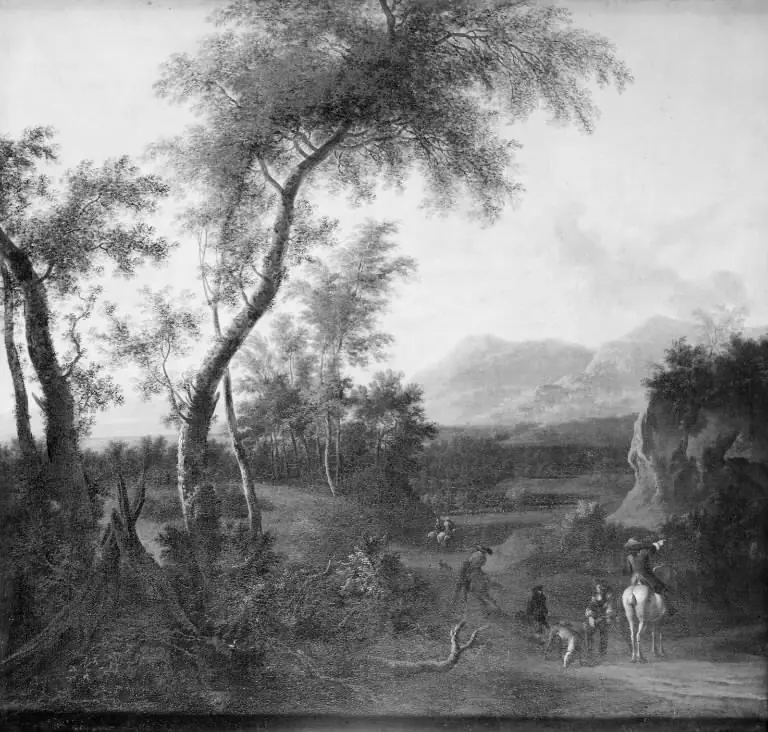
Created circa 1669, this oil painting presents a tranquil woodland setting where a narrow track winds among craggy hills. Two figures stand beside a modest stream, one holding a leash attached to a dog, while a small herd of cattle grazes nearby. Tall trees with interlaced branches frame the scene beneath a softly clouded sky, rendered in muted earth tones punctuated by warm highlights.
Subject & Meaning
The composition illustrates a typical pastoral narrative, emphasizing the harmonious relationship between humans, animals, and the natural environment. The shepherds’ calm presence and the leisurely grazing of the herd suggest an idealized vision of rural life, reflecting the 17th‑century Dutch fascination with bucolic serenity and the moral virtue associated with simple, agrarian existence.
Technique & Style
The treatment of foliage and atmospheric perspective aligns with the Italianate landscape tradition popular among Dutch painters of the period.
The artist employs a nuanced handling of light and shadow, allowing illumination to cascade over foliage and stone, thereby imparting a subtle three‑dimensionality. Earthy browns and greens dominate the palette, while warm yellow tones catch the eye in sunlit patches. The treatment of foliage and atmospheric perspective aligns with the Italianate landscape tradition popular among Dutch painters of the period.
History & Provenance
Attributed to Frederik de Moucheron, a Dutch Golden Age landscape specialist known for collaborating with figure painters, the work entered the collection of the Kunsthistorisches Museum in Vienna. Its provenance traces back to the artist’s workshop, where assistants likely contributed the human and animal figures that complement de Moucheron’s scenery.
Context
During the mid‑17th century, Dutch artists frequently incorporated Italianate elements—such as rolling hills and luminous skies—into domestic scenes, catering to a market that prized both exoticism and familiar countryside motifs. This painting exemplifies that blend, marrying northern naturalism with the idealized light and composition associated with southern influences.
Artist & collection
Artist
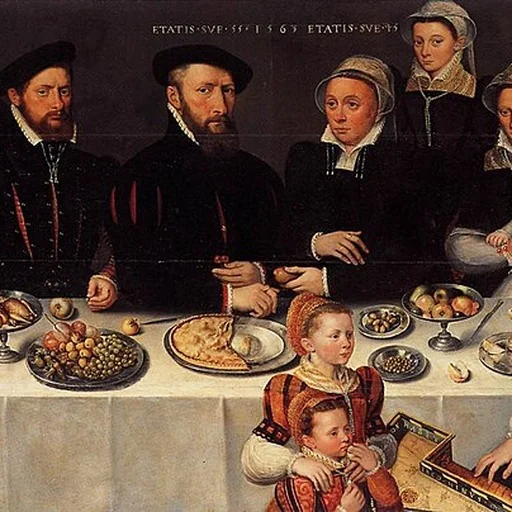
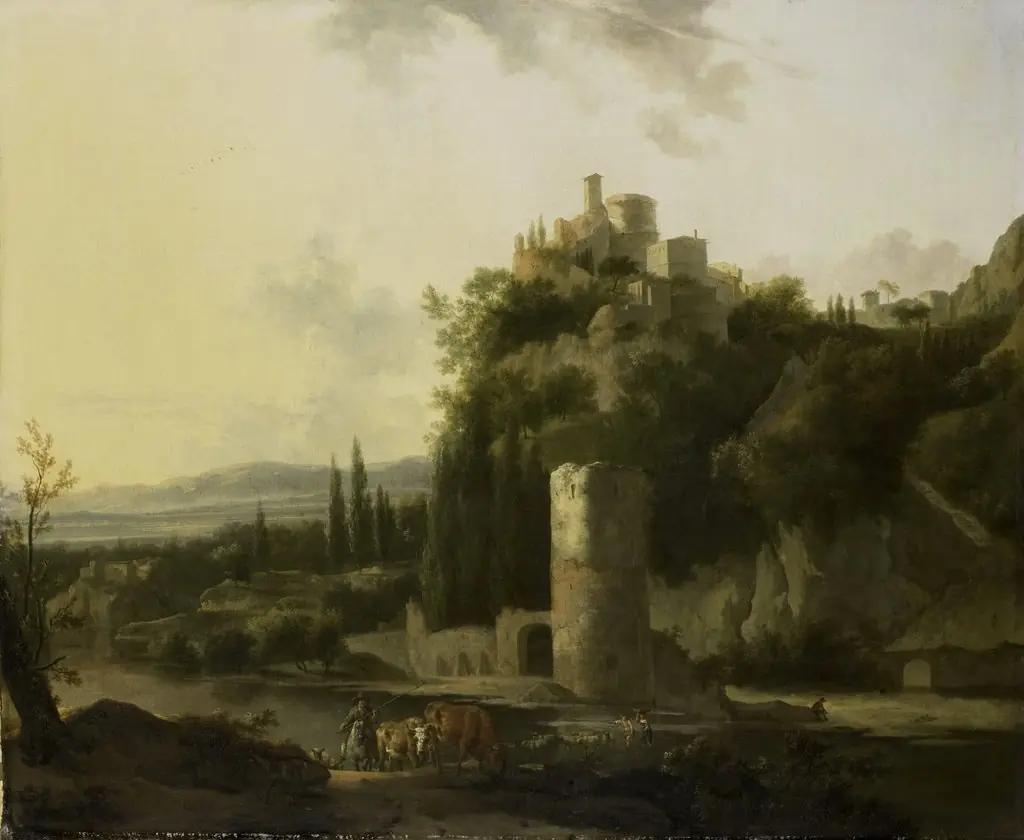
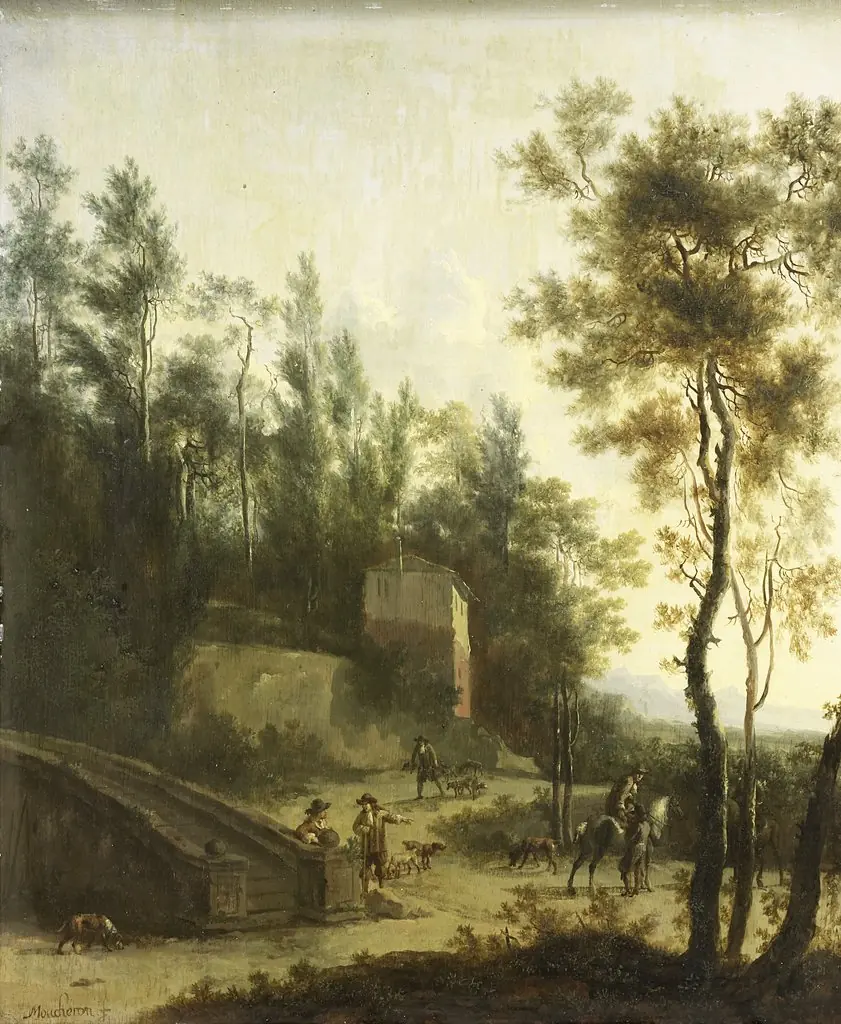
Frederik de Moucheron (1633 – 5 January 1686) was a Dutch Golden Age landscape painter and draughtsman. He mainly produced (Italianate) landscapes that were furnished with human and animal figures by various colleagues.

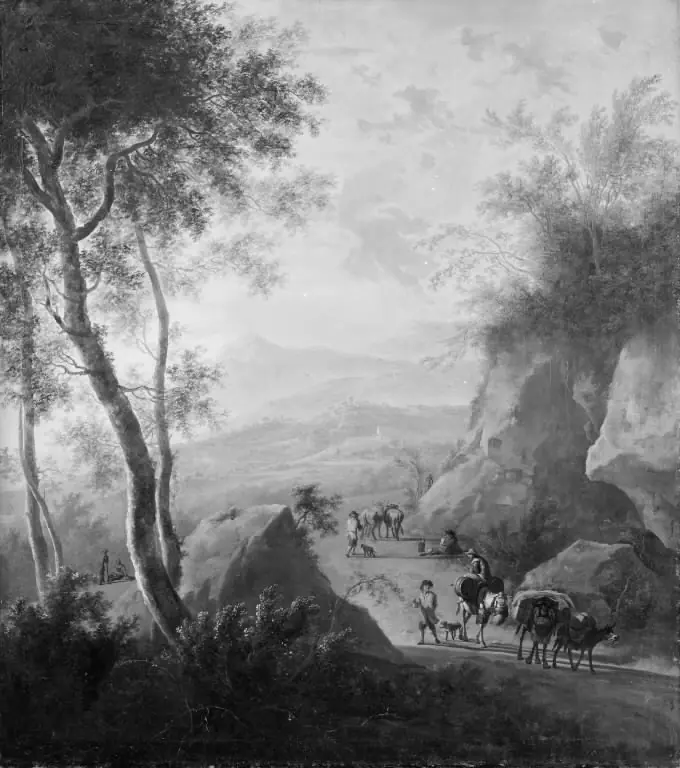
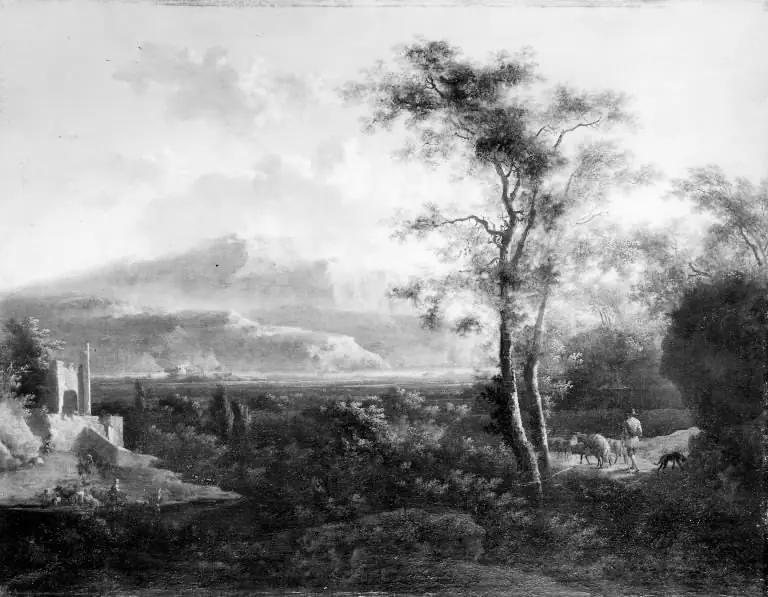
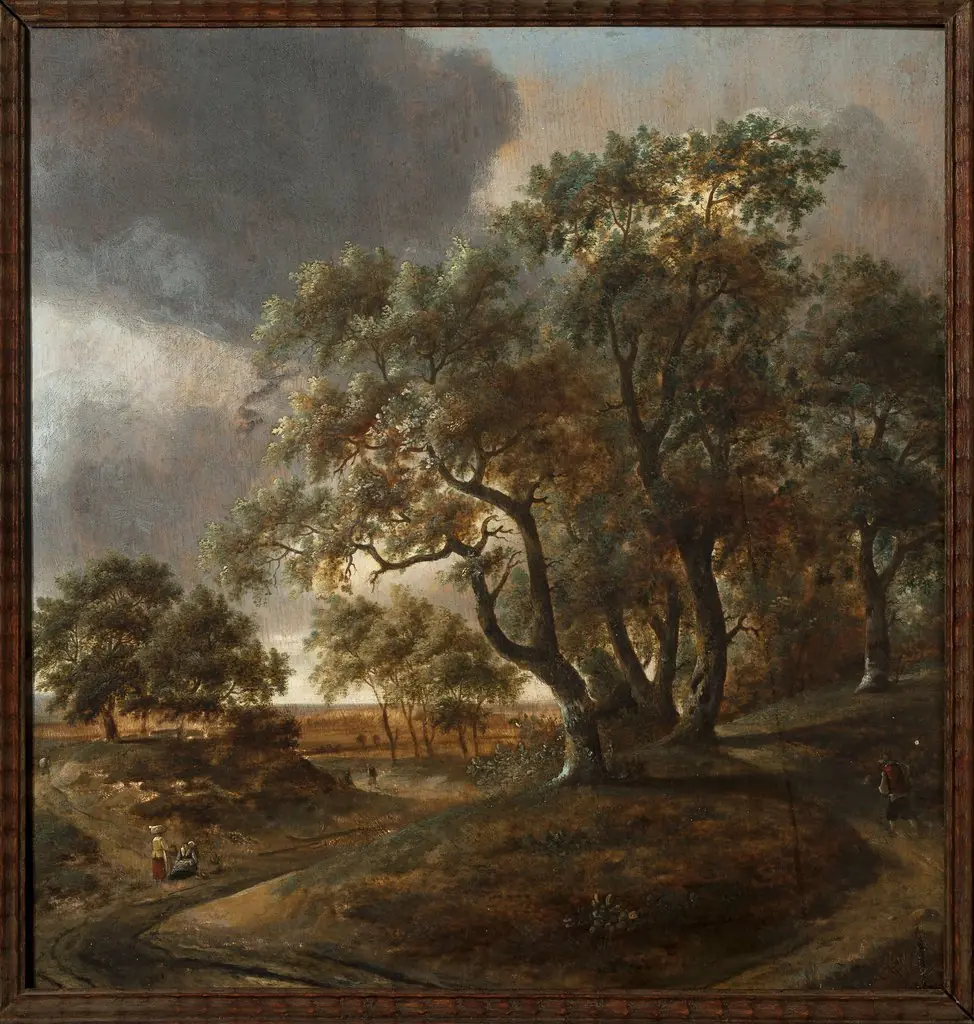 Landscape with staffage
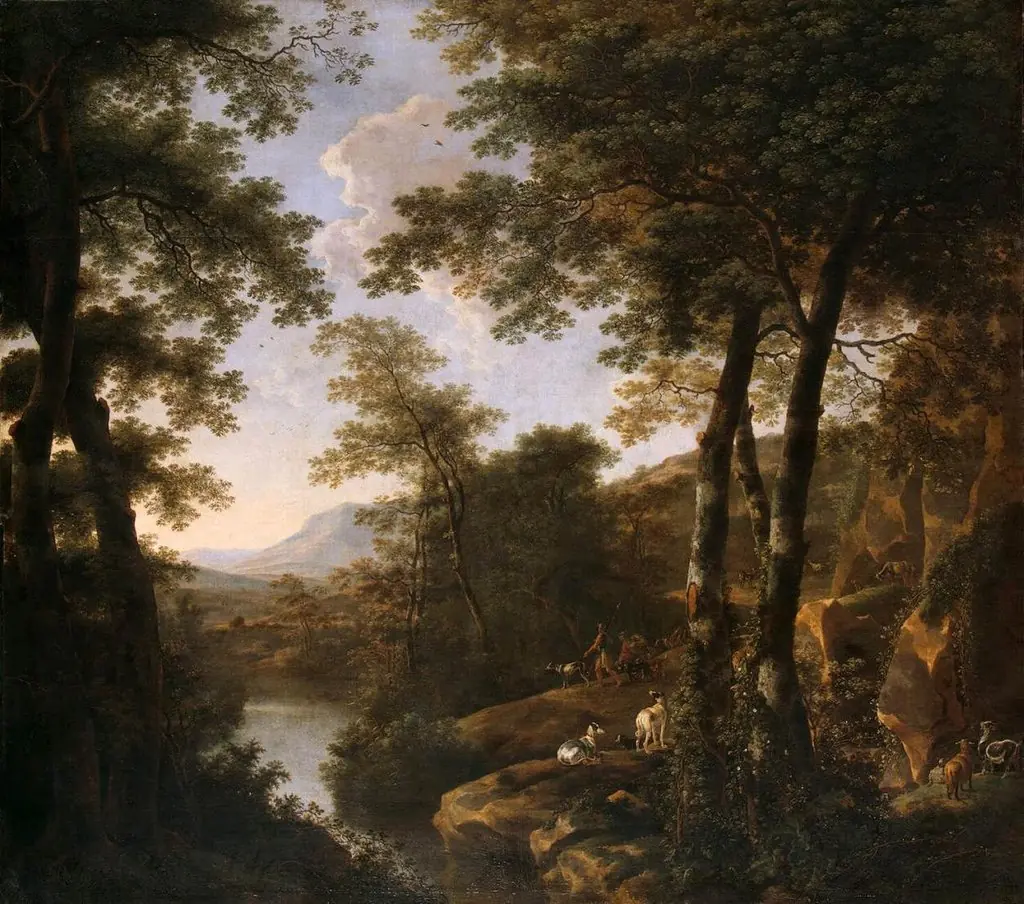 Italian Landscape with Roman Warriors
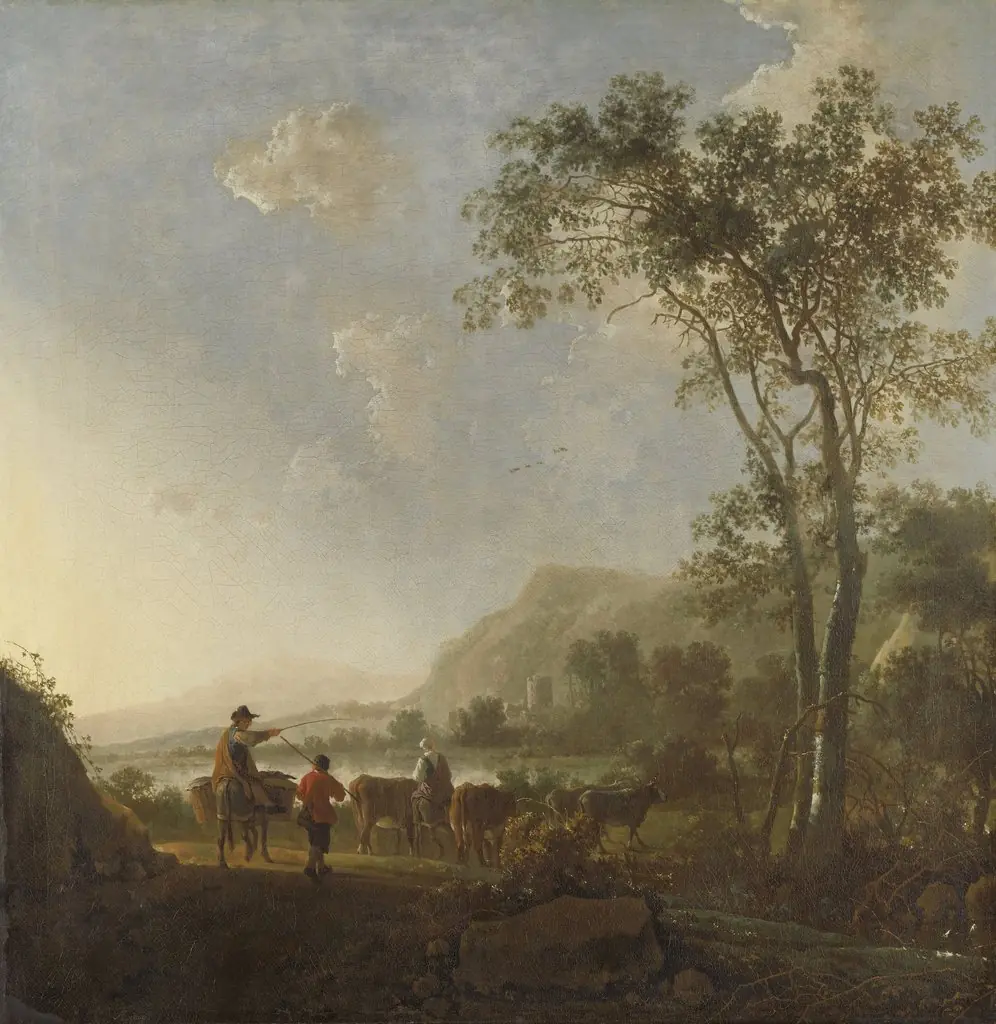 Landscape with herdsman and cattle
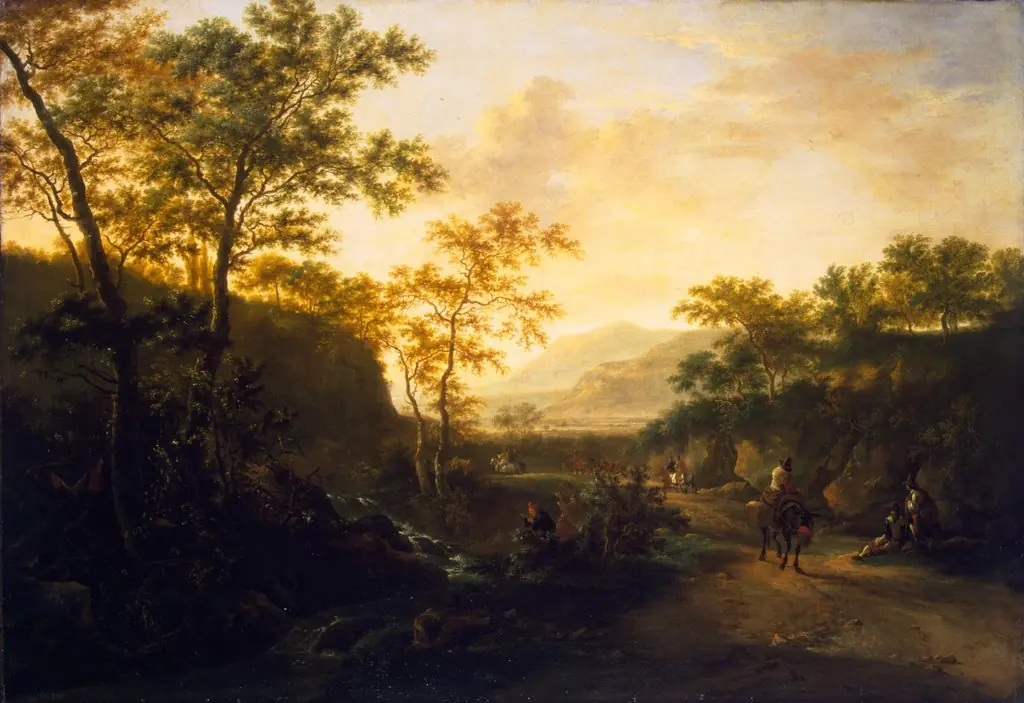 Italian Landscape with a Path
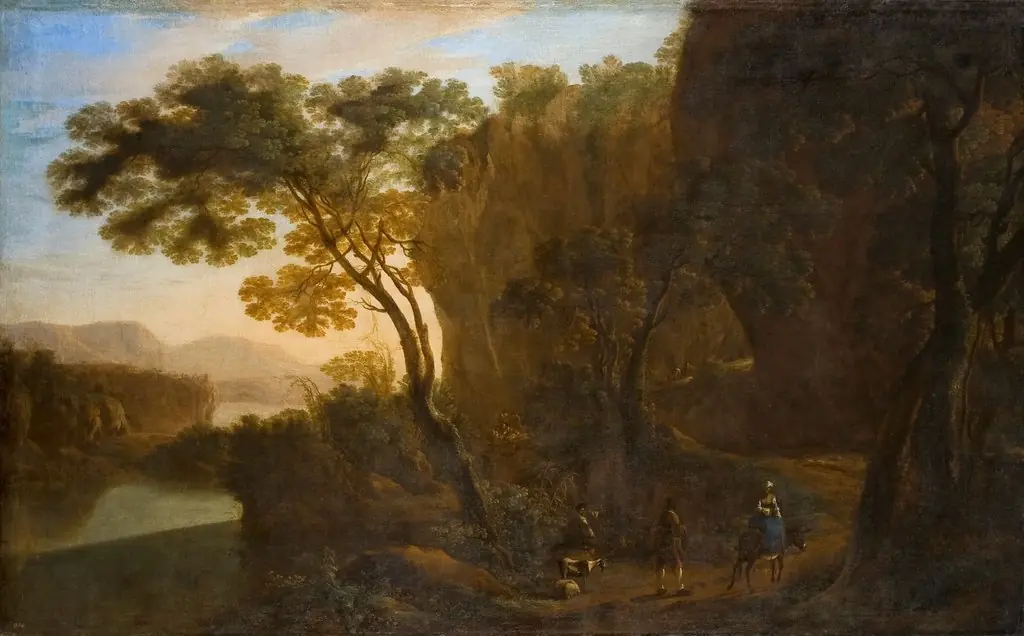 Crossing the Pass
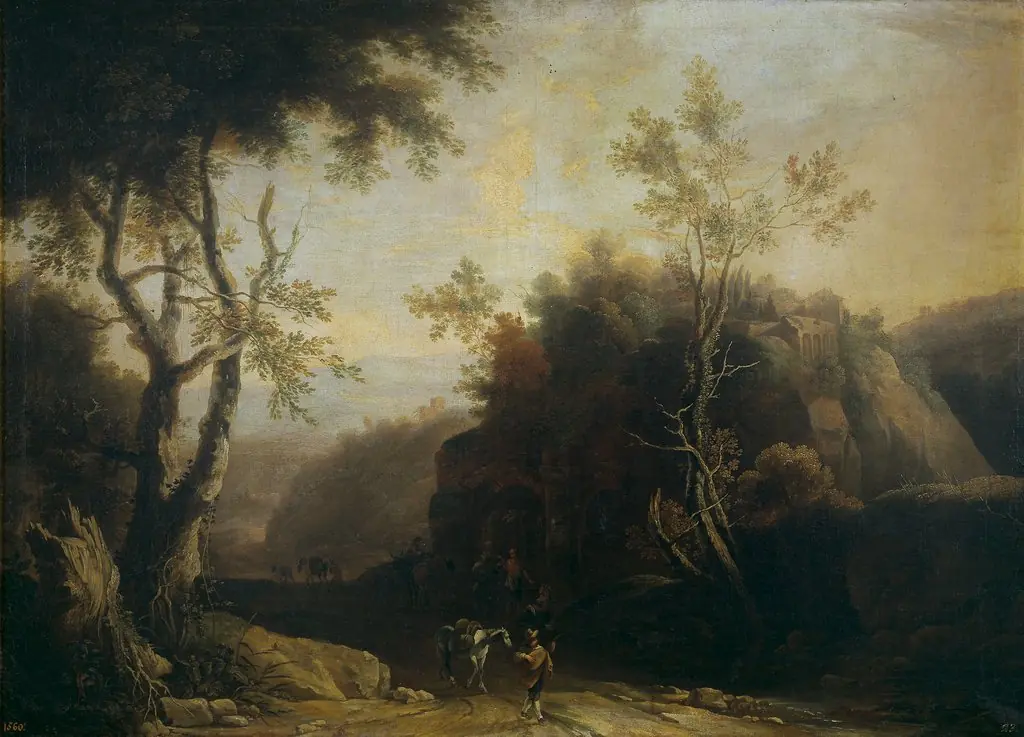 Landscape with tavern and Roman aqueduct
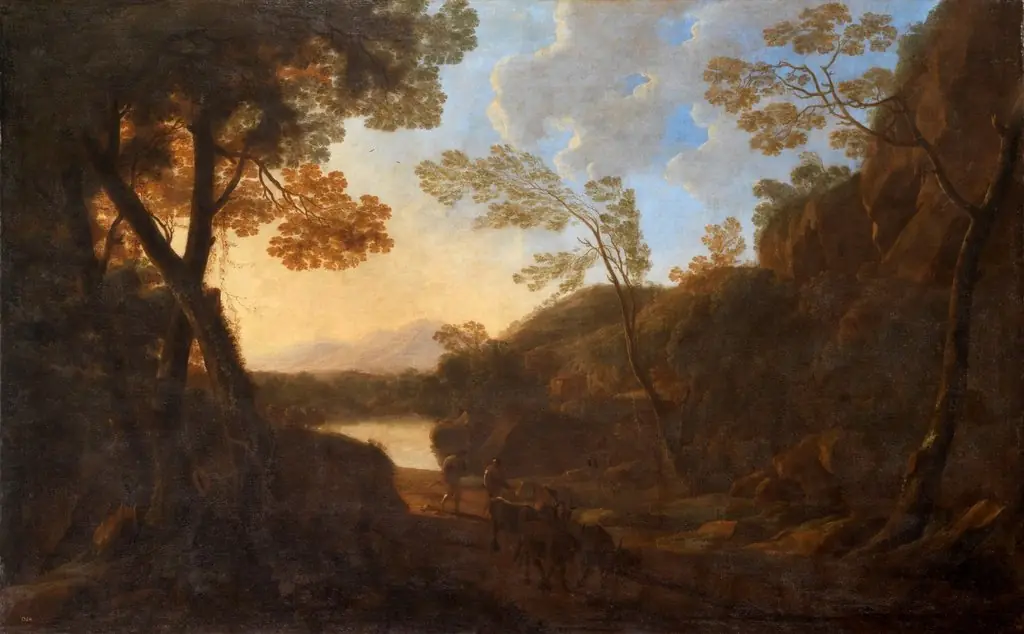 Mountain Pass
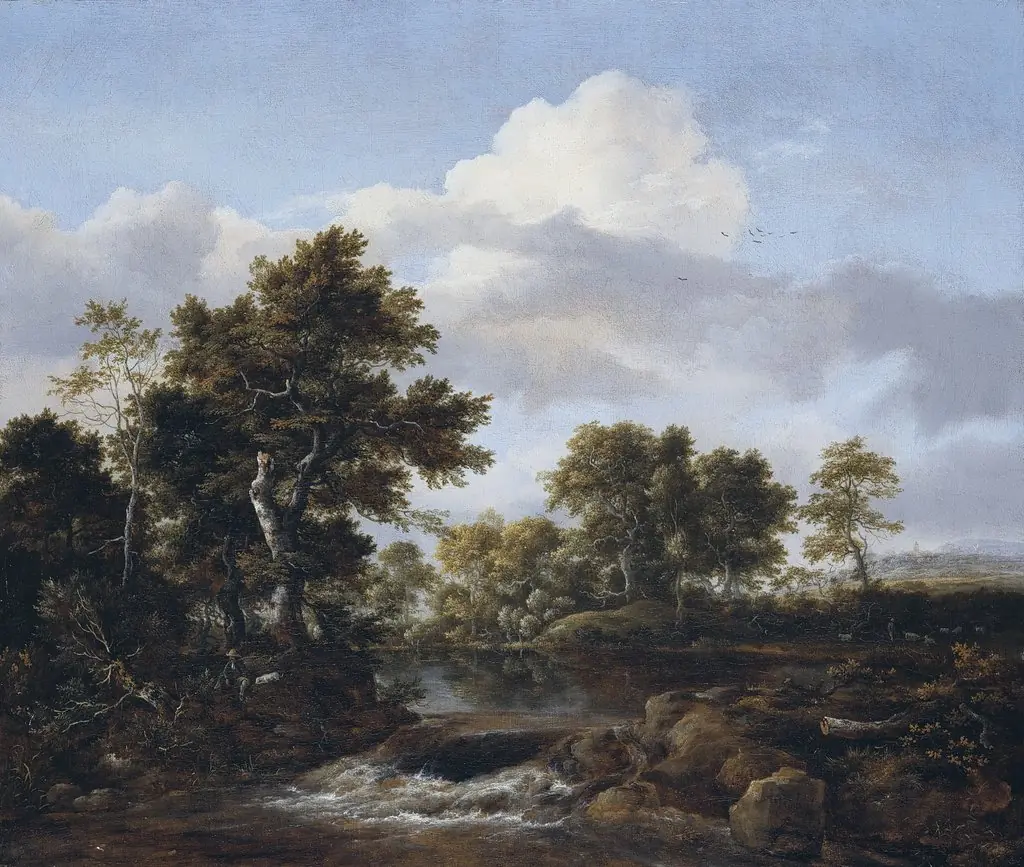 Wooded Landscape with a Stream
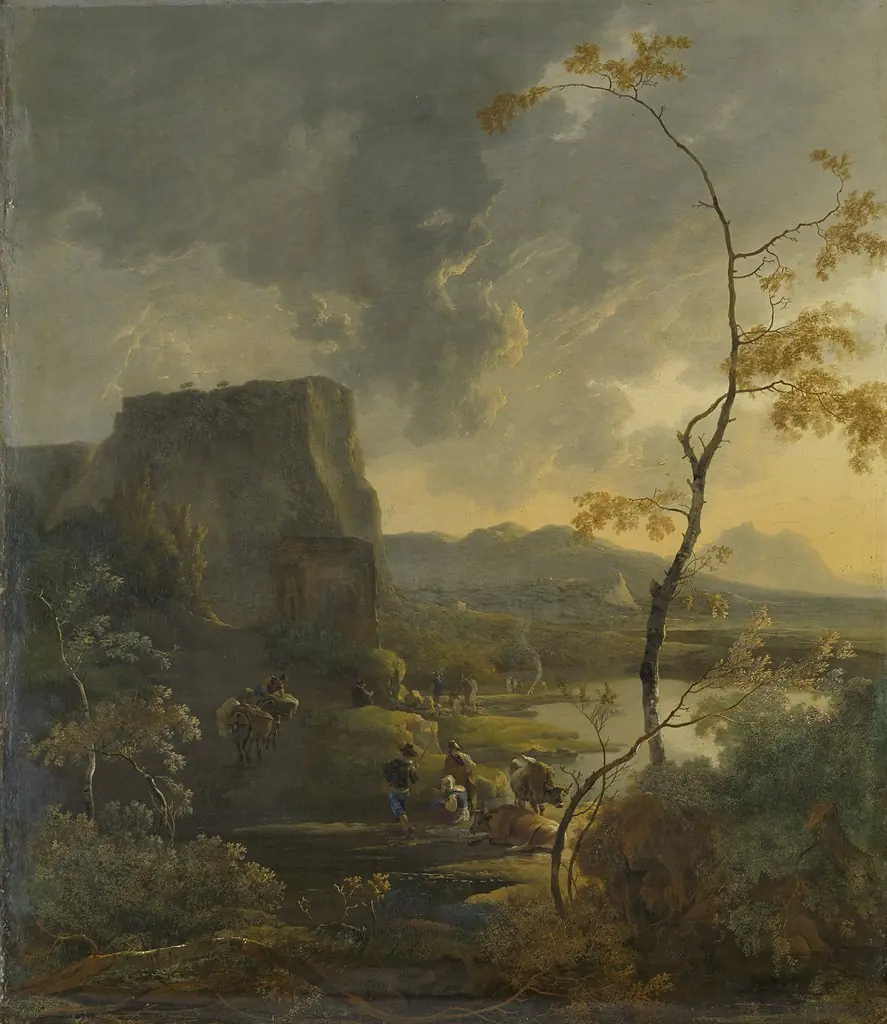 Italian landscape with ancient tempietto
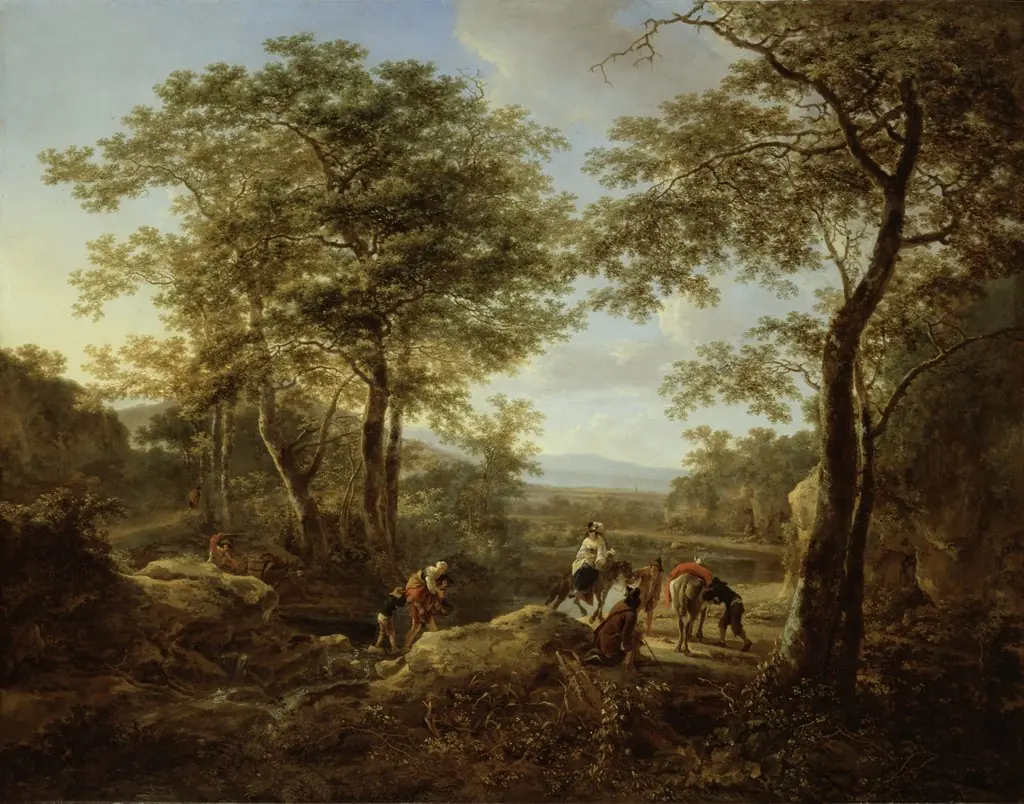 The Ford and Halt of the Travelers
 Paisaje con pastores y ganado
 Landschaft mit kämpfenden Reitern