Artwork
Erasmus of Rotterdam
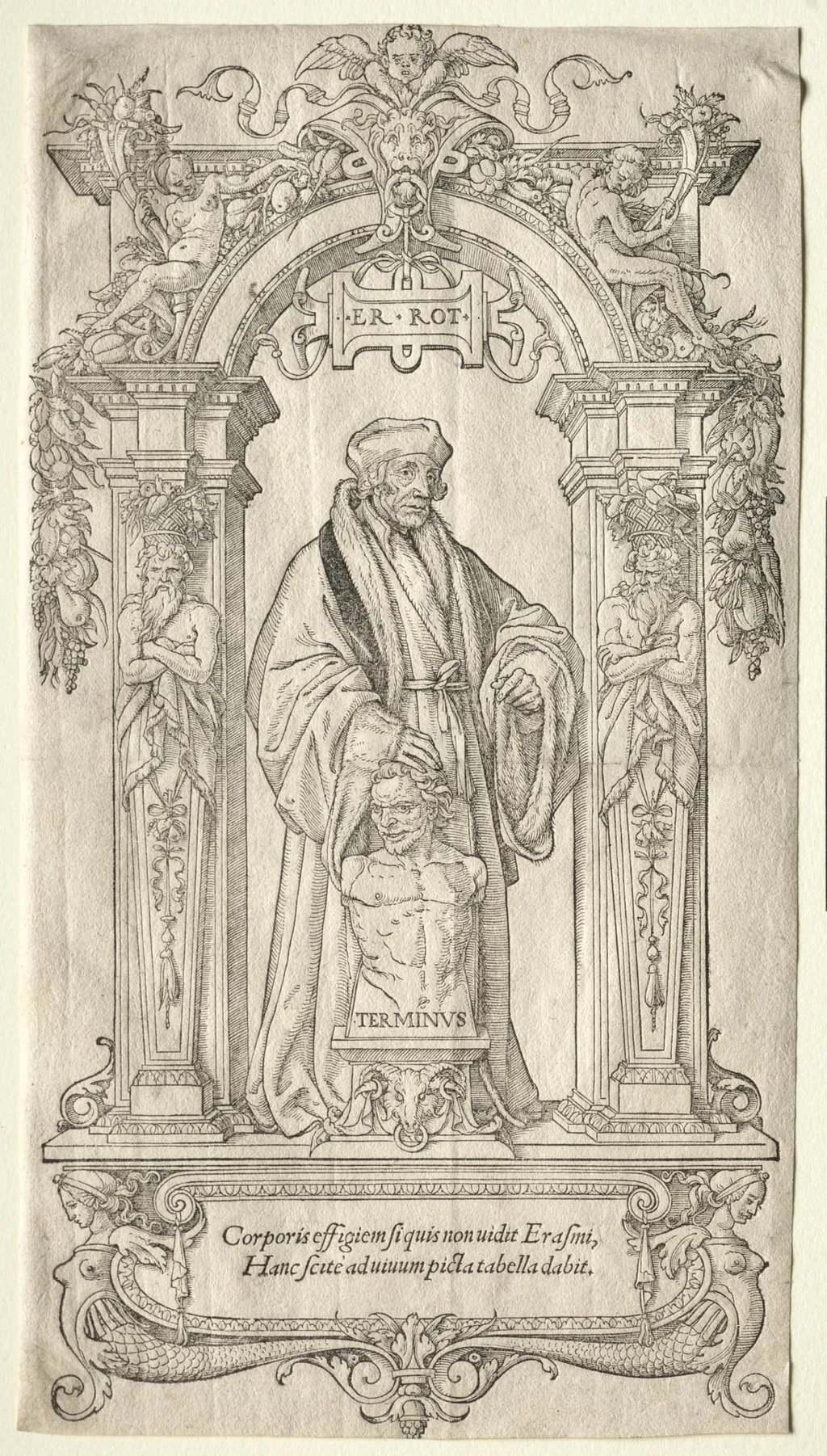
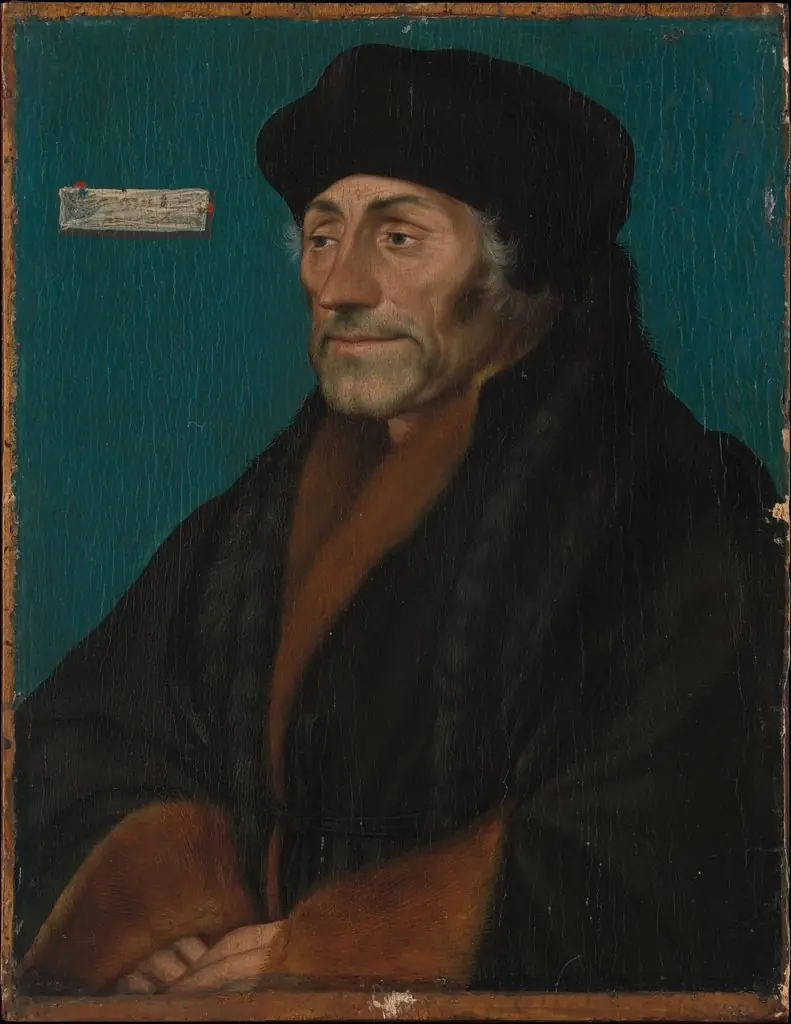
Erasmus of Rotterdam is a print by the Renaissance artist Hans Holbein the Younger. It dates from 1522 and is held in the collection of the Cleveland Museum of Art.
About this work
Overview
Painted around 1522 by Hans Holbein the Younger, this portrait depicts the Dutch scholar Desiderius Erasmus of Rotterdam.
Painted around 1522 by Hans Holbein the Younger, this portrait depicts the Dutch scholar Desiderius Erasmus of Rotterdam. Executed in the Northern Renaissance tradition, the work captures Erasmus in a moment of quiet contemplation. Holbein, known for his meticulous observation, rendered the subject with restrained elegance. The painting is now held in the collection of the Cleveland Museum of Art.
Subject & Meaning
Erasmus was a leading humanist thinker whose writings challenged religious dogma and promoted classical learning. Holbein portrays him not as a cleric or noble, but as a scholar engaged with a book, emphasizing intellectual labor over status. The calm expression and unadorned attire reflect Erasmus’s values of humility and reason, aligning the image with his public persona as a reformer grounded in learning.
Technique & Style
Holbein employed fine brushwork and precise rendering to convey texture and form, characteristic of Northern Renaissance portraiture. Subtle modeling defines the face and hands, while the desk and book are rendered with exacting detail. Unlike Italian contemporaries, Holbein avoided dramatic lighting or idealization, favoring a quiet realism that underscores the subject’s introspective nature.
History & Provenance
The portrait was likely commissioned during Erasmus’s stay in Basel, a center of humanist activity. Holbein, then working in the city, had access to intellectual circles and painted several portraits of scholars. The painting entered the Cleveland Museum of Art’s collection in the 20th century, having passed through private European collections since its creation.
Context
In the early 16th century, portraits of scholars became symbols of cultural authority, replacing traditional religious or aristocratic subjects. Erasmus’s image circulated widely through engravings, reinforcing his influence. Holbein’s depiction reflects a broader shift toward valuing intellectual life, as humanist ideals gained traction across Northern Europe amid religious and educational upheaval.
Legacy
This portrait remains a defining image of Erasmus, shaping how later generations visualized the humanist ideal. Its restrained composition and psychological depth influenced subsequent scholarly portraiture. Though not widely reproduced in Holbein’s lifetime, its endurance in museum collections attests to its role in documenting the intellectual culture of the Northern Renaissance.
Artist & collection
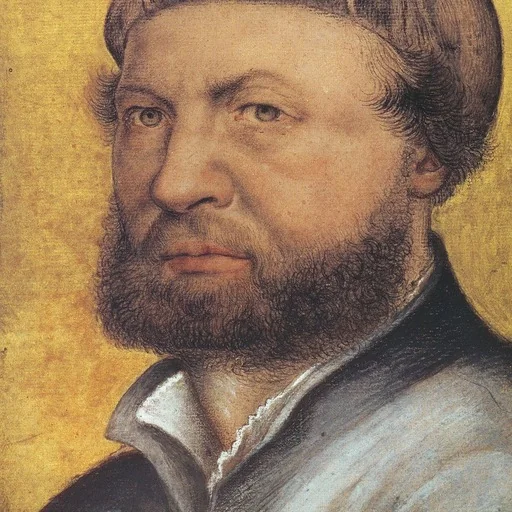
Artist
Hans Holbein the Younger (UK: HOL-byne, US: HOHL-byne, HAWL-; German: Hans Holbein der Jüngere; c.