Artwork
Hermann Hillebrandt de Wedigh
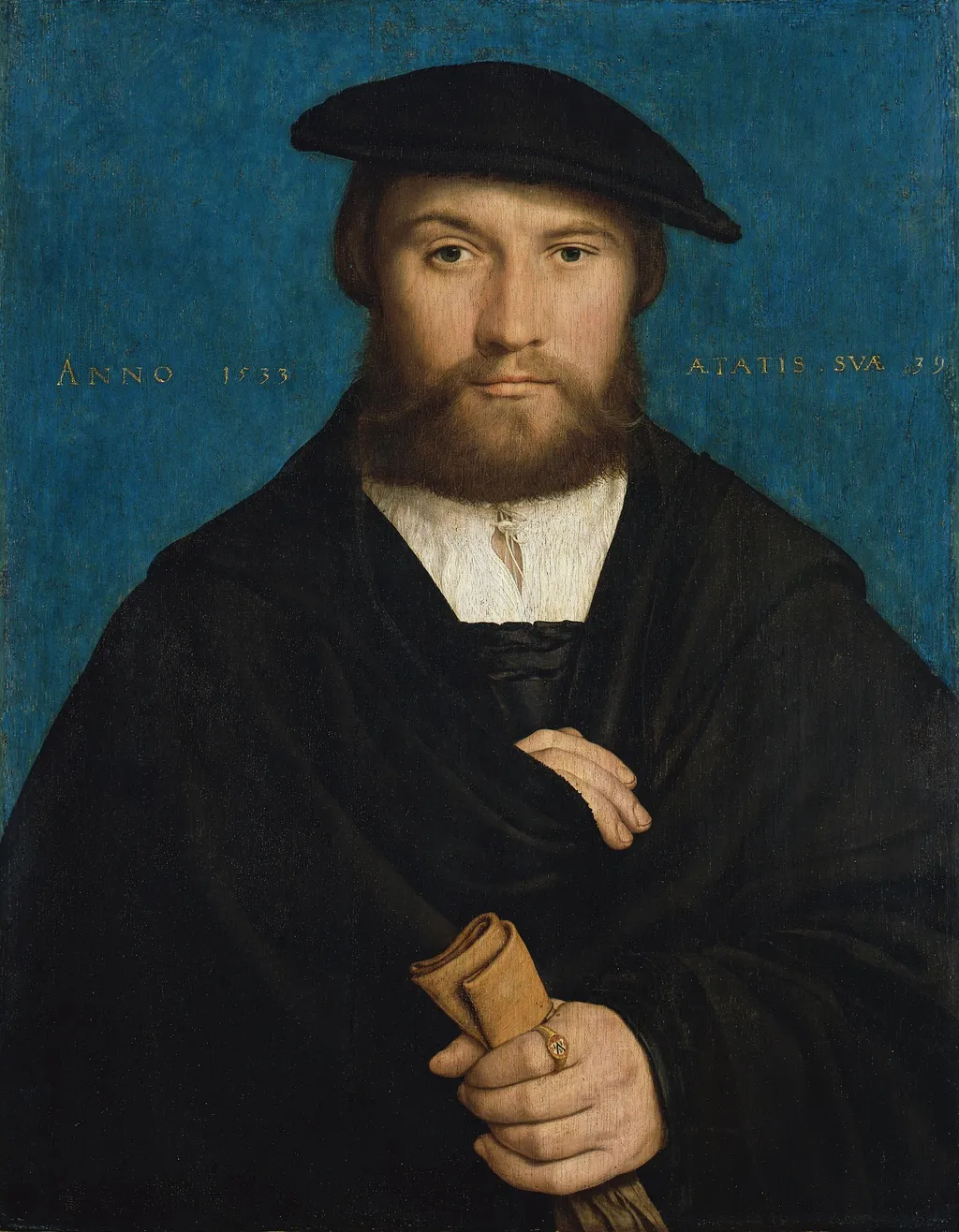
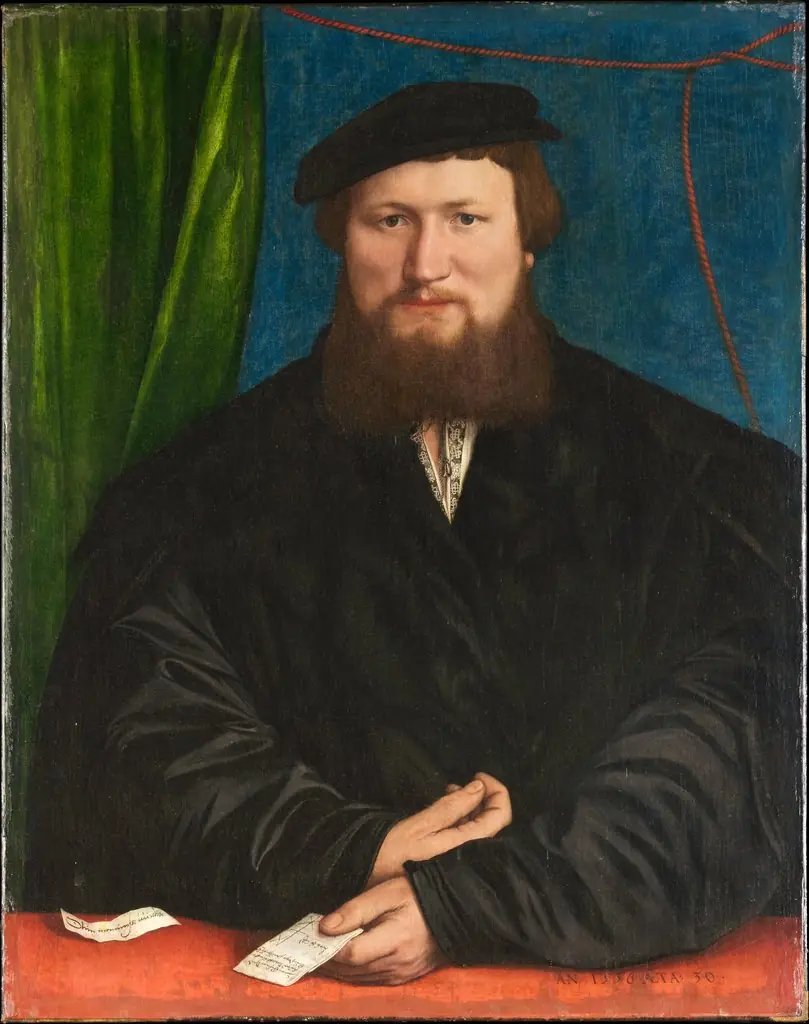
Hermann Hillebrandt de Wedigh is an oil painting by the Early Baroque Italian artist Hans Holbein the Younger. It dates from 1533 and is held in the collection of the Gemäldegalerie Berlin.
About this work
Overview
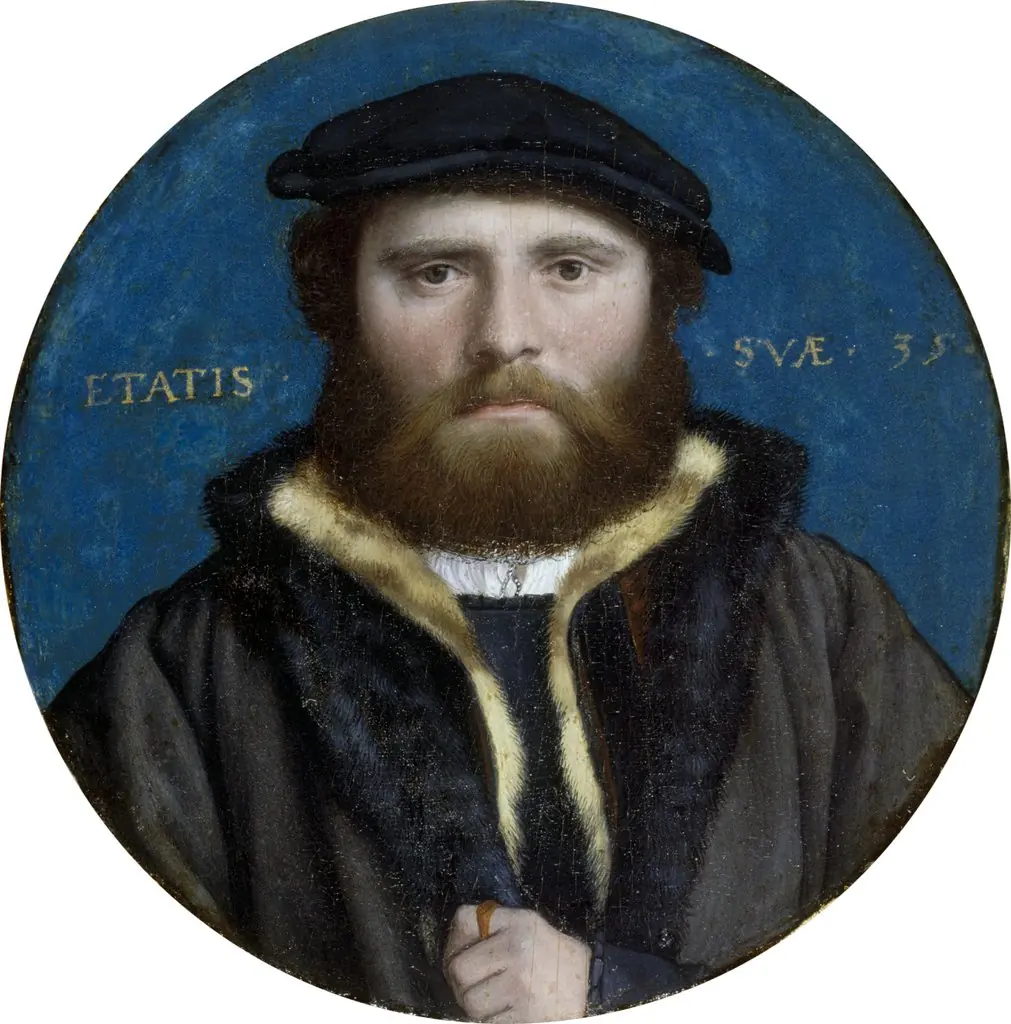
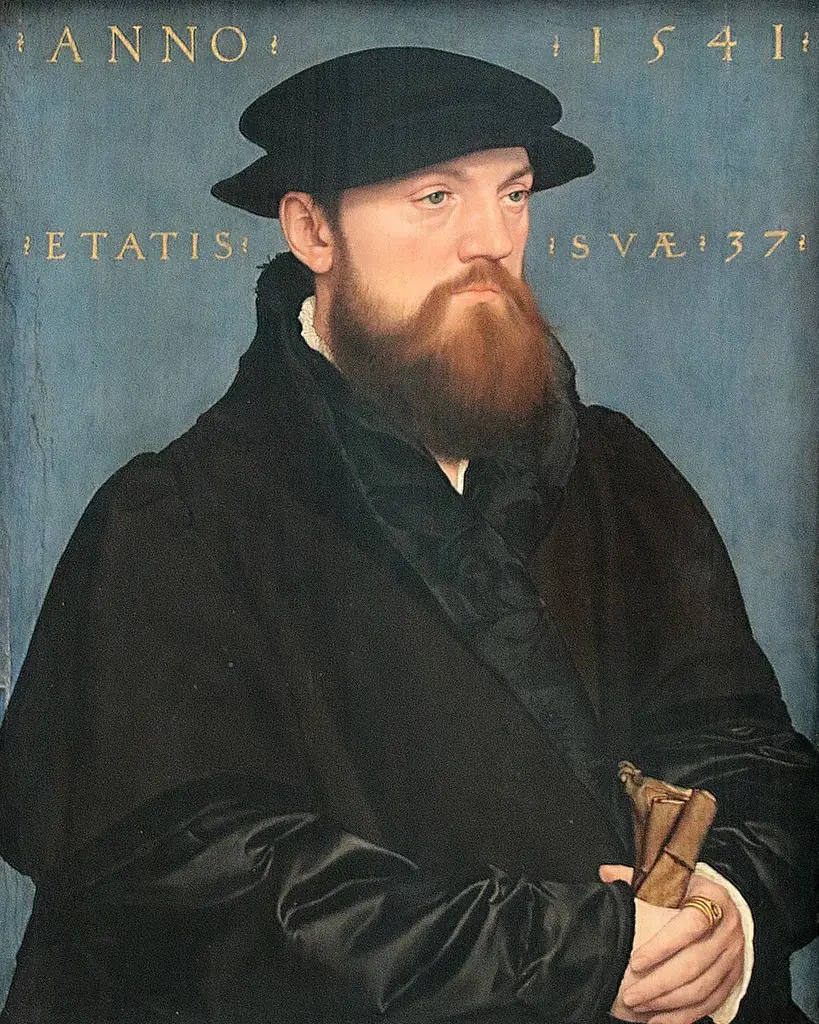
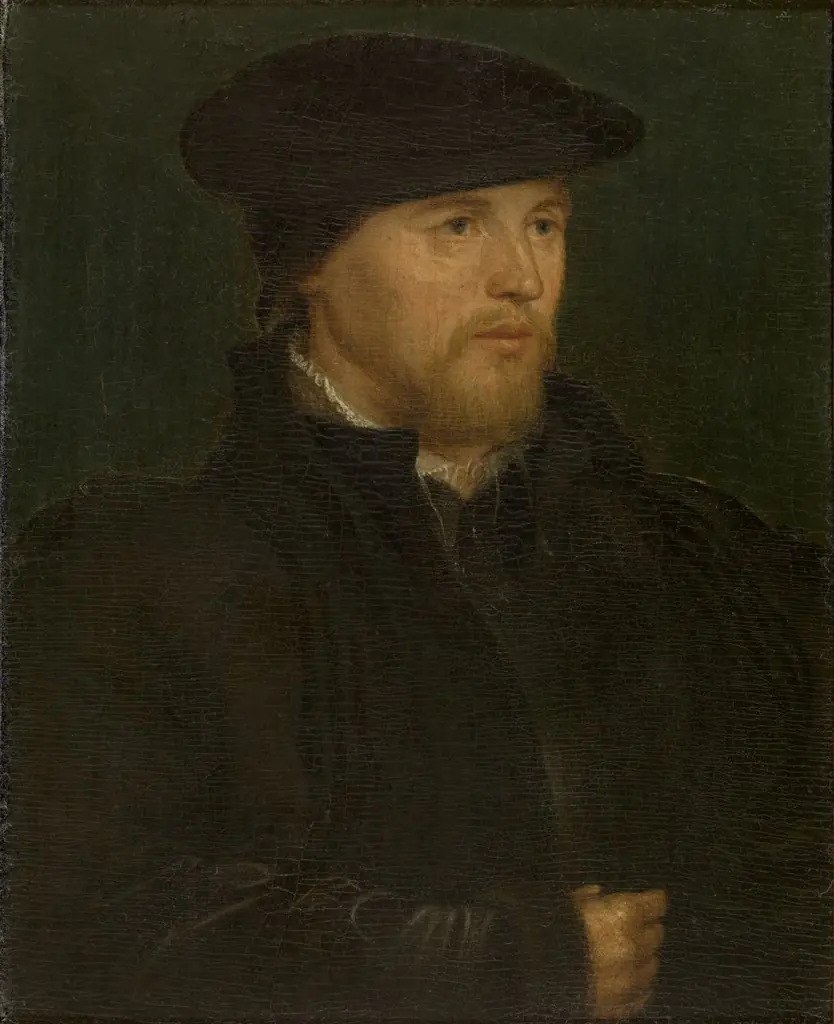
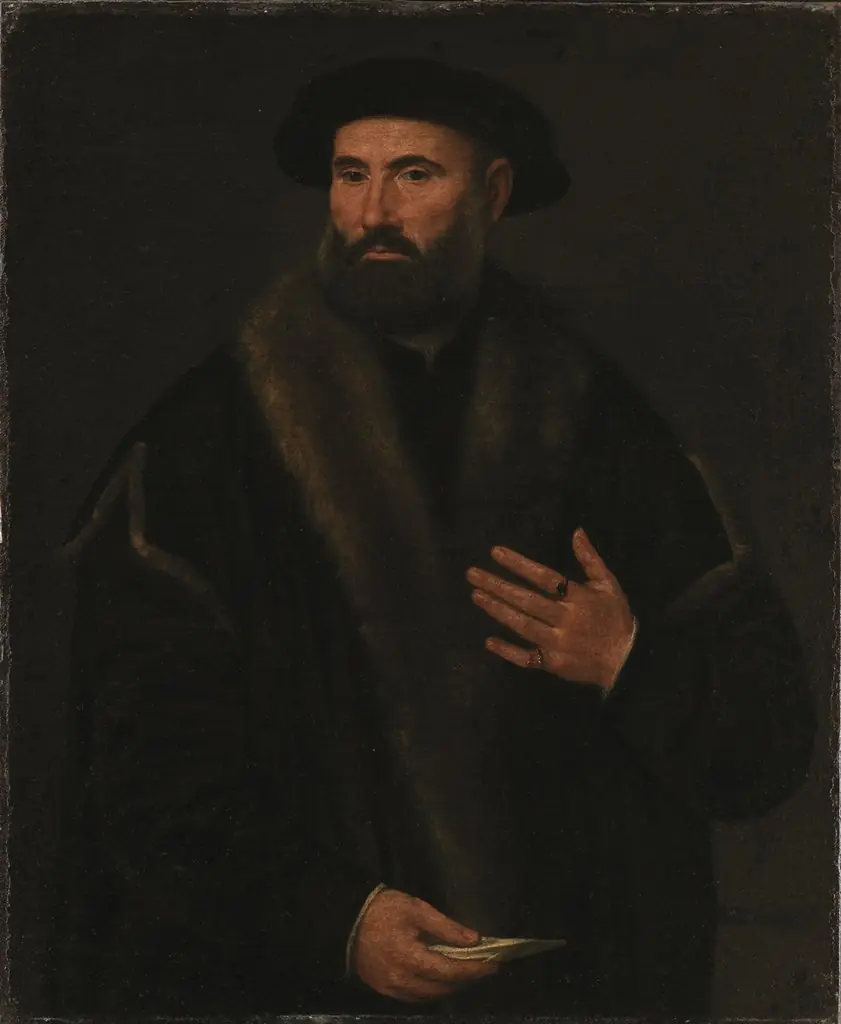
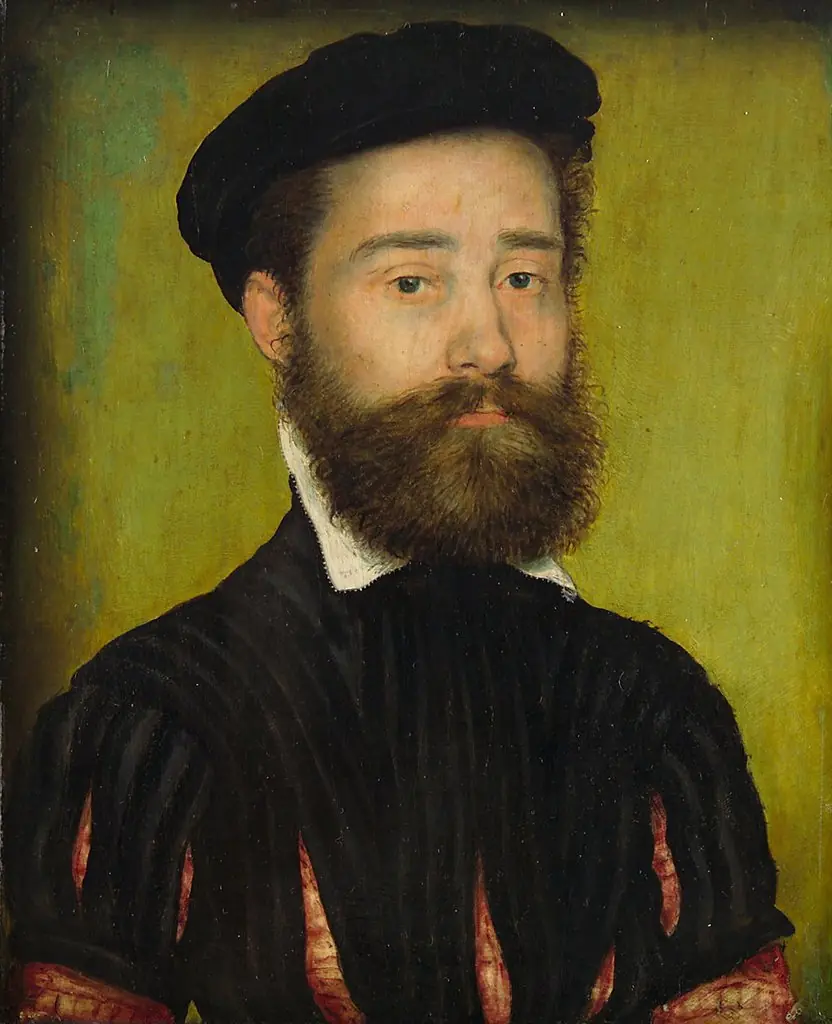
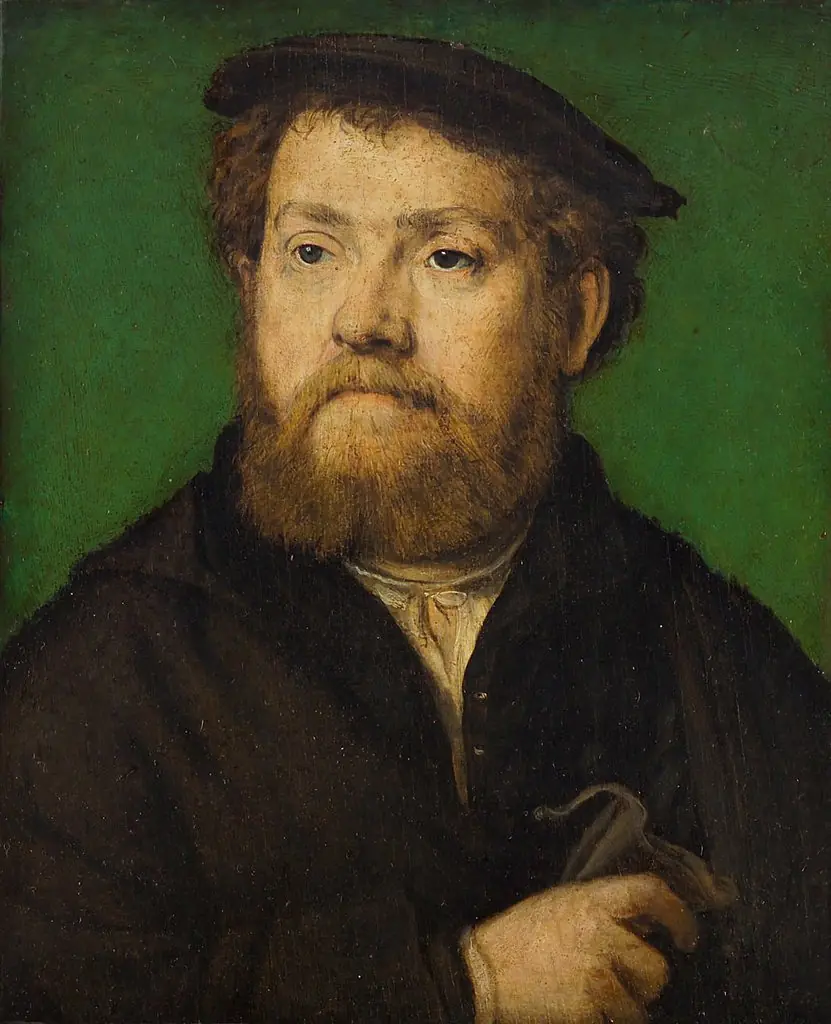
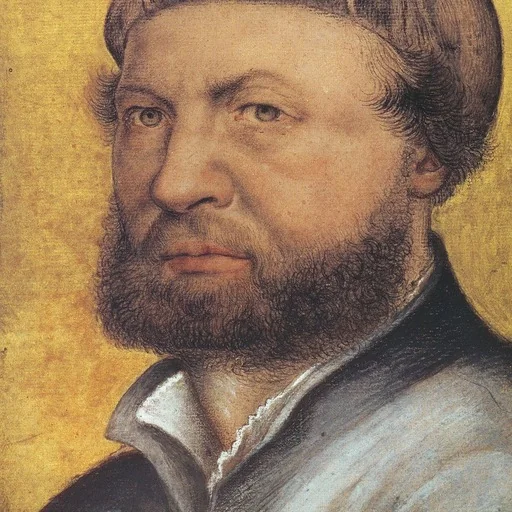
The portrait, executed in 1533, shows Hermann Hillebrandt de Wedigh, a Cologne merchant associated with the Steelyard in London. Rendered on oak panel, the work measures a modest size and is now part of the Gemäldegalerie collection in Berlin. The sitter is presented in a formal pose, his gaze fixed forward, conveying a restrained dignity typical of early 16th‑century portraiture.
Subject & Meaning
De Wedigh is depicted in dark clothing with a crisp white collar and a black hat, holding a rolled document in his right hand, a detail that hints at his commercial activities. The solemn expression and direct eye contact suggest a self‑presentation aimed at affirming status and reliability, qualities valued by merchants operating within the international trade hub of the Steelyard.
Technique & Style
Hans Holbein the Younger combined oil and tempera on a prepared oak surface, allowing for fine detail in the facial features and fabric textures. The background is rendered in a uniform blue, a compositional device that isolates the figure and emphasizes his presence. Holbein’s precise brushwork and subtle modeling reflect the Northern Renaissance emphasis on realism and individual character.
History & Provenance
After its creation, the portrait entered private collections before being acquired by the Gemäldegalerie in Berlin, where it remains on display. Documentation links the sitter to the Wedigh family of Cologne, a lineage involved in the cloth and metal trade, confirming the painting’s role as a visual record of a specific commercial network in the early 1500s.
Own this work as a print
Artist & collection
Artist
Hans Holbein the Younger (UK: HOL-byne, US: HOHL-byne, HAWL-; German: Hans Holbein der Jüngere; c.