Artwork
Epitaph des Jodok Hauser
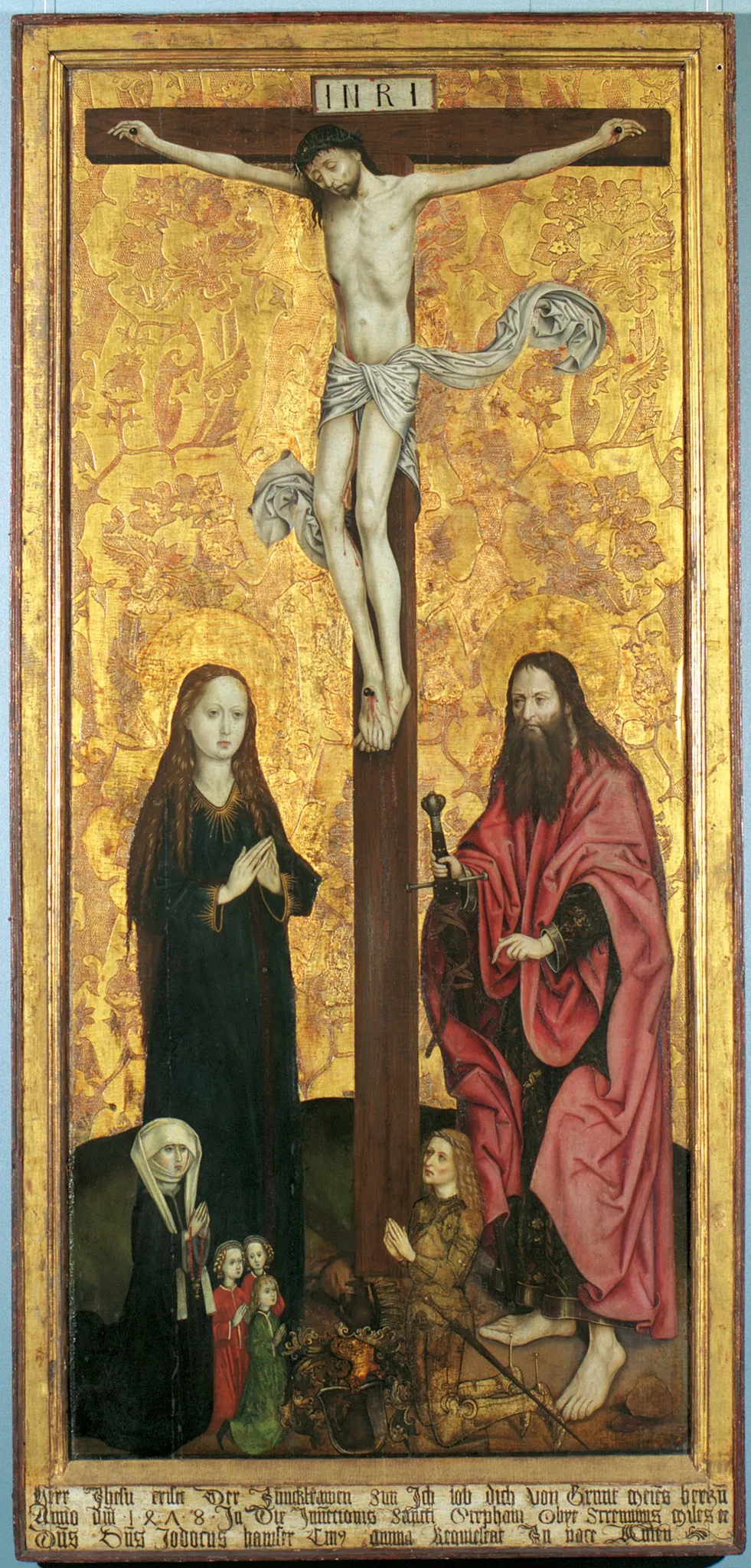
Epitaph des Jodok Hauser is an unspecified painting by the Northern Renaissance artist Hans Siebenbürger. It dates from 1490 and is held in the collection of the Kunsthistorisches Museum.
About this work
Overview
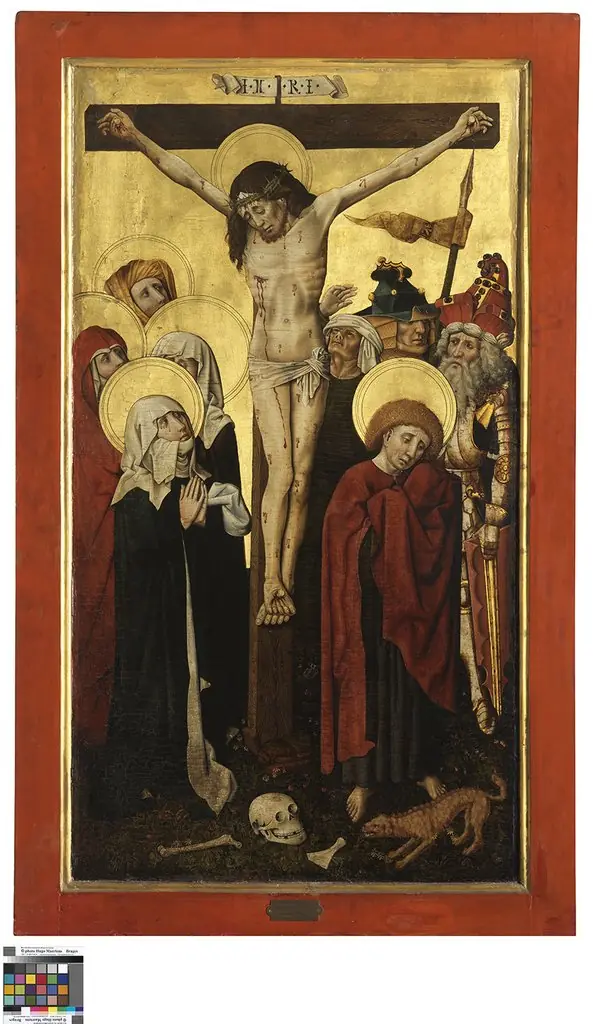
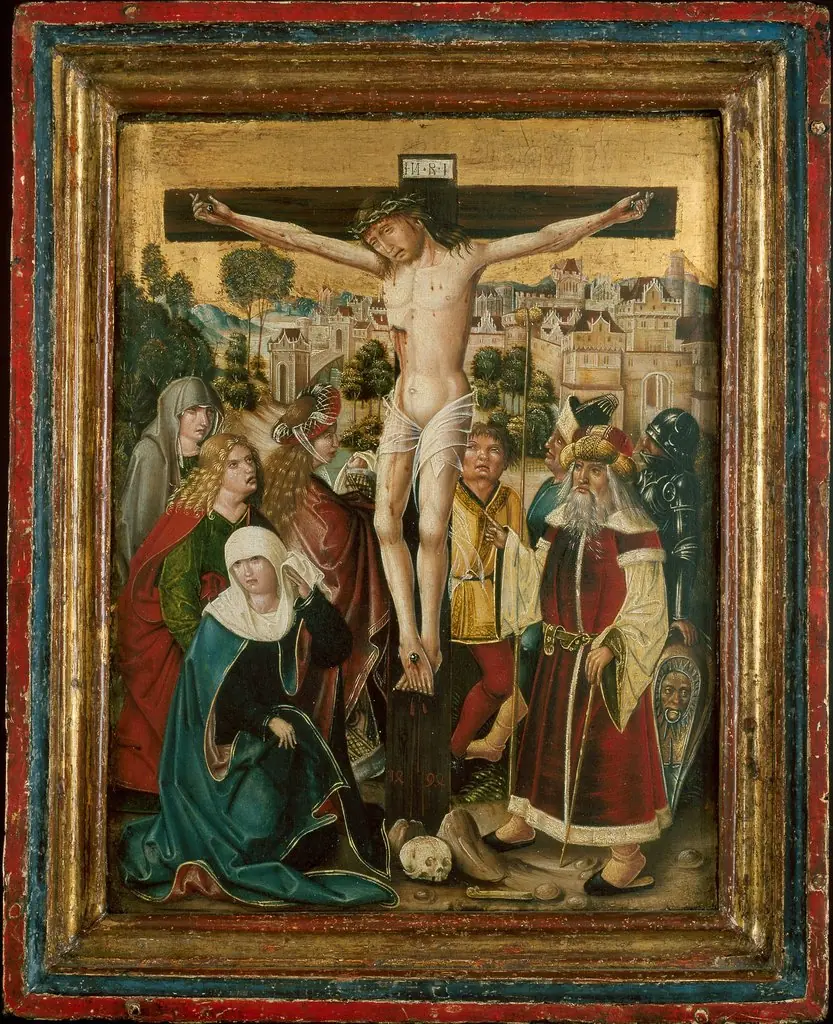
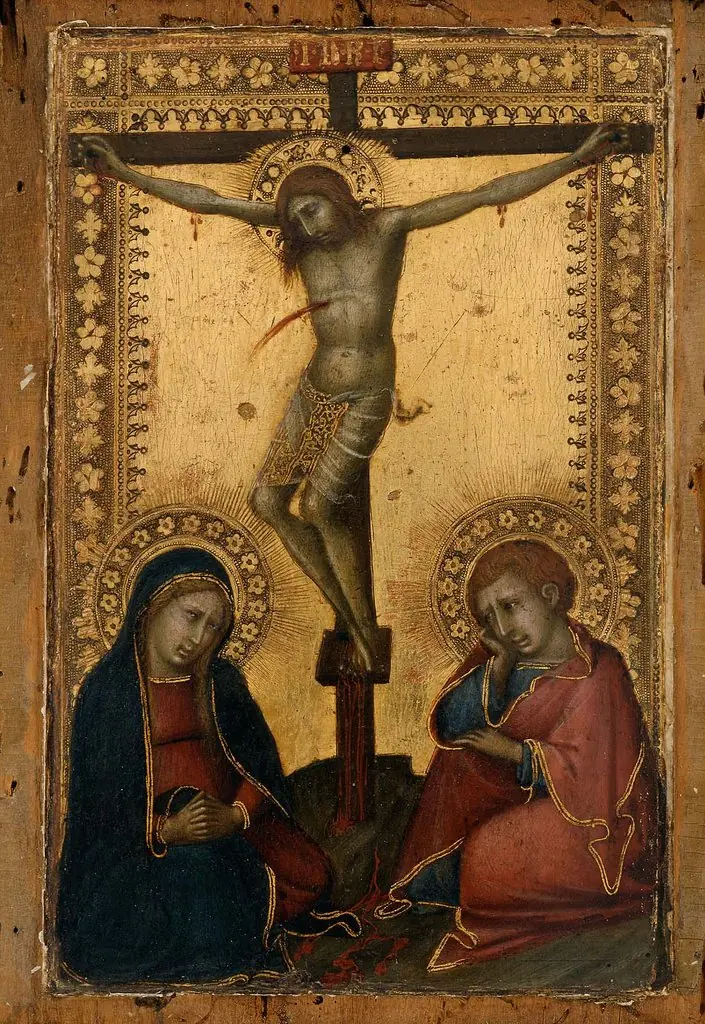
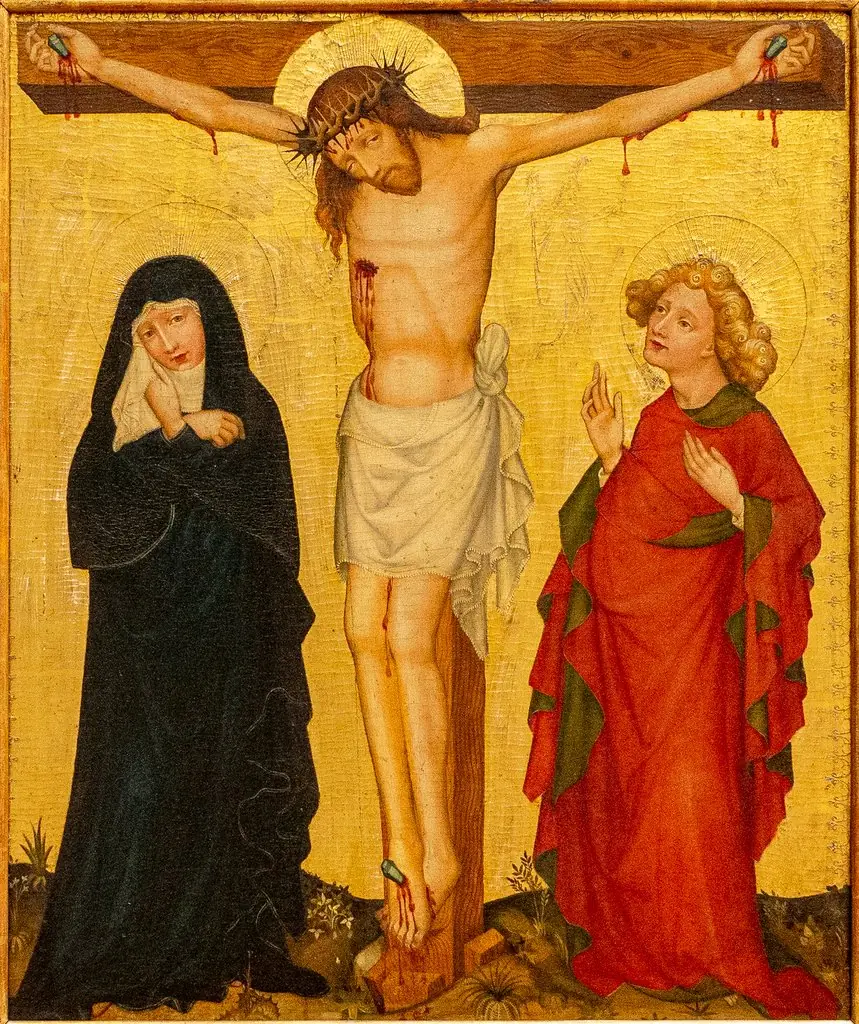
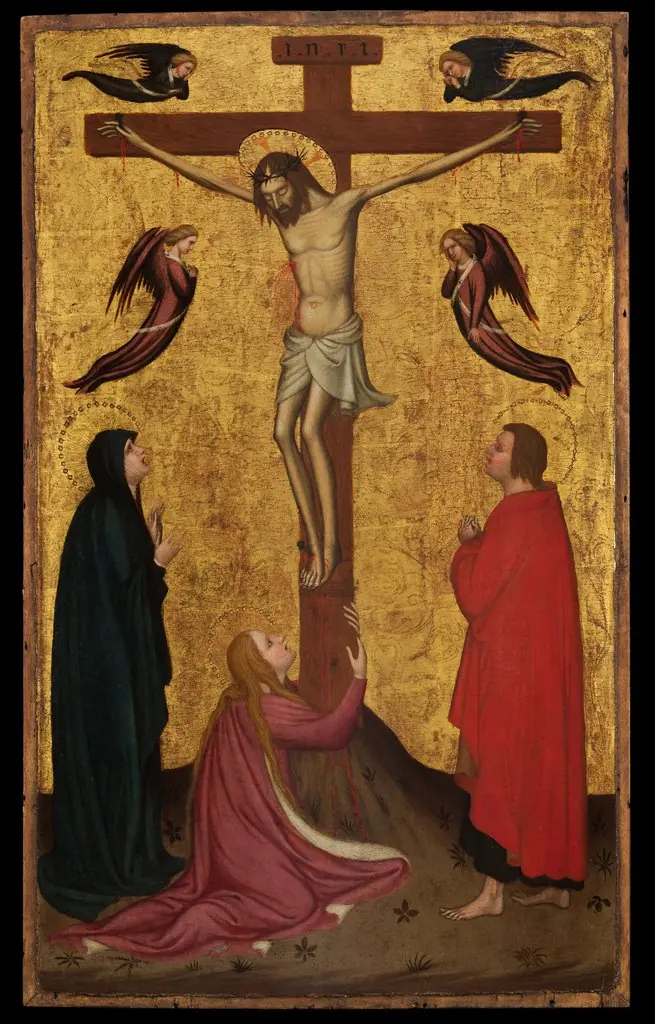
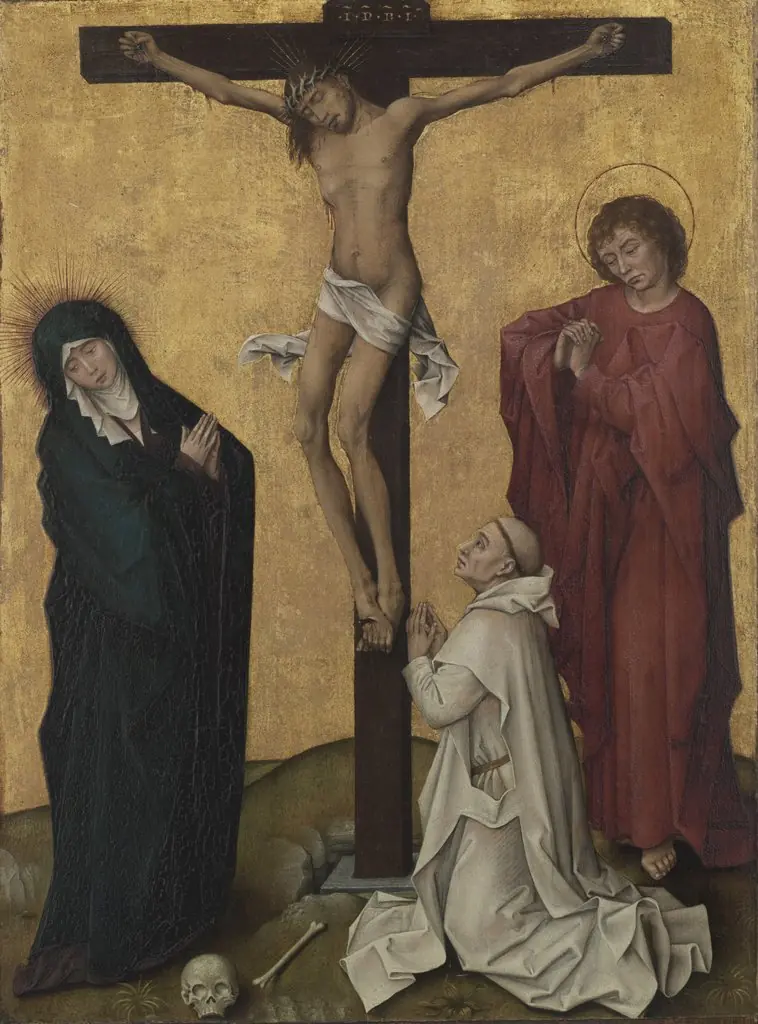
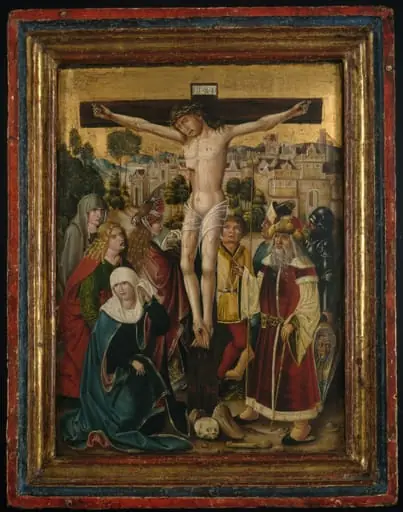
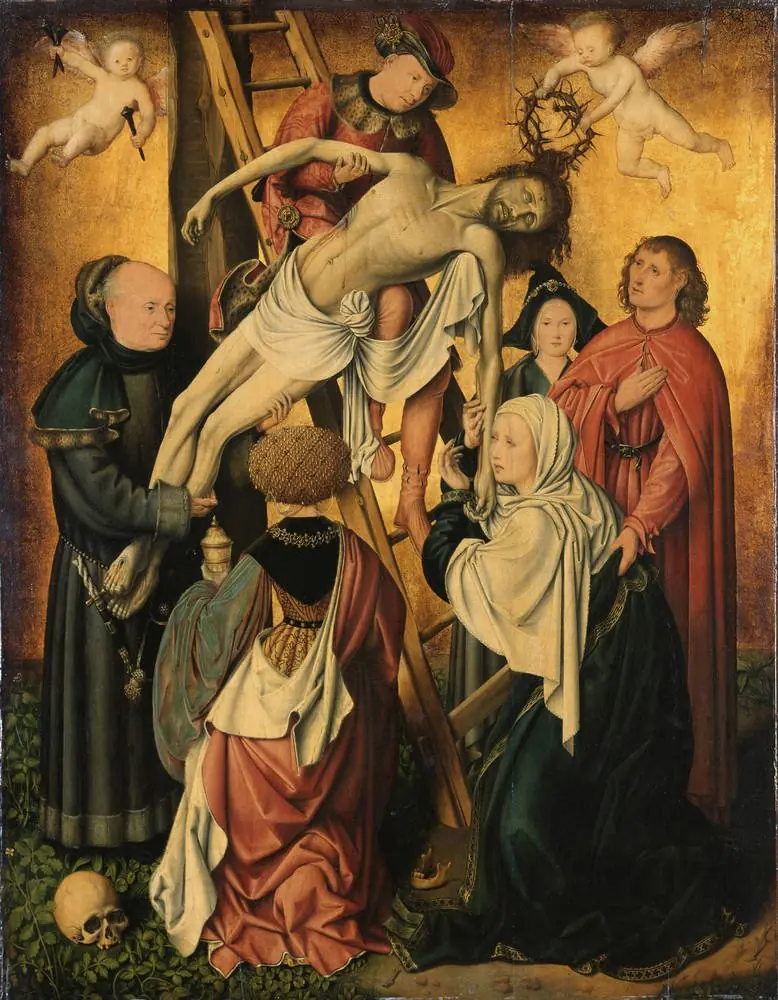
Created around 1490, this devotional panel by Hans Siebenbürger depicts a crucifixion scene and is part of the collection of the Kunsthistorisches Museum. The work presents a central figure on the cross surrounded by a small group of mourners, all rendered against a gold background that emphasizes the spiritual rather than naturalistic setting.
Subject & Meaning
The central figure is a man affixed to a cross, his head inclined backward and arms outstretched, evoking the traditional representation of Christ’s sacrifice.
The central figure is a man affixed to a cross, his head inclined backward and arms outstretched, evoking the traditional representation of Christ’s sacrifice. Flanking him are a cloaked woman with clasped hands and a bearded man in red holding a spear, likely symbolising the Virgin Mary and a possible donor or saint, while two kneeling figures—an older woman and a young man—suggest personal commemoration.
Technique & Style
Executed in tempera on panel, the painting employs a flat gold ground with intricate swirling motifs, a common decorative choice in late‑medieval devotional art. Figures are rendered with a restrained linearity; faces appear serene and devoid of overt emotion, reflecting the period’s emphasis on contemplative stillness over dramatic expression.
History & Provenance
Attributed to the German painter Hans Siebenbürger, the panel has been documented in the Kunsthistorisches Museum’s holdings since the early 20th century. Its provenance prior to museum acquisition remains unclear, but the work is representative of the artist’s output in the Upper Rhine region during the transition from Gothic to early Renaissance visual language.
Artist & collection