Artwork
Forest meadow
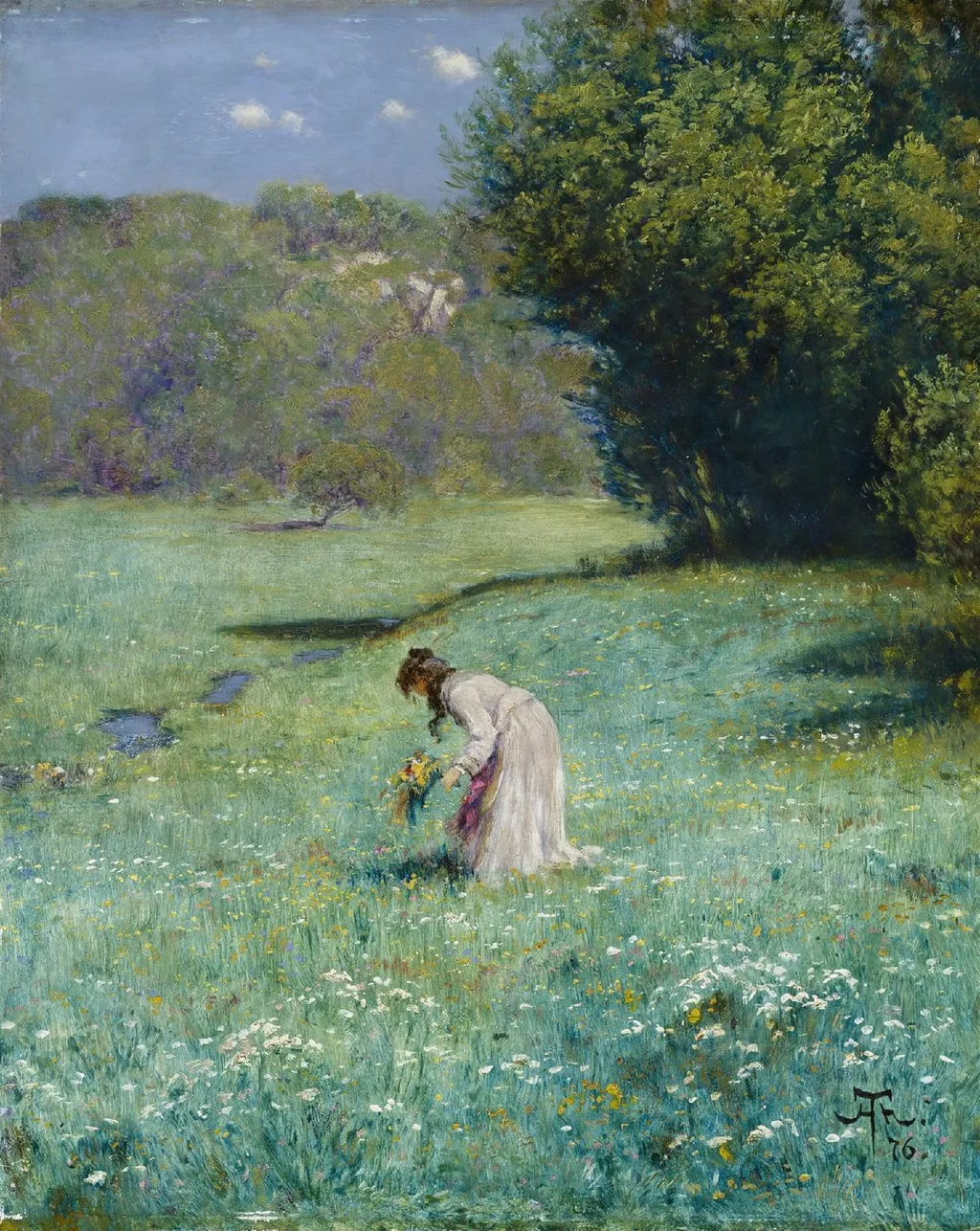
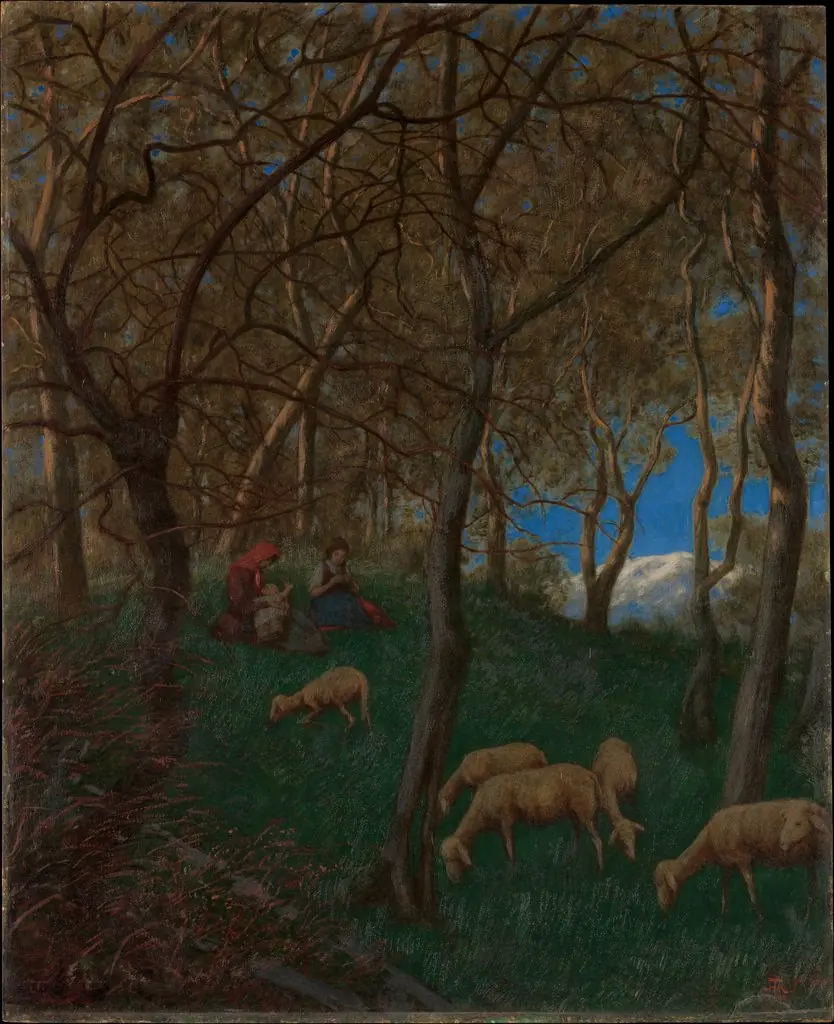
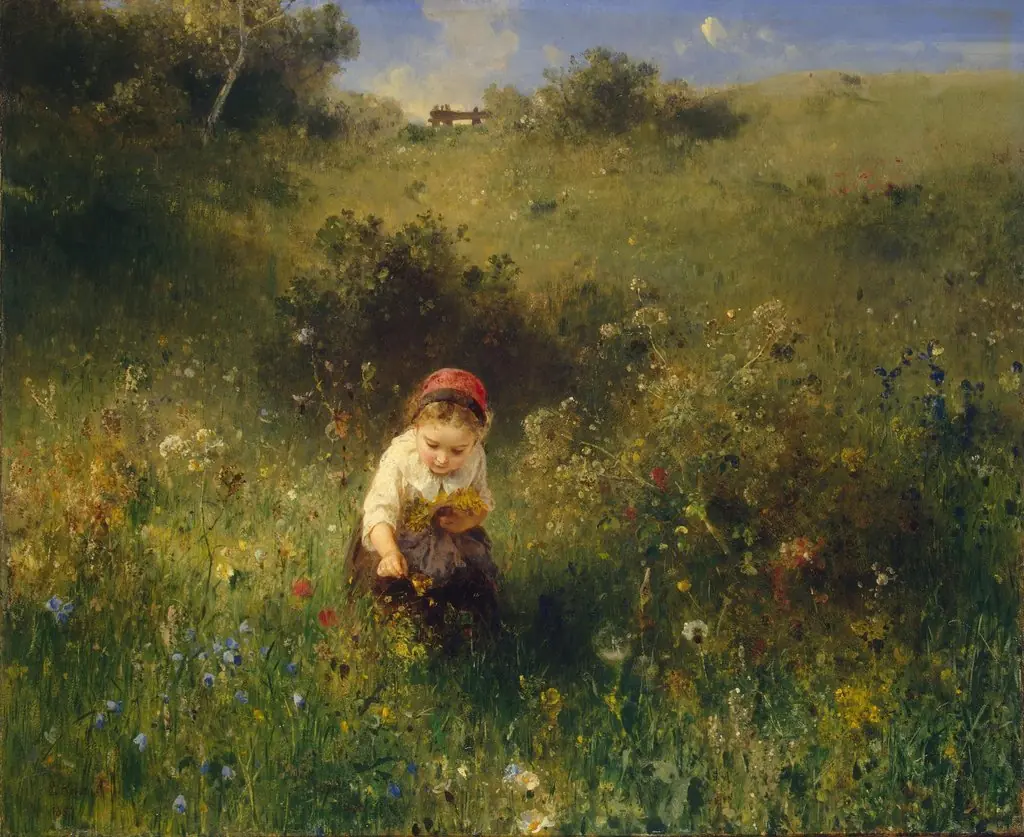
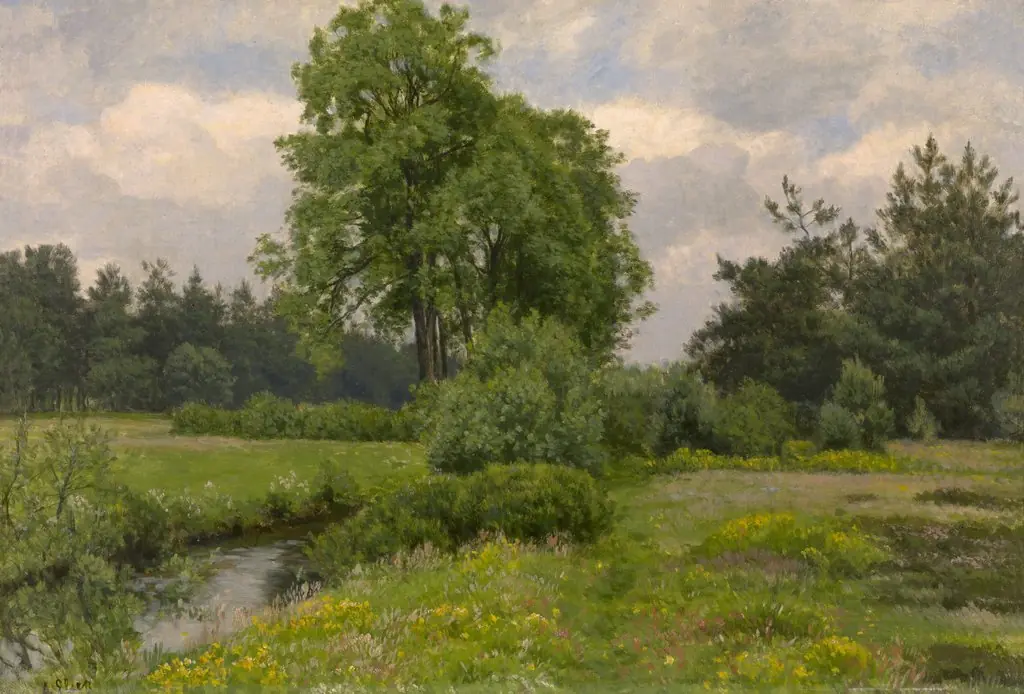
Forest meadow is an oil painting by the Impressionist artist Hans Thoma. It dates from 1888 and is held in the collection of the Hamburger Kunsthalle.
About this work
Overview
Though often linked to Impressionist tendencies, his approach remained rooted in regional realism rather than avant-garde experimentation.
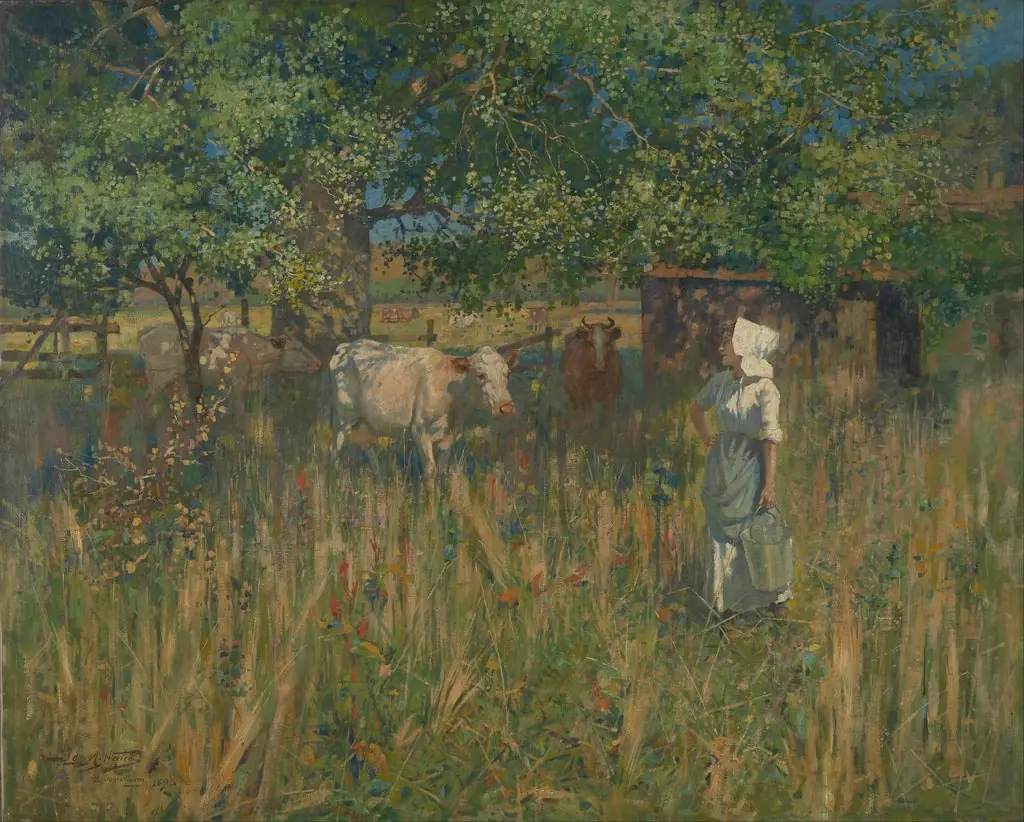
Painted in 1888, *Forest meadow* is an oil on canvas work by German artist Hans Thoma. It depicts a quiet rural scene in which a woman gathers wildflowers beneath a canopy of trees. The painting belongs to the collection of Hamburger Kunsthalle and reflects Thoma’s sustained interest in the German countryside, blending observed nature with a contemplative mood. Though often linked to Impressionist tendencies, his approach remained rooted in regional realism rather than avant-garde experimentation.
Subject & Meaning
The central figure, a woman in a modest white dress, is engaged in the quiet act of flower-picking, a gesture that evokes daily rural life rather than narrative drama. Her stillness and the abundance of wildflowers suggest harmony between human presence and the natural world. The absence of overt symbolism or idealization points to Thoma’s preference for understated, intimate moments, inviting reflection rather than storytelling.
Technique & Style
Thoma employed a nuanced palette of greens to render the meadow’s foliage, transitioning from pale lime to deep forest tones. The sky, rendered in soft blues and whites, contrasts gently with the earthy ground. Brushwork is loose yet controlled, capturing light and texture without overt impasto. The woman’s form is defined with subtle contours, integrating her into the landscape rather than isolating her as a focal point.
History & Provenance
The painting has remained in the Hamburger Kunsthalle’s collection since its creation. After Thoma’s death, his work was selectively co-opted by nationalist circles in the 1930s, and some of his paintings were seized from Jewish collectors under Nazi rule. While *Forest meadow* itself was not documented as looted, its later reception was inevitably shaped by this period of cultural appropriation and forced displacement.
Context
Thoma worked during a time when German art grappled with shifting identities—between romantic tradition and modern influences. Though he taught at the Karlsruhe Academy and later entered public office, his art avoided overt political messaging. *Forest meadow* aligns with a broader 19th-century European trend of elevating rural life as a site of moral and aesthetic purity, distinct from urban industrialization.
Legacy
Thoma’s reputation endured beyond his lifetime, though his association with nationalist misappropriation complicated his legacy. *Forest meadow* remains a quiet example of his ability to convey tranquility through observation. Today, it is valued not for ideological resonance but for its sensitivity to light, texture, and the unembellished rhythm of rural existence.
Own this work as a print
Artist & collection
Artist
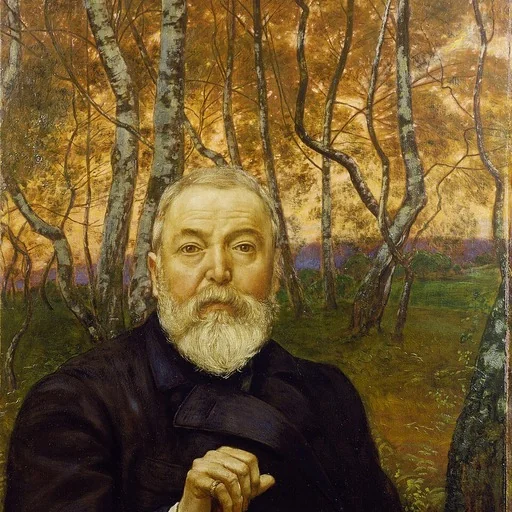
Hans Thoma (2 October 1839 – 7 November 1924) was a German painter. An alumnus and later professor of Karlsruhe Academy, he is known for his landscapes, portraits, and symbolic works rooted in German regional life and…