Artwork
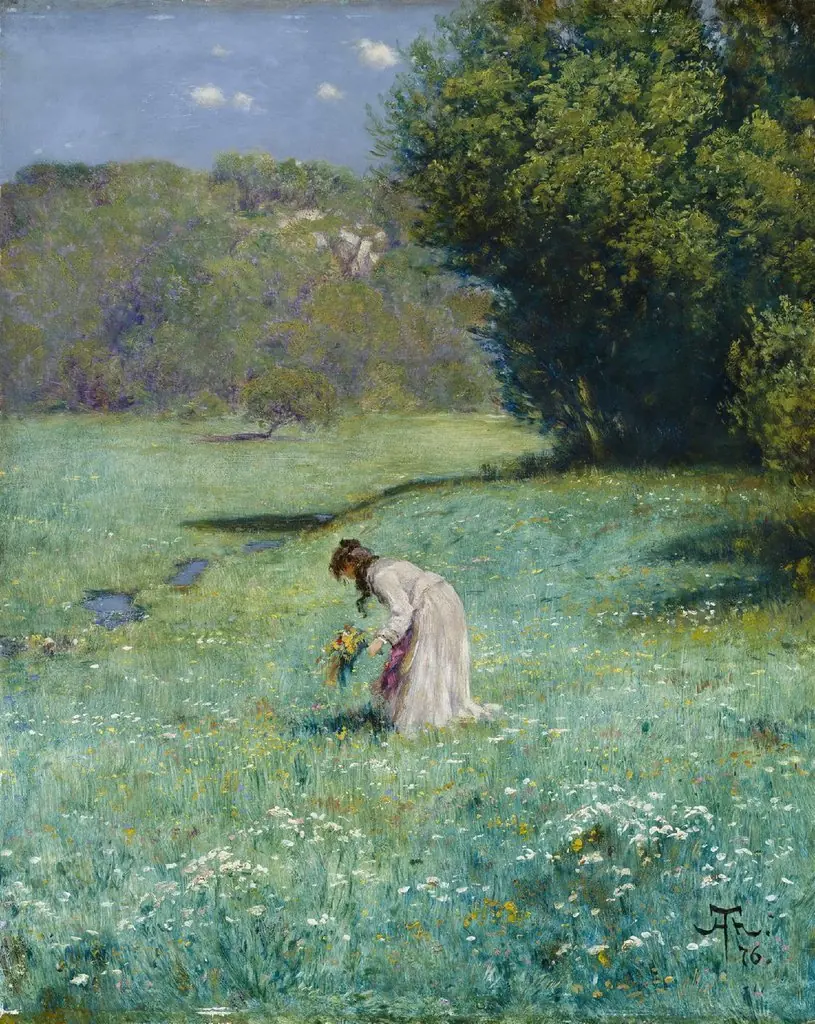
Girl in a Field
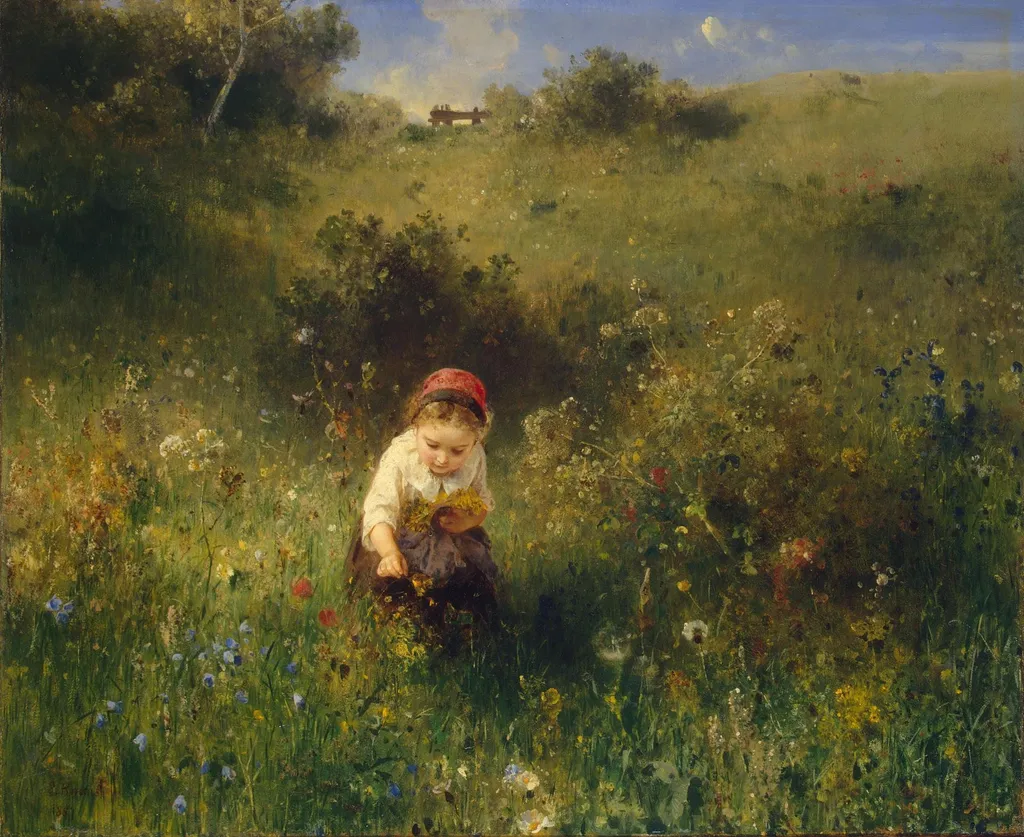
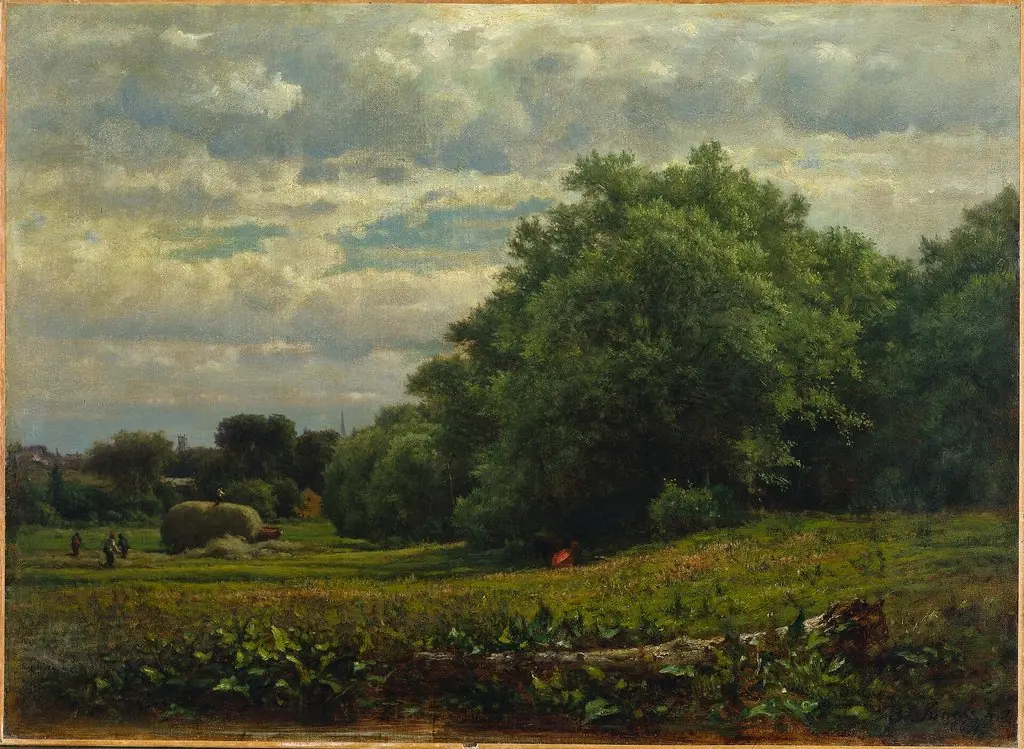
Girl in a Field is an oil painting by the Biedermeier artist Ludwig Knaus. It dates from 1857 and is held in the collection of the Hermitage Museum.
About this work
Overview
Belonging to the Biedermeier tradition, it reflects a quiet focus on ordinary moments, avoiding grand narratives in favor of subtle, intimate observation.
Painted in 1857 by German artist Ludwig Knaus, this oil-on-canvas work depicts a solitary girl in a rural landscape. Belonging to the Biedermeier tradition, it reflects a quiet focus on ordinary moments, avoiding grand narratives in favor of subtle, intimate observation. The painting is part of the State Hermitage Museum’s collection, where it remains a quiet example of mid-19th-century German genre painting.
Subject & Meaning
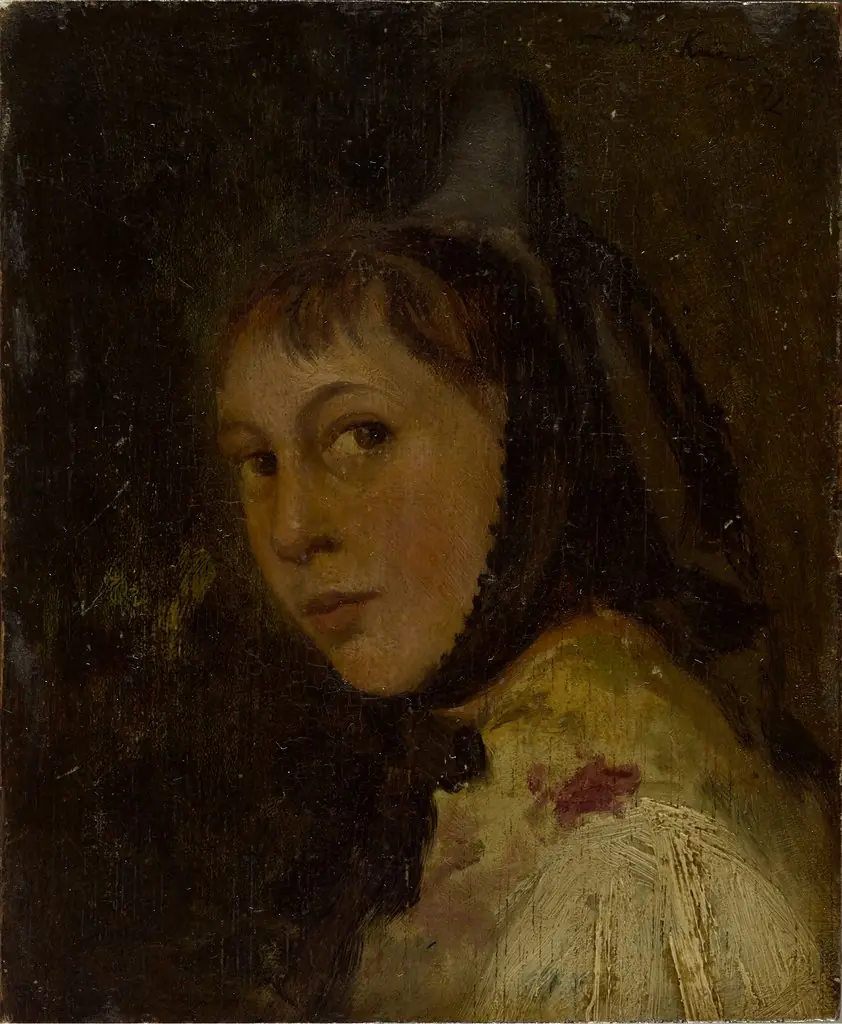
The figure is a young girl, crouched among tall grasses and wildflowers, gathering blooms with quiet concentration. Her simple attire—a white blouse and red headscarf—suggests rural life without romanticizing poverty. The act of picking flowers implies a fleeting, personal ritual, evoking themes of transience and quiet diligence. No narrative climax is offered; the meaning lies in the stillness of the moment.
Technique & Style
Knaus employed fine brushwork to render the textures of grass, fabric, and petals with delicate precision. The palette favors natural tones—soft greens, muted yellows, and pale blues—creating harmony between figure and environment. Light falls gently across the scene, enhancing the sense of calm. The composition is uncluttered, directing attention to the girl’s motion and the subtle interplay of color and form.
History & Provenance
Created during Knaus’s early career, the painting emerged from the Düsseldorf school’s emphasis on realistic, emotionally restrained genre scenes. It entered the Hermitage’s collection in the 19th century, likely through state acquisition or diplomatic exchange. Its presence in a major Russian institution reflects the broader European interest in German Biedermeier art during that period.
Context
In mid-19th-century Germany, the Biedermeier movement responded to political repression by turning inward, celebrating domestic tranquility and rural simplicity. Artists like Knaus avoided revolutionary themes, instead focusing on private, uneventful moments. This painting aligns with that ethos, offering a vision of peace rooted in nature and routine, away from urban and political turmoil.
Legacy
Though not widely exhibited today, the painting remains a representative example of Biedermeier genre painting. It illustrates how German artists of the time cultivated emotional depth through restraint, influencing later realist traditions. Its endurance in the Hermitage underscores its role as a quiet testament to everyday life in 19th-century Europe.
Own this work as a print
Artist & collection
Artist
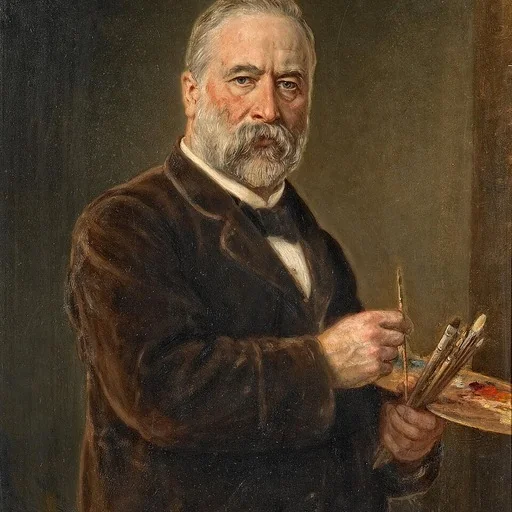
Ludwig Knaus (5 October 1829 – 7 December 1910) was a German genre painter of the younger 7 Düsseldorf school of painting.