Artwork
Bacchus, Venus and Cupid
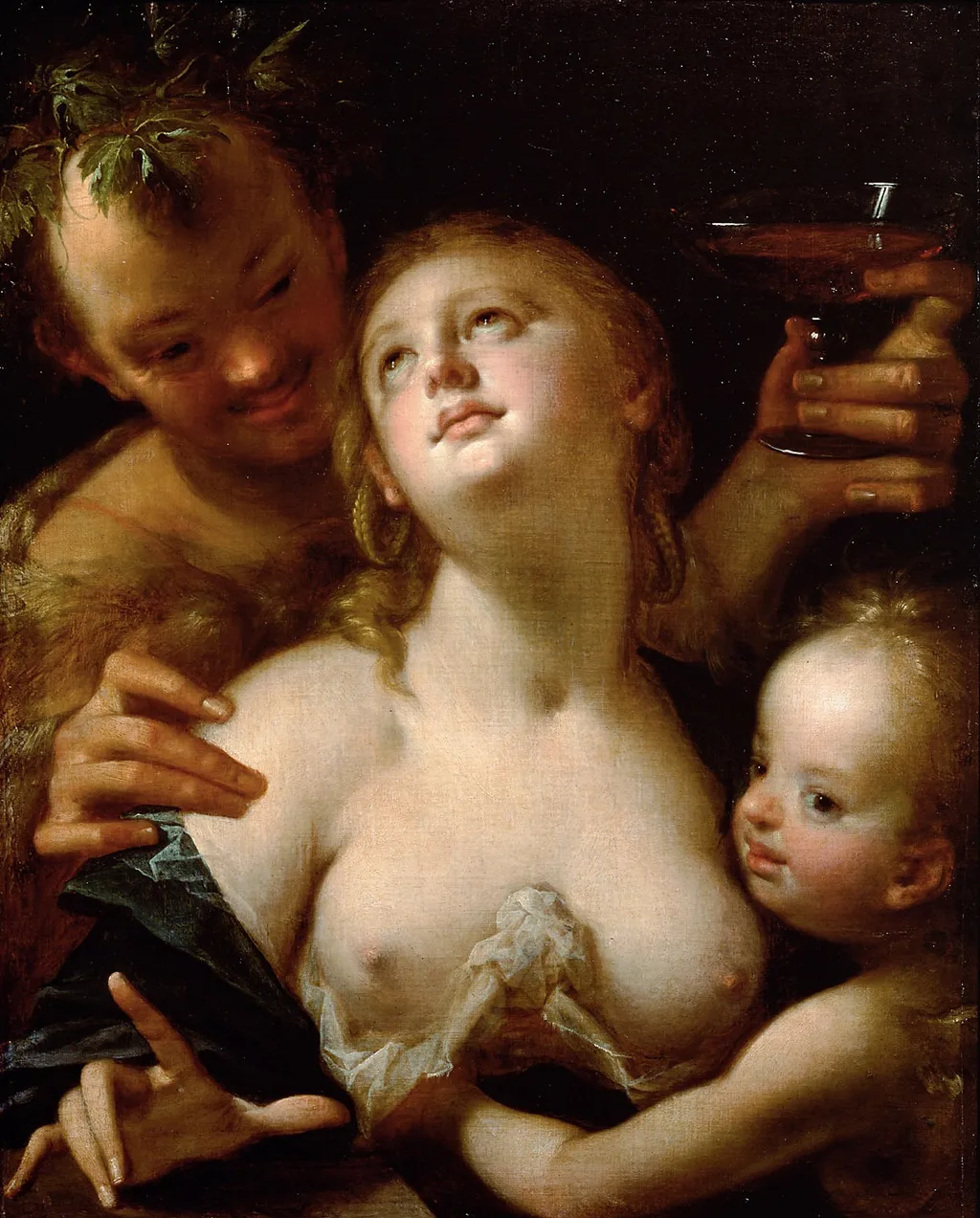
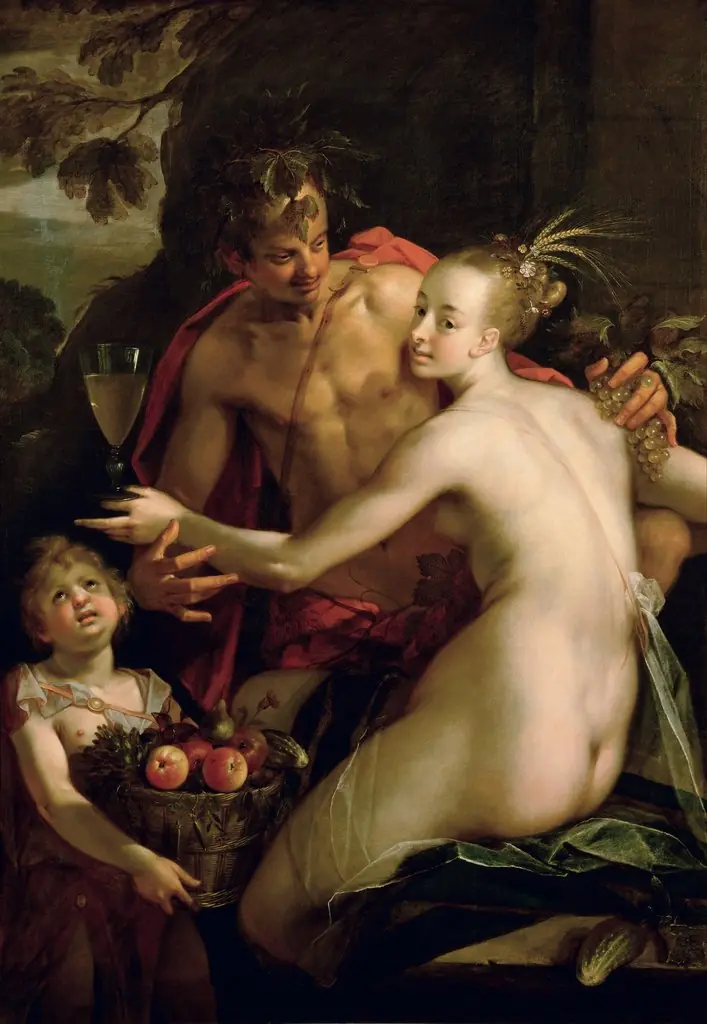
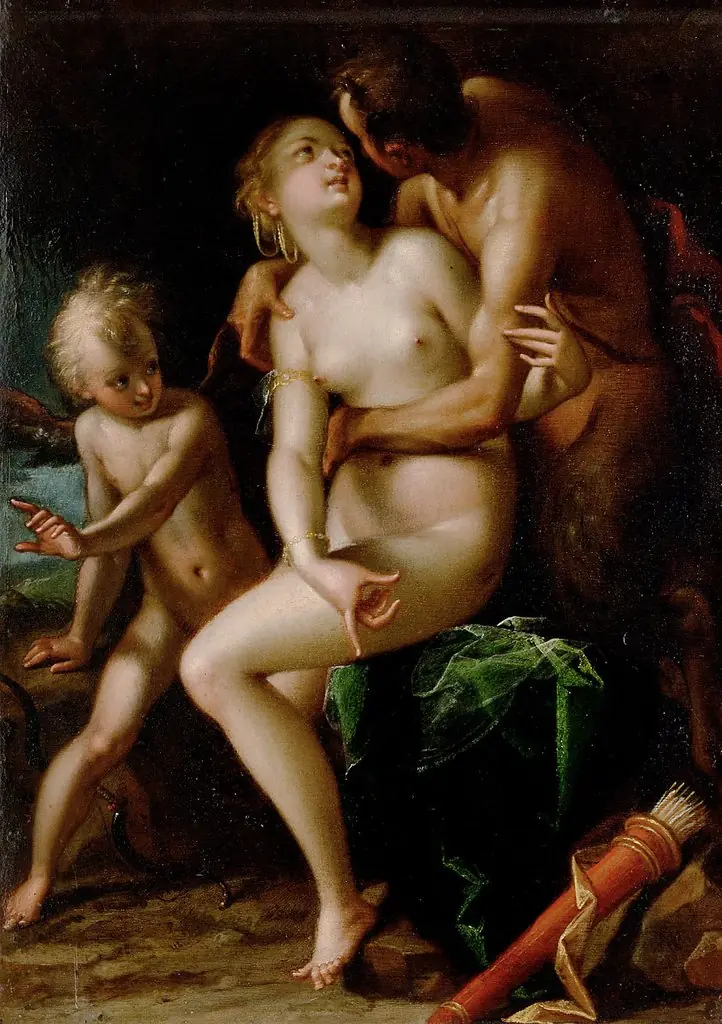
Bacchus, Venus and Cupid is a paint painting by the Mannerist artist Hans von Aachen. It dates from 1598 and is held in the collection of the Kunsthistorisches Museum. Created in 1598, this oil painting brings together the Roman deities Bacchus and Venus with the youthful Cupid.
About this work
Overview
Created in 1598, this oil painting brings together the Roman deities Bacchus and Venus with the youthful Cupid. Executed by Hans von Aachen, a prominent Northern Mannerist, the work is part of the Kunsthistorisches Museum’s collection. The composition centers on the three figures, arranged in a compact group that emphasizes their interaction and the sensual atmosphere of the scene.
Subject & Meaning
The central male figure, identified as Bacchus, rests his hands on the shoulders of the nude Venus, who looks upward with an exposed bosom, while the infant Cupid reaches toward her arm. The inclusion of foliage in their hair alludes to the mythic association of Bacchus with vines and the natural world, and the tender gesture of Cupid suggests themes of love and desire intertwined with the revelry of wine.
Technique & Style
Von Aachen employs a pronounced chiaroscuro, using strong contrasts of light and shadow to model the bodies and create a sense of three‑dimensionality.
Von Aachen employs a pronounced chiaroscuro, using strong contrasts of light and shadow to model the bodies and create a sense of three‑dimensionality. The figures are elongated in the manner typical of Mannerist aesthetics, and the composition is carefully balanced, guiding the eye across the intertwined forms. The delicate rendering of flesh and the subtle play of illumination demonstrate the artist’s refined handling of paint.
History & Provenance
The painting was produced during von Aachen’s tenure as court painter to Emperor Rudolf II, whose taste favored eroticized mythological subjects. After remaining in the imperial collection, it entered the holdings of the Kunsthistorisches Museum in Vienna, where it remains on display as part of the museum’s representation of Northern Mannerism.
Context
Hans von Aachen, active in the late sixteenth century, was a leading exponent of Northern Mannerism, a style that merged Italianate elegance with a heightened artificiality. His work often catered to the Habsburg court’s fascination with classical mythology, and this piece exemplifies the period’s preference for sophisticated, allegorical compositions that combined sensuality with intellectual references.
Own this work as a print
Artist & collection
Artist
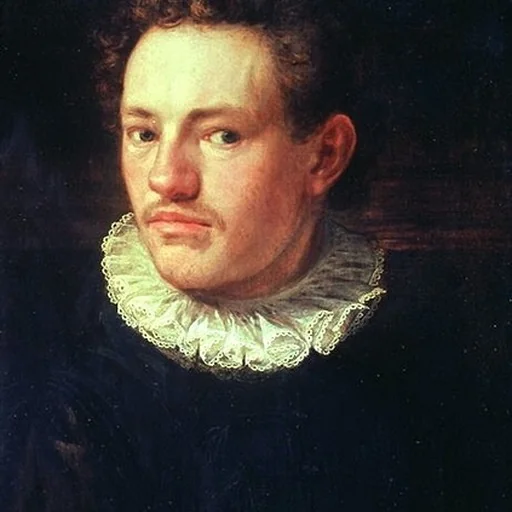
Hans von Aachen (1552 – 4 March 1615) was a German painter who was one of the leading representatives of Northern Mannerism.