Artwork
Cottage interior
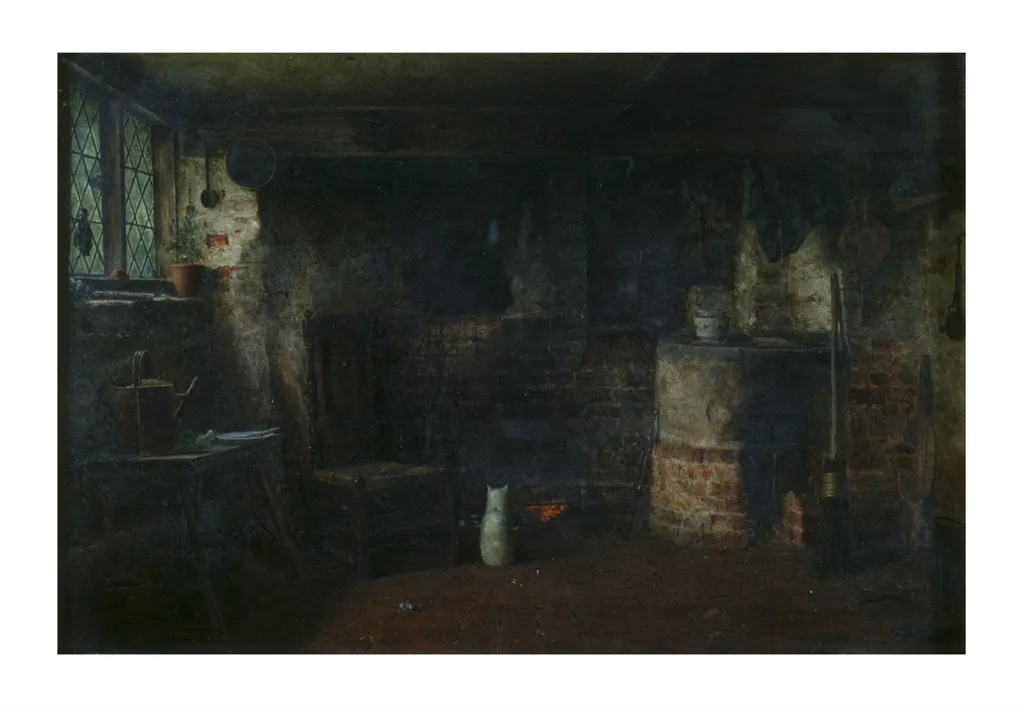
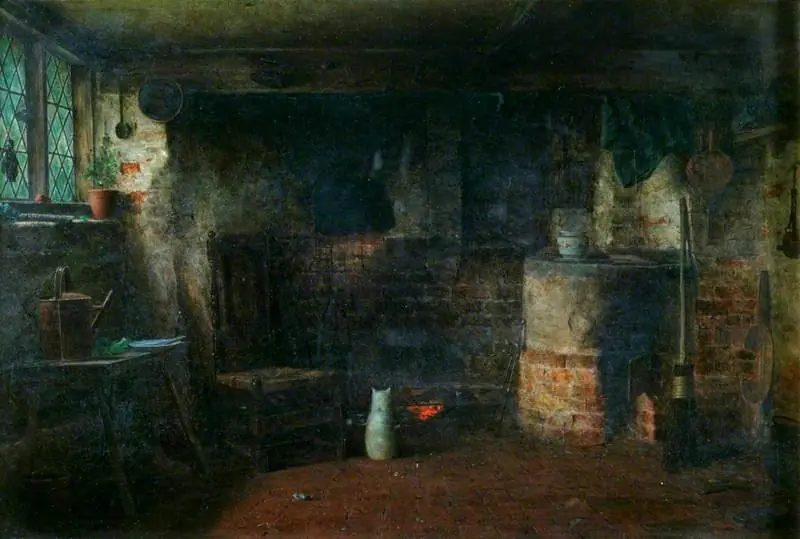
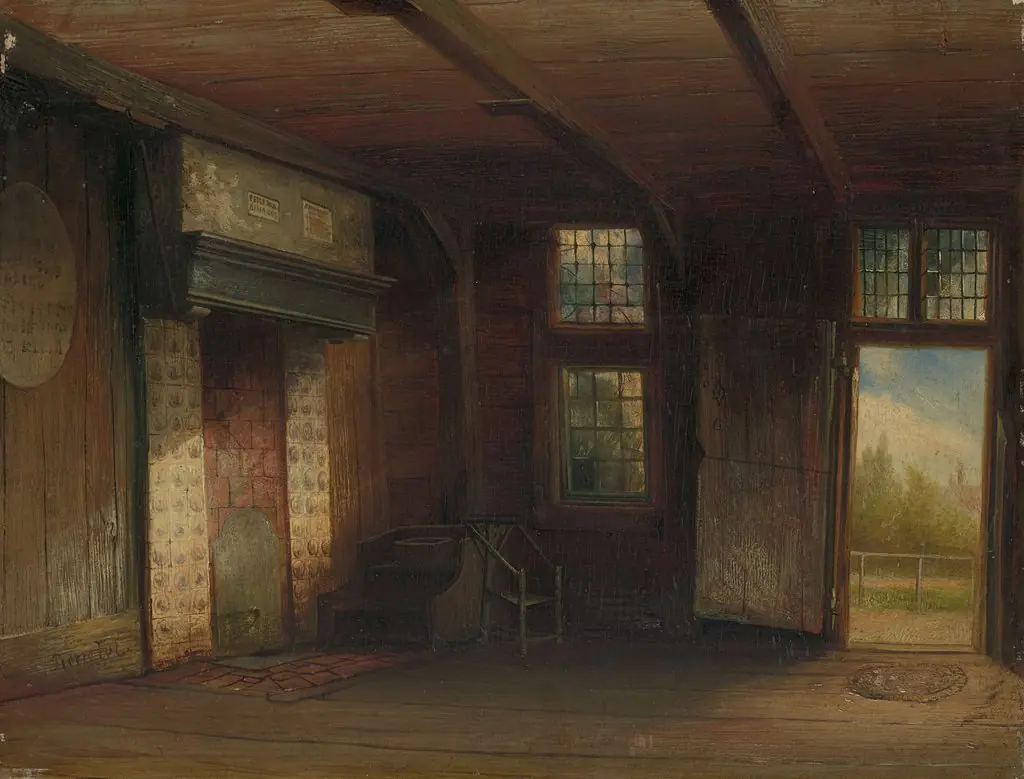
Cottage interior is an oil painting by the British Romanticist artist Frederick Daniel Hardy. It dates from 1852 and is held in the collection of the Victoria and Albert Museum. This oil painting depicts a quiet interior of a rural cottage, notable for its absence of human figures.
About this work
Overview
Unlike most works by the artist, which typically feature people engaged in daily tasks, this scene is inhabited only by a sleeping cat.
This oil painting depicts a quiet interior of a rural cottage, notable for its absence of human figures. Unlike most works by the artist, which typically feature people engaged in daily tasks, this scene is inhabited only by a sleeping cat. The stillness of the space and the lack of human presence set it apart from the artist’s broader body of work, which centered on domestic life in the countryside.
Subject & Meaning
The subject is an unadorned cottage interior, rendered with attention to ordinary details—furniture, walls, and floor. The sleeping cat serves as the sole indicator of life, introducing a quiet sense of presence without narrative. The absence of people shifts focus to the atmosphere of the space itself, suggesting solitude or respite rather than activity, and subtly evokes the rhythm of rural domesticity.
Technique & Style
The painting employs subtle chiaroscuro to define form and depth, with light falling gently across wooden surfaces and textiles. Brushwork is restrained, favoring smooth transitions over dramatic contrast. The muted palette and soft modeling of shadows reinforce the calm, introspective mood, aligning with the artist’s broader commitment to naturalistic observation rather than theatrical effect.
History & Provenance
Created during a period when the artist regularly exhibited at the Royal Academy, this work was once misclassified as a still-life due to its lack of human figures. It was among the ninety-three cottage scenes he showed between 1851 and 1898, though few of these omitted people entirely. Its unusual composition likely contributed to its initial misinterpretation in early catalogues.
Context
In mid-to-late 19th-century Britain, genre scenes of rural life were popular among middle-class audiences. Artists often depicted cottages as symbols of moral simplicity. Hardy’s focus on such settings aligned with this trend, yet his decision to exclude people here diverges from the norm, offering a more contemplative, less didactic view of domestic space.
Legacy
This painting stands as a quiet anomaly in the artist’s oeuvre, highlighting his capacity to convey mood beyond narrative. While not widely discussed in scholarly literature, it reflects a broader interest among Victorian painters in the emotional resonance of empty spaces. Its understated presence continues to invite reflection on the quiet rhythms of everyday life.
Own this work as a print
Artist & collection
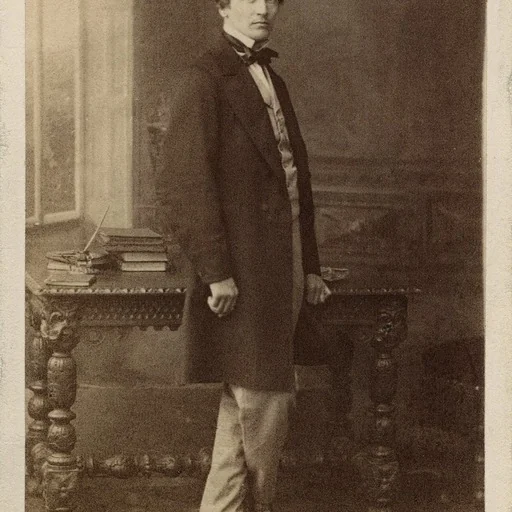
Artist
Frederick Daniel Hardy (13 February 1827 – 1 April 1911) was an English genre painter and member of the Cranbrook Colony of artists.