Artwork
Cottages in Ireland
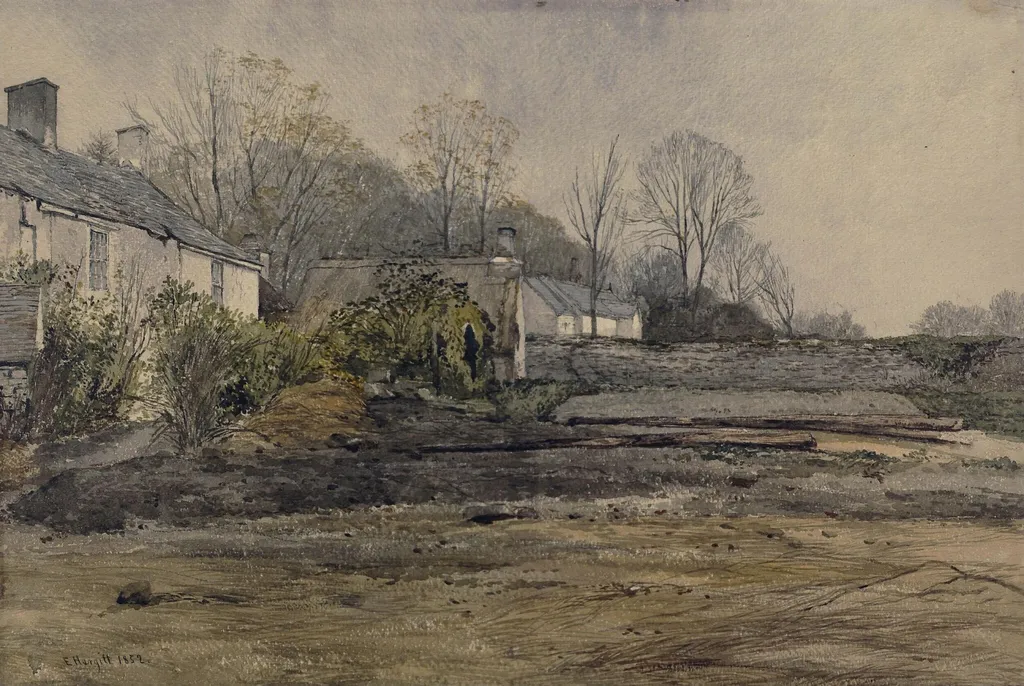
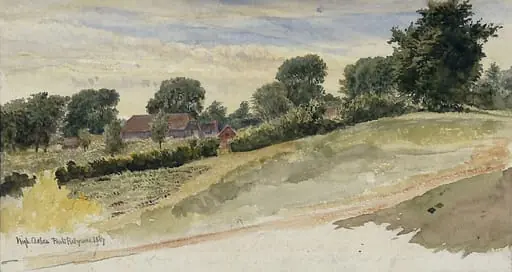
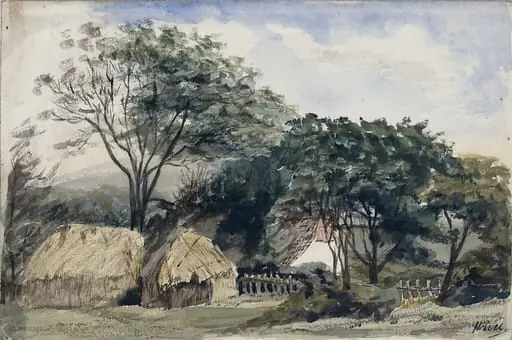
Cottages in Ireland is a watercolor work on paper by the British Romanticist artist Edward Hargitt. It dates from 1852 and is held in the collection of the Victoria and Albert Museum.
About this work
Overview
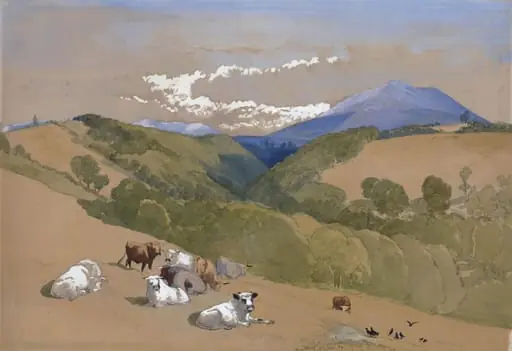
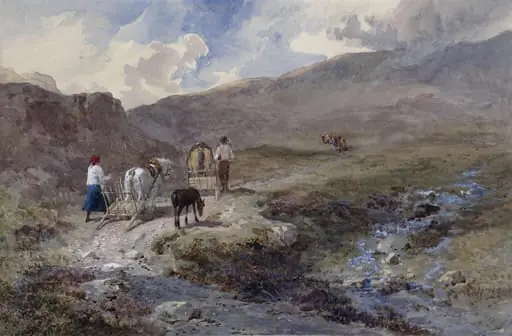
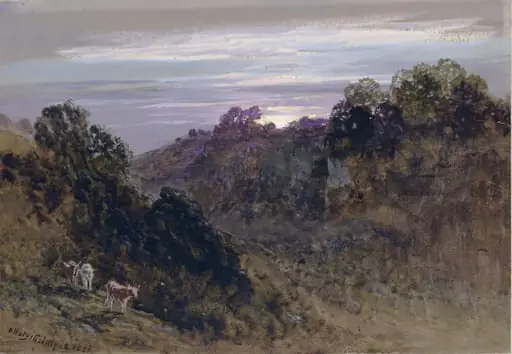
Cottages in Ireland, painted in 1852 by Edward Hargitt, is a watercolour depicting a modest rural scene in the Irish countryside. The work is part of the Victoria and Albert Museum’s collection and exemplifies 19th-century British watercolour practice, where landscape and everyday life were rendered with quiet observation rather than dramatic emphasis.
Subject & Meaning
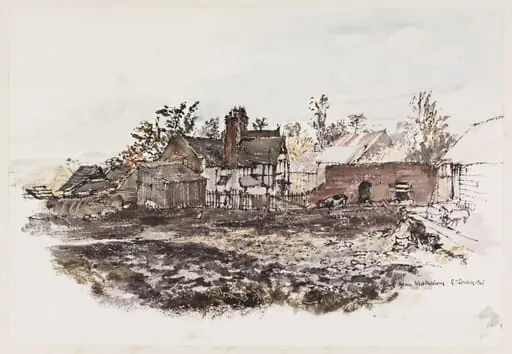
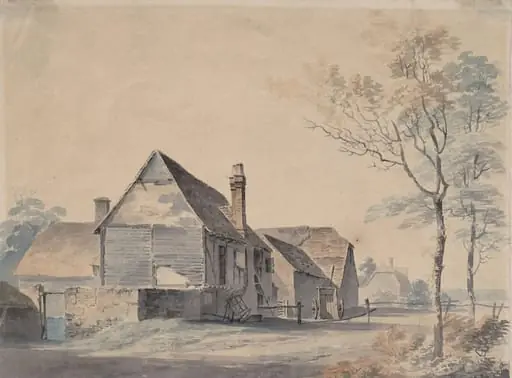
Two small stone cottages stand in a still, damp landscape, one partially obscured by bare trees. The scene conveys solitude and the quiet endurance of rural life. Mud, puddles, and sparse vegetation suggest a season of transition, perhaps early spring or late autumn, reinforcing a tone of stillness and modesty without overt symbolism.
Technique & Style
Hargitt employed loose, transparent washes to suggest atmosphere and texture. Soft greys, muted greens, and earth tones create a hazy, diffused light. The brushwork is restrained yet expressive, capturing the dampness of the ground and the skeletal branches without detail, relying instead on tonal gradation to evoke mood.
History & Provenance
The painting was completed in 1852 and entered the Victoria and Albert Museum’s collection through its established acquisition of British watercolours from the mid-19th century. Its provenance reflects the museum’s interest in documenting domestic and topographical art from the period, though no record of prior ownership is publicly documented.
Context
Hargitt worked during a time when watercolour was increasingly valued for its immediacy and portability, favored by amateur and professional artists alike. Scenes of rural Ireland, often viewed through a lens of nostalgia or ethnographic interest, were common in British art, reflecting both curiosity and colonial perspectives on the island’s landscape.
Legacy
Cottages in Ireland remains a quiet example of mid-Victorian watercolour practice, valued for its sensitivity to light and atmosphere rather than narrative or grandeur. It contributes to a broader understanding of how everyday rural life was recorded in British art, without idealization or embellishment.
Own this work as a print
Artist & collection
Artist
Edward Hargitt painted quiet Irish landscapes in watercolour in the mid-1800s, showing cottages and hills bathed in soft light.