Artwork
Saint Augustine Subdues Heresy with Lightning Bolts from His Pen
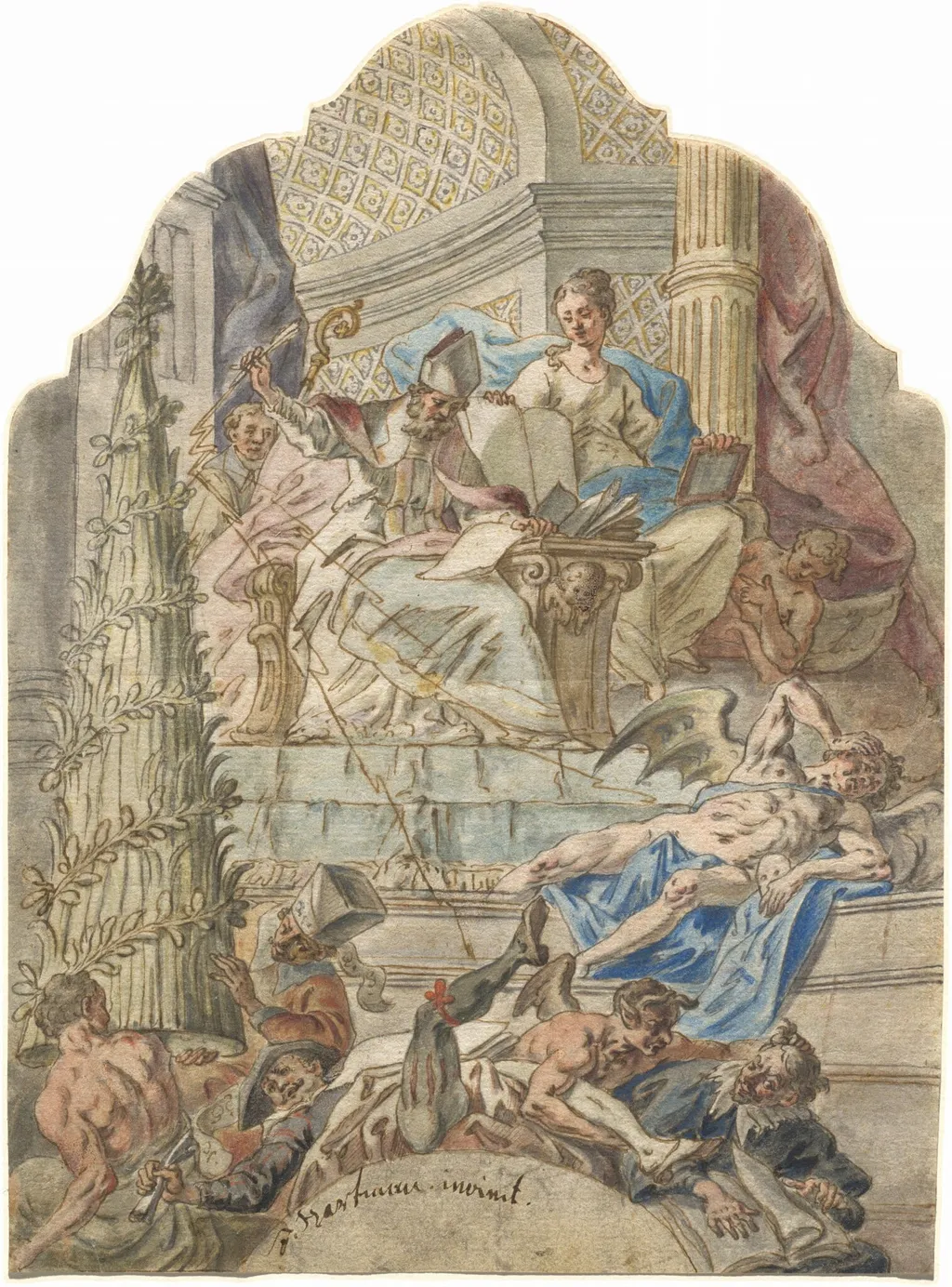
Saint Augustine Subdues Heresy with Lightning Bolts from His Pen is an ink drawing by the Romanticist artist Joseph Hartmann. It dates from 1780 and is held in the collection of the National Gallery of Art.
About this work
Overview
The work occupies a space between preparatory study and finished devotional image, using translucent washes to suggest both movement and spiritual intensity.
Created around 1780 by Joseph Hartmann, this drawing depicts Saint Augustine wielding his pen as a divine instrument against heresy. Executed in watercolor, ink, and graphite on laid paper, it blends the spontaneity of sketching with the layered richness of painted composition. The work occupies a space between preparatory study and finished devotional image, using translucent washes to suggest both movement and spiritual intensity.
Subject & Meaning
The scene centers on Saint Augustine, robed and elevated, as lightning emanates from his writing instrument—symbolizing the power of theological argument to vanquish error. Below, a woman in blue reaches upward amid chaotic figures and winged putti, suggesting souls caught between salvation and corruption. The storm-lit architecture behind them evokes a sacred space under divine judgment, reinforcing the triumph of orthodoxy through intellectual authority.
Technique & Style
Hartmann employed thin watercolor glazes over ink outlines and faint graphite underdrawing to build luminous depth without heavy opacity. The blending of gray and brown inks with translucent washes creates a sense of atmospheric turbulence, while the loose, energetic lines suggest motion. The technique balances precision in form with expressive fluidity, giving the image a dynamic, almost theatrical quality.
History & Provenance
The work is attributed to Joseph Hartmann, an 18th-century artist active in southern Germany or Austria, known for religious subjects in watercolor. Its survival in relatively intact condition suggests it was likely kept in a private or ecclesiastical collection, possibly used for contemplative or instructional purposes. No documented exhibition or sale history is known prior to its modern cataloging.
Context
In the late 18th century, Catholic devotional imagery still emphasized doctrinal clarity amid Enlightenment skepticism. Hartmann’s depiction aligns with Counter-Reformation visual traditions that personified theological conflict, yet its sketch-like execution reflects a shift toward more intimate, personal expressions of faith. The use of watercolor, less common for major religious commissions, hints at a domestic or scholarly audience.
Legacy
Though not widely reproduced or studied, the drawing exemplifies how minor artists adapted grand religious themes to intimate media. Its fusion of Baroque drama with Rococo fluidity offers insight into regional devotional practices beyond major artistic centers. The work remains a quiet testament to the enduring symbolic power of the written word in religious iconography.
Artist & collection


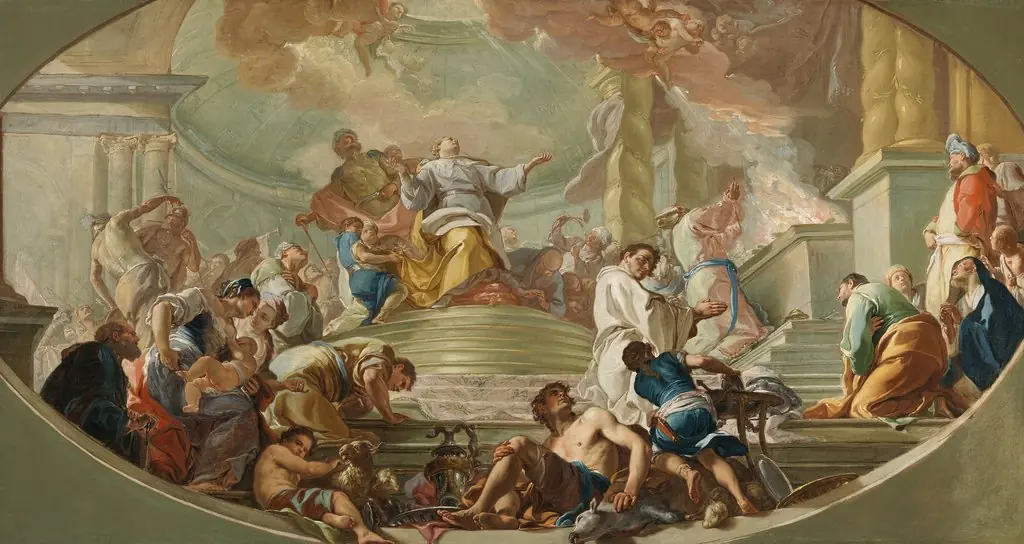 The Dedication of the Temple at Jerusalem
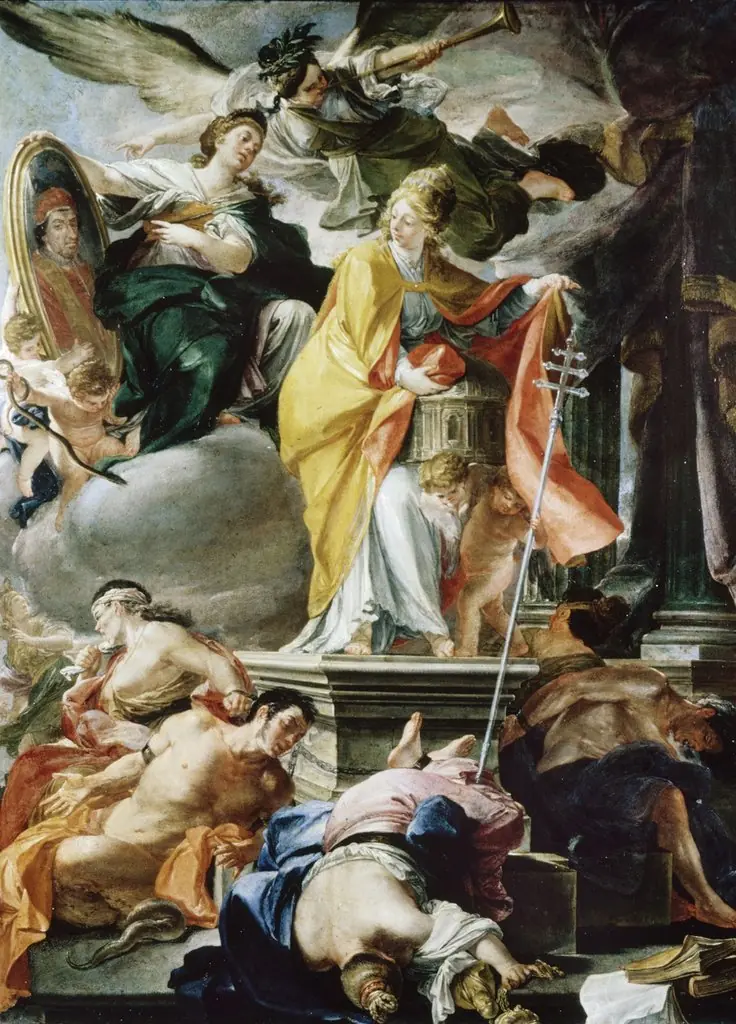 Allegory of the Papacy of Clement XI
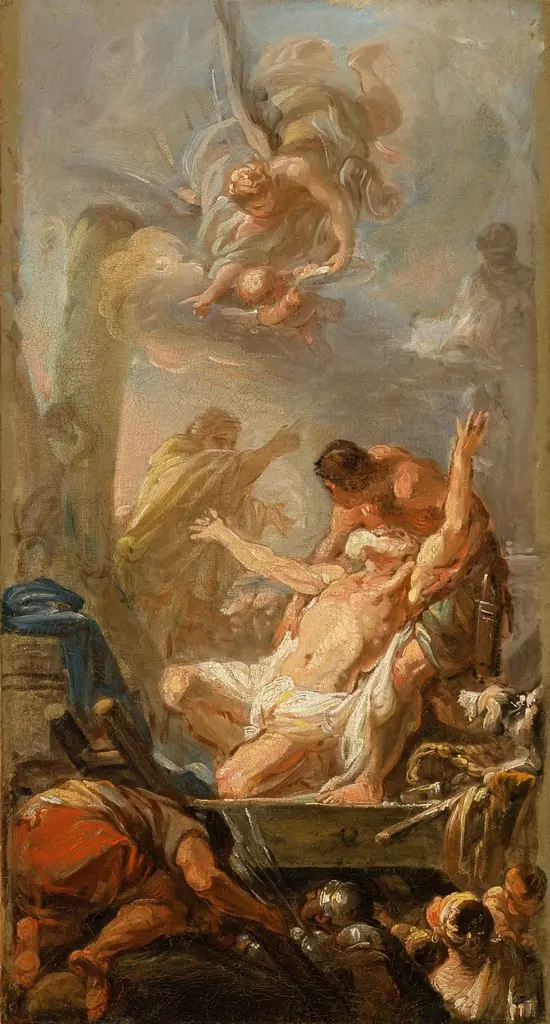 Scene from the Martyrdom of St. Andrew
 Ut Pictura Poesis
 Funeral Procession of a Saint with Angels
 Miracles of St. Francis of Paola (Sketch)
 Flagellation of Christ
 Merope
 The Victory of Truth over Heresy
 The Apotheosis of Henri IV
 The Presentation in the Temple
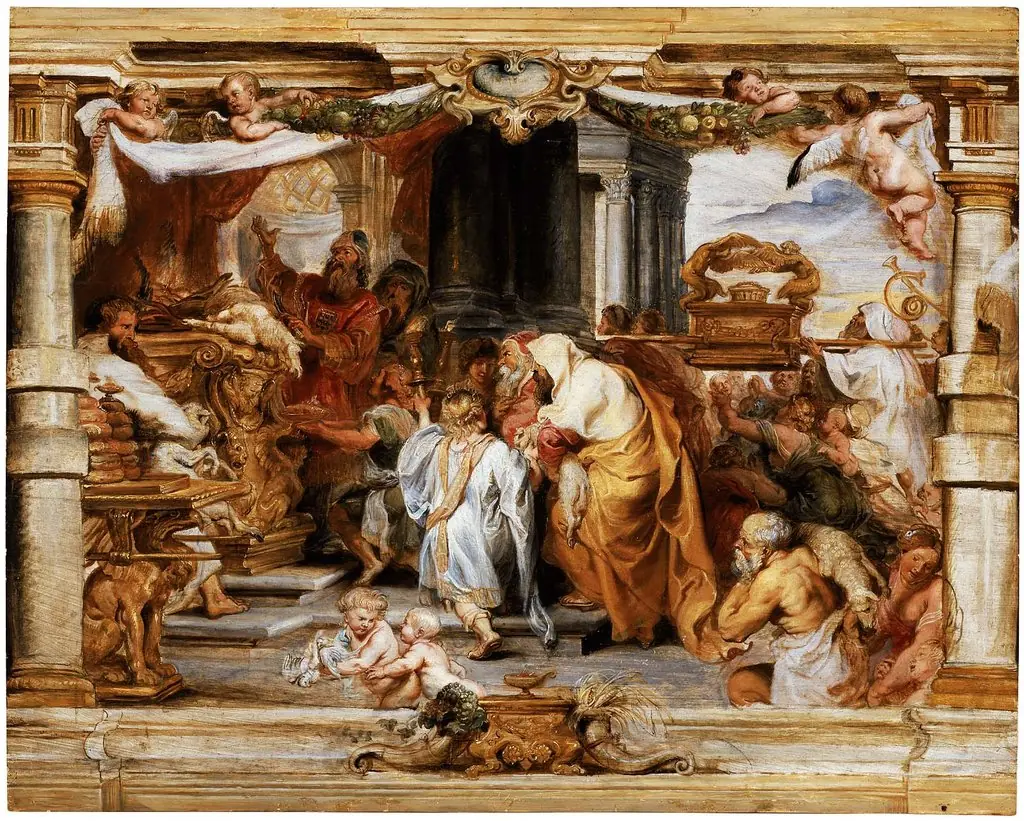 The Sacrifice of the Old Covenant